
Many people wonder if they really need a box spring when setting up their new mattress. The answer isn't always straightforward because it depends on what type of mattress you have and what kind of bed frame you're using. Modern mattresses are built differently than older models, and many of them work just fine without any box spring at all.
We'll walk you through which mattresses don't require a box spring and explain why a good base still matters for your sleep quality. You'll learn about different foundation options and discover how to choose the right support system for your specific mattress type. Understanding these basics will help you create a comfortable bedroom setup without spending money on unnecessary items.
Key Takeaways
- Most modern mattresses including memory foam, latex, and many hybrids don't need a box spring to function properly
- Platform beds and slatted frames provide solid alternatives that support your mattress without a traditional box spring base
- Choosing the right foundation protects your mattress warranty and helps extend its lifespan while ensuring proper support
Which Mattresses Work Without a Box Spring?
Many modern mattresses work perfectly well without needing a box spring underneath them. Memory foam mattresses are built with dense foam layers that provide their own support system. These beds can sit directly on platform beds or slatted frames.
Latex mattresses also don't require a box spring. Their natural construction gives enough support on solid surfaces.
Hybrid mattresses combine memory foam with coil springs to create a sleep setup that works on platform beds. The internal coil system means these beds already have the support built right into the mattress construction.
Mattresses That Don't Need Box Springs:
- Memory foam beds
- Latex mattresses
- Hybrid models
- Modern innerspring designs
Platform beds are designed with solid or slatted surfaces that give enough support for these mattress types. This means your sleep quality and sleep health aren't compromised when you skip the box spring. The mattress technology in today's beds has changed how we think about proper sleep support.
What Is a Box Spring Base?
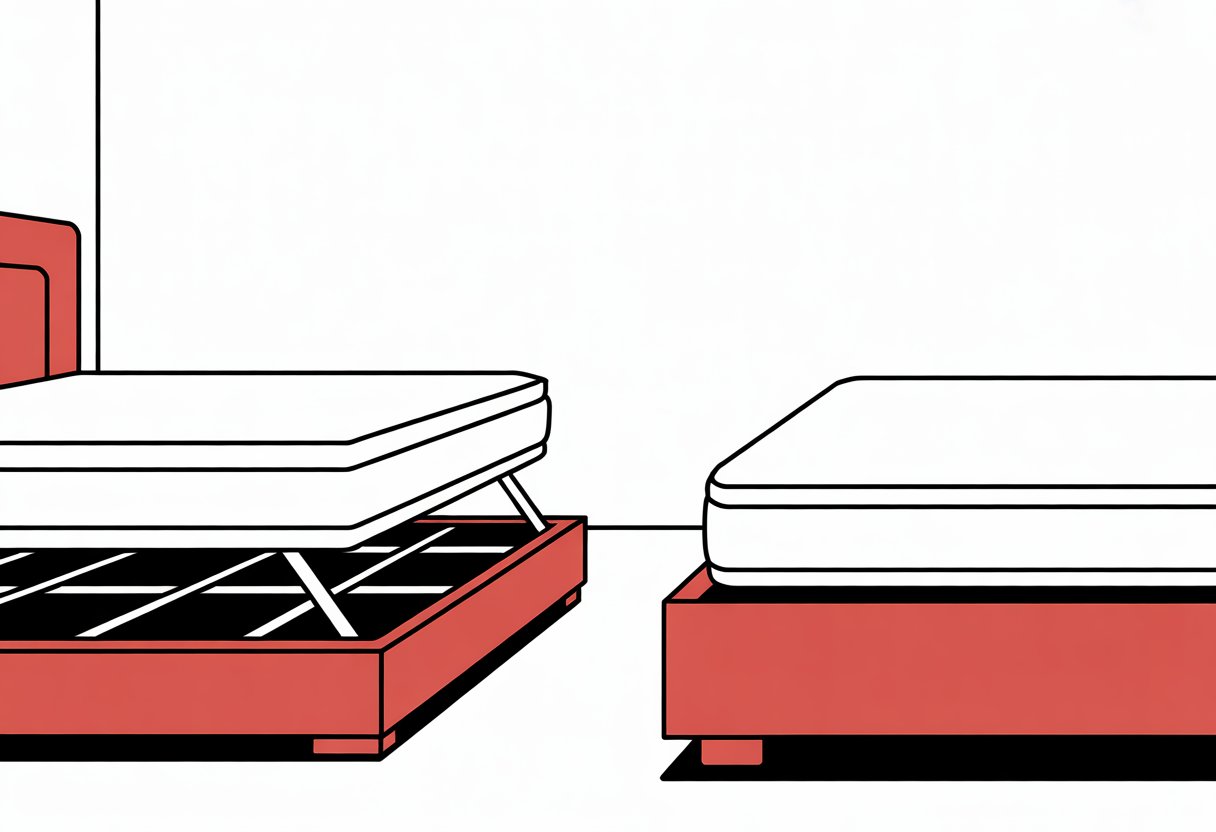
A box spring base serves as a mattress foundation built for specific bed sizes. It features a wooden frame structure filled with coil springs or sometimes a metal grid system. The entire unit gets covered in fabric to create a finished appearance and protect users from the internal components.
We use box spring bases with bed frames designed to accommodate this type of support system. These foundations deliver three key benefits for your sleeping setup.
Support and Comfort
The box spring provides support by absorbing impact when you move on the mattress. This shock absorption creates a more comfortable sleeping surface compared to placing a mattress directly on a hard platform.
Height Adjustment
These bases elevate your mattress to a practical level. Getting in and out of bed becomes much easier when your sleeping surface sits at an appropriate height rather than close to the floor.
Air Circulation
The space created beneath your mattress improves airflow around the bed. This ventilation helps regulate temperature during warm nights and prevents moisture buildup.
Mattress Compatibility
Box springs work well with traditional innerspring mattresses since they offer complementary support. However, they don't suit every mattress type available today. Modern foam, latex, and hybrid mattresses often perform better on solid surfaces rather than spring-based foundations.
The mattress industry has evolved significantly over recent years. While box springs were once the standard choice for mattress support, we now have numerous options designed for different mattress constructions and sleeping preferences.
Mattresses That Don't Need a Box Spring Base
All-Foam Mattresses
All-foam mattresses use multiple foam layers to create both comfort and support. These beds work well without a box spring because the foam construction provides its own supportive base.
One key benefit is motion isolation. If you sleep with a partner or pet, their movements during the night won't disturb your rest. Memory foam mattresses also conform to your body shape and sleeping position, which helps with pressure relief and spinal alignment.
You can place foam mattresses directly on platform beds or solid foundations. The coil-free design means you don't need additional spring support underneath.
Natural Latex Mattresses
Latex offers more bounce and responsiveness than memory foam. When you lie down on a latex mattress, it adapts quickly to your position and provides a springier feel.
Most latex mattresses combine foam support layers at the bottom with latex comfort layers on top. This construction creates a supportive sleep surface without requiring a box spring base.
Like foam options, latex mattresses work well on platform beds and foundations. The material naturally provides enough support on its own.
Hybrid Mattresses
Hybrid mattresses combine foam or latex comfort layers with innerspring coils at the base. This design creates a sturdy, self-supporting structure.
The coil system in hybrid beds provides its own foundation, so you don't need a box spring to add support. These mattresses work directly on platform beds or other solid bases.
Keep in mind that hybrid mattresses are typically heavier than all-foam options. Make sure your bed frame can handle the extra weight.
Contemporary Mattresses Including Bed-in-a-Box Options
Most modern mattresses don't require a box spring because they include their own supportive layers. Traditional box springs were made for older innerspring mattresses, but today's beds have built-in support systems.
Contemporary designs feature various technologies like memory foam, pocket springs, and cooling materials. These innovations eliminate the need for additional spring support underneath.
Compressed Mattresses
Compressed mattresses arrive in a compact box and expand when you open them. These beds are designed to perform best without a box spring.
They provide firm support and pressure relief right out of the box. You can place them on any flat, solid surface like a platform bed or slatted frame.
Options Beyond a Box Spring
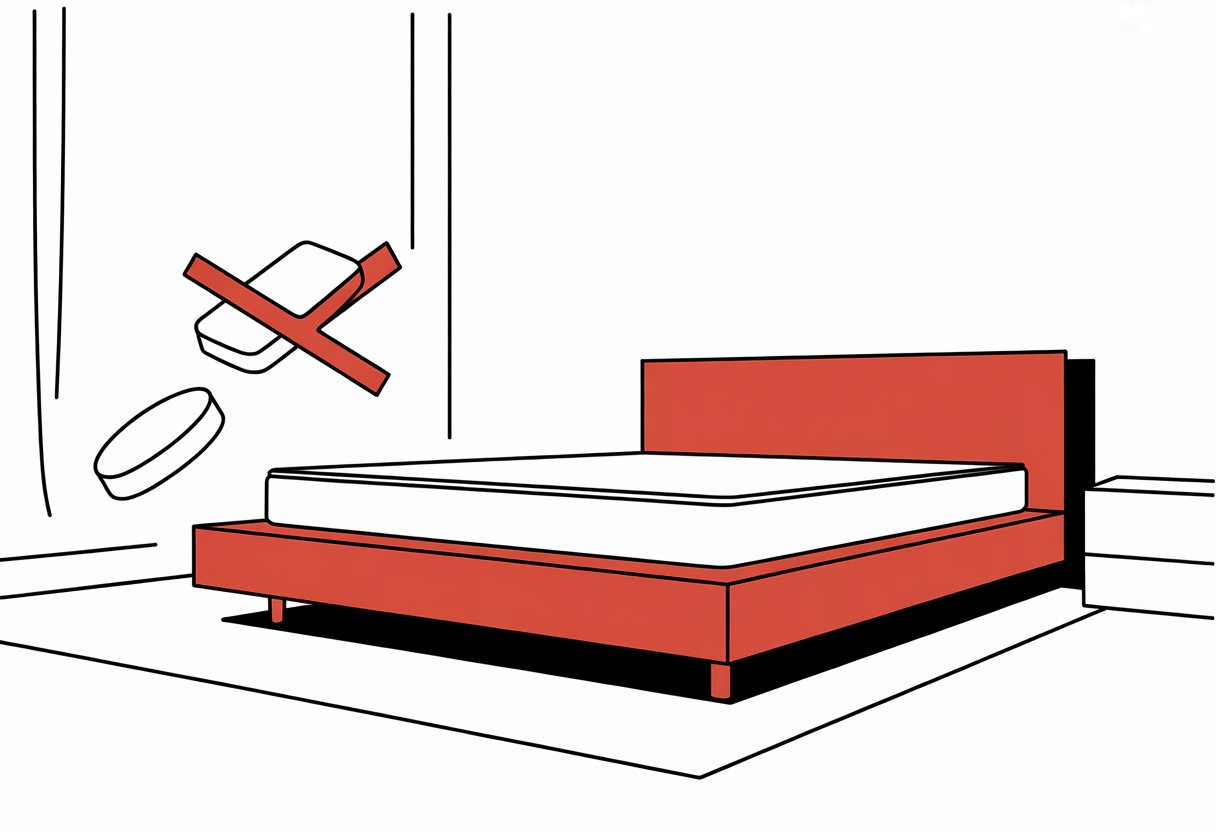
Modern mattresses work well with different support systems. While box springs were popular decades ago, they are becoming less necessary with newer mattress technologies.
We recommend three main alternatives that provide excellent support.
Foundation Support System
A mattress foundation uses wooden slats or a solid flat surface instead of springs. These bases look like traditional supports from the outside but contain no coil system inside.
Key benefits include:
- Stable, firm support for foam mattresses
- Compatible with most bed frames
- No sagging or shifting over time
Foundation beds work particularly well with memory foam and latex mattresses. The solid construction prevents these mattress types from sinking between gaps.
Platform Bed Frame
A platform bed eliminates the need for a box spring by combining a foundation with an elevated frame. These beds feature wooden or metal legs that keep your mattress off the floor.
Platform bed frames offer practical advantages:
- Built-in elevation for better airflow
- Optional storage drawers underneath
- Works with slatted or solid surfaces
The spacing between slats allows air to circulate beneath your mattress. This helps regulate temperature and prevents moisture buildup.
Adjustable Base System
An adjustable bed base lets you change sleeping positions electronically. You can raise the head or foot sections to find comfortable angles for different activities.
We find these bases helpful for people who:
- Read or watch television in bed
- Need assistance getting up in the morning
- Experience back pain or circulation issues
Adjustable bed bases require compatible mattresses that can bend without damage. Most foam and hybrid mattresses work well with adjustable bases, while traditional innerspring models may not.
5 Reasons Why Your Mattress Needs a Good Base
Everyone wants quality sleep, and choosing the right foundation plays a major role in achieving that goal. We believe understanding why a proper base matters helps you make better decisions for your bedroom.
Compatibility matters most. Different mattresses require specific types of support systems. Memory foam works best on solid foundations rather than box springs, while innerspring mattresses may need different setups.
Proper mattress support prevents damage. A quality base distributes weight evenly and stops sagging. This keeps your bed in better condition for years.
Long-lasting construction saves money. Investing in durable mattress bases means fewer replacements over time.
Storage options add value. Many bases include drawers or compartments underneath. This gives us extra space for linens and clothing.
Aesthetic appeal completes your room. The right base enhances your bedroom's look while providing the necessary bed frame compatibility and mattress height you need for comfortable sleeping.
Final Thoughts
We've seen how mattress technology has changed what bedroom setups work best. Many foam and hybrid mattresses work well on platform beds without needing traditional spring support underneath. This gives us more flexibility when choosing our bedroom furniture. Whether we pick a foundation or platform frame depends on our specific mattress type and personal preferences.
Common Questions About Mattresses and Box Springs
What Makes Platform Beds Different From Box Springs?
Platform beds provide a solid or slatted surface that sits close to the ground. They eliminate the need for additional support layers beneath your mattress.
Box springs contain metal coils wrapped in fabric and wood. They add height and traditionally offered bounce for older innerspring mattresses.
Platform beds work well with modern mattress types because they create a firm, flat base. The slats or solid platform distribute weight evenly across the entire mattress surface.
Key differences include:
- Platform beds sit lower to the floor
- Box springs add 20 to 25 centimetres of height
- Platform beds cost less over time since they don't need replacement
- Box springs may wear out and require updates every few years
Do All Foam Mattresses Work Without Box Springs?
Most foam mattresses perform better without box springs. The springs in a box spring can create uneven support that prevents foam from contouring properly to your body.
Memory foam and latex mattresses need a firm, flat surface. Bed-in-a-box mattresses often aren't suitable for box spring bases because the give from the springs interferes with how the foam responds.
Some foam mattress warranties become void if you use a box spring. The manufacturer designs these mattresses to work with specific support types like platform beds or foundations.
You should always check your mattress specifications before choosing a base. The guidelines will tell you exactly what support works best.
How Does Skipping a Box Spring Impact Coverage and Stability?
Your mattress warranty often requires specific support types. Using the wrong base can void your coverage even if the mattress develops defects.
We recommend reading warranty terms carefully before setting up your bed. Most modern mattresses specify platform beds, foundations, or slatted frames as acceptable options.
Support requirements affect:
- Warranty validity: Wrong support can cancel coverage
- Mattress lifespan: Proper support prevents sagging
- Comfort level: Correct bases maintain intended feel
- Body support: Appropriate foundations keep spine aligned
The right support system extends how long your mattress lasts. Poor support causes premature wear and uncomfortable sleeping surfaces.
Which Frame Types Suit Mattresses That Don't Need Box Springs?
Several frame options work well for box-spring-free mattresses. Each type offers different benefits depending on your needs and bedroom setup.
| Frame Type | Best For | Considerations |
|---|---|---|
| Platform beds | All foam and hybrid mattresses | Slats should be no more than 7.5 cm apart |
| Adjustable bases | People with mobility needs | Work with most modern mattress types |
| Slatted frames | Budget-conscious buyers | Need centre support for larger sizes |
| Foundations | Traditional bed frame look | Provide flat, solid surface |
Platform beds are the most popular choice because they provide everything the mattress needs in one piece. Adjustable beds and foundations also offer proper support for modern mattress designs.
We suggest measuring your bedroom before selecting a frame. Lower platform beds work better in rooms with low ceilings.
Which Mattress Materials Function Best Without Box Springs?
Modern mattress materials are specifically engineered to work without box springs. These designs focus on internal support rather than relying on spring-based foundations.
Memory foam mattresses contain dense foam layers that need solid support. The material responds to body heat and pressure, which works best on firm, flat surfaces.
Latex mattresses use natural or synthetic rubber. They're naturally supportive and don't need extra spring support underneath.
Hybrid mattresses combine foam layers with internal coils. The coil system provides support from within the mattress itself.
Older mattresses frequently needed box springs, but most newer mattresses do not require them. The materials and construction methods have changed significantly over the past two decades.
Traditional innerspring mattresses are the main type that still benefits from box springs. The springs in the foundation work together with the mattress springs.
What Factors Matter When Choosing a Foundation for These Mattresses?
Selecting the right foundation requires looking at several practical aspects. Your choice affects comfort, durability, and whether your warranty stays valid.
Slat spacing is critical for foam mattresses. Gaps wider than 7.5 centimetres allow the mattress to sag between slats. This creates uncomfortable dips and voids warranties.
Weight capacity must match your mattress size and the combined weight of sleepers. Larger mattresses and heavier people need sturdier foundations with centre support beams.
Ventilation helps mattresses breathe and prevents moisture buildup. Slatted bases allow better airflow than solid platforms, which reduces heat retention and mould growth.
We consider budget constraints when recommending foundations. Platform beds cost less upfront and don't need replacement as often as box springs.
Height preferences matter for getting in and out of bed easily. Lower platforms suit younger people, whilst taller foundations help those with mobility concerns.
The foundation should match your bedroom aesthetic. Modern platform beds suit contemporary rooms, whilst traditional foundations work better in classic spaces.