
Adjustable bases have changed how people sleep by letting you move your bed into different positions with the push of a button. But before you buy one, you need to know if your current mattress will work with it. The wrong pairing can lead to damage, discomfort, and wasted money.
Not every mattress is designed to bend and flex with an adjustable base, but many modern mattresses work well if they're flexible enough. Memory foam, latex, and some hybrid mattresses are usually good choices. Traditional innerspring mattresses with rigid coils often don't work as well because they resist bending.
Understanding which mattresses are compatible saves you from making an expensive mistake. You'll learn what makes a mattress work with an adjustable base, which types to avoid, and how to check if your current mattress will hold up. This guide gives you the facts you need to make a smart choice.
Key Takeaways
-
Memory foam and latex mattresses work best with adjustable bases because they bend easily
-
Traditional innerspring mattresses and very thick or firm beds often don't flex well enough
-
You can test compatibility by gently bending your mattress or checking with the manufacturer
Can I Put Any Mattress on an Adjustable Base?
Not every mattress works with an adjustable base, but many modern designs are compatible. The key factors are flexibility and construction type, which determine whether your mattress can safely bend without damage.
What Makes a Mattress Compatible with an Adjustable Base
Your mattress needs to bend and flex without breaking down when you raise or lower your adjustable base. Memory foam, latex, and hybrid mattresses work well because they can handle the movement.
Compatible mattress types include:
-
Memory foam mattresses (all foam construction)
-
Latex mattresses (natural or synthetic)
-
Hybrid mattresses with individually pocketed coils
-
Gel mattresses without rigid innerspring systems
Traditional innerspring mattresses with connected coil systems typically don't work well. The rigid metal framework resists bending and can damage both the mattress and your adjustable base. Some innerspring models may work if they use individually wrapped coils, but you should verify this with the manufacturer.
The mattress thickness matters less than its ability to flex. Check your mattress manufacturer's specifications to confirm adjustable base compatibility before making a purchase.
Potential Risks of Using Incompatible Mattresses
Using the wrong mattress on your adjustable base can cause permanent damage to both products. The mattress may develop tears, splits, or broken internal components when forced to bend repeatedly.
Your adjustable base motor works harder when pushing against a rigid mattress. This extra strain can lead to mechanical failure and void your warranty coverage. You'll lose the adjustment features you paid for.
An incompatible mattress won't conform properly to the base positions. This creates gaps and uneven support that reduce comfort and proper body alignment. You might experience back pain or poor sleep quality despite having an adjustable base.
Common problems include:
-
Mattress warranty cancellation
-
Premature sagging or indentations
-
Torn fabric or foam layers
-
Motor burnout on the base
-
Uncomfortable gaps between sections
Always verify mattress compatibility with the manufacturer before using it on your adjustable base.
Best Mattress Types for Adjustable Bases

Memory foam, latex, and hybrid mattresses are usually the best choice because they flex easily with the base's movements. Each type offers different benefits for support, comfort, and durability.
Memory Foam Mattresses: Flexibility and Pressure Relief
Memory foam mattresses work well on adjustable bases because they bend and flex without damage. The foam conforms to your body shape while adapting to different base positions.
These mattresses excel at pressure relief. When you raise the head or foot of your bed, the foam continues to cushion your shoulders, hips, and lower back. This helps reduce pain and improves comfort in various positions.
Memory foam responds to heat and weight. It softens where your body makes contact and stays firm elsewhere. This creates even weight distribution across the mattress surface.
The material bounces back to its original shape after you adjust the base. You won't see permanent creases or damage from regular position changes. Most memory foam mattresses between 8 and 12 inches thick bend smoothly on adjustable frames.
Latex Mattresses: Responsiveness and Durability
Latex mattresses offer natural flexibility that works well with adjustable bases. The material springs back quickly when you change positions, making it easier to move around during the night.
A latex mattress provides strong support while remaining flexible. It maintains proper spine alignment whether your base is flat or elevated. The material doesn't sag or develop weak spots from repeated bending.
Natural latex resists dust mites and mould better than other materials. It also sleeps cooler because air flows through its open cell structure. You'll feel less heat buildup when using the massage or elevation features.
Latex lasts longer than most other mattress types. It can handle thousands of adjustments without breaking down. The material stays responsive for years, even with daily use of your adjustable base.
Hybrid Mattresses: Pocketed Coil Support
Hybrid mattresses with individually pocketed coils flex well on adjustable bases. Each coil moves independently, allowing the mattress to bend at the hinge points without resistance.
The pocketed coils provide strong support in the centre while the foam layers on top offer pressure relief. This combination keeps your spine aligned in elevated positions. The coils also promote airflow, which helps regulate temperature.
Traditional innerspring mattresses with connected coils don't work as well. The linked springs resist bending and can damage the mattress or base. Only hybrids with individually wrapped coils are suitable for adjustable frames.
Look for hybrids with thinner comfort layers on top. Too much foam can prevent proper flexing. The best options balance cushioning comfort with the flexibility needed for base adjustments.
Special Considerations for Air Mattresses
Most air mattresses don't work well on adjustable bases. The air chambers can't flex properly when you raise or lower sections. Bending the chambers creates uneven pressure and can cause leaks over time.
Some manufacturers make air mattresses specifically designed for adjustable bases. These models use multiple air chambers that adjust independently. Check with the manufacturer before placing any air mattress on an adjustable frame.
Standard camping or temporary air mattresses should never be used on adjustable bases. They lack the structural support needed and will likely develop holes. The pump connections can also disconnect during base movements.
If you want customisable firmness on an adjustable base, choose a latex or memory foam mattress instead. These materials provide comfort customisation without the mechanical limitations of air chambers.
Mattress Types to Avoid with Adjustable Bases
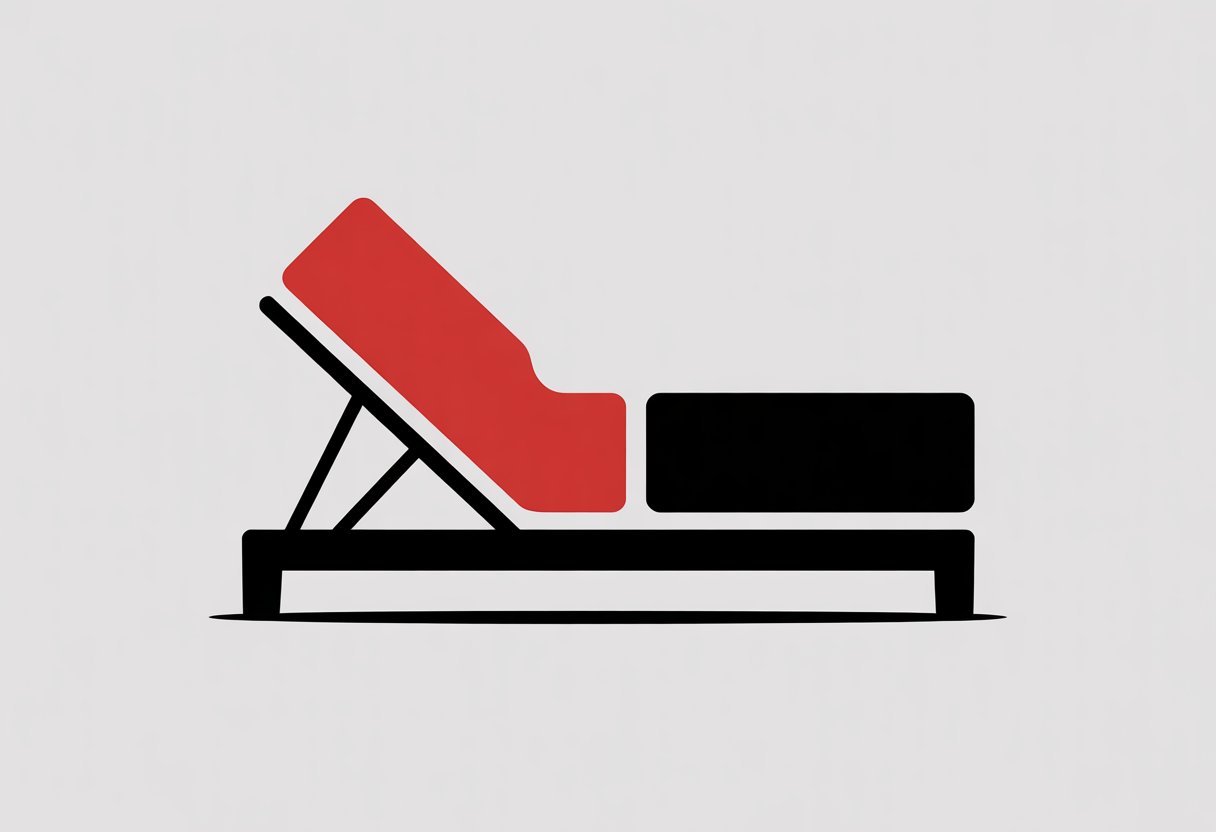
Certain mattress constructions resist bending and can break down when paired with adjustable bases. Connected coil systems, reinforced edges, and excessive thickness prevent proper flexing.
Traditional Innerspring Mattresses Explained
A traditional innerspring mattress uses a network of connected coils that work as a single unit. These coils are either woven together in a continuous pattern or linked with helical wires running along the edges. This design creates a stable, bouncy sleep surface when placed on a flat foundation.
Traditional innerspring mattresses don't bend well because the connected coil system resists flexing. When you raise the head or foot section of your adjustable base, these linked springs fight against the movement. The coils can snap or become permanently deformed at the bend points.
Bonnell coils are the most common type of connected spring system. They have an hourglass shape and connect to neighbouring coils through spiral wires. This interconnection makes the entire mattress rigid.
Why Edge and Coil Design Matter
Edge support systems add extra reinforcement around mattress perimeters to prevent sagging when you sit on the side. Manufacturers use foam encasements, steel rods, or extra rows of coils along the borders. These reinforced edges make the mattress more rigid.
Your adjustable base bends at specific hinge points. Reinforced edges at these locations prevent proper flexing and create stress on both the mattress and base mechanisms. The rigid perimeter can crack or separate from the rest of the mattress over time.
Individually wrapped coils in pockets work differently than connected systems. Each coil moves independently within its own fabric sleeve. This design allows the mattress to bend at hinge points without damaging the internal structure.
Issues with Extra-Thick or Super-Firm Mattresses
Mattresses over 14 inches thick become increasingly difficult to bend regardless of their internal construction. The additional material adds weight and resistance that works against your adjustable base motors. Thicker comfort layers and support cores reduce flexibility.
Super-firm mattresses use dense materials that resist compression and bending. High-density foam layers, extra coil gauges, and reinforced support systems all contribute to rigidity. When you try to adjust these mattresses, they create gaps between the sleep surface and base rather than conforming smoothly.
The base motors strain when moving thick or firm mattresses. This extra work shortens the lifespan of your adjustable mechanism and may void your warranty.
Factors That Affect Mattress Compatibility

Several key elements determine whether your mattress will work properly with an adjustable base. The thickness, flexibility, and size of your mattress all play crucial roles in how well your sleep system functions when the base moves into different positions.
Optimal Mattress Thickness Range
Your mattress thickness directly impacts how well it bends and adjusts to different positions. Mattresses between 20 to 30 centimetres thick typically work best on adjustable bases because they offer enough cushioning without being too rigid.
Mattresses that are too thick may resist bending properly. When a mattress exceeds 35 centimetres in depth, it often becomes difficult for the base to move it into elevated positions smoothly.
Very thin mattresses under 15 centimetres can also cause problems. They might not provide adequate support when the base is in an articulated position, and you may feel the mechanism underneath.
The internal construction matters just as much as the total depth. Factors including flexibility, durability, and weight all influence whether your mattress will function properly on an adjustable base.
Importance of Mattress Flexibility
Flexibility determines whether your mattress can bend without damage when the base moves. Latex mattresses tend to be amongst the most adjustable base friendly due to their natural ability to flex and return to shape.
Memory foam and all-foam options also bend well because they lack rigid internal components. These materials conform to the base's movements without fighting against the mechanism.
Traditional innerspring mattresses with perimeter cables can be problematic. The metal cables around the edges may bend once but fail to return to their original shape, permanently damaging your mattress.
Pocket coil mattresses offer better flexibility than traditional innersprings. Each coil moves independently, allowing the mattress to adjust more easily to different positions without internal resistance.
Mattress Size and Fit on Adjustable Bases
Your mattress must match the exact dimensions of your adjustable base. A queen mattress needs a queen base, and a king mattress requires a king base.
Split mattresses work particularly well on dual adjustable bases. Two twin XL mattresses on a split king base let each person adjust their side independently without affecting their partner.
The mattress should sit flush against all edges of the base. Gaps between the mattress and base frame can cause the mattress to shift when the base moves, reducing stability and comfort.
Weight distribution also matters for proper fit. Heavier mattresses may strain the base's motors, whilst lighter options allow the mechanism to work more efficiently and last longer.
How to Check If Your Mattress Will Work
Before purchasing an adjustable bed base, you need to verify that your current mattress is compatible by checking manufacturer specifications, reviewing warranty terms, and conducting simple flexibility tests at home.
Identifying Manufacturer Recommendations
Check the manufacturer's product documentation or website for explicit compatibility statements about adjustable bases. Most mattress companies clearly indicate whether their products work with adjustable frames in the product specifications or FAQ sections.
Look for details about recommended base types and any restrictions on mattress positioning. Some manufacturers specify maximum bend angles or movement ranges that their mattresses can handle safely. You should also note if the manufacturer requires specific base features, such as a minimum number of support slats or a solid platform.
Contact the manufacturer directly if you cannot find clear information online. Ask specific questions about your mattress model and the adjustable base you're considering. Request written confirmation of compatibility, as this documentation may prove valuable if warranty issues arise later.
Pay attention to thickness specifications, as adjustable bases may have weight and thickness limits that affect performance.
Understanding Mattress Warranty Implications
Your mattress warranty may become void if you use it on an incompatible base or frame. Review your warranty documentation carefully to identify any clauses about foundation requirements or prohibited uses.
Many warranties specifically state that using the mattress on an adjustable base without manufacturer approval will nullify coverage. This means you could lose protection against defects, sagging, or premature wear if you proceed without proper verification.
Document all communications with the manufacturer about adjustable base compatibility. Save emails, chat transcripts, or written statements confirming that your specific mattress model is approved for adjustable base use. This evidence protects your warranty rights if disputes occur.
Some manufacturers offer separate warranties or coverage extensions specifically for adjustable base use. Ask whether additional protection is available and whether it's worth the investment for your situation.
Testing Mattress Flexibility at Home
Perform a simple bend test by carefully lifting one corner of your mattress and folding it gently towards the centre. The mattress should flex smoothly without resistance, creasing, or making cracking sounds from internal components.
Signs of good flexibility:
-
The mattress bends in a smooth curve
-
No unusual sounds or resistance
-
The surface returns to flat without visible damage
-
No stress marks or permanent creases appear
Warning signs of incompatibility:
-
Stiff resistance when attempting to bend
-
Cracking, popping, or grinding noises
-
Visible stress lines or damage to the cover
-
Inability to return to a flat position
Test different areas of the mattress, as construction quality may vary across the surface. Focus on the sections that will experience the most movement on an adjustable bed base, particularly where the head and foot sections articulate.
Maximising the Benefits of Your Adjustable Sleep System
Proper care and compatible accessories help your adjustable bed and mattress work together effectively for years. Regular maintenance and thoughtful pairing choices protect your investment.
Extending Mattress and Base Lifespan
Rotate your mattress every three to six months to prevent uneven wear patterns. This practice distributes body weight across different areas of the mattress surface.
Check all mechanical components on your adjustable base quarterly. Tighten any loose bolts or screws, and listen for unusual sounds during operation. These simple checks catch small problems before they become serious issues.
Keep the area under your adjustable bed clean and free of dust. Debris can interfere with the motor and mechanical parts over time. Use a mattress protector to guard against spills and stains that might damage foam or fabric layers.
Avoid exceeding the weight capacity listed by your base manufacturer. Overloading strains motors and frame components, leading to premature failure. Most adjustable beds support between 300 to 850 pounds depending on the model.
Clean control remotes and wipe down the base frame monthly with a slightly damp cloth. This prevents buildup that might affect button function or appearance.
Pairing With the Right Bed Frame and Accessories
Most adjustable bases fit standard bed frames, but verify dimensions before purchasing. Measure your base's length, width, and height to ensure proper fit within your existing frame.
Choose sheets designed for adjustable beds or use deep-pocket fitted sheets. Regular sheets often pull loose when you raise the head or foot sections. Look for sheets with at least 38-centimetre pockets for secure fit.
Add a mattress pad or topper only if it maintains flexibility. Thick, rigid toppers restrict the mattress's ability to bend with the base movements. Select thin memory foam or latex toppers that conform to position changes.
Position your sleep system away from walls if you plan to elevate the head frequently. Leave at least 15 centimetres of clearance to prevent the mattress from rubbing against walls or headboards. This spacing also improves air circulation around your mattress.
Frequently Asked Questions
Memory foam and latex mattresses bend easily with adjustable bases, while traditional innerspring mattresses often struggle due to their rigid coil systems. Mattress thickness matters too, with most adjustable bases working best with mattresses between 8 to 14 inches thick.
What types of mattresses are compatible with adjustable bases?
Memory foam mattresses work well with adjustable bases because they flex easily without damage. These mattresses mould to your body and move smoothly as the base adjusts positions.
Latex mattresses are another good option. They're flexible enough to bend with the base whilst maintaining their supportive qualities. They tend to last longer than other types.
Hybrid mattresses can work on adjustable bases, but you need to check their construction first. The foam layers provide flexibility, but the coil system must be designed to bend without breaking down.
Are there specific mattress materials that work best with adjustable frames?
Memory foam ranks as one of the best materials for adjustable frames. It compresses and flexes without resistance, which prevents stress on both the mattress and the base.
Latex foam also performs well because it's naturally flexible. It bounces back to its original shape quickly after adjusting positions. Natural latex tends to be more durable than synthetic versions.
Some high-end air mattresses work if they're built with flexible materials. However, budget air mattresses often can't handle repeated bending and may develop leaks or weak spots over time.
Can memory foam mattresses be used on adjustable bases without damaging them?
Yes, memory foam mattresses are designed to bend and flex repeatedly. The material's cellular structure allows it to compress in different areas without tearing or breaking down.
Memory foam actually benefits from the movement of an adjustable base. The ability to change positions helps distribute wear more evenly across the mattress surface. This can extend the mattress's lifespan compared to keeping it flat all the time.
You won't see damage from normal adjustable base use with quality memory foam. The material recovers its shape after each adjustment without developing permanent creases or weak spots.
What should be considered when pairing a mattress with an adjustable base for optimal comfort and support?
Check your mattress's flexibility before pairing it with an adjustable base. Try gently bending the mattress to see if it moves smoothly or resists the motion.
Your mattress should be between 8 to 14 inches thick for best results. Thicker mattresses may not bend properly, whilst very thin ones might not provide enough cushioning when the base is adjusted.
Traditional innerspring mattresses aren't recommended because their rigid coil systems don't bend well. The interconnected springs can wear out quickly or create uncomfortable pressure points when forced to adjust.
Is it necessary to purchase a mattress specifically designed for adjustable bases, or will any mattress suffice?
You don't need a specially marketed mattress if your current one meets the flexibility requirements. Many non-innerspring mattresses work with adjustable beds without being labelled as "adjustable base compatible."
Memory foam and latex mattresses you already own will likely work fine. The key is whether the materials can bend without damage, not whether the manufacturer specifically mentions adjustable bases.
That said, some mattresses are built with extra flexibility in mind. These might last longer on an adjustable base if you plan to change positions frequently throughout the night.
How does mattress thickness affect compatibility with adjustable bed frames?
Most adjustable bases work best with mattresses that measure 8 to 14 inches thick. This range provides enough cushioning whilst remaining flexible enough to bend properly.
Mattresses thicker than 14 inches often resist bending. The extra layers create more rigidity, which puts stress on both the mattress and the adjustable mechanism. You might notice uneven surfaces or hear straining noises when adjusting.
Very thin mattresses under 8 inches can bend too easily. Whilst they won't damage the base, you might feel the mechanism through the mattress when it's in certain positions. This can reduce comfort, especially if you spend time in raised positions for reading or watching television.