

















Choosing the right mattress can make a big difference in how well you sleep each night. Two popular options that people often compare are latex and memory foam mattresses. Both types use layers to adjust to your body shape while you rest, but they work in different ways and offer unique benefits.
Understanding the key differences between these mattress types will help you figure out which one fits your sleep needs best. Each material has its own feel, support level, and features that might work better for some people than others. Learning about what makes latex and memory foam different can guide you toward a better choice for your comfort and rest.
Key Takeaways
- Memory foam and latex mattresses both conform to your body but have different feels and support levels
- Each material offers distinct benefits for temperature control, durability, and pressure relief
- Your personal sleep needs and preferences will determine which mattress type works best for you
Memory Foam Mattresses
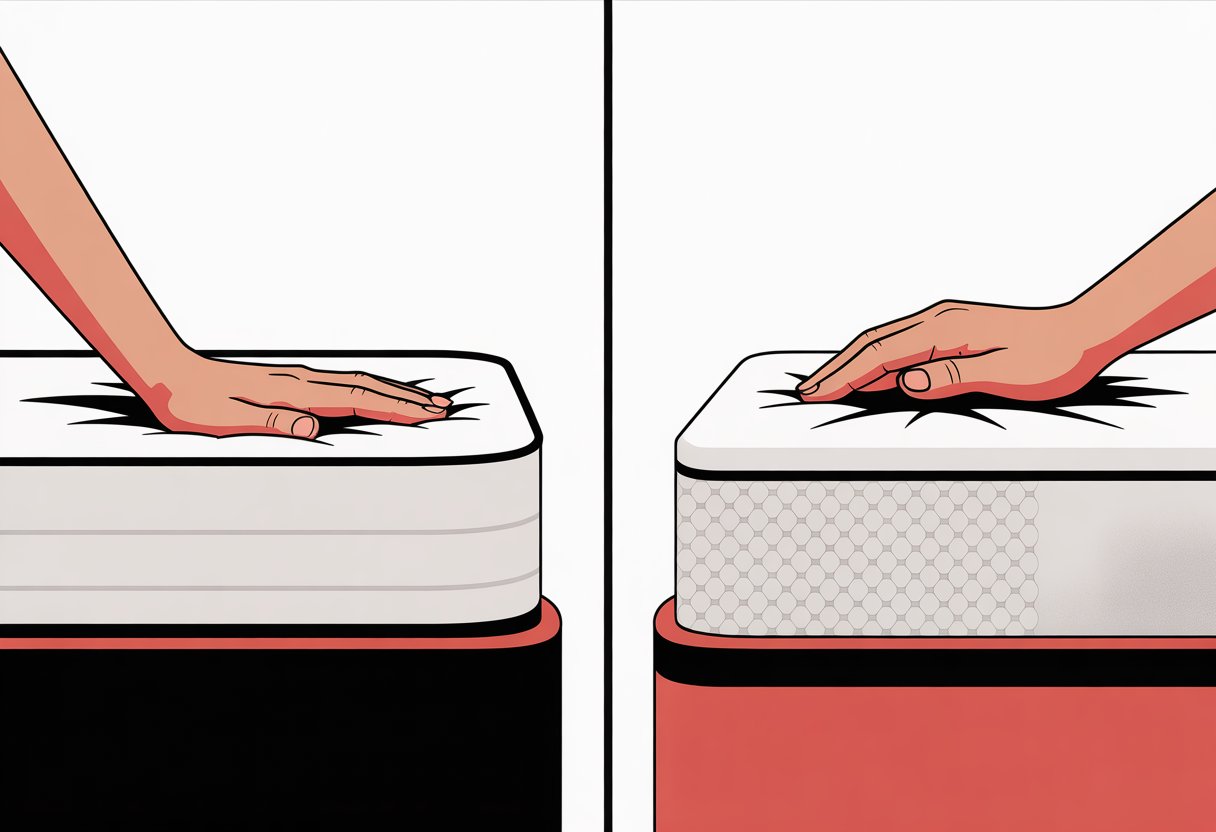
Memory foam mattresses use polyurethane foam combined with additional chemicals to create a viscoelastic material. When you apply pressure to the surface, the mattress contours around your body and moulds to your shape.
These mattresses respond to both heat and pressure from your body. The foam changes its shape due to a chemical reaction triggered by trapped body heat. When you get up, the foam returns to its original form.
All memory foam mattresses are types of polyurethane foam. However, not every polyurethane foam qualifies as memory foam.
The structure features open cells that allow for better airflow. Many manufacturers add gel or other cooling materials to help reduce heat buildup during sleep.
You can find memory foam mattresses in different firmness levels. This lets you choose the feel that works best for your sleep preferences.
Benefits
Memory foam offers several advantages for sleepers:
- Blocks movement across the bed: The foam layers soak up movements, so you won't disturb your partner when you shift positions at night
- Moulds to your body shape: The material conforms closely to your body and provides targeted support where you need it
- Resists dust mites: The dense structure makes it difficult for dust mites to live in the mattress
- Supports side and back sleepers: The contouring properties work well if you sleep on your side or back
- Comes with trial periods: Most companies offer long return windows and warranties so you can test the mattress
Drawbacks
Memory foam mattresses have some limitations:
- Not ideal for stomach sleepers: The sinking feeling can cause your hips to dip too far, which may lead to poor spine alignment
- Produces initial odours: New mattresses release gases that contain volatile organic compounds, creating a chemical smell
- Traps body heat: The dense foam can retain heat, which may feel uncomfortable if you sleep hot or sweat during the night
Latex Mattresses
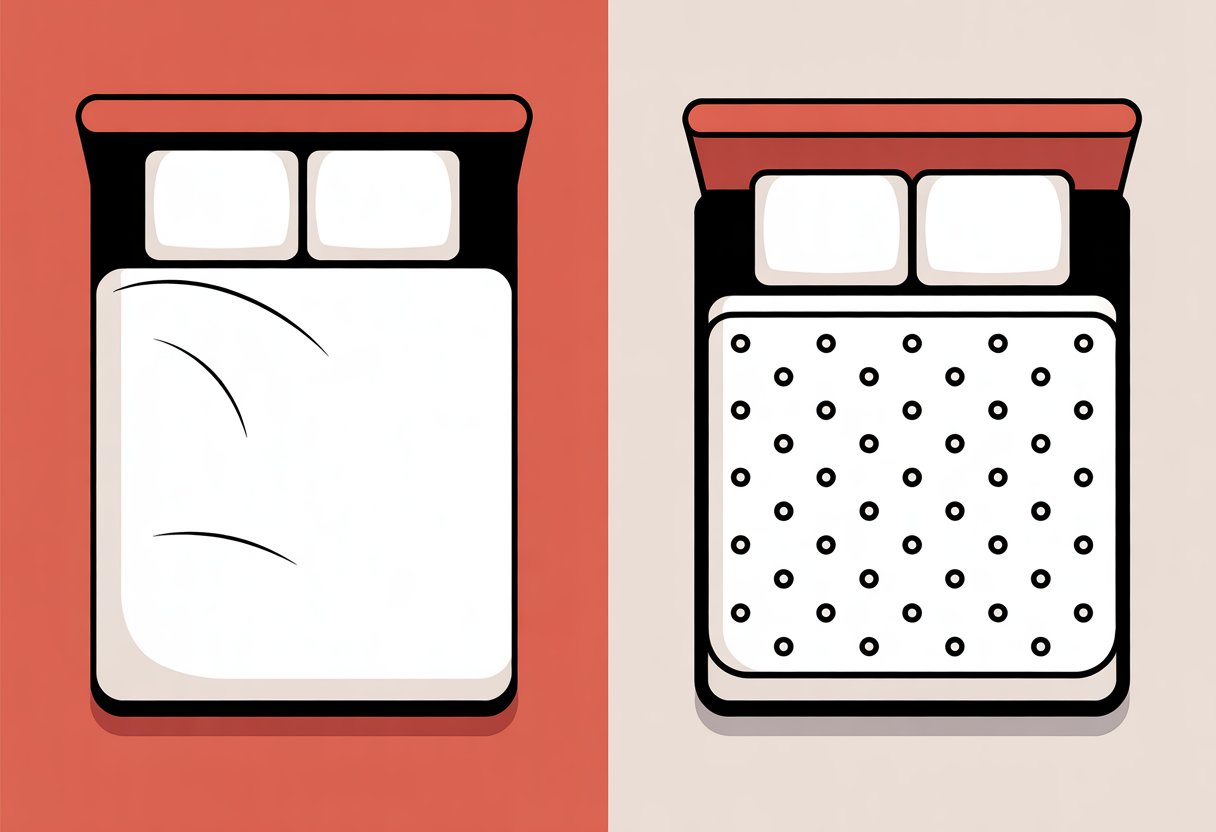
Latex mattresses use rubber-based foam as their primary material. Natural latex comes from rubber trees, while synthetic versions use manufactured compounds like styrene-butadiene rubber. You can also find blended latex options that combine both types.
Natural latex mattresses use sap harvested from rubber trees. Manufacturers process this raw material into foam layers without synthetic additives. If you want an eco-friendly sleep surface, natural latex provides a renewable option.
Synthetic latex mimics the properties of natural rubber but costs less. It feels similar to natural latex but has slightly less bounce. Blended latex mixes natural and synthetic materials to balance performance and price.
Two main processes create latex foam: Dunlop and Talalay. Dunlop latex is denser and firmer because manufacturers pour the foam in one step. Talalay latex goes through extra steps that create a lighter, softer feel with more consistent firmness throughout.
Benefits
Durability stands out as a key advantage. Latex is a resilient material that maintains its shape for many years. A quality latex mattress often lasts longer than foam alternatives.
Temperature regulation works well because latex has an open cell structure that allows natural airflow. The small holes throughout the material help heat escape while you sleep.
Responsive support means the mattress adjusts to your body without excessive sinking. You get pressure relief while maintaining ease of movement throughout the night.
Drawbacks
Allergic reactions can occur if you have latex sensitivities. Anyone with known latex allergies should avoid these mattresses entirely.
Heavy weight makes latex mattresses difficult to move. Rotating or transporting your mattress requires more effort compared to other types.
Higher cost puts latex mattresses at a premium price point. You'll typically pay more upfront than you would for memory foam or innerspring options.
Key Distinctions Between Memory Foam and Latex
How the Material Moulds to Your Body
Memory foam wraps around your body's curves and creates a hugging sensation. It responds slowly to pressure relief and moulds closely to your shape.
Latex foam pushes back against your weight with a springier feel. It compresses under pressure but maintains its shape rather than creating a deep sink-in effect.
The difference affects spinal alignment and sleep quality. Memory foam adapts to every contour of your body. Latex provides more general support across your pressure points.
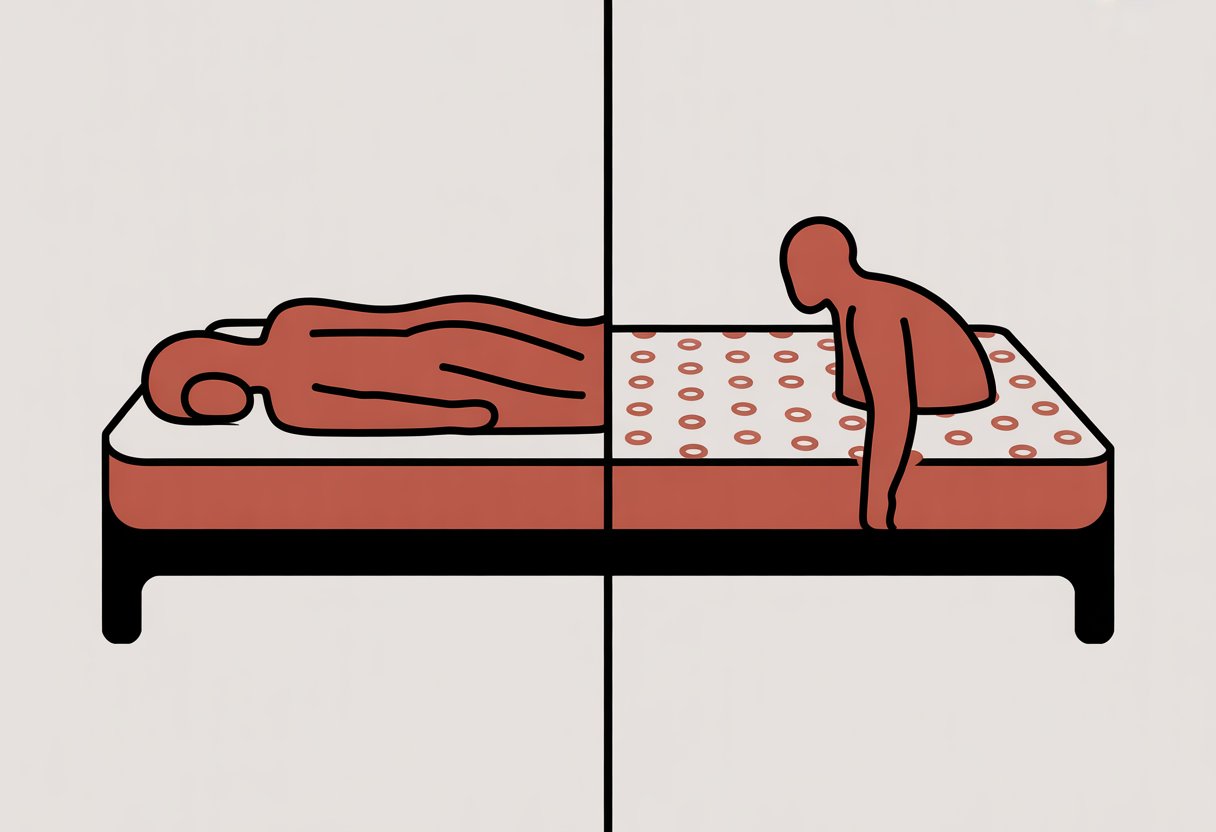
How Movement Travels Across the Bed
Memory foam excels at motion isolation when your partner shifts positions during the night. You won't feel their movements on your side of the mattress.
Latex allows motion transfer because of its bouncy nature and quick response time. You'll notice when someone moves around next to you.
Final Thoughts
You now understand the key differences between memory foam and latex mattresses. Each material offers distinct benefits and drawbacks that affect how you sleep.
Your choice depends on what matters most to you. Consider your budget, sleeping position, and whether you prefer a hugging sensation or a more responsive feel.
Think about factors like temperature control, durability, and pressure relief when selecting from the best mattresses available. Both options can provide quality sleep when matched to your specific needs.
Frequently Asked Questions
How do memory foam and latex mattresses compare in support and feel?
Memory foam moulds closely to your body shape and creates a cradling sensation. It responds slowly to pressure and allows you to sink into the surface.
Latex provides a bouncier and more responsive feel. When you press down on latex, it pushes back immediately with a lifting quality rather than letting you sink deeply.
Key support differences include:
- Memory foam hugs your body contours more tightly
- Latex offers firmer support with less conforming
- Memory foam feels softer initially
- Latex has a springy, resilient texture
The choice depends on your sleeping position. Latex works better for back and stomach sleepers who need firmer support, whilst memory foam suits side sleepers who need pressure relief.
What makes memory foam and latex different in terms of lifespan?
Latex mattresses typically last longer than memory foam options. The natural durability of latex material helps it maintain its shape and support over many years.
Memory foam tends to break down faster because it is less dense. The foam can develop body impressions and lose its supportive qualities sooner.
Durability comparison:
| Feature | Memory Foam | Latex |
|---|---|---|
| Average lifespan | 6-8 years | 10-15 years |
| Density | Lower | Higher |
| Shape retention | Moderate | Excellent |
| Resistance to sagging | Fair | Very good |
Latex maintains its bounce and support characteristics throughout its life. Memory foam gradually becomes softer and less responsive as you use it over time.
How do these mattress types handle heat whilst you sleep?
Latex stays cooler than memory foam during the night. The material allows air to flow through it more easily, which helps regulate your body temperature.
Memory foam tends to trap body heat. The dense structure that creates its contouring effect also prevents air circulation.
Temperature factors:
- Latex has an open cell structure that promotes airflow
- Memory foam absorbs and retains warmth from your body
- Latex feels neutral or slightly cool to the touch
- Memory foam can make you feel hot, especially in warm climates
Some memory foam mattresses now include cooling technologies like gel infusions or ventilated designs. However, natural latex still provides better temperature control without these additions.
What are the differences in allergen resistance and materials?
Latex naturally resists dust mites, mould, and bacteria. The material creates an environment where these allergens cannot thrive easily.
Memory foam offers some resistance to allergens but not at the same level as latex. The synthetic materials used in most memory foam are less inherently resistant to biological growth.
Material composition:
- Latex: Made from rubber tree sap or synthetic latex compounds
- Memory foam: Created from polyurethane and various chemicals
Natural latex is a renewable resource harvested from trees. Memory foam is petroleum-based and manufactured through chemical processes.
Both materials can trigger allergies in certain people. Some individuals react to the natural proteins in latex, whilst others are sensitive to the off-gassing chemicals in new memory foam.
If you have a latex allergy, memory foam is your safer choice. If you want the most natural option with built-in antimicrobial properties, latex is preferable.
How do memory foam and latex compare for reducing motion transfer?
Memory foam excels at isolating movement between sleep partners. When your partner moves or gets out of bed, you feel minimal disturbance because the foam absorbs the motion.
Latex transfers more motion due to its bouncy nature. The responsive quality that makes latex feel lively also means movement travels across the surface more easily.
Motion isolation characteristics:
- Memory foam absorbs energy and prevents it from spreading
- Latex bounces back quickly, which can create ripples
- Memory foam works better for couples with different sleep schedules
- Latex may disturb light sleepers when their partner moves
The dense, viscous structure of memory foam makes it one of the best materials for motion isolation. If you share your bed and wake easily from movement, memory foam provides superior performance in this area.
What price differences exist between memory foam and latex mattresses?
Latex mattresses cost more than memory foam ones in most cases. The higher price reflects the material quality and manufacturing process.
Memory foam offers a more budget-friendly entry point. You can find quality memory foam mattresses at lower price ranges than comparable latex options.
Cost considerations:
| Factor | Memory Foam | Latex |
|---|---|---|
| Initial purchase price | Lower | Higher |
| Cost per year of use | Moderate to high | Lower |
| Replacement frequency | More often | Less often |
| Value proposition | Good short-term | Better long-term |
Whilst latex requires a larger upfront investment, its longer lifespan can make it more economical over time. A latex mattress that lasts 12 years may cost less per year than replacing memory foam mattresses every 7 years.
Your budget and how long you plan to keep the mattress should guide your decision. Memory foam provides good value if you want lower initial costs, whilst latex offers better value if you consider the total ownership period.
 by
by 


