

















Memory foam mattresses have changed how millions of people sleep by moulding to your body and reducing pressure points. These mattresses use special foam that reacts to your weight and body heat to create a custom sleeping surface. Whether you wake up with aches or just want better sleep, understanding memory foam can help you make a smart choice.
Finding the best memory foam mattress for your needs can lead to years of improved rest.
Memory foam mattresses offer pressure relief, motion isolation, and body contouring that traditional spring mattresses cannot match, making them popular for people with back pain or who share a bed with a partner. The foam was originally developed by NASA in the 1960s for aircraft seats, but today's versions include cooling gels, plant-based materials, and different firmness levels. You can find options ranging from budget-friendly all-foam designs to luxury memory foam hybrid mattresses that combine foam layers with coil systems.
Picking the right memory foam mattress means looking at thickness, density, firmness, and special features like temperature control. This guide will help you understand what makes memory foam different, how to choose the best option for your needs, and what to expect when you switch to this type of mattress.
Key Takeaways
Memory foam mattresses contour to your body to relieve pressure and reduce motion transfer between sleeping partners
Different types include traditional memory foam, gel-infused versions for cooling, and hybrid designs with coil support
Consider factors like firmness level, mattress thickness, and temperature regulation when selecting a memory foam mattress
What Is a Memory Foam Mattress?
A memory foam mattress contains one or more layers of viscoelastic foam that responds to your body heat and weight. Memory foam mattresses are made with synthetic materials designed to provide support and pressure relief while you sleep.
How Memory Foam Works
Memory foam reacts to your body temperature to soften and mould around your shape. When you lie down, the material compresses under pressure points like your shoulders and hips. This creates a cradling effect that distributes your weight evenly across the surface.
The foam contains millions of tiny cells that compress and shift when you apply pressure. These cells push back against your body to provide support. When you move or get up, the foam slowly returns to its original shape.
Your body heat causes the foam to become more pliable, which allows it to contour more closely to your curves. Cooler areas of the mattress remain firmer, creating different support zones. This process happens continuously throughout the night as you shift positions.
Types of Foam Used in Mattresses
Traditional memory foam is the original version that uses dense viscoelastic material. It provides deep contouring but can trap heat during sleep.
Open-cell foam features a porous internal structure with air passages throughout. These tiny tunnels allow heat to escape and air to circulate more freely than traditional options.
Gel-infused foam incorporates gel beads or pods into the foam layers. The gel absorbs and disperses body heat without softening the mattress structure. Many shoppers choose a cooling memory foam mattress to benefit from this technology.
Memory foam mattresses typically include multiple layers rather than being made entirely from one type of foam. Most combine memory foam comfort layers with firmer support foam underneath. Some mattresses blend memory foam with springs to create hybrid designs.
History and Development of Memory Foam
NASA developed the original memory foam material in the 1960s for aircraft cushions. The technology aimed to improve crash protection and cushioning for astronauts during flights. Scientists created the viscoelastic polymer by adding certain chemicals to polyurethane foam.
The material became available for medical use in the 1980s. Hospitals used it for patients who needed extended bed rest to prevent pressure sores. Manufacturers began producing consumer mattresses with memory foam in the early 1990s.
Modern memory foam has evolved significantly from early versions. Today's foams incorporate cooling technologies, plant-based materials, and varying density options. Manufacturers now produce foam in different firmness levels measured by indentation load deflection, which indicates how much weight creates an impression in the surface.
Key Benefits of Memory Foam Mattresses
Memory foam mattresses adapt to your body's shape and weight, providing targeted support where you need it most. These materials work by responding to heat and pressure, which helps reduce discomfort and improve sleep quality throughout the night.
Pressure Relief and Spinal Alignment
Memory foam reduces pressure on your body by distributing your weight evenly across the mattress surface. When you lie down, the foam moulds to your curves and supports areas like your shoulders, hips, and lower back.
This conforming ability helps maintain proper spinal alignment regardless of how you sleep. Memory foam mattresses respond to heat and pressure to realign your spine, neck, and hips during rest. Your spine stays in a neutral position instead of curving unnaturally.
The pressure relief benefits are particularly helpful if you experience joint pain or stiffness. The foam cushions sensitive areas without creating hard pressure points that can disrupt your sleep. Your blood circulation improves when pressure is distributed evenly, which means less tossing and turning at night.
Motion Isolation for Couples
Motion isolation is one of the strongest advantages memory foam offers for couples sharing a bed. The foam absorbs movement instead of transferring it across the mattress surface.
When your partner gets up during the night or shifts positions, you won't feel the motion on your side of the bed. This feature helps you stay asleep even if your partner moves frequently. The dense structure of memory foam prevents waves of motion from travelling through the mattress layers.
Light sleepers benefit most from this feature since they're easily disturbed by movement. You can maintain uninterrupted sleep cycles even when sharing your bed with a restless sleeper or a pet.
Suitability for Different Sleep Positions
Memory foam works well for side sleepers who need extra cushioning for their shoulders and hips. The foam fills the space at your waist while supporting heavier body parts, keeping your spine straight.
Back sleepers receive adequate lumbar support as the foam contours to the natural curve of the lower back. Your body weight doesn't cause excessive sinking that would create an unhealthy sleeping posture.
Stomach sleepers may need a firm mattress to prevent their hips from sinking too deeply. A mattress that's too soft can cause your back to arch unnaturally in this position. Most memory foam mattresses come in various firmness levels, allowing you to choose one that matches your preferred sleep position and body type.
Types of Memory Foam and Special Features
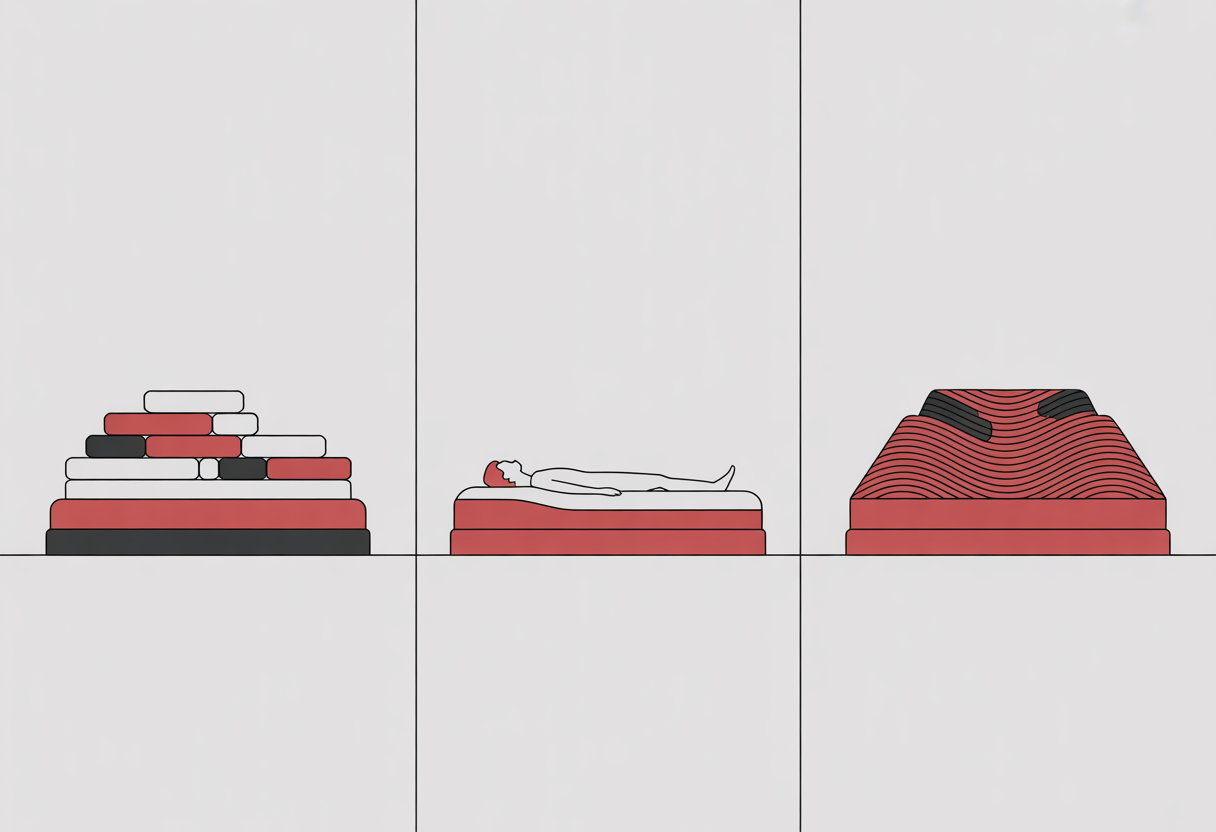
Memory foam mattresses use different materials and technologies to address specific sleep needs. Each type offers distinct benefits for temperature control, pressure relief, and environmental impact.
Traditional Memory Foam
Traditional memory foam uses viscoelastic polyurethane as its main material. This foam responds to your body heat and weight by softening and moulding around your shape.
The material creates a cradling sensation that relieves pressure points. It works well for side sleepers who need cushioning around their hips and shoulders.
Key characteristics:
Conforms closely to your body
Provides excellent motion isolation
Reduces pressure on joints
Returns to original shape slowly
Traditional memory foam tends to trap body heat because of its dense structure. The cells are tightly packed, which limits airflow through the material. This can make you feel warm during the night, especially in warmer climates or if you naturally sleep hot.
Gel Memory Foam
Gel memory foam adds cooling particles throughout the foam structure. These gel beads or swirls help pull heat away from your body while you sleep.
The gel particles work by absorbing and dispersing thermal energy. This keeps the surface temperature lower than traditional foam options.
Gel foam maintains the same pressure-relieving properties as standard memory foam. You still get the contouring and support, but with better temperature regulation. The gel infusion typically makes the mattress sleep 2-3 degrees cooler.
This type works well if you like the feel of memory foam but find traditional versions too warm. The gel enhances breathability without changing how the foam supports your body.
Cooling Memory Foam Technology
A cooling memory foam mattress uses multiple methods to improve airflow and heat management. Open-cell memory foam features tiny air pockets that let air move through the material more easily.
The open structure allows heat to escape instead of getting trapped near your body. This design responds faster to movement and feels less dense than closed-cell versions.
Some manufacturers add materials like graphite or copper to their foam. These additions conduct heat away from the sleeping surface more effectively.
Cooling features may include:
Phase-change materials that absorb excess heat
Ventilation channels built into foam layers
A cooling cover to help regulate surface temperature
Air circulation systems between foam sections
A cooling mattress with these technologies works best for hot sleepers or warm climates. The enhanced airflow keeps you more comfortable throughout the night without sacrificing the supportive qualities of memory foam.
Graphite Infused Memory Foam
Graphite infused memory foam infuses the material with natural graphite extract during manufacturing. The extract acts as a natural preservative and odour reducer.
This addition helps minimise the chemical smell that new foam products sometimes have. Graphite contains natural antioxidants that keep the foam fresh longer.
Some versions combine graphite with other plant-based materials or bamboo charcoal. These natural additives can improve moisture absorption and air quality around your sleeping area.
The foam still provides the same contouring and pressure relief as other memory foam types. The graphite component doesn't change how the mattress feels or supports your body. It mainly affects the freshness and initial scent of the product.
Choosing the Right Memory Foam Mattress
Finding the perfect memory foam mattress requires attention to several key factors that affect your sleep quality. Your body weight, sleep position, and personal preferences all play a role in determining which firmness level, edge support, motion isolation, and size will work best for you.
Firmness Levels and Comfort Preferences
Memory foam mattresses typically range from soft to extra firm on the firmness scale. Most manufacturers rate their mattresses from 1 to 10, with 1 being the softest and 10 being the firmest.
A medium-firm mattress (around 5 to 7 on the scale) works well for most sleepers. Side sleepers often prefer softer options (3 to 5) that cushion shoulders and hips. Back and stomach sleepers usually need a firm mattress (6 to 8) for proper spinal alignment.
Your body weight matters when choosing firmness. Lighter individuals (under 130 pounds) typically need softer foam to feel proper contouring. Heavier sleepers (over 230 pounds) benefit from firmer options that prevent excessive sinking.
When considering factors like firmness and thickness, test the mattress in your usual sleep position if possible. The right firmness level should keep your spine neutral without causing pressure points.
Edge Support and Durability
Edge support determines how well the mattress holds up when you sit or sleep near the sides. Traditional memory foam mattresses often have weaker edges than innerspring models because the foam compresses more easily.
Look for mattresses with reinforced perimeters or high-density foam around the borders. These features prevent the feeling of rolling off and maximize your usable sleep surface. Strong edge support matters more if you share your bed or sit on the edge frequently.
Durability connects directly to foam density. Density, mmHg, ILD, and knowing the country of origin are important qualities when selecting quality foam. Higher-density foam (4 to 5 pounds per cubic foot) lasts longer than lower-density options (3 pounds or less).
A quality memory foam mattress should maintain its shape and support for 7 to 10 years. Check warranty terms that cover sagging or indentations deeper than 1.5 inches.
Assessing Motion Transfer
Memory foam excels at absorbing movement, making it ideal for couples. The foam's ability to contour and isolate motion means you won't feel your partner tossing and turning throughout the night.
Higher-density memory foam provides better motion isolation than lower-density options. The material absorbs energy rather than transferring it across the surface. This makes memory foam superior to traditional innerspring mattresses for reducing disturbances.
Test motion transfer by pressing down on one side of the mattress while observing movement on the other side. Minimal transfer indicates good isolation. This feature proves especially valuable if you and your partner have different sleep schedules or one person moves frequently during sleep.
Mattress Thickness and Sizing
Memory foam mattresses typically range from 6 to 14 inches thick. Thinner options (6 to 8 inches) work well for children or guest rooms. Standard mattresses (10 to 12 inches) suit most adults. Thicker models (12 to 14 inches) accommodate heavier individuals or those who prefer extra cushioning.
The foam layers matter more than total thickness. Look for at least 2 to 3 inches of memory foam on top, with a high-density base foam below for support.
Standard mattress sizes include:
Twin: 38 × 75 inches
Full/Double: 54 × 75 inches
Queen: 60 × 80 inches
King: 76 × 80 inches
California King: 72 × 84 inches
Measure your bedroom and consider your height and sleeping partners. Queen sizes work for most couples, while king sizes provide extra space. Ensure your bed frame and sheets match your chosen mattress dimensions before purchasing.
Popular Memory Foam Mattress Brands in Canada
Canadian shoppers can choose from several well-known memory foam mattress brands that offer different features and price points. Silk & Snow provides budget-friendly options, while Zinus offers affordable mattresses with unique materials like green tea infusions.
Serta Modern Series Mattress Overview
The Serta Modern Series mattress is a solid budget-friendly choice for Canadians looking for quality memory foam without spending too much. This mattress comes in three firmness levels: firm, medium firm, and plush.
You get thick gel memory foam on the surface that moulds to your body shape. These models offer competitive pricing and include comprehensive warranties to protect your investment.
The construction uses high-density materials that last longer than cheaper alternatives. Your mattress stays durable even after years of use. The antimicrobial cover helps keep germs and allergens away from your sleeping surface.
Motion isolation works well on this mattress. You won't feel your partner moving around during the night. The 10-inch thickness provides adequate support for most sleeping positions, though side sleepers might notice some pressure on their hips and shoulders over time.
Sealy Memory Foam Mattress
Sealy offers memory foam mattresses designed for consistent support and comfort. Their advanced foam technology helps maintain a fresh sleeping environment and provides long-lasting durability.
These mattresses typically come at lower price points than other brands. You'll find various thickness options ranging from 6 inches to 12 inches. The company ships their mattresses compressed in boxes for easier delivery and setup.
The memory foam layers provide basic comfort and support. You can expect slower response times compared to hybrid options. Temperature regulation isn't the strongest feature of these mattresses, so you might sleep warmer than on other models.
Sealy mattresses work well for both primary bedrooms and guest rooms. They offer excellent value and the durability expected from a leading mattress brand.
Best Canadian Memory Foam Mattress Picks
The Tempur-Pedic mattress ranks as the premium choice for overall performance. It includes temperature-balancing materials that adjust to your body heat for a perfect night's sleep.
You get superior motion isolation and a responsive faux latex layer. The mattress adapts quickly when you change positions at night. The phase-changing cover keeps you cool in summer and warm in winter.
The Stearns & Foster mattress offers exceptional cooling properties and a luxury feel. It features advanced gel foam and a cooling cover for maximum breathability. The 13-inch thickness provides more support than standard foam mattresses.
Beautyrest makes an excellent choice for couples who need strong motion isolation. The mattress comes in three firmness options and features open-cell foam that stays responsive.
Hybrid Memory Foam Mattresses
Hybrid mattresses combine memory foam layers with innerspring coils for added support and bounce. You get the pressure relief of memory foam with better airflow and edge support from the coil system.
These mattresses respond faster than all-foam options. You won't feel stuck when changing sleeping positions. The coil layer also helps with temperature regulation since air flows more freely through the mattress.
Hybrids typically cost more than pure memory foam mattresses. The added construction complexity increases the price. You'll pay extra for the combination of materials and enhanced durability.
Edge support improves significantly with hybrid designs. You can sit or sleep near the mattress edge without feeling like you'll roll off. The perimeter stays firmer and more stable than traditional memory foam mattresses.
Bedroom Essentials for Your Memory Foam Mattress
Your memory foam mattress needs proper support and protection to perform well and last longer. The right bed frame keeps your mattress stable, while toppers and protectors add comfort and guard against wear.
Bed Frames and Platform Beds
Platform beds work perfectly with memory foam mattresses because they provide solid, even support across the entire surface. These frames have a flat base or closely spaced slats that prevent sagging and maintain the mattress shape. Your slats should be no more than three inches apart to avoid creating gaps that let the foam sink between them.
Solid platform beds offer the best airflow control and stability. They distribute your weight evenly and help your memory foam contour properly to your body. Metal frames with centre support bars also work well, especially for queen and king sizes that need extra reinforcement in the middle.
When choosing a bed frame for memory foam support, check the weight capacity and construction quality. Sturdy materials like solid wood or heavy-gauge steel prevent wobbling and squeaking. Your frame should sit low enough that climbing into bed feels comfortable but high enough to allow storage underneath if needed.
Box Springs and Adjustable Bases
Box springs are not recommended for memory foam mattresses. They flex and bend in ways that reduce the foam's ability to support your spine properly. The springs can create uneven surfaces that damage the memory foam layers over time.
Adjustable bases pair well with memory foam because the material adapts to different positions without losing support. You can raise your head to read or elevate your legs to reduce pressure on your lower back. The foam compresses and rebounds as you adjust the base throughout the night.
Look for adjustable bases with sturdy motors and multiple position presets. Some models include massage features and USB charging ports. Make sure your memory foam mattress is compatible with the base before purchasing, as some thicker or heavier models may not bend properly.
Mattress Toppers and Protectors
Mattress toppers add an extra comfort layer when your memory foam feels too firm or starts showing wear. A two to three-inch topper can soften the surface without completely changing how the mattress feels. Latex toppers breathe better than memory foam ones and help reduce heat buildup during sleep.
Waterproof protectors guard against spills, sweat, and dust mites that can damage memory foam over time. Choose breathable protectors that don't trap heat or make noise when you move. Many manufacturers require protectors to keep warranties valid, so check your mattress documentation before skipping this essential.
Some protectors include cooling technology or moisture-wicking fabrics that work well with memory foam's tendency to retain body heat. Zippered encasement protectors offer the most complete coverage but fitted sheet-style protectors are easier to remove and wash regularly.
Headboards and Accessories
Headboards attach to your bed frame and provide back support when you sit up in bed. They also protect your walls from scratches and oil stains. Upholstered headboards feel softer when you lean against them, while wooden or metal styles are easier to clean and maintain.
Your headboard should match the width of your mattress and sit high enough to support your back comfortably. Most headboards mount directly to the bed frame using brackets, though some models stand independently against the wall. Freestanding headboards work better with adjustable bases that move up and down.
Consider adding bed risers if you need more storage space underneath your memory foam mattress setup. Non-slip pads between the mattress and base prevent sliding, especially important with smooth memory foam covers. Keep your bedroom temperature between 15 and 19 degrees Celsius to help your memory foam maintain its optimal firmness and response time.
Comparing Memory Foam to Other Mattress Types
Memory foam mattresses differ from latex and hybrid options in how they respond to your body, regulate temperature, and provide support. Each type offers distinct advantages depending on your sleep preferences and physical needs.
Memory Foam vs Latex Mattress
Latex mattresses use natural or synthetic rubber instead of viscoelastic foam. They feel bouncier and more responsive than memory foam, which slowly contours to your body shape.
Latex doesn't hug your body as closely as memory foam does. You'll notice more surface bounce when you move around at night. This makes latex easier to change positions on, but it provides less pressure point relief for your shoulders and hips.
Temperature regulation differs significantly between these materials. Latex naturally allows more airflow than traditional memory foam, helping you stay cooler throughout the night. However, modern memory foam often includes cooling technologies like gel infusions or open-cell structures.
Key differences:
Feel: Latex is springier; memory foam is slower to respond
Pressure relief: Memory foam contours more closely
Temperature: Latex sleeps cooler naturally
Durability: Both last 7-10 years with proper care
Memory Foam vs Hybrid Mattress
Hybrid mattresses combine innerspring coils with memory foam or other comfort layers. This design creates a different sleep experience than all-foam mattresses.
The coil system in hybrids adds bounce and responsiveness that pure memory foam can't match. You'll find it easier to move around and get in and out of bed. Hybrids typically have a longer lifespan than memory foam mattresses due to their reinforced coil structures.
Better airflow sets hybrids apart from all-foam beds, reducing heat buildup during sleep. The space between coils allows air to circulate more freely. Memory foam mattresses without cooling features can trap body heat.
Hybrids generally cost more than memory foam mattresses. They're also heavier and harder to move or rotate.
When to Choose Memory Foam
Choose memory foam if you sleep on your side and need extra cushioning for your shoulders and hips. The material excels at relieving pressure points where your body presses into the mattress.
You'll benefit from memory foam if you share your bed with a partner. The material absorbs movement exceptionally well, preventing motion transfer when someone gets up or changes position during the night.
Memory foam suits you if you prefer feeling cradled by your mattress rather than sleeping on top of it. The slow response creates a hugging sensation that some people find comforting.
Consider other options if you tend to sleep hot or prefer a bouncier surface. Look for memory foam with cooling features like gel infusions or open-cell technology if temperature regulation concerns you but you still want the contouring benefits.
Frequently Asked Questions
Memory foam mattresses raise common questions about comfort, health benefits, longevity, and potential concerns. Understanding how these mattresses work and what to expect helps you make informed decisions about your sleep surface.
What are the benefits of using a memory foam mattress for sleep quality?
Memory foam mattresses conform to your body shape, creating a personalized sleep surface that adapts to your unique contours. This customized support helps distribute your weight evenly across the mattress surface.
The material responds to pressure and temperature, softening where your body makes contact while maintaining firmness in other areas. This pressure relief reduces the need to shift positions frequently during the night.
Memory foam also excels at motion isolation. When your partner moves or gets out of bed, the foam absorbs that movement rather than transferring it across the surface, which means fewer sleep disruptions throughout the night.
How does a memory foam mattress support joint and spine health?
Memory foam provides targeted support by contouring around pressure points like your shoulders, hips, and knees. This reduces stress on these joints and helps maintain proper alignment while you sleep.
The foam cradles your body's curves while supporting your spine's natural alignment. When you lie down, the material softens under heavier areas and remains firmer under lighter areas, creating balanced support from head to toe.
For back pain concerns, mattress firmness matters more than the foam type itself. You'll want a firm or extra-firm tension mattress that provides sufficient spinal support, particularly if you sleep on your front or back.
Can a memory foam mattress help with sleep disturbances like tossing and turning?
Memory foam's pressure-relieving properties address one of the main reasons people toss and turn during sleep. When pressure builds up at contact points, your body naturally shifts to find relief, but memory foam prevents this pressure accumulation.
The material's conforming nature eliminates gaps between your body and the mattress surface. This continuous support reduces the discomfort that triggers position changes throughout the night.
Superior motion isolation also minimizes disturbances from a partner's movements. The foam absorbs motion locally rather than transmitting vibrations across the bed, helping both sleepers rest more peacefully.
What is the expected lifespan of a memory foam mattress and how to maintain it?
Most memory foam mattresses need replacement every 6-10 years. Over time, the foam materials naturally deteriorate, which affects the mattress's comfort, support, and ability to bounce back to its original shape.
You'll notice signs of wear when the mattress no longer provides the same level of support or develops permanent body impressions. The foam's reactivity decreases as it ages, meaning it takes longer to return to its original form after you get up.
Protecting your investment starts with using a mattress protector to shield against spills, accidents, and odours. Rotate your mattress every 3-6 months to promote even wear across the surface.
Ensure your bed base provides adequate support for the mattress. Avoid jumping on the bed, as this can damage the foam layers and shorten the mattress's useful life.
Are there any potential drawbacks or health concerns associated with memory foam mattresses?
Memory foam retains heat, which can be problematic if you tend to sleep hot. The material's dense structure limits airflow through the mattress, trapping body heat rather than dispersing it effectively.
Heat retention occurs because memory foam doesn't distribute air well throughout the mattress. This creates a warmer sleep surface compared to other mattress types with better breathability.
Some people experience an initial off-gassing odour when they first unpack a memory foam mattress. This smell typically dissipates within a few days of airing out the mattress in a well-ventilated room.
The sinking sensation that many people enjoy can feel restrictive to others. If you prefer sleeping on top of your mattress rather than sinking into it, memory foam may not suit your comfort preferences.
How do I determine the right density and thickness of a memory foam mattress for my needs?
Your body weight plays a significant role in selecting appropriate foam density. Heavier individuals need higher-density foam that won't compress excessively, while lighter individuals can use lower-density options comfortably.
Mattress tension affects support more than the memory foam composition itself. Consider your primary sleep position when choosing firmness: side sleepers typically need softer surfaces, while back and stomach sleepers benefit from firmer support.
Thickness impacts both comfort and durability. Thicker mattresses generally last longer and provide more cushioning, but they also cost more and require deeper-pocket sheets.
Test the mattress if possible before purchasing. What feels comfortable in a showroom for a few minutes might feel different after sleeping on it for several hours each night.
 by
by 


