

















Buying a mattress in a box is convenient, but many people forget to think about what goes underneath it. Your new mattress needs proper support to perform well and last as long as possible. Without the right base, even the best mattress can sag early or feel uncomfortable.

Most mattress-in-a-box products work best with a platform bed or slatted foundation, while traditional box springs are not recommended for foam mattresses. The type of support system you choose affects how your mattress feels and how long it lasts. The good news is that you have several options that fit different budgets and bedroom styles.
This guide will help you understand the different types of bed frames and foundations available. You'll learn which support works best for your mattress type and what features matter most when making your choice.
Key Takeaways
- Foam mattresses require solid or slatted foundations rather than traditional box springs with coils
- Platform beds combine a frame and foundation in one piece, eliminating the need for a separate base
- Proper mattress support extends the life of your mattress and maintains its comfort level
Understanding Bed Frames and Mattress Support
Bed frames provide the structural base that holds your mattress off the floor, while mattress foundations create the immediate support layer between your mattress and the frame. Both elements work together to ensure your mattress performs properly and lasts as long as possible.
What Is a Bed Frame?
A bed frame is the structural framework that elevates your mattress and foundation above the floor. It typically consists of a headboard, footboard, side rails, and centre support beams that create a stable platform for sleeping.
Bed frames come in various materials including wood, metal, and upholstered designs. Each type offers different aesthetic options and structural characteristics to match your bedroom décor and support needs.
Some bed frames include built-in support systems like slats or a solid platform surface. Others require you to add a separate foundation or box spring to properly support your mattress.
The height of your bed frame affects both accessibility and storage options. Higher frames provide space underneath for storage bins or luggage, while lower profiles create a more modern, minimalist appearance.
The Role of Mattress Foundations
A mattress foundation is the supportive layer that sits between your mattress and bed frame. Different types of mattress support include platform bases, slatted bases, bunkie boards, and box springs.
Platform beds feature a solid or slatted surface that supports your mattress directly without requiring additional foundation layers. These work exceptionally well with foam and hybrid mattresses.
Slatted bed foundations use evenly spaced wooden or metal slats to distribute weight across the mattress surface. The slats should be spaced no more than three inches apart to prevent sagging and maintain proper support.
Box springs contain internal springs encased in fabric and paired with a wooden frame. While box springs work well with innerspring mattresses, they may not be necessary or recommended for foam mattresses.
Bunkie boards are thin, solid platforms that provide firm support without adding significant height to your bed setup.
Why Proper Support Matters
Adequate mattress support prevents premature sagging and extends the lifespan of your mattress investment. Without proper support, your mattress can develop body impressions and lose its ability to maintain spinal alignment.
Improper support leads to uneven weight distribution across the mattress surface. This causes certain areas to wear out faster than others, voiding many manufacturer warranties that require appropriate foundation use.
Your body needs consistent support throughout the night to maintain proper posture and reduce pressure points. A sagging or inadequate foundation compromises your mattress's ability to provide this support, potentially leading to discomfort and poor sleep quality.
Ventilation is another critical factor in mattress support systems. Proper airflow beneath your mattress prevents moisture buildup and helps regulate temperature, creating a healthier sleep environment.
Types of Bed Frames and Foundations for Mattress in a Box
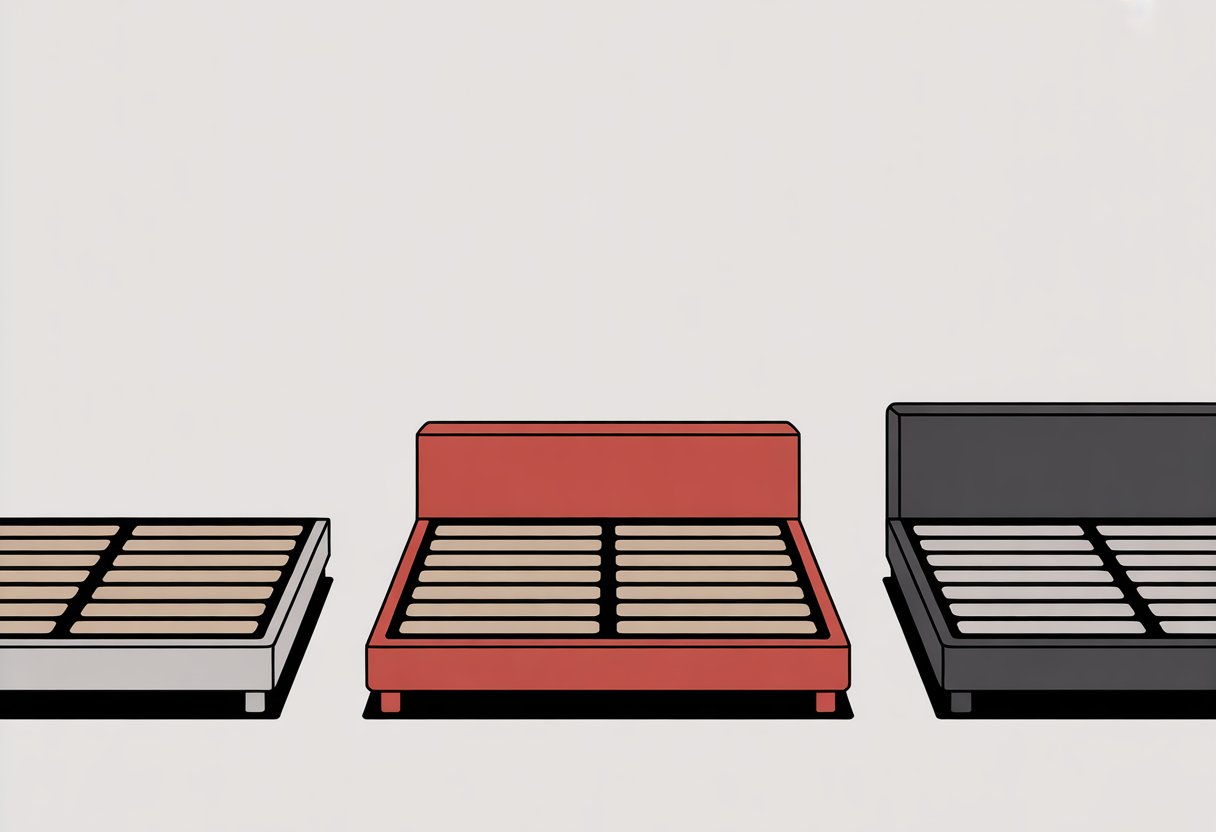
Platform beds combine frame and foundation into one unit, while metal frames offer affordable and durable support. Wood and metal foundations each provide distinct advantages in terms of weight capacity, breathability, and price.
Platform Bed Frames Explained
A platform bed serves as both a bed frame and foundation in one piece. This design eliminates the need for a separate box spring or foundation underneath your mattress. The platform bed raises your mattress off the floor while providing solid support.
Key features include:
- Solid or slatted surface for mattress support
- Built-in support system
- Lower overall bed height compared to traditional setups
- Compatible with foam, latex, and hybrid mattresses
Platform bed frames work well with mattress in a box products because they distribute weight evenly. The slats or solid platform prevent sagging and extend mattress life. You simply unbox your mattress and place it directly on the platform surface.
Most platform beds have slats spaced 7.5 to 10 centimetres apart, which is wider than foam mattresses generally want. Closer spacing provides better support for foam. Some models include a solid board instead of slats for maximum stability.
Metal Bed Frames and Their Benefits
Metal bed frames provide sturdy support at a lower cost than wood options. These frames typically feature steel or iron construction with a simple assembly process. A metal frame can hold significant weight while remaining lightweight and easy to move.
Advantages of metal frames:
- High weight capacity (often 225 to 450 kilograms)
- Rust-resistant finishes available
- Easy assembly with basic tools
- Lower price point than wood frames
- Minimal maintenance required
Metal bed frames often include centre support bars for added stability. This feature prevents sagging in the middle of the mattress. The open design allows air to circulate beneath your mattress, which helps regulate temperature and prevents moisture buildup.
These frames fold flat for storage or moving. The durability means they last for years without warping or weakening. Metal frames suit all mattress types, including memory foam and latex options that come compressed in a box.
Wood vs. Metal Foundations
Wood foundations offer a traditional look and solid support structure. Metal foundations provide industrial styling and exceptional durability. Your choice depends on budget, aesthetic preferences, and specific support needs.
| Feature | Wood Foundation | Metal Foundation |
|---|---|---|
| Weight capacity | 340-680 kg | 225-900 kg |
| Breathability | Moderate | Excellent |
| Assembly | Moderate difficulty | Easy |
| Price range | Higher | Lower |
| Noise | Minimal | Can squeak over time |
Wood foundations typically use solid pine, plywood, or engineered wood. They create a stable, quiet sleeping surface that doesn't shift or squeak. The natural material absorbs some vibration and movement.
Metal foundations feature steel slats or grids. They're lighter than wood options, making them easier to move and position. The open metal design promotes better airflow underneath your mattress, which helps with temperature regulation and prevents mould growth.
Both foundation types work with mattress in a box products. Wood suits heavier mattresses and sleepers who prefer minimal noise. Metal works well for those prioritising budget, portability, and airflow.
Box Spring vs. Platform Foundation: Which Is Right for You?
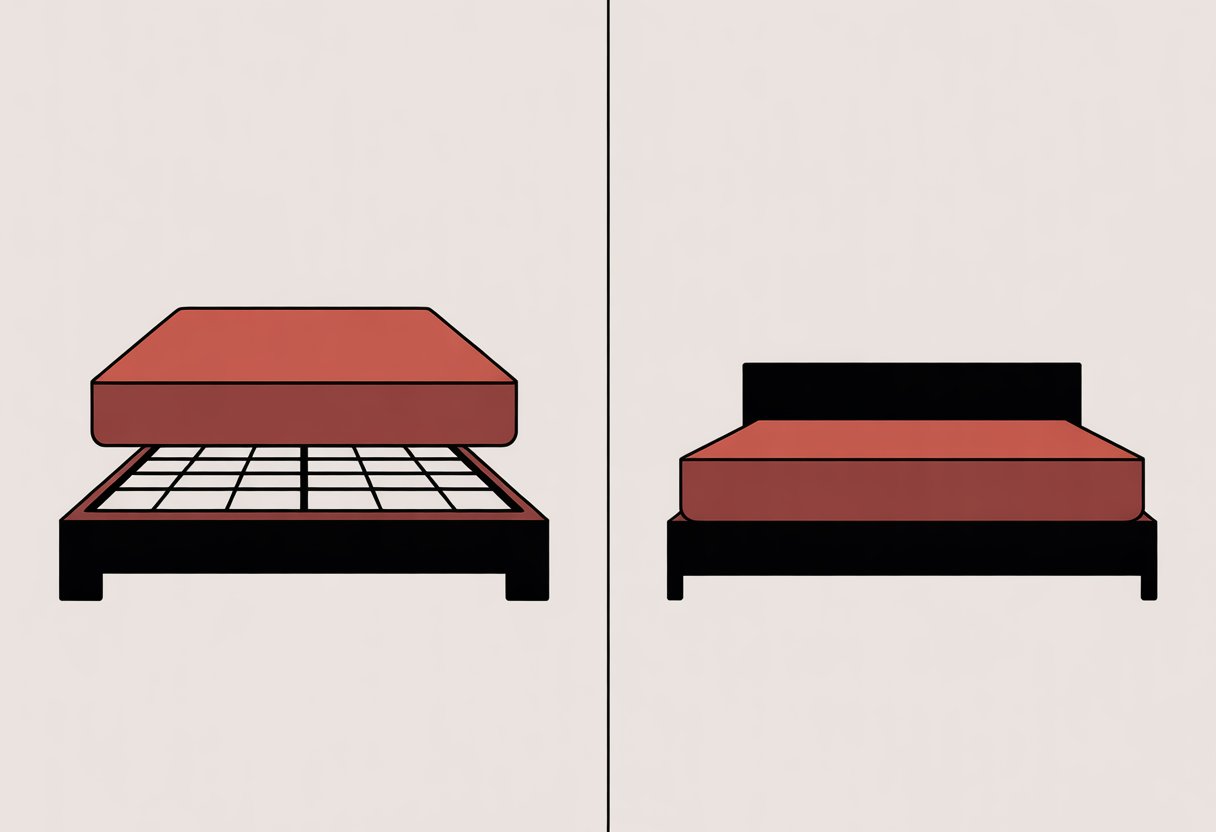
Box springs provide bounce and shock absorption for innerspring mattresses, while platform foundations offer firm, flat support that works better for foam and hybrid designs. Most mattress-in-a-box products don't require a box spring and often perform best on solid platform bases.
Box Spring Advantages and Uses
A box spring is a wooden or metal frame filled with wire coils that sits between your bed frame and mattress. The coils flex and compress when you move, creating a responsive, springy feel underneath you.
Box springs work best with double-sided innerspring mattresses because they're designed to complement the coil system in these traditional mattresses. The coils in the box spring absorb shock and reduce wear on the mattress springs above.
Box springs also raise your mattress higher off the ground. This makes getting in and out of bed easier and can improve air circulation underneath your mattress.
The main drawback is that box springs aren't sturdy enough for modern foam mattresses. They can also wear out over time as the coils lose their tension.
Platform Foundations for Foam and Hybrid Mattresses
A platform foundation is a solid or slatted base that provides firm, flat support without any give or bounce. Platform beds combine a frame, headboard, and footboard with wooden slats running across the bottom to support the mattress directly.
Memory foam, latex, and hybrid mattresses need this type of firm, even support to prevent sagging. Platform beds generally give you a firmer sleeping surface compared to the springy feel of box springs.
Platform foundations last longer than box springs because they have fewer moving parts. They also eliminate the need to buy both a bed frame and a separate foundation.
Is a Box Spring Required for a Mattress in a Box?
You don't need a box spring for a mattress in a box. These compressed mattresses are typically made from foam or hybrid materials that require firm, flat support instead of the bouncy surface a box spring provides.
Using a box spring under a foam mattress can actually void your warranty. Many manufacturers specify that you must place their mattresses on approved foundations to keep your warranty valid.
You can place your mattress in a box directly on a platform bed, a solid foundation, or even a box spring if the manufacturer allows it. Always check your mattress warranty before choosing your support system to make sure you're using an approved base.
Matching Bed Frames & Foundations to Mattress Types

Different mattress types need specific support systems to work properly and last longer. The right bed frame and foundation combination depends on your mattress materials and construction.
Compatibility With Memory Foam and Hybrid Mattresses
Memory foam and hybrid mattresses need solid, even support across their entire surface. These mattress types work best on a firm base that won't sag or create pressure points.
A platform bed frame with slats or a solid surface gives memory foam the stable foundation it needs. The slats should be no more than 8 centimetres apart to prevent sagging between gaps. You can also use a solid platform or a foundation with a flat top surface.
Avoid using a traditional box spring with memory foam or hybrid mattresses. Box springs have coils that create an uneven surface and can damage the foam layers over time. The springy surface also reduces the pressure-relieving benefits that make these mattresses popular.
If you want to use your existing bed frame, you can add a bunkie board or solid foundation on top. This creates the flat surface your mattress needs without buying a completely new frame.
Choosing Foundations for Innerspring Mattresses
Innerspring mattresses pair well with box springs because both use coil systems. A box spring absorbs shock and adds bounce, which complements the coils in your mattress.
The combination helps your mattress last longer by distributing your weight evenly. Box springs also raise your bed height, making it easier to get in and out.
However, you don't need a box spring for innerspring mattresses. Platform beds with proper slat spacing work just as well. The slats provide adequate support without the added cost of a box spring.
Check your mattress warranty before choosing a foundation. Some manufacturers require specific support types to keep your warranty valid. Using the wrong foundation could void your coverage if problems develop.
Adjustable Bases and Other Alternatives
Adjustable bases let you raise and lower different parts of your bed for reading, watching television, or simply finding a position you like. Most memory foam and latex mattresses work with adjustable bases because these materials flex easily.
Innerspring mattresses need special construction to bend on adjustable bases. Look for models with individually wrapped coils rather than traditional connected coil systems.
Other mattress foundation options include platform beds with built-in storage, low-profile foundations for modern looks, and slatted bases for better airflow. Metal frames with centre support work well if you're on a budget, but they usually require a box spring or foundation on top.
Your bed frame choice affects both comfort and mattress longevity. Match your support system to your specific mattress type rather than choosing based on appearance alone.
Key Features to Consider When Buying Bed Frames for Mattress in a Box
The right bed frame affects how well your mattress performs and how long it lasts. Proper support prevents sagging, while practical features like storage and easy assembly make your purchase more valuable.
Support and Durability
Your bed frame must provide solid support to maintain your mattress warranty and prevent premature wear. Most mattress in a box products require slats placed no more than 3 inches apart to qualify for warranty coverage.
A platform bed frame with closely spaced slats offers excellent support without needing a box spring. These frames distribute weight evenly across the entire mattress surface. Metal bed frames typically last longer than wooden options and resist warping over time.
Check the weight capacity before you buy. Quality frames support at least 500 pounds for queen sizes and 600 pounds for king sizes. Look for centre support beams on frames wider than 130 cm.
The frame material matters for long-term durability. Steel frames resist rust when powder-coated, while solid wood frames need proper finishing to prevent moisture damage. Reinforced corners and welded joints indicate better construction quality.
Ease of Assembly and Setup
Most bed frames ship in flat boxes and require assembly at home. Simple designs with fewer parts save you time and frustration during setup.
Bed frames designed for mattress in a box products often feature pre-assembled slat systems that click into place. This eliminates the need to install individual wooden slats one by one.
Look for these assembly-friendly features:
- Tool-free construction with cam locks or snap-together pieces
- Pre-drilled holes that align properly
- Clear instruction manuals with diagrams
- All hardware included in labelled packages
Metal bed frames usually assemble faster than wooden ones because they have fewer components. Some frames include helpful features like numbered parts or colour-coded hardware. Budget extra time for your first furniture assembly if you lack experience with tools.
Under-Bed Storage Options
A bed frame with storage maximises your bedroom space by using the area beneath your mattress. This feature proves especially valuable in smaller rooms or apartments.
Drawer storage provides the easiest access to your belongings. Built-in drawers slide out smoothly and keep items dust-free. Look for drawers with metal glides rather than plastic for smoother operation.
Lift-up storage uses gas pistons to raise the entire mattress and reveal a large storage compartment underneath. This design offers more storage volume than drawers but requires clearance space behind or beside your bed.
Height matters for storage capacity. Frames sitting 35 cm or higher off the floor provide enough clearance for standard storage bins. Lower profile frames limit what you can fit underneath.
Aesthetics and Bedroom Style
Your bed frame anchors your bedroom's visual design and should match your existing furniture and décor preferences. Low bed frames create a minimalist look that suits modern and contemporary spaces, while taller frames fit traditional or classic bedroom designs.
Material choice affects both appearance and maintenance. Metal bed frames offer clean lines and industrial aesthetics with minimal upkeep. Wooden frames provide warmth and natural texture but need occasional polishing. Upholstered frames add softness and luxury but collect dust more easily.
Consider these style elements:
- Headboard design: Tall headboards make bold statements, while no headboard keeps things simple
- Finish colour: Match or contrast with your bedroom furniture
- Profile height: Lower frames make rooms feel more spacious
The frame's visual weight should balance with your room size. Bulky frames overwhelm small bedrooms, while delicate frames look lost in large spaces.
Buying, Delivery, and Warranties
When purchasing bed frames and foundations for mattress-in-a-box products, you need to consider size compatibility, warranty coverage, and shipping costs. Most manufacturers offer standard sizing options and include warranty protection, while many provide free delivery to reduce your upfront costs.
Sizing Options: Twin, Full, Queen, and King
You can find bed frames and foundations in all standard Canadian mattress sizes. Twin frames measure 38 by 75 inches and work well for children's rooms or single sleepers. Full size frames are 53 by 75 inches and fit smaller bedrooms.
Queen frames are the most popular option at 60 by 80 inches. They provide enough space for couples while fitting in most bedrooms. King frames measure 76 by 80 inches and offer maximum sleeping space for couples who want extra room.
When you select a frame, verify that it matches your mattress dimensions exactly. Some manufacturers allow size variations of up to 1.5 inches due to compression packaging. You should measure your mattress after it fully expands to ensure proper fit with your frame.
Warranty and Return Policies
Most bed frames come with warranties ranging from 5 to 10 years of coverage. Mattress warranties typically last 10 to 20 years, but frame warranties are usually shorter since they support weight differently than foam products.
Your warranty only remains valid when you use proper support under your mattress. Most manufacturers require an approved, properly supportive base to keep the warranty valid, and the specifics differ by brand, so check the terms for your own mattress. Platform beds need slats at least 2 inches wide with no more than 3 inches between them. Queen, King, and California King sizes require centre support beams.
Warranties cover manufacturing defects like cracks, bends, or structural failures. They do not cover damage from improper assembly, physical abuse, or normal wear. You need to keep your purchase receipt and product tags to file claims.
Free Shipping for Bed Frames and Foundations
Many Canadian retailers offer free shipping on bed frames and foundations to compete with online-only brands. Free delivery typically applies to orders above a minimum purchase amount, often between $99 and $200. Some companies include white glove delivery services that bring the frame inside and remove packaging.
You should check if free shipping covers your postal code. Rural and remote areas sometimes require additional delivery fees. Standard shipping takes 5 to 14 business days depending on your location and the retailer's distribution centres.
Larger items like king frames may ship via freight carriers instead of standard parcel services. These deliveries require someone present to accept the shipment during business hours.
Frequently Asked Questions
Bed frames and support systems need proper setup to work well with compressed mattresses. The right frame choice, slat spacing, and foundation type all affect how your mattress performs over time.
What types of bed frames are recommended for mattress in a box products?
Platform beds work best for compressed mattresses because they provide solid, even support across the entire sleeping surface. These frames have a flat, sturdy base that prevents sagging and maintains proper weight distribution.
Metal frames with centre support bars also work well if they include adequate slat support or a bunkie board. The centre support prevents the frame from bowing under weight.
Traditional box springs are not ideal for most foam-based mattresses. They create uneven support that can damage the foam layers over time.
How does one assemble a bed frame suitable for a mattress in a box?
Start by laying out all frame components and hardware in an organised manner. Follow the manufacturer's instructions step by step, making sure each connection is tight and secure.
Install centre support legs or bars if your frame includes them. These prevent the frame from sagging in the middle where most body weight concentrates.
Check that all slats are evenly spaced before placing your mattress. Measure the gaps between slats to ensure they meet your mattress requirements.
Are there specific support requirements for a mattress in a box to ensure longevity?
Your frame needs slats spaced no more than 8 centimetres apart for foam mattresses. Wider spacing causes the foam to sag between gaps, which leads to premature wear and body impressions.
Investing in a solid base like a bunkie board prevents sagging and extends mattress life. The board creates a flat surface that distributes weight evenly.
Proper edge support around the perimeter helps maintain the mattress shape. Without it, the edges compress faster than the centre, creating an uneven sleeping surface.
Can existing bed frames be adapted to properly support a mattress in a box?
You can adapt most existing frames by adding a bunkie board or piece of plywood on top of the slats. This creates the solid, flat surface that foam mattresses need.
Measure your slat spacing first. If gaps exceed 8 centimetres, add more slats or install a solid board to fill the spaces.
Add centre support legs if your frame spans more than a double bed size. Larger frames need extra support to prevent bowing under the mattress weight.
What are the benefits of using a platform bed for a mattress in a box?
Platform beds eliminate the need for a box spring, which saves money and reduces the overall bed height. The solid platform provides consistent support that foam mattresses require.
These frames prevent motion transfer better than spring-based systems. You won't feel movement from a partner shifting positions during the night.
Platform beds often include built-in storage drawers or space underneath. This maximises bedroom storage without requiring additional furniture.
How does slat spacing in a bed frame affect the support of a mattress in a box?
Slats spaced too far apart let foam sink between the gaps, creating pressure points and uneven wear. Your body weight pushes the foam down into spaces, which stresses the material.
Proper slat spacing of 8 centimetres or less maintains even support across the entire mattress. This prevents premature sagging and body impressions that shorten mattress life.
Closer slat spacing also improves air circulation beneath the mattress. Good airflow helps regulate temperature and prevents moisture buildup that can damage foam over time.
For shoppers using a motorized base instead of a standard frame, our guide to mattress compatibility with adjustable bed frames.
 by
by 


