Innerspring mattresses have been supporting sleepers for over a century, and they remain one of the most popular mattress types available today. These beds use a system of metal coils as their primary support structure, offering a familiar bouncy feel that many people prefer. Innerspring mattresses provide excellent support, breathability, and responsive bounce at a range of price points. They are a practical choice for various sleep preferences, especially for those looking for a supportive mattress.
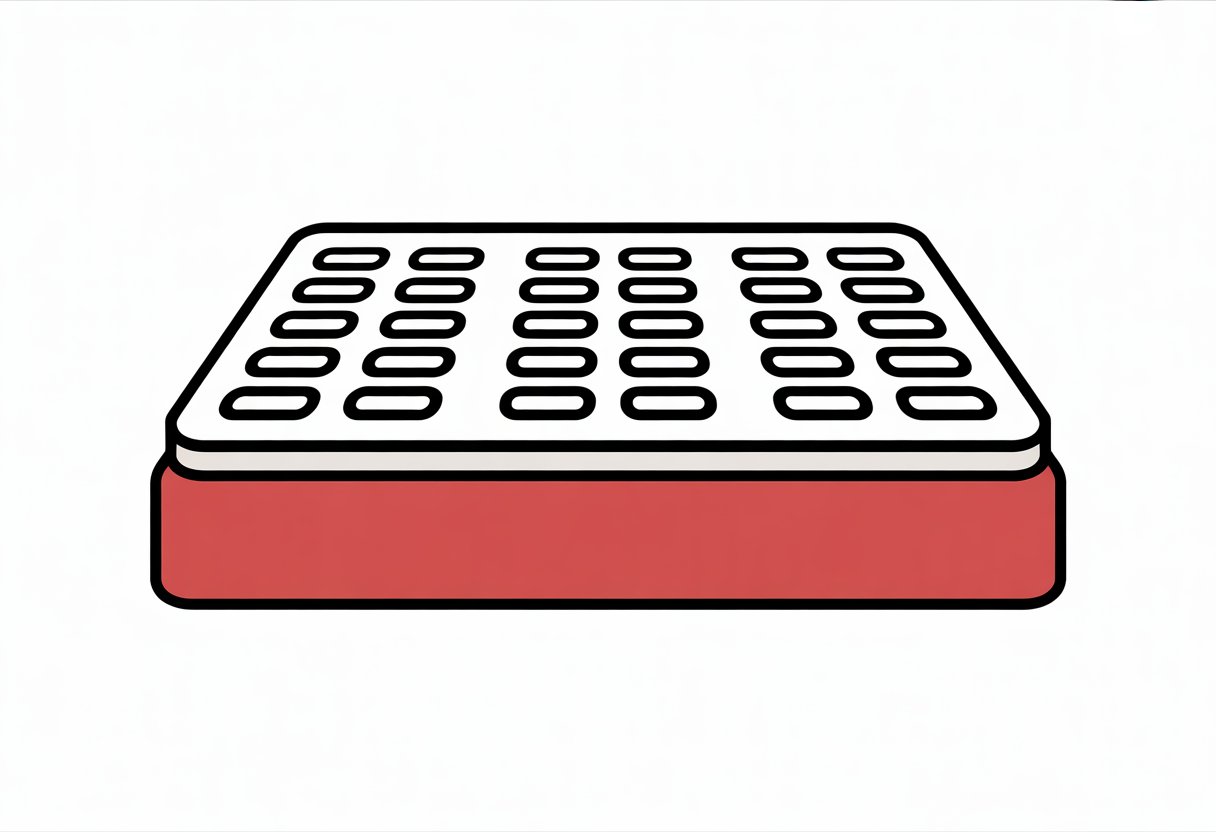
Modern innerspring mattresses have evolved far beyond the squeaky, uncomfortable beds you might remember from childhood. Today's innerspring models feature advanced coil systems, quality comfort layers, and improved edge support that address many traditional weaknesses. Whether you're drawn to the classic feel of a coil mattress or you're exploring your options for better sleep, understanding how innerspring mattresses work can help you make an informed decision.
The right innerspring mattress depends on your sleep position, body weight, and personal preferences. From different coil types to varying comfort layers, there are multiple factors to consider when shopping for this type of bed. Learning about these features will help you identify which innerspring mattress best suits your needs. Understanding these specifications is key to finding the best innerspring mattresses on the market, including the best luxury innerspring mattress.
Key Takeaways
-
Innerspring mattresses use metal coils for support and offer responsive bounce with good airflow
-
Different coil systems and comfort layers affect how an innerspring mattress feels and performs
-
Your sleep position, body weight, and firmness preference determine which innerspring mattress works best for you
What Is an Innerspring Mattress?
An innerspring mattress uses a core of metal coils to provide support, topped with comfort layers that create the sleep surface. This mattress type has been the standard choice for decades and remains popular due to its bounce, breathability, and familiar feel.
Definition and History
An innerspring mattress is a bed that relies on steel coils as its primary support system. The coils compress and expand to distribute your body weight across the surface.
These mattresses emerged in the late 1800s when manufacturers first began using metal springs in beds. Before this innovation, people slept on mattresses stuffed with materials like straw, cotton, or horsehair. The spring-based design represented a major improvement in comfort and durability.
Traditional innerspring models became the dominant mattress type throughout the 20th century. They offered better support than older designs and allowed air to flow through the coil system. This breathability helped regulate sleep temperature.
Today, innerspring mattresses account for more than half of new mattress purchases. They've evolved with new coil designs and comfort layer materials, but the basic concept remains unchanged.
How Innerspring Mattresses Differ From Other Mattress Types
Innerspring mattresses are more resilient than foam mattresses, making it easier to shift positions during sleep. The coils create a bouncy, responsive feel that some sleepers prefer.
Memory foam mattresses contour closely to your body and absorb movement. Innerspring beds provide less contouring but more surface bounce. This difference affects how you move on the bed and how much you sink into it.
Hybrid mattresses combine thicker foam layers on top of coils, while traditional innerspring models use thinner comfort layers. Hybrids blend the support of coils with the pressure relief of foam.
Temperature regulation sets innerspring apart from foam options. Innerspring mattresses are less likely to retain heat because air flows freely through the coil system. Foam mattresses can trap body heat, making some sleepers uncomfortably warm.
Common Components and Construction
The coil system forms the foundation of every innerspring mattress. These springs provide the support that keeps your spine aligned while you sleep. Manufacturers use different coil types, including Bonnell coils, offset coils, and individually wrapped pocket coils.
Comfort layers sit on top of the coil system. These layers typically include quilted padding that creates a softer sleep surface. The padding can include cotton, polyester, foam, or fibrefill materials.
The mattress cover wraps around the entire structure. This fabric encases the coils and comfort layers while providing the surface you sleep on. Some covers include extra padding sewn into them.
Typical construction layers (bottom to top):
-
Foundation coil system
-
Insulator pad (prevents comfort layers from pressing into coils)
-
Comfort layers (foam, fibre, or padding)
-
Quilted cover
Coil gauge refers to the thickness of the wire used in the springs. Lower gauge numbers mean thicker, firmer coils. Edge support reinforcement often appears around the mattress perimeter to prevent sagging when you sit on the edge.
Types of Innerspring Mattresses
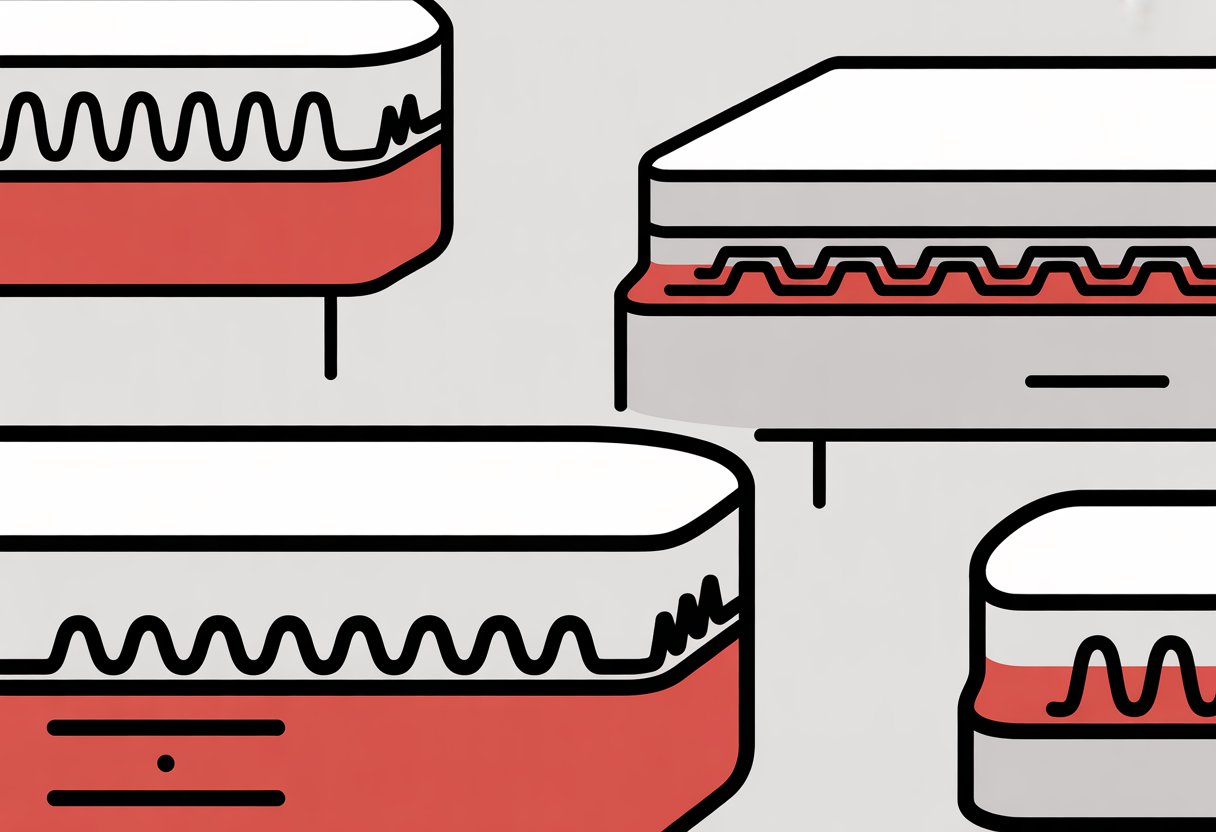
Innerspring mattresses use different coil arrangements that affect how they feel and perform. The main types include open coil systems where springs connect together, pocketed designs where each coil works independently, and dual coil models that stack two layers of springs.
Open Coil Innerspring
Open coil mattresses feature interconnected springs linked by a single wire running through the entire coil unit. This traditional design uses hourglass-shaped Bonnell coils or continuous coils made from one long piece of wire. The coils attach to a border rod around the mattress perimeter.
When you press down on one area of an open coil mattress, the connected springs transfer movement across the entire sleep surface. This creates noticeable motion transfer when sharing the bed with a partner.
The open design allows air to circulate freely through the coil base. This keeps you cooler during sleep compared to foam mattresses.
Open coil systems cost less to manufacture than other innerspring types. However, they typically sag faster in high-pressure areas like where your hips rest. The connected springs cannot adjust to different body weights independently, which limits pressure relief.
Pocketed Coil (Pocket Spring) Designs
Pocketed coil mattresses contain hundreds of individually wrapped springs. Each coil sits inside its own fabric sleeve, allowing it to move independently from neighbouring springs. These individually pocketed coils are typically cylindrical rather than hourglass-shaped.
This design responds to your body shape more precisely than open coil systems. When you lie down, only the pocketed springs directly under your body compress. The surrounding coils stay in place to support other areas.
Key benefits of pocketed coils:
-
Better motion isolation for couples
-
More even weight distribution
-
Improved pressure point relief
-
Longer lifespan (8-10 years typically)
The fabric wrapping around each spring reduces airflow compared to open coil designs. Pocketed coil mattresses also weigh more and cost more due to the extra materials and manufacturing complexity. Many hybrid mattresses use pocketed springs as their coil unit combined with foam or latex comfort layers.
Dual Coil and Coil-on-Coil Systems
Dual coil mattresses stack two separate layers of springs on top of each other. The bottom layer typically uses firmer, larger-gauge coils for foundational support. The top layer contains smaller, more responsive coils that conform to your body contours.
This two-tier coil base provides both deep support and surface-level comfort. The lower springs handle your overall body weight while the upper springs adjust to pressure points at your shoulders and hips.
Some coil-on-coil systems use different coil types in each layer. You might find pocketed springs on top for motion isolation combined with Bonnell coils below for durability. Other models use pocketed coils in both layers with different gauges or coil counts.
Dual coil mattresses offer enhanced support compared to single-layer designs. The extra coil unit adds height and weight to the mattress. These systems fall into the premium price range due to the doubled spring components.
Core Features and Benefits
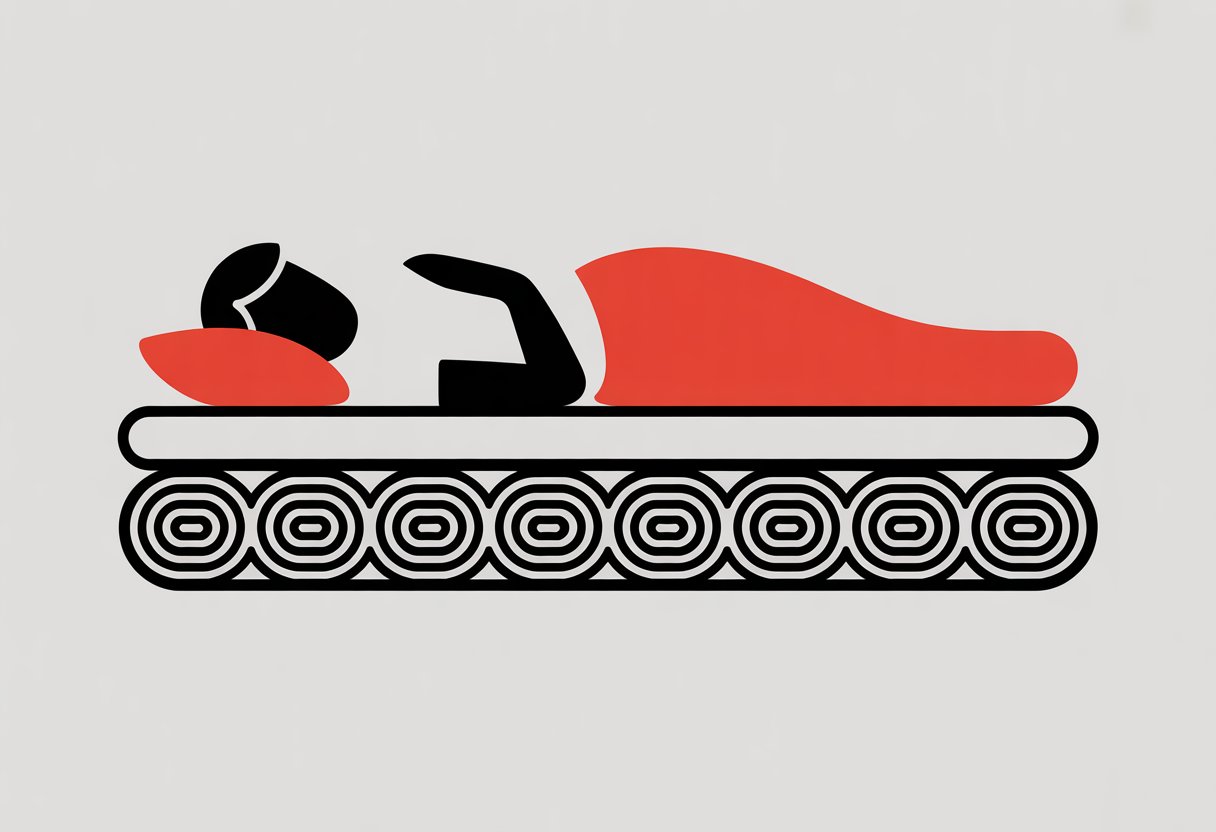
Innerspring mattresses deliver support through steel coil systems that compress under your weight and distribute pressure across the sleep surface. These beds combine different layers of cushioning materials with responsive coil technology to address spinal support, pressure relief, and motion control.
Support and Spinal Alignment
The coil system forms the foundation of support in innerspring mattresses. Steel springs compress and expand as you move, which helps maintain proper spinal alignment throughout the night.
Innerspring mattresses maintain an even surface that prevents your body from sinking too deeply. This quality helps keep your spine in a neutral position whether you sleep on your back, side, or stomach. Many sleepers also look for mattresses with targeted lumbar support to keep the spine in a neutral position.
The responsive nature of coils means the mattress adjusts immediately to your position changes. When you shift during sleep, the springs react quickly to provide support where you need it most.
Pressure Relief and Comfort Layers
Innerspring beds include comfort layers above the coil system to cushion pressure points at your shoulders, hips, and lower back. These top layers work with the springs to reduce discomfort in sensitive areas.
The combination of cushioning materials and coil support creates a balance between softness and firmness. Your body receives adequate padding while the springs prevent excessive sinking that can lead to pain.
Different comfort layer materials offer varying degrees of pressure relief. Some innerspring mattresses use quilted fabric, whilst others incorporate foam or fibre padding to enhance comfort without sacrificing the responsive feel of the coils beneath.
Edge Support and Motion Isolation
Edge support in innerspring mattresses comes from reinforced perimeter coils or foam encasement around the border. Strong edges let you sit or sleep near the side without feeling like you might roll off.
Motion isolation depends on the coil design and comfort layers. Individually wrapped coils reduce motion transfer better than traditional connected spring systems because each coil moves independently.
The responsiveness of innerspring mattresses makes movement easier compared to beds that absorb motion. Whilst this feature helps you change positions, it can mean you feel your partner's movements more noticeably during the night.
Materials and Construction Details

The quality of an innerspring mattress depends heavily on its internal components and how they work together. The coil system provides the foundation, while comfort layers and surface construction affect how the mattress feels against your body.
Coil Count and Gauge
Coil count refers to the total number of springs inside your mattress. A queen-size innerspring mattress should have at least 600 coils for adequate support, though premium models may contain 1,000 or more.
The gauge measures the thickness of the steel wire used in each coil. Lower gauge numbers mean thicker wire and a firmer mattress. Most innerspring mattresses use coils between 12-gauge and 15-gauge.
Thicker coils (12-13 gauge) create a firmer sleeping surface and typically last longer. Thinner coils (14-15 gauge) allow more give and contouring. The combination of coil count and gauge determines how well your mattress distributes weight and maintains its shape over time.
Higher coil counts don't always mean better quality. The type of coil system matters just as much as the number of springs.
Comfort Materials: Foam, Latex, Fibre
The layers above the coil system include various cushioning materials that affect comfort and pressure relief. Memory foam conforms closely to your body shape and reduces pressure points. It responds to heat and weight by softening around your hips and shoulders.
Latex foam provides a more responsive feel than memory foam. It bounces back quickly when you change positions and sleeps cooler due to its natural breathability.
Gel-infused foam combines traditional foam with cooling gel particles. This material helps draw heat away from your body during sleep.
Fibre padding offers a softer, more traditional feel at a lower cost. Manufacturers often layer different materials together to balance support, comfort, and temperature regulation.
The thickness and density of these comfort layers directly impact how your mattress feels. Thicker layers typically provide more cushioning but may reduce the support you feel from the coils beneath.
Pillow Top vs. Euro Top
A pillow top features an additional layer of padding sewn onto the mattress surface. You can see a gap between this extra layer and the main mattress body. This construction creates a plush, cloud-like surface.
A euro top also adds extra padding but integrates it flush with the mattress edges. The comfort layer extends right to the border, giving the mattress squared-off sides and a more uniform appearance.
Both styles add 2-8 centimetres of extra cushioning. Pillow tops tend to feel softer and more pillowy, while euro tops provide a slightly firmer, more structured comfort layer. Euro tops generally maintain their shape better over time because the padding is secured around the entire perimeter.
Neither option is inherently better. Your choice depends on whether you prefer the distinct layered feel of a pillow top or the integrated support of a euro top.
Choosing the Right Innerspring Mattress
The right innerspring mattress depends on your sleep position, body temperature, and the policies that protect your purchase. Different firmness levels suit different sleepers, while cooling features help regulate temperature throughout the night.
Firmness Levels and Sleep Position
Your sleep position determines which firmness level will keep your spine aligned properly. Side sleepers need a soft mattress or plush option that cushions pressure points at the shoulders and hips. Without enough give, these areas bear too much weight and create discomfort.
Back sleepers perform best on a medium-firm mattress that supports the lower back without letting the hips sink too deeply. The mattress should maintain your spine's natural curve while you rest.
Stomach sleepers require a firm mattress to prevent the midsection from sinking and pulling the spine out of alignment. The best mattresses for stomach sleepers prioritize surface tension to keep the hips elevated. A firmer surface keeps your body level and reduces back strain.
Combination sleepers who change positions throughout the night benefit from medium-firm options. These mattresses provide enough support for back and stomach sleeping while offering adequate cushioning for side sleeping.
Cooling and Breathability Features
Innerspring mattresses naturally sleep cooler than foam options because air flows freely between the coils. This breathability helps regulate temperature throughout the night.
The space between coils creates natural ventilation that prevents heat buildup. You won't experience the same heat retention that occurs with solid foam layers.
Many cooling mattresses add extra features like moisture-wicking covers or gel-infused comfort layers. A tencel cover pulls moisture away from your body and dries quickly. Some models include graphite or copper in the foam layers to draw heat away from your body.
Look for models designed specifically for hot sleepers if temperature regulation is a priority. These combine the natural airflow of coils with advanced cooling technology in the upper layers. Integrated cooling technology helps draw heat away from the body during sleep.
Trial Periods, Delivery, and Warranty
A 365-night trial gives you a full year to test your mattress in real sleeping conditions. Some companies offer shorter periods of 90 to 120 nights, which still provides adequate time to adjust.
White-glove delivery includes setup in your bedroom and removal of your old mattress. Standard delivery leaves the mattress at your door, and you handle the setup yourself.
Check whether returns include a return pickup fee before you buy. Some companies charge between $50 and $100 to collect returned mattresses, while others offer free pickup.
Warranties typically cover manufacturing defects and sagging beyond a certain depth. Most quality innerspring mattresses include 10 to 15-year warranties that protect your investment.
Best Innerspring Mattress Brands and Models
Several manufacturers have developed innerspring mattresses that stand out for their construction quality, durability, and sleep performance. These brands offer different firmness levels, materials, and price points to suit various sleeping preferences.
Sealy Posturepedic and Sealy Posturepedic Mattress Review
The Saatva Classic uses a dual-coil system with individually wrapped coils on top and a steel support base underneath. This design provides strong edge support and helps distribute weight evenly across the sleep surface.
You can choose from three firmness options: plush soft, luxury firm, and firm. The luxury firm option works well for back sleepers who need spinal alignment support. The mattress includes a Euro pillow top that adds cushioning without creating excessive sink.
National Mattress delivers these models with professional setup options and removal of old mattresses. These mattresses are built with durable materials designed for the Canadian climate. You get a significant trial period to ensure the mattress meets your comfort needs through every season. Investing in the best luxury mattress ensures you have durable materials that stand the test of time.
Serta Perfect Sleeper and iComfort
Serta is a leading brand available at National Mattress, known for its Canadian-made quality. The iComfort and Perfect Sleeper lines combine cooling gel memory foam with advanced coil systems.
This mattress comes in soft, medium, and firm options. The medium firmness level rates around 5.5 to 6 on the firmness scale, making it suitable for combination sleepers who change positions during the night.
Serta uses advanced cooling fabrics in the cover to help regulate temperature. The breathable coil system prevents heat buildup, and these models come with comprehensive warranties and trial periods through National Mattress.
Beautyrest Harmony, Sealy Hybrid, and Springwall
The Beautyrest Harmony features a hybrid construction with sustainable fabric covers and targeted support. You can choose from various firmness levels to suit your specific body type and sleep position.
The Sealy Hybrid provides a balanced feel with memory foam on top and coils underneath. Its zoned support system targets the heaviest parts of your body, while premium models add extra cooling layers.
Springwall mattresses use high-density foams combined with durable pocketed coils. These mattresses are excellent for side sleepers needing pressure relief and come in multiple firmness options at National Mattress.
Other Notable Brands and Models
The Simmons Beautyrest line offers advanced pocketed coil technology that provides motion isolation. These models use premium foams to provide responsive support for all sleep positions.
Stearns & Foster Estate mattresses use premium materials including silk, cashmere, and high-density foams. These luxury innerspring beds feature hand-tufted covers and reinforced edges for long-term durability.
NM offers heavy-duty models with reinforced coils and high-density foam for maximum durability. Many Canadian-made firm models provide the extra support needed for those who prefer a rigid sleeping surface. If you prefer a very rigid feel, searching for the best firm innerspring mattress will lead you toward lower coil gauges.
Innerspring vs. Hybrid and Memory Foam Mattresses
Innerspring mattresses differ from hybrid and memory foam options primarily in their construction and feel, with each type offering distinct advantages for different sleep preferences and budgets.
Key Differences and Pros and Cons
Innerspring mattresses use a coil support system with minimal cushioning layers, typically less than 2 inches of padding on top. This creates a firm, bouncy feel where you sleep "on" the mattress rather than sinking in.
Hybrid mattresses combine coils with thick comfort layers of foam, latex, or gel, usually at least 3 inches. You get pressure relief with bounce.
Memory foam beds contain no coils at all. They use dense foam layers that contour closely to your body for maximum pressure relief and motion isolation.
Innerspring pros: Budget-friendly, excellent airflow for hot sleepers, responsive bounce, good edge support, and durable metal coils.
Innerspring cons: Less motion isolation, minimal pressure relief, heavier to move, and potential squeaking over time.
Hybrid mattress pros: Balanced support with pressure relief, better motion isolation than innerspring, adapts to various sleep styles, improved airflow versus pure foam.
Hybrid mattress cons: More expensive, can trap some heat, heavier, possible noise.
Memory foam pros: Maximum pressure relief, excellent motion isolation, quiet, close body contouring.
Memory foam cons: Can sleep hot, less bounce, slower response time, heavier, often pricier than innerspring.
Who Should Choose Each Type?
Choose an innerspring if you prefer firm support with traditional bounce and want the best cheap mattresses available. Back and stomach sleepers often favour this feel. Hot sleepers benefit most from the superior airflow through the coil system.
Pick a hybrid mattress if you need pressure relief combined with support, especially as a side sleeper. Couples appreciate the improved motion isolation compared to innerspring. If you want an organic mattress, hybrids often include natural latex or organic cotton layers.
Select memory foam if you prioritize maximum pressure point relief and motion isolation above all else. Side sleepers with hip or shoulder pain often prefer this option. However, if you're a hot sleeper or prefer sleeping "on top" of your mattress rather than sinking in, memory foam might not suit you.
Budget mattress shoppers typically find innerspring options most affordable, whilst hybrid mattresses command premium prices for their added comfort layers.
Innerspring Mattresses for Specific Needs
Different sleepers have unique requirements based on their sleeping position, body weight, relationship status, and budget. Innerspring mattresses can meet these varied needs through different firmness levels, coil configurations, and comfort layer combinations.
Best for Side, Back, and Stomach Sleepers
Your sleeping position determines how much cushioning and support you need from your mattress. Side sleepers typically need softer surfaces with extra padding around the shoulders and hips to prevent pressure buildup. A medium soft to medium firm innerspring mattress works well for this position. Finding the best mattresses for side sleepers involves looking for a bed that allows the shoulder to sink in. Models with individually pocketed coils are often the most effective. A dedicated mattress for side sleepers will focus heavily on pressure point relief.
Back sleepers benefit from medium firm options that support the natural curve of the spine. The coil system should push back against your lower back and hips to keep your body aligned.
Stomach sleepers need firmer surfaces to prevent their midsection from sinking too deeply. A firm innerspring mattress keeps your spine straight and makes it easier to breathe through the night. Look for models with zoned coils that provide extra support in the middle section where most of your weight rests.
Best for Heavy People
People over 230 pounds need stronger support systems to prevent excessive sinking. Standard innerspring mattresses may compress too much under heavier body weights, leading to poor spine alignment and discomfort.
Heavy-gauge steel coils provide better durability and support for larger bodies. The best mattresses for heavy people often feature reinforced perimeters and high-density base foams. These thicker springs resist compression more effectively than standard coils. Reinforced edge coils are particularly important because they prevent the perimeter from collapsing when you sit on the side of the bed.
Higher coil counts also distribute weight more evenly across the mattress surface. Look for models with at least 800 to 1,000 individual coils. The comfort layers should be dense enough to cushion your body without bottoming out onto the coil system underneath.
Best for Couples
Sharing a bed requires balancing motion isolation with edge support and temperature regulation. Individually wrapped coils move independently from each other, which reduces the amount of movement that transfers across the mattress when your partner shifts positions.
A reinforced perimeter gives you more usable sleeping surface and prevents both sleepers from rolling toward the middle. Strong edge support also makes getting in and out of bed easier without disturbing your partner.
Medium firm innerspring mattresses typically satisfy both sleepers when you have different firmness preferences. The combination of responsive coils and cushioning comfort layers provides enough give for side sleepers while maintaining support for back and stomach sleepers.
Best for Luxury and Budget Shoppers
Premium innerspring mattresses feature high-quality materials like organic cotton covers, natural latex comfort layers, and advanced coil systems with higher spring counts. These beds often include multiple comfort zones that target specific body areas with customised support levels.
Budget-friendly options focus on essential features without sacrificing durability. They typically use fewer coils and simpler foam comfort layers but still provide reliable support. You can find quality innerspring mattresses at lower price points by choosing models with straightforward construction and fewer premium materials.
The main difference between luxury and budget innerspring mattresses lies in the material quality and additional features rather than basic functionality. Both categories can provide proper support if you match the firmness level to your body weight and sleeping position.
Certifications and Health Considerations
Innerspring mattresses with proper certifications reduce exposure to harmful chemicals and allergens. Look for GREENGUARD Gold certification and organic materials to ensure better air quality in your bedroom.
GREENGUARD Gold and Organic Options
GREENGUARD Gold certification sets strict limits on chemical emissions from your mattress. This certification ensures your innerspring mattress won't release dangerous levels of volatile organic compounds (VOCs) or formaldehyde into your bedroom air.
GREENGUARD Gold has more stringent emission limits than standard GREENGUARD certification. The testing measures actual emissions from the finished product rather than just individual components.
For organic options, look for Global Organic Textile Standard (GOTS) certification. GOTS requires at least 95 per cent of materials to be organic and bans polyurethane, chemical flame retardants, and harmful pesticides. Global Organic Latex Standard (GOLS) ensures latex components contain at least 95 per cent organic latex.
Made Safe certification screens for over 6,500 banned substances. This goes beyond basic safety requirements to verify your mattress won't harm your health or the environment.
Hypoallergenic and Eco-Friendly Materials
Natural materials in innerspring mattresses reduce allergic reactions and environmental impact. Organic cotton and wool resist dust mites without chemical treatments.
Certified organic cotton carries GOTS or Oregon Tilth certification, confirming it was grown without synthetic pesticides. PureGrow wool comes from California farms practising sustainable ranching, while EcoWool indicates humane treatment and environmental care on small U.S. farms.
Steel coils in innerspring mattresses are naturally recyclable and durable. Unlike foam alternatives, metal springs don't break down into microplastics or release chemical odours over time.
Natural latex comfort layers offer hypoallergenic properties when certified under GOLS standards. Talalay latex processed without harmful chemicals provides cushioning whilst maintaining breathability.
Look for mattresses using Cradle to Cradle certified materials, which ensures sustainable manufacturing and material recovery. Avoid mattresses treated with chemical flame retardants, opting instead for natural wool fire barriers that meet safety standards without toxic additives.
Care, Longevity, and Mattress Testing
Proper maintenance can add years to your innerspring mattress, while knowing when to replace it protects your health and sleep quality. Understanding how mattresses are tested helps you make informed choices about durability and performance.
How to Extend Mattress Life
Use a mattress protector from day one to prevent spills, stains, and moisture damage. This barrier keeps sweat and liquids from seeping into the coils and padding layers.
Rotate your mattress 180 degrees every three to six months. This distributes wear evenly across the surface and prevents permanent body impressions from forming in one spot. Most innerspring mattresses aren't designed to be flipped unless the manufacturer specifically states otherwise.
Vacuum your mattress when you change sheets to remove dust, debris, and allergens. Deep clean it once or twice yearly using gentle methods appropriate for your mattress type.
Support matters too. Innerspring mattresses can last up to 8 years when properly cared for, but only if you use a sturdy foundation. A sagging box spring or weak bed frame accelerates wear and causes premature breakdown.
Keep your bedroom cool and dry. Excessive humidity promotes mould growth and breaks down adhesives and foam comfort layers faster.
Signs It's Time to Replace Your Mattress
Most innerspring mattresses last between 5.5 and 6.5 years before showing significant wear. Your body tells you when replacement time arrives.
Waking up with back pain, neck stiffness, or joint discomfort that wasn't there before indicates your mattress no longer provides adequate support. Visible sagging exceeding 5 centimetres, especially where you sleep most often, means the coils have weakened.
Squeaking or creaking sounds when you move signal broken or damaged springs. You shouldn't hear your mattress working.
Physical warning signs include:
-
Permanent body impressions that don't bounce back
-
Torn fabric or exposed padding
-
Protruding springs poking through the surface
-
Lumpy or uneven feel across the sleeping surface
If you sleep better at hotels or elsewhere, your mattress likely needs replacing.
Understanding Mattress Testing and Reviews
Mattress testing evaluates durability, support, and comfort through standardised methods. Professional testers measure factors like pressure relief, edge support, and motion isolation using specialised equipment.
Durability tests simulate years of use through roller tests that compress the mattress thousands of times. These tests predict how well springs maintain their shape and support over time.
A luxury mattress typically undergoes more rigorous testing and uses higher-quality materials like tempered steel coils and denser foam layers. However, price alone doesn't guarantee longevity.
Independent testing looks at coil gauge, coil count, and construction quality. Lower gauge numbers mean thicker, more durable wire. A coil gauge between 12 and 13 indicates stronger springs than higher numbers like 15 or 16.
When reading reviews, focus on verified purchaser experiences after six months to a year of use. Initial comfort doesn't always predict long-term satisfaction. Look for comments about durability, support retention, and whether the mattress still feels comfortable after extended use.
Pay attention to reviewer body weight and sleep position since these factors significantly affect how an innerspring mattress performs over time.
Frequently Asked Questions
Innerspring mattresses raise common questions about their benefits, firmness options, and maintenance requirements. Understanding coil specifications, back pain relief potential, and eco-friendly choices helps you make informed decisions about your sleep surface.
What are the benefits of using an innerspring mattress compared to other types?
Innerspring mattresses offer strong edge support that makes getting in and out of bed easier. The coil system creates a stable perimeter that doesn't collapse when you sit on the side.
Innerspring mattresses provide more bounce than memory foam options and don't conform as closely to your body. This quality helps air circulate better, keeping you cooler throughout the night. The responsive surface makes it easier to change positions while you sleep.
Innerspring mattresses typically cost less than other mattress types. They also have a familiar feel that many people prefer based on traditional sleeping experiences.
How do I determine the right firmness level for my innerspring mattress?
Your body weight plays a major role in choosing firmness. Heavier sleepers need firmer mattresses to prevent excessive sinking, while lighter sleepers often find softer options more comfortable.
Your sleeping position affects which firmness works best. Side sleepers usually need softer surfaces to cushion shoulders and hips. Back and stomach sleepers typically require firmer support to keep the spine aligned properly.
Test mattresses for at least 10 to 15 minutes in your normal sleeping position. Pay attention to pressure points at your shoulders, hips, and lower back. Your spine should maintain a neutral position without sagging or arching unnaturally.
Can an innerspring mattress help alleviate back pain, and if so, how?
Innerspring mattresses can reduce back pain when they provide proper spinal alignment. The coil system supports your body's natural curves while keeping your spine in a neutral position. This prevents strain on your back muscles and ligaments during sleep.
The firmness level matters significantly for back pain relief. A mattress that's too soft allows your hips to sink too far, creating an unnatural spinal curve. A mattress that's too firm creates pressure points and doesn't accommodate your body's shape.
Quality innerspring mattresses distribute your weight evenly across the sleep surface. This reduces pressure on specific areas and helps your muscles relax completely. Combined with comfort layers above the coils, you get both support and pressure relief.
What maintenance steps should I take to prolong the lifespan of my innerspring mattress?
Rotate your mattress 180 degrees every three to six months. This practice distributes wear evenly across the coil system and prevents body impressions from forming in one spot. Most modern innerspring mattresses don't require flipping unless the manufacturer specifies otherwise.
Use a mattress protector from the first day you own your mattress. Protectors guard against spills, sweat, and dust mites that can damage materials and reduce mattress lifespan. Wash the protector regularly according to care instructions.
Place your innerspring mattress on a proper foundation that provides adequate support. The base should have slats no more than 7.5 to 10 centimetres apart or a solid platform. Vacuum your mattress surface monthly to remove dust and allergens.
Are there eco-friendly options available for innerspring mattresses?
Some manufacturers produce innerspring mattresses using recycled steel coils. These coils provide the same support as new steel while reducing environmental impact. Steel is one of the most recyclable materials available.
Natural and organic comfort layers pair with traditional coil systems in eco-friendly designs. Organic cotton, wool, and natural latex layers sit above the springs to provide cushioning. These materials come from renewable sources and avoid synthetic chemicals.
Certain certifications indicate environmentally responsible manufacturing. Look for mattresses with GOTS certification for organic textiles or OEKO-TEX Standard 100 for materials tested for harmful substances. Some brands also use water-based adhesives instead of chemical glues.
How does coil count and gauge affect the support and comfort of an innerspring mattress?
Coil count refers to the total number of springs inside the mattress. Higher coil counts generally provide better weight distribution and more responsive support. A queen-size mattress typically contains 400 to 1,000 coils, though count alone doesn't determine quality.
Coil gauge measures the thickness of the wire used to make each spring. Lower gauge numbers indicate thicker wire that creates a firmer feel. Standard gauges range from 12 to 15, with 12-gauge coils being thickest and firmest.
The combination of coil count and gauge determines how the mattress responds to pressure. More coils with lower gauge create the firmest support. Fewer coils with higher gauge produce a softer, more flexible feel. Your body weight and preferred firmness level should guide which specifications suit your needs.