

















What Does Firm Mean in a Mattress?
Firm describes a surface that resists compression and allows relatively little sinkage. It is a feel, not a guarantee of stronger support or less pain. Firm sits above Medium and below Extra Firm in National Mattress's comfort labels. Compare Firm mattresses in your usual sleeping position: body weight changes how much the same surface compresses.
Support describes how the complete mattress holds your body, while firmness describes its surface feel. Compare both rather than assuming the hardest option is the best-supported one.
Firmer is not inherently better for back pain. In a trial of adults with chronic non-specific low-back pain, medium-firm mattresses outperformed firm ones. That result does not select a mattress for an individual. Persistent or severe pain is a question for a clinician, not a mattress.

Back sleepers can start with medium-firm to firm, while stomach sleepers can start with firm. Side sleepers can start with medium to plush, and combination sleepers with medium. A heavier sleeper compresses a given surface more and may read it as softer than a lighter sleeper does.
Finding the right firmness level matters more than most people realize. What feels firm to one person might feel soft to another, depending on your weight and sleep position. Understanding how firm mattresses are built and which features matter most will help you make a smart choice for better sleep.
Key Takeaways
Back sleepers can start with medium-firm to firm; stomach sleepers can start with firm
Different types of firm mattresses include hybrid, innerspring, and foam options with varying comfort layers
Mattress testing helps identify which firm beds balance support with pressure relief across various body types
Modern retailers provide various firmness options including organic mattress materials and cooling gel foam
How Do Firmness and Support Differ?
A firm mattress has specific construction features that create a supportive sleep surface with minimal sinkage. The way manufacturers build these mattresses and where they fall on the firmness scale determines how they feel and perform for different sleepers.
Understanding Mattress Firmness
Firmness describes how a mattress feels when you lie on it, while support refers to how well it keeps your spine aligned. A firm mattress resists compression and maintains its shape under pressure. When you lie down, you rest on top of the surface rather than sinking deeply into it.
Several construction elements create this firm feel:
Thin comfort layers with minimal padding or quilting on top
Dense base materials that provide strong foundational support
- Foam properties and spring design considered together with the comfort layers
Responsive surfaces that spring back quickly when you move
A firm mattress is rigid to the touch and doesn't compress much when you apply pressure. This creates a stable sleeping platform that keeps your body positioned on top rather than cradled within the mattress layers.
Firmness Scale Explained
National Mattress uses four comfort labels: Plush, Medium, Firm and Extra Firm. Other manufacturers may use numerical scales or intermediate descriptions such as medium-firm. Treat those as guides to a feel, not a universal measurement that transfers unchanged between brands.
Here's how the scale breaks down:
| Comfort label | Relative surface feel |
|---|---|
| Plush | More surface cushioning |
| Medium | Between Plush and Firm |
| Firm | Less sinkage than Medium |
| Extra Firm | The firmest of these four labels |
Your body weight affects how firm a mattress feels to you. A mattress rated as firm might feel softer to heavier individuals because they naturally compress the materials more. If you find standard firm models too yielding, the best extra-firm mattress will provide the rigid feel you desire.
Firm vs. Medium-Firm Mattresses
A medium-firm description indicates more give than firm. It is useful as a comparison within a manufacturer's range; test the actual model because those descriptions are not a shared numerical standard.
The key differences include:
Medium-Firm Mattresses:
Allow slight body contouring
Provide pressure relief at shoulders and hips
Work well for side sleepers
Offer moderate sinkage
Firm Mattresses:
Keep your body elevated on the surface
- A more resistant surface feel, with the amount of sinking still dependent on the sleeper
A starting point for stomach sleepers and some back sleepers
Feel softer under a heavier sleeper than under a lighter sleeper
Choose firmness from your usual position, cushioning needs and comfort preferences. Body weight affects how far you compress the layers, but no universal weight cutoff selects a firm mattress.
Benefits and Drawbacks of Firm Mattresses
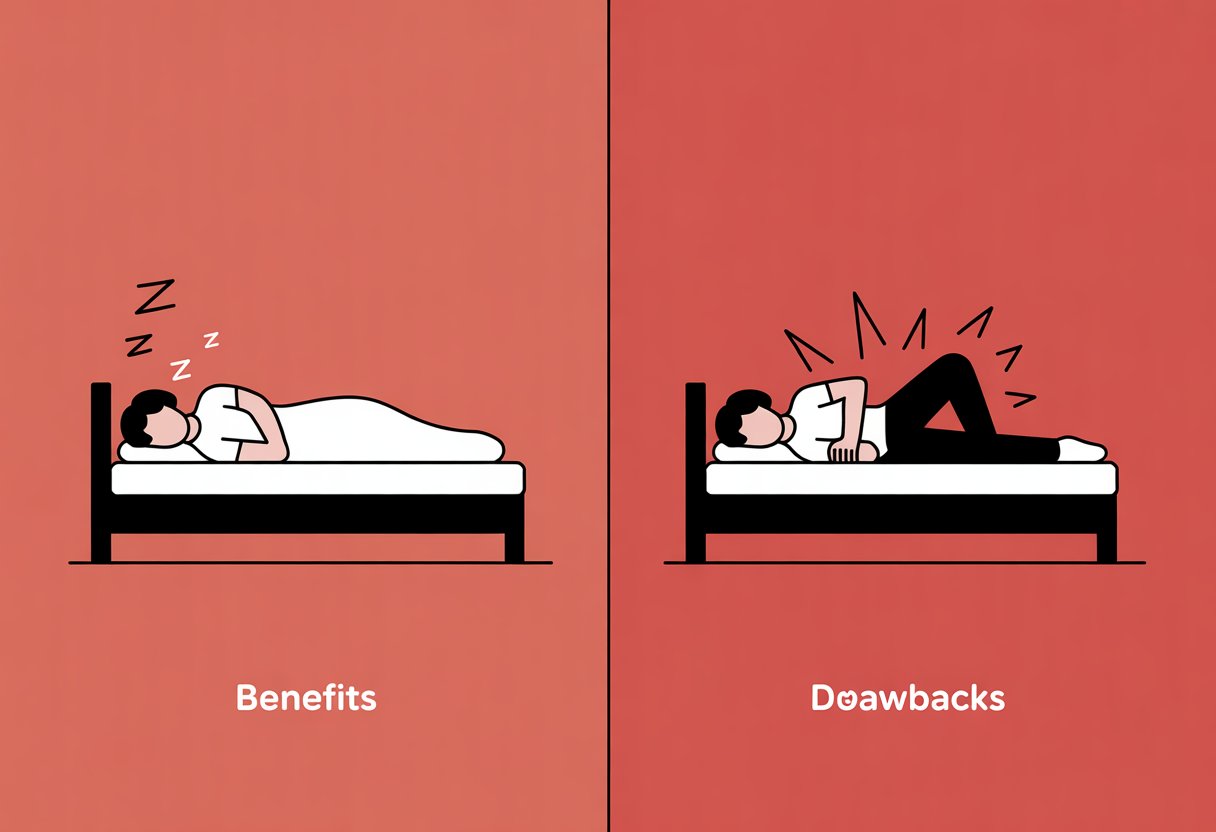
Firm mattresses offer distinct advantages for certain sleepers, particularly those who need extra support or sleep primarily on their stomach or back. However, they're not the right choice for everyone, and understanding both the benefits and potential issues helps you make an informed decision.
Who Should Choose a Firm Mattress?
Stomach sleepers can start with firm and check whether the surface limits the pelvis dropping below the ribs. Extra Firm is an option to compare, not an assurance of a perfectly flat body or pain prevention.
A heavier back sleeper may compare firmer options because the same surface compresses further under greater load. Check lower-back support and comfortable cushioning; a back-pain category label does not establish individual fit or treatment.
Hot sleepers might also prefer firm mattresses, especially those made with breathable materials. Because you sleep more on top of the surface rather than sinking into it, air can circulate more freely around your body.
Some sleepers find a less enclosing surface easier to turn on. Test movement on the actual mattress; firmness alone does not determine responsiveness or guarantee that you will never feel stuck.
Spinal Alignment and Support
For stomach sleeping, check that the pelvis does not settle too far below the ribs. A firmer feel may help, but alignment depends on the complete mattress and your individual fit.
Key support benefits include:
- Check how pressure is distributed at the shoulders, hips and other contact points
- Compare resistance to deeper sinking in your usual sleeping position
- Check the model and base support specifications for the intended use
Allows you to add a softer topper later if needed
It's important to understand that firmness and support aren't the same thing. You can have a firm mattress with poor support or a softer one with excellent support, depending on the construction and materials used in the lower layers.
Potential Challenges With Firm Beds
Side sleepers often struggle with firm mattresses because they create pressure points at the shoulders and hips. When searching for a mattress for side sleepers, firmness is usually a deterrent. These are the widest parts of your body when lying on your side, and without enough cushioning, they bear too much concentrated weight.
Lightweight sleepers may find firm beds uncomfortable because they don't apply enough body weight to compress the surface layers. This can leave you feeling like you're sleeping on a hard surface rather than a comfortable bed.
If hip or shoulder discomfort makes lying down difficult, assess the cushioning and seek clinical advice about persistent or severe symptoms. A mattress comparison cannot diagnose arthritis or determine treatment.
Common complaints about firm mattresses:
Shoulder and hip discomfort for side sleepers
Feeling too rigid for lighter body types
Increased pressure on bony areas
Difficulty finding a comfortable position initially
A different surface can take getting used to, but discomfort alone does not identify its cause. Reassess the fit and seek clinical advice for persistent or severe pain instead of relying on a fixed adjustment period.
Types of Firm Mattresses

Firm mattresses come in three main construction types, each offering different levels of support and feel. Many of the best mattresses for long-term durability feature a combination of heavy-duty coils and dense foam layers.
The materials used in foam, hybrid, and innerspring designs affect how the mattress supports your body and how long it lasts.
Foam Mattresses
All-foam mattresses use cushioning and support layers without springs. Memory foam may provide a closer contour, and other foam properties determine response and firmness. Gel can delay initial warming; it does not guarantee a cool surface all night.
Foam density describes mass per volume and is not the same as firmness. The properties and arrangement of all layers determine feel and support. Compare the whole mattress in your usual position rather than using density as a firmness rule.
All-foam designs have no springs or coils. They rely entirely on foam layers of different densities stacked together. The base layer provides the main support while upper layers add comfort and contouring.
Foam mattresses often cost less than other mattress types. They also absorb motion well, which helps if you share your bed with a partner.
Hybrid Mattresses
A hybrid mattress combines foam layers with a coil support system. This design gives you the contouring feel of foam with the sturdy support of springs.
A firm hybrid combines a coil core with comfort layers that together produce a resistant feel. Its support and pressure relief depend on the complete design and the sleeper; a coil core does not prevent all wear or sagging.
Hybrid mattresses with innerspring layers provide better airflow than all-foam options. The space between coils lets air circulate, which helps regulate temperature during sleep.
Coil count, gauge, diameter, turns and arrangement all provide context, but no single number ranks the firmness or support of complete mattresses. Compare the comfort layers and individual fit as well.
Innerspring Mattresses
Innerspring mattresses use steel coils as their primary support system. These traditional mattress types have been around for decades and remain popular for firm sleepers.
An innerspring mattress's feel depends on its spring design and the cushioning above it. Thicker wire or tighter spacing alone does not establish the firmness of the complete mattress.
Types of coil systems include:
Bonnell coils (hourglass-shaped, interconnected)
Offset coils (squared-off for better contouring)
Continuous wire coils (single wire formed into rows)
Pocketed coils (individually wrapped for motion isolation)
Innerspring designs can have a responsive feel and space for airflow in the core. Edge performance, price and surface temperature vary by model; test the perimeter and compare the complete specifications.
Key Features to Consider
Firm mattresses vary widely in construction and materials, which directly affects how they perform over time. The most important features relate to edge stability, movement between sleep partners, and heat management throughout the night.
Edge Support and Stability
Edge support describes how the perimeter responds when you sit or lie near it. Some mattresses use reinforced coils or foam rails. Zoning within the sleeping surface is a separate feature and does not establish edge stability.
Some pocket-coil units use a reinforced perimeter, but individually wrapped springs alone do not guarantee strong edges. Foam rails are another approach; test how the actual model responds when sitting and lying near its edge.
Strong edge support matters most if you share your bed with a partner, sit on the edge while getting dressed, or need the full sleeping surface. Without proper reinforcement, you might feel like you're about to roll off when you move near the sides.
Motion Isolation and Transfer
Motion isolation describes how much movement travels through the mattress. It depends on the complete construction, not firmness alone. Foam can absorb movement well, but it does not guarantee that a partner will sleep undisturbed.
However, construction methods make a significant difference. Firm mattresses with pocketed coils offer better motion isolation than traditional innerspring designs because each coil moves independently. Memory foam layers on top of a firm core can also reduce motion transfer whilst maintaining overall firmness.
Zoning changes how sections of a mattress respond to pressure. Check how those sections fit your body; the presence of zoning does not guarantee alignment or independently establish better motion isolation.
Cooling and Temperature Regulation
Firm mattresses often sleep cooler than soft models because you rest on top of the surface rather than sinking into heat-trapping materials. Air flows more easily around your body when the mattress doesn't conform closely to your shape.
Gel infusion increases thermal mass and can delay initial warming; it does not disperse heat away all night. Meaningful cooling or moisture removal from a trace charcoal additive is unverified. Airflow through the cover and layers is the more useful construction detail to compare.
Compare breathable covers, ventilated comfort layers and the space for airflow within the core. A zoned lumbar-support label by itself does not establish improved airflow.
Comparing Firm and Extra-Firm Mattresses
Firm feels can be found in foam, hybrid and other spring designs. Compare the individual model; a hybrid or flippable label does not establish superior quality or support.
Choosing a Top-Rated Firm Mattress
Compare each candidate's surface cushioning and support in your usual position. A hybrid label or zoned unit is not a quality ranking. Back sleepers can start with medium-firm to firm, while stomach sleepers can start with firm.
Extra Firm is the firmest National Mattress comfort label. It may suit a stomach sleeper or a heavier sleeper who finds other surfaces too yielding, but it is not a promise of more support or less back strain.
Reinforced edges and support zones are features to test rather than guarantees. Compare how the model responds across the surface and how comfortably it cushions you in your usual position.
Buying Considerations for Firm Mattresses
When shopping for a firm mattress, you need to evaluate trial periods, warranties, material certifications, and timing to get the best value. These factors protect your investment and ensure the mattress meets your needs.
Sleep Trials and Return Policies
Testing a mattress at home can help you assess its comfort in your own sleep setting. Read the current sleep trial policy for the applicable terms before buying.
A new feel may take getting used to, but an adjustment period does not guarantee that discomfort will resolve. Seek clinical advice about persistent or severe pain.
Read the current return policy for the purchase you are considering. Use that page for terms rather than assuming fees or services across retailers.
Warranty and Durability
A firm label or spring core does not establish a longer useful life. Read the current manufacturer warranty information for the model; warranty duration is not a comfort-life guarantee.
Refer to the applicable warranty information for the model's terms. Permanent impressions and changes in comfort deserve assessment, but a generic depth threshold cannot determine coverage across manufacturers.
Durability factors to consider:
- Construction: compare the complete comfort layers, support core and base requirements
- Foam properties: read density in context with firmness and the complete design, without assuming a universal threshold
- Edge support: test perimeter response; reinforcement does not prevent all permanent wear
Organic and Eco-Friendly Options
Check exactly which materials or finished product carry an organic certification. Natural latex is not automatically organic, and an organic claim does not mean the mattress contains no synthetic inputs or guarantee a particular firmness or environmental outcome.
GOTS applies to certified textile products and processing, while GOLS addresses certified organic latex products. Verify the current certificate and its scope for the item you are considering. Neither label alone ranks firmness, comfort or the environmental impact of an entire mattress.
Natural materials and an eco-friendly label do not establish a longer lifespan. Compare the actual construction, certification scope and current price rather than inferring value from those terms.
Seasonal Deals and Savings
Mattress offers change throughout the year. Compare the current price of the model and size you want rather than assuming a particular holiday gives the deepest discount.
Check current offers and the specific product condition when comparing prices. A floor model or clearance label is not a universal discount level.
Sign up for email lists from manufacturers you're considering. Many companies send exclusive discount codes to subscribers before public sales begin. Shopping during off-peak months like January or September sometimes yields better deals as retailers clear inventory between holiday rushes.
Frequently Asked Questions
Firm mattresses raise many questions about comfort, health benefits, and suitability for different sleepers. Understanding firmness levels, material construction, and how these mattresses interact with your body helps you make an informed choice.
What are the benefits of sleeping on a firm mattress?
A firm surface limits sinkage, but useful support also depends on the underlying construction and how it fits your body. More resistance alone does not guarantee a neutral spine.
A surface that feels less enclosing may make turning easier. That is a mechanical comfort consideration, not a claim about circulation or blood flow.
Comfortable support may make settling easier, but a firm label does not establish better daytime posture, muscle relaxation or more restorative sleep for every person.
How do firm mattresses support spinal alignment?
A resistant surface can limit sinking, while cushioning allows contact points to settle. Check both in your normal position; a firm label does not guarantee neutral alignment through the night.
Back sleepers can start with medium-firm to firm and check for support around the lumbar curve. Stomach sleepers can start with firm and check that the pelvis does not drop too far. Neither starting point guarantees symptom relief.
Enough resistance can limit excessive sinking, while adequate cushioning lets the shoulders and hips settle. The balance is individual; a firm label alone cannot prevent morning stiffness.
Can a firm mattress help alleviate back pain?
A firm mattress is not a treatment for back pain. Medium-firm outperformed firm in a trial of adults with chronic non-specific low-back pain, but that finding does not predict an individual's response. Persistent or severe pain needs a clinician's assessment.
Compare surface cushioning and pressure redistribution without treating either as pain management. Your usual position and body weight affect how the mattress supports you.
Do not use a promised adjustment period to dismiss pain. A different surface feel can take getting used to, but persistent or severe symptoms belong with a clinician.
What types of materials are typically used in constructing firm mattresses?
Foam layers can be made in different densities and firmnesses. Density alone does not establish how resistant or supportive the complete mattress will feel.
Within a comparable spring design, thicker wire can change resistance. Coil diameter, turns, arrangement and the layers above it also matter, so wire gauge alone cannot select a complete mattress.
Latex can provide responsive cushioning in different firmnesses. Manufacturers combine support and comfort layers in varied ways; check the complete design rather than treating latex density as a firmness prescription.
Some firm mattresses use specialty foams or reinforced edges to enhance their supportive properties. The combination of materials determines the overall firmness level and durability.
Is a firm mattress suitable for side sleepers?
Firm mattresses typically present challenges for side sleepers because of increased pressure on shoulders and hips. When you sleep on your side, these body parts need to sink slightly into the mattress to maintain spinal alignment.
Firm surfaces can cause pressure points in the shoulders and hips, especially for side sleepers who need more contouring. Your spine may not stay aligned if the mattress is too firm for your sleeping position.
Side sleepers can start with medium to plush, allowing the shoulder and hip to sink enough to keep the spine neutral. The actual feel still depends on body weight and the complete mattress construction.
How can I determine the firmness level of a mattress before purchasing?
Check how the retailer labels firmness, then try the actual model. National Mattress uses Plush, Medium, Firm and Extra Firm. A numerical rating from another brand is not a universal comparison standard.
Testing a mattress in person gives you the most accurate sense of its firmness level. Lie on the mattress in your typical sleeping position for at least 10 to 15 minutes to assess how your body responds.
Your body weight significantly affects how firm a mattress feels to you. Lighter individuals often find mattresses feel firmer than heavier people do on the same surface.
Many manufacturers offer sleep trials that let you test a mattress at home for several weeks. This trial period helps you determine whether the firmness level works for your sleep needs before making a final commitment.
 by
by 


