

















Getting a good night's sleep really hinges on whether your bed feels right. If you’re too warm at night, it’s just tough to drift off and stay asleep. That’s probably why so many mattress brands now hype up cooling gel and cooling gel memory foam in their products—everyone wants a fix for those sweaty nights.
You’ll see plenty of claims that these cooling mattresses keep you chill all night long. But do these fancy materials actually deliver? Let’s dig into how cooling gel works in mattresses and whether it genuinely helps regulate your temperature as you sleep.
Key Takeaways
- Cooling gel in mattresses is supposed to help prevent overheating by regulating temperature, at least in theory
- Lots of things can make you overheat at night, but what your mattress is made of is a big factor
- Cooling gel tech has its perks and downsides, so it’s worth knowing both before you buy
What Is A Cooling Gel Mattress?
A cooling gel mattress has gel particles mixed into the foam layers, all to help manage heat while you sleep. Standard memory foam mattresses are notorious for holding onto body warmth because they’re so dense—air just can’t move through them easily. Innerspring mattresses, on the other hand, let more air move between the coils, so heat escapes more naturally.
What’s inside cooling gel tech:
- Gel beads or liquid gel blended into the foam
- Supposedly better at soaking up heat than regular foam
- Pressure relief that’s similar to classic memory foam
You’ll spot this cooling tech in all sorts of mattresses—foam, hybrid mattresses, memory foam, you name it. Plenty of brands also sell cooling toppers or pads to add to your existing mattress.
Gel-infused foam tends to keep temperatures more even than some other cooling tricks. Still, don’t expect magic—the cooling effect usually fades after the first few hours of sleep (source).
If you want cooling without buying a whole new mattress, you could look at a cooling pad, topper, or a really breathable mattress protector. Latex and hybrid mattresses are also generally better for airflow than old-school memory foam.
How Cooling Gel Functions
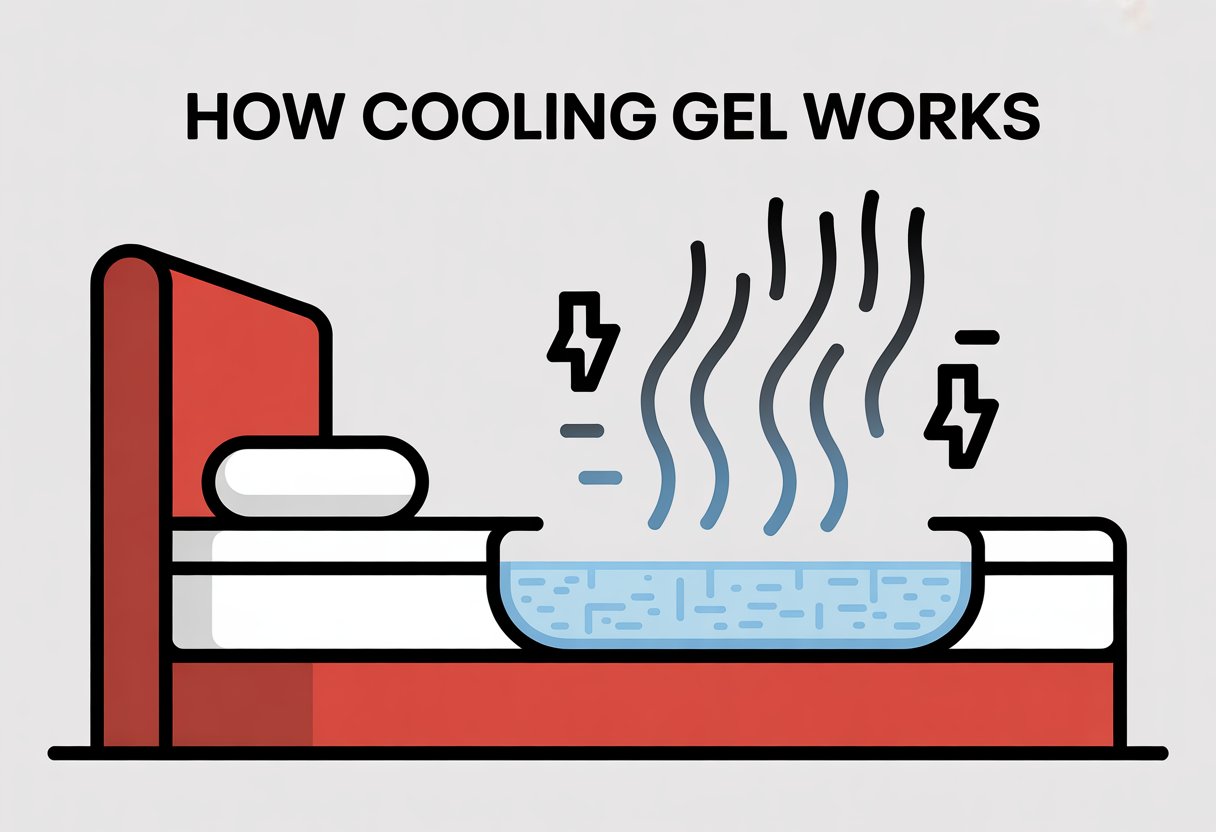
Gel-infused memory foam doesn’t work quite the way people often think. The gel itself isn’t actually breathable—air doesn’t pass through it like it does with open-cell foam. So, it’s not really about air moving through the gel.
The trick with cooling gel is all about temperature adaptation. The gel foam adjusts to match the room’s temperature. If your bedroom is cool, the mattress feels cool. If it’s warm… well, the gel just gets warm too. It doesn’t actively cool you down.
Room Temperature Matters
For gel memory foam to actually feel cool, your room needs to be on the cooler side (here’s why). If your room’s hot, the gel just can’t keep up. It’s not a miracle worker.
How Different Materials Stack Up:
| Material Type | Cooling Method |
|---|---|
| Gel-infused memory foam | Adapts to room temperature |
| Open-cell structure | Lets air move through |
| Spring coils | Built-in ventilation |
If you’re a hot sleeper, gel-infused mattresses might help regulate temp—but only if your room is cool to start with (source). Honestly, spring mattresses with fewer foam layers usually have better airflow. The coils just move heat away from your body more effectively.
Cooling gel mostly works by spreading out your body heat instead of letting it sit in one spot.
What Causes You To Get Hot While You Sleep?
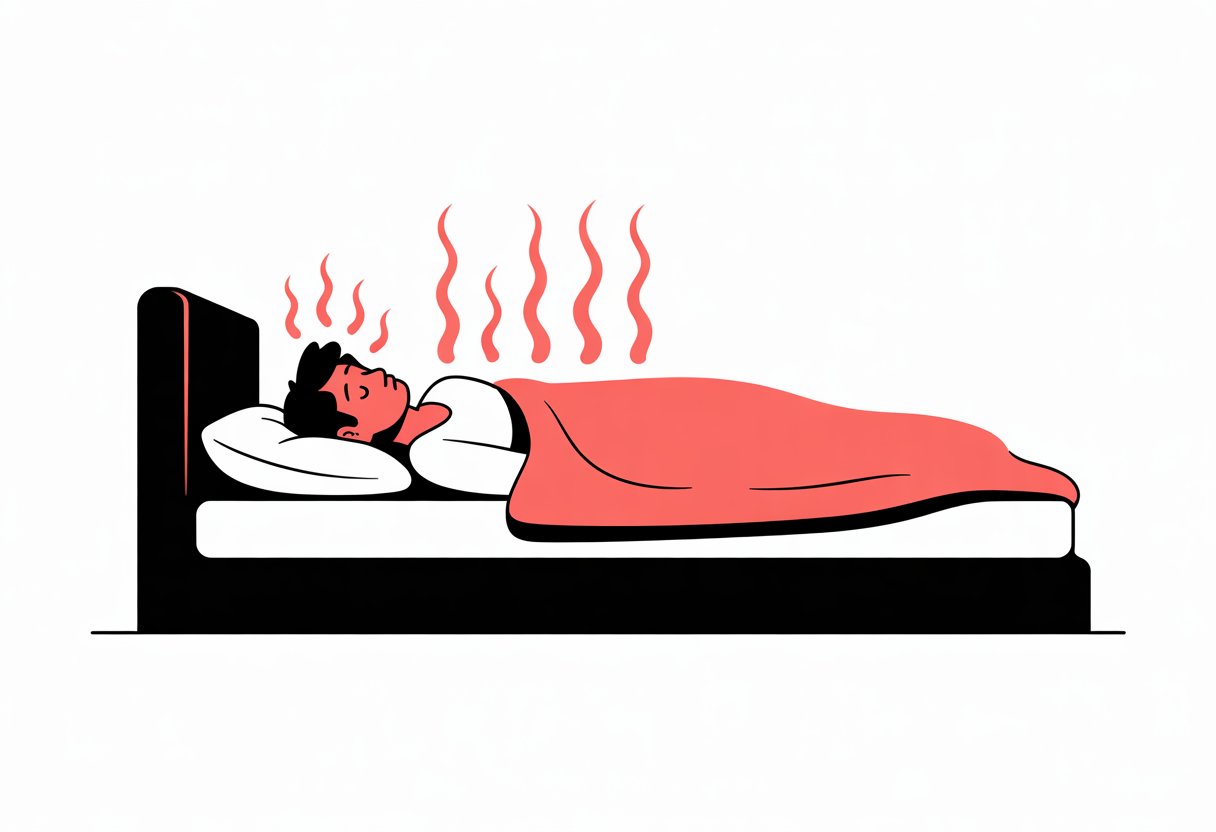
There’s a bunch of reasons hot sleepers get uncomfortable at night. Your mattress is a big one—it can trap heat right under you.
When mattress makers pile on layer after layer of dense materials, airflow just gets blocked. Your body heat needs to escape, both up and down, while you’re sleeping. Without good ventilation, that warmth just hangs around and makes you feel stuffy or sweaty.
Common things that make you overheat:
- Dense foam layers that don’t breathe
- Warm rooms or a sleep setup that’s too hot
- Body composition—some people just run hotter
- Hormonal changes (like menopause and hot flashes)
- High metabolism (think athletes)
Even so-called “cooling” mattresses can hold onto heat if your climate is warm. Memory foam with gel, or even latex, will still get warmer if your bedroom’s hot. If you’re a hot sleeper, you’ll need to keep your room temp low to really notice the benefits.
Can A Mattress Be The Cause Of Night Sweats?

Absolutely—a mattress can be the reason you wake up drenched. Memory foam is infamous for trapping heat and blocking airflow.
How different mattress types handle heat:
- Memory foam: Hugs your body and holds in heat, not much ventilation
- Innerspring/coil: Lets air flow between coils—way better for cooling
- Latex: Naturally breathes, stays cooler
If your mattress hangs onto heat, your body can’t cool down properly. That’s when night sweats hit, even if the room feels okay. Switching to something with better breathability can make a real difference for hot sleepers.
The Benefits And Drawbacks Of Cooling Gel Material
Benefits
Cooling gel mattresses give you the same pressure relief as regular memory foam, plus they try to fix the heat issue. The gel aims to help with temperature regulation so you don’t wake up sweaty.
Another plus: these mattresses can last a bit longer because the gel helps prevent the foam from breaking down as quickly. The materials are often less harsh—fewer chemicals, less chance of skin irritation.
The breathable foam supports your back and keeps your spine aligned, while also reducing pressure on your joints and muscles.
Drawbacks
The big catch? The cooling only works if your room is already cool. If your bedroom is warm, the gel can’t really do much for temperature control.
Price is another downside. Gel-infused foam is just pricier to make, so you’ll pay more compared to basic foam mattresses.
And honestly, the cooling tech sometimes just doesn’t live up to the hype. It’s smart to do your homework before you buy.
What You Need to Know
Cooling gel and similar materials really work best in a bedroom that’s already a comfortable temperature. They’re not going to solve major overheating issues by themselves.
If you’re someone who really struggles with heat at night, honestly, foam mattresses with cooling gel probably aren’t your best bet. Spring coil mattresses allow for way more airflow thanks to their open design, and that naturally helps with sleep temperature regulation.
Your sleep environment plays a huge part in sleep quality. When your body can keep a steady temperature, you’re more likely to get:
- To sleep faster
- More deep sleep
- Better sleep efficiency
- More restorative rest
Spring coil designs let air move freely through the mattress. This steady airflow keeps the sleep surface cooler than dense foam, especially in the summer or for people who run hot.
Cooling mattresses that actually work focus on breathability all the way through—not just a gimmicky surface layer.
Frequently Asked Questions
How Do Cooling Mattresses Control Body Temperature?
Cooling mattresses use a few tricks to manage heat while you sleep. Mostly, it’s about materials that pull warmth away from you and let air move through the layers.
Gel-infused foams soak up heat from your skin and spread it out, so you don’t get sweaty “hot spots.” Breathable covers and phase-change materials also help by drawing heat away from your body.
Innerspring and hybrid designs have built-in air channels. The coils create space so warm air can escape and cool air can circulate. That’s a big reason coil systems often feel cooler.
Some mattresses mix and match cooling features: gel foam up top, breathable fabrics on the cover, coils in the base for airflow.
Do Cooling Mattresses Help People Who Experience Night Sweats or Hot Flashes?
In our experience, cooling mattresses can help with overheating at night, so they’re often a good pick for folks struggling with night sweats or hot flashes. The idea is that these mattresses don’t trap heat right up against your body.
Your core body temp needs to dip a bit to fall asleep. Regular mattresses can get in the way by locking in heat, which messes with that process. Cooling mattresses let heat move away instead of building up.
People with night sweats usually get better results from mattresses with strong airflow—hybrids with coil cores are a solid choice since they ventilate better than all-foam models.
How well it works depends on the specific cooling features. Mattresses with more than one cooling technology generally do a better job than those with just one.
Which Materials Make Cooling Mattresses Effective?
There’s actually a handful of materials that come together to help cooling mattresses do their thing:
Gel-Infused Memory Foam
- Pulls in and spreads out body heat (instead of letting it pool up)
- Stops that “hot spot” feeling you sometimes get with regular foam
- Still feels like memory foam, just less sweaty
Breathable Cover Fabrics
- Let air flow right through instead of trapping it
- Draws moisture off your skin—pretty key if you’re a night sweater
- Usually made from cotton, bamboo, or sometimes those fancy synthetic blends
Innerspring Coils
- Leave open spaces inside the mattress for air to move around
- Pushes heat out from the inside, not just the top
- Honestly, coils beat out solid foam layers when it comes to airflow
Copper-Infused Foam
- Moves heat away from your body surprisingly well
- Has some antimicrobial perks (not a cure-all, but hey, every bit helps)
- Makes foam layers a bit tougher, too
Phase-Change Materials
- Soak up excess heat when you’re getting too warm
- Release that heat back if you cool off
- Basically, they try to keep things at a steady temp
Each of these materials does its own thing, but the main goal is the same: don’t let heat get stuck and let air move freely.
What Is the Durability of Cooling Mattresses Compared to Standard Models?
Honestly, a cooling mattress lasts about as long as a regular one if they’re built with the same quality. The cooling features themselves don’t really shorten (or extend) a mattress’s life—it’s more about the overall construction.
Factors That Affect Longevity:
| Mattress Type | Expected Lifespan | Durability Notes |
|---|---|---|
| Gel-Infused Foam | 6-8 years | Gel holds up if it’s decent quality |
| Hybrid Cooling | 7-10 years | Coils usually outlive the foam on top |
| Innerspring with Cooling Cover | 6-9 years | Cover might wear out before the springs do |
| All-Foam Cooling | 5-7 years | All about foam density and quality |
Things like gel or copper usually don’t make a mattress wear out faster. In fact, higher-density foams (the ones that also tend to cool better) can stick around longer than the cheap stuff.
If you go for a hybrid with a solid coil base, you’ll probably get the most mileage—those coils keep the mattress feeling supportive and help with cooling for years, even if the top layers soften up.
Are There Health Advantages to Using a Cooling Mattress?
Better temperature control at night? That’s not just a comfort thing—it can actually help you sleep better. When you’re not overheating, you’re less likely to toss, turn, or wake up drenched in sweat.
Sleep Quality Improvements:
- More deep sleep, less rolling around
- Easier to fall asleep (ever notice how it’s tough to doze off when you’re hot?)
- Fewer “ugh, I’m too hot” wake-ups
Physical Comfort Benefits:
- Less sweating (always a win)
- Fewer aches in the morning from all that restless moving
- Pressure relief is better when cooling features and support work together
Consistent, good sleep has ripple effects—stronger immune system, better mood, more energy. Cooling mattresses aren’t magic, but they can make a real difference if you’re prone to overheating.
If you’re dealing with things like hormonal changes, injuries, or chronic pain, keeping your body temp in check can make nights a lot more bearable.
Plus, when your spine is aligned and you’re not overheating, you’re less likely to wake up sore or cranky. It’s not a miracle cure, but hey, every bit helps when it comes to sleep.
What Are the Performance Differences Between Passive and Active Cooling Systems?
Passive cooling systems are kind of the “set it and forget it” approach—they rely on smart materials and clever design, not plugs or moving parts. Active systems, on the other hand, need electricity or some extra gadgetry to actually work.
Passive Cooling Methods:
- Gel-infused foams that soak up and spread out heat on their own
- Breathable fabrics and open-cell foams that let air move through
- Coil systems that help airflow just by how they’re built
- Phase-change materials that react to your body heat (pretty neat, honestly)
- No ongoing costs, no fiddly maintenance
Active Cooling Methods:
- Electric cooling pads or mattress toppers (yep, you have to plug these in)
- Water-based cooling systems with temperature controls (a bit high-tech)
- Built-in fans or air circulation gadgets inside the mattress
- Need a power source, so they’ll bump up your energy bill
- Let you dial in a specific temperature, if that’s your thing
Most cooling mattresses on the market use passive technologies. These tend to offer steady, hassle-free cooling—no wires, no extra costs, just the materials doing their job.
Passive systems are usually plenty for folks who get a little too warm at night. They keep working all night long, no adjustments needed. Active systems? They’re for people who want more control or maybe have extra-sensitive temperature needs, but you’re paying more for that—and, honestly, there’s always the chance something mechanical could go wrong.
From what we’ve seen, passive cooling is a solid bet for most sleepers who just want better temperature regulation. Active systems might be worth it if you’re really sensitive to heat or have a medical reason, but for the average person, passive gets the job done.
 by
by 


