

















Your bed frame and mattress work together to create the foundation of good sleep. Finding the right Bedframes Mattresses combo ensures your sleep surface remains level and comfortable for years. The right combination supports your body, keeps your spine aligned, and helps you wake up feeling rested. Many people focus only on the mattress and forget that the frame plays an important role in how well you sleep.

Choosing the right bed frame and mattress means understanding your sleep needs, body type, and budget before you shop. A firm mattress might work well for back sleepers while side sleepers often need something softer. Your frame choice affects mattress support, room style, and even storage space. From Sealy and Serta mattresses to our bed frames, options range from simple metal platforms to upholstered frames with built-in drawers.
Getting both pieces right takes some planning. You need to match frame and mattress sizes, think about your bedroom layout, and consider how long each piece will last. This guide walks you through frame types, mattress options, sizing charts, and practical buying tips to help you make smart choices.
Key Takeaways
Bed frames and mattresses must work together to provide proper support and comfort for quality sleep
Different frame styles and mattress types suit different sleep positions, body types, and bedroom needs
Matching the right size, considering your budget, and choosing quality materials helps you get the best value
Understanding Bedframes and Mattresses
A bed frame supports your mattress and keeps it off the floor, while the mattress provides the cushioning and support for your body during sleep. These two components must work together properly to ensure comfort, durability, and good sleep quality.
What Is a Bed Frame?
A bed frame is a structure on which you rest your mattress, consisting of the head, foot, and side rails. Frames can be made from wood, metal, or upholstered materials. Most bed frames include legs that elevate the mattress off the floor, though some styles sit directly on the ground.
The frame's primary job is to provide structural support by spreading your weight evenly across the mattress surface. This proper weight distribution prevents sagging and extends your mattress's lifespan. Some bed frames require a box spring or foundation, while platform beds have built-in slat systems that eliminate this need.
Bed frames also improve ventilation underneath your mattress. This airflow helps prevent moisture buildup, which can lead to mould and unpleasant odours.
The Role of Mattresses in Comfort and Support
Your mattress directly affects how well you sleep and how you feel when you wake up. Mattresses come in different types, including innerspring, memory foam, latex, and hybrid designs. Each type offers different levels of firmness and support.
A quality mattress should support your spine's natural alignment while cushioning pressure points like your shoulders and hips. The right mattress for you depends on your weight, sleeping position, and any physical conditions you may have. Side sleepers typically need softer mattresses, while back and stomach sleepers often prefer firmer options.
Mattress thickness typically ranges from 20 to 36 centimetres. Thicker mattresses generally provide more cushioning, but they also require deeper fitted sheets and may affect the overall bed height.
Importance of Bed Frame and Mattress Compatibility
Your bed frame and mattress must be compatible in both size and design. A queen mattress requires a queen frame, and the frame's width must match the mattress dimensions exactly to prevent gaps or overhang.
Support requirements vary by mattress type:
Memory foam and latex mattresses need solid support or closely spaced slats
Innerspring mattresses may require a box spring or foundation
Hybrid mattresses work with most frame types
Platform beds with built-in slat systems work well with foam and latex mattresses. However, if the slats are spaced more than 7.5 centimetres apart, your mattress may sag between them. Some manufacturers void warranties if you use an incompatible support system.
The frame's height also affects accessibility. Higher frames make it easier to get in and out of bed, especially for older adults or people with mobility issues. Lower frames suit those who prefer a minimalist look or have low ceilings.
Types of Bed Frames

Bed frames support your mattress and define your bedroom's style and function. The right frame depends on your storage needs, design preferences, and how much floor clearance you want.
Platform Bed Frames
A platform bed frame features a solid base or slats that support your mattress directly without a box spring. The base sits close to the floor, usually 12 to 18 inches high. Because the slats provide full support, there is often no box spring needed for these setups.
Key Benefits:
No need to purchase a separate box spring
Lower profile creates a modern, minimalist look
Sturdy support prevents mattress sagging
Works with most mattress types
Most platform beds eliminate the need for a box spring and provide adequate airflow through slatted designs. The slats should sit no more than three inches apart to properly support foam and hybrid mattresses.
Platform bed frames work well in smaller rooms since they don't add extra height. They're also easier to get in and out of compared to taller frames.
Bed Frames with Storage
A bed frame with storage maximises your bedroom space by using the area beneath your mattress. Choosing a bed frame with storage is a smart way to declutter without adding more furniture. These frames include drawers, lift-up compartments, or open shelving.
Storage Options:
Drawer frames: Pull-out drawers on one or both sides
Hydraulic lift frames: Entire mattress platform lifts up
Bookcase frames: Open shelves at the foot or sides
Under bed storage works particularly well in flats or smaller bedrooms where wardrobe space is limited. Drawer-style frames typically need extra clearance on the sides to open fully, so measure your room before buying. A high-quality bed frame with storage provides easy access to seasonal items or extra linens.
Hydraulic lift frames provide the most storage volume since you can access the entire space under the mattress. These frames use gas-lift mechanisms that make raising the platform effortless, even when your bedding is in place.
Upholstered Bed Frames
An upholstered bed frame features fabric or leather covering on the headboard, footboard, and side rails. Upholstered bed frames include padding and fabrics like velvet, linen, or faux leather.
The padded headboard provides comfortable support when you sit up to read or watch television. The soft surface prevents scratches on your walls and reduces noise when you shift positions.
Material Choices:
Velvet: Luxurious feel, shows texture
Linen: Breathable, casual look
Leather: Durable, easy to wipe clean
Polyester: Budget-friendly, stain-resistant
Upholstered bed frames need regular vacuuming to remove dust and allergens from the fabric. Treat spills immediately to prevent permanent staining. Some frames come with removable, washable covers that simplify maintenance.
These frames suit traditional and contemporary bedrooms equally well, depending on the fabric choice and design details like button tufting or nail head trim.
Wooden Bed Frames
A wooden bed frame uses solid wood or engineered wood for its construction. Common woods include oak, pine, walnut, and maple, each offering different colours and grain patterns.
Solid wood frames last decades with proper care and can handle daily use without loosening or breaking. The natural material regulates temperature better than metal or upholstered options.
Wood Types:
Oak: Dense, durable, prominent grain
Pine: Lightweight, affordable, softer texture
Walnut: Dark colour, smooth finish
Maple: Hard surface, light tone
Wooden bed frames range from simple platform designs to ornate frames with carved details on posts and headboards. The finish affects both appearance and maintenance, since painted frames hide scratches better, whilst stained or natural finishes showcase the wood grain.
Clean wooden frames with a slightly damp cloth and avoid harsh chemicals that strip the finish. Apply furniture polish every few months to maintain the wood's lustre and protect against moisture damage.
Choosing the Right Mattress

The mattress you select determines your comfort and how well it pairs with your bed frame. Different mattress constructions offer distinct feels, and proper sizing ensures your mattress fits securely on your frame without overhang or gaps.
Standard Mattress Types
Three main mattress types dominate the market, each with unique characteristics. Foam mattresses use layers of memory foam, polyurethane foam, or latex to create a cradling feel. They provide excellent motion isolation, making them ideal if you share your bed. However, they retain more heat than other types and can make repositioning difficult.
Innerspring mattresses feature a steel-coil foundation topped with padding layers of cotton, wool, or foam. These mattresses offer more resilience than foam, allowing you to shift positions easily throughout the night. They retain less heat but typically score lower for motion isolation unless they have individually wrapped coils.
Adjustable air mattresses contain air chambers at their core that you can inflate or deflate to change firmness levels. You can set separate firmness on each side of the bed, though these models cost significantly more than other types.
Matching Mattresses to Bed Frames
Your bed frame design influences which mattress works best. Platform beds with solid surfaces or closely spaced slats support foam mattresses well because these mattresses don't need additional airflow from underneath. Slatted frames with wider gaps work better with innerspring mattresses since the coils need ventilation to prevent moisture buildup.
Box springs pair primarily with innerspring mattresses to add height and absorb shock from the coils. Using a box spring with a foam mattress often voids the warranty because the unstable surface causes uneven wear.
Check your frame's weight capacity before selecting a mattress. Heavier mattress types like thick innersprings or adjustable air models require sturdier frames with centre support beams. Your frame's height also matters, because thicker mattresses on tall frames can make getting in and out of bed difficult.
Mattress Size and Thickness Considerations
Standard bed sizes must match your frame dimensions exactly:
Size | Dimensions | Best For |
|---|---|---|
Twin | 38×75 inches | Single sleepers, small rooms |
Twin XL | 38×80 inches | Taller individuals, dorm rooms |
Full/Double | 54×75 inches | Single sleepers, guest rooms |
Queen | 60×80 inches | Couples, most common size |
King | 76×80 inches | Couples needing space |
California King | 72×84 inches | Taller couples |
Mattress thickness affects both comfort and frame compatibility. Foam mattresses average 11 inches thick, while innersprings average 13 inches. Your frame's side rails must be deep enough to contain your mattress thickness without it sitting too high or too low. Measure the distance from your floor to the top of your frame's rails, then subtract your mattress thickness to determine your final bed height.
Bed Frame and Mattress Sizes Explained
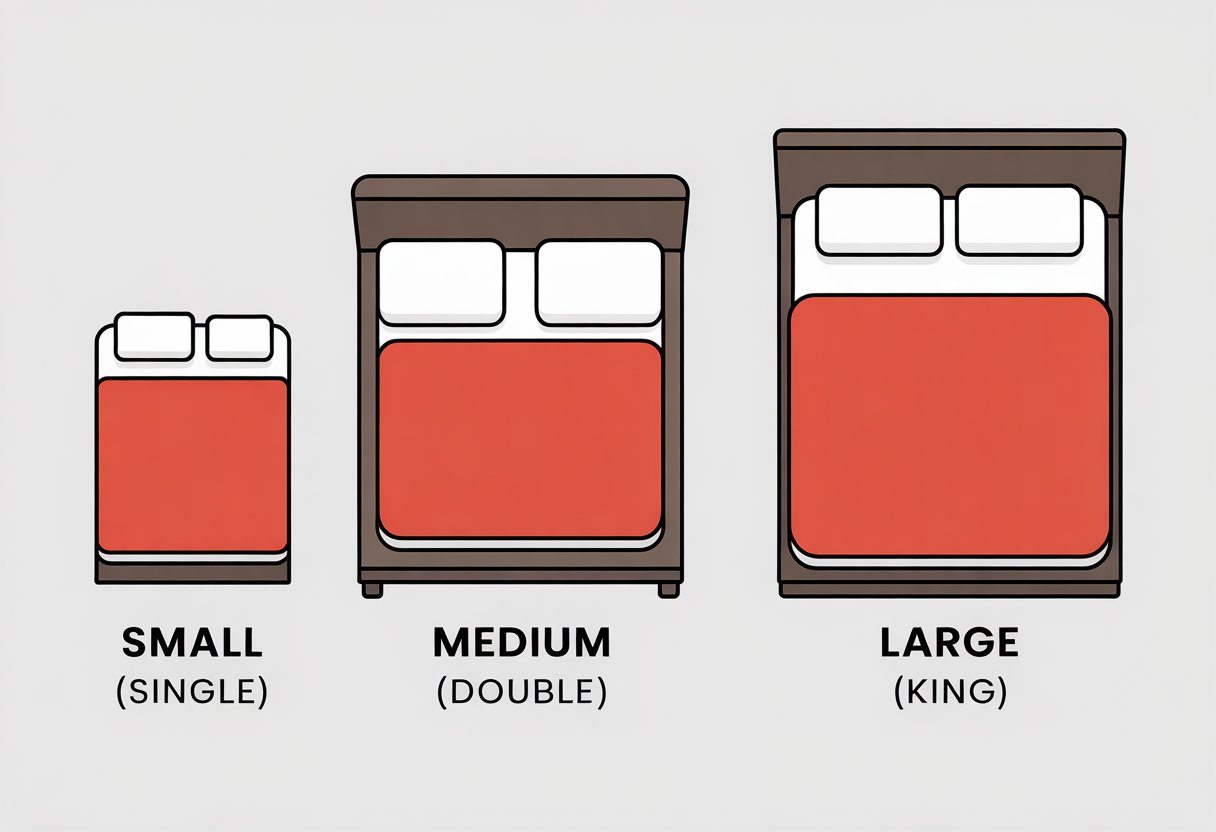
Bed frames and mattresses come in specific dimensions that need to match for proper fit and support. Knowing the available bed frame sizes helps you plan your floor space effectively. Canadian retailers follow standardized measurements that differ slightly from other countries in actual dimensions and availability.
Standard Bed Sizes in Canada
Canadian mattress dimensions align with American sizes, but you'll find some variations in what retailers stock. The most common sizes include twin (38" x 75"), double (54" x 75"), queen (60" x 80"), and king (76" x 80"). These measurements represent the mattress dimensions your frame needs to accommodate.
Actual mattress dimensions are often rounded in marketing materials. A twin might measure 38" x 74" in reality, while a double typically comes in at 53" x 74". Your bed frame should account for these real-world measurements plus a small clearance gap.
Twin XL adds five inches of length (38" x 80") and appears frequently in university residences. California king (72" x 84") offers extra length but has limited availability in Canada and often requires special ordering.
King, Queen, Double, and Twin Frames
Queen frames dominate the Canadian market for couples because they provide adequate personal space without overwhelming most bedrooms. Your queen frame needs internal dimensions of at least 60" x 80" to properly support the mattress. Most frames add 2-4 inches to these measurements for the frame structure itself.
King bed frames require 76" x 80" of internal space and work best in master bedrooms with at least 12 feet by 12 feet of floor area. You need to measure your doorways before purchasing because king mattresses don't bend. Many Canadian homes have narrower door frames and hallways that make delivery challenging.
Double frames suit single adults or smaller spaces like condos and apartments. Twin frames work for children's rooms, guest rooms, or studio apartments where space is limited.
Frame Dimensions by Size:
Mattress Size | Mattress Dimensions | Minimum Frame Interior |
|---|---|---|
Twin | 38" x 75" | 39" x 76" |
Double | 54" x 75" | 55" x 76" |
Queen | 60" x 80" | 61" x 81" |
King | 76" x 80" | 77" x 81" |
Bed Frame Sizing for Different Needs
Your height determines whether standard lengths work for you. Anyone over 6 feet tall should consider a twin XL, queen, king, or California king for adequate leg room. Standard twin and double frames leave taller sleepers with their feet hanging over the edge.
Couples need to evaluate their combined sleeping habits. If either of you moves frequently during sleep or prefers extra personal space, a king frame prevents disturbances better than a queen. Split king frames allow different mattress firmnesses on each side.
Measure your bedroom before selecting a frame size. You need at least 24 inches of walking space on each side of the bed and at the foot. A king frame in a 10-foot by 10-foot room leaves insufficient space for dressers, nightstands, or comfortable movement.
Check your stairways, hallways, and door frames with a tape measure. Most bed frames disassemble for transport, but you still need clearance for the headboard and footboard sections. Canadian homes built before 1980 often have narrower passages that complicate delivery of larger frames.
Essential Accessories and Add-Ons
The right accessories can transform your bed from basic furniture into a complete sleep system. Selecting proper support foundations, comfortable pillows, and stylish headboards enhances both function and appearance.
Headboards and Bedroom Style
A headboard serves as the focal point of your bedroom while providing practical benefits. It is an essential element of bedroom decor that ties your furniture together. Upholstered headboards with padding offer a soft surface for sitting up in bed to read or watch television. Wood and metal headboards create clean lines that suit modern or traditional decor styles.
Soft headboard options include:
Tufted fabric designs with button details
Padded velvet or linen coverings
Leather or faux leather upholstery
Height matters when choosing a headboard. Tall headboards work well in rooms with high ceilings, while low-profile designs suit smaller spaces. Wall-mounted headboards save floor space and work with any bed frame width.
Some headboards attach directly to bed frames, while others mount to walls independently. Freestanding headboards slip between the mattress and wall without requiring installation. Choose based on your bed frame design and whether you rent or own your home.
Pillows and Sleep Essentials
Your pillow choice affects sleep quality as much as your mattress does. Side sleepers need thicker pillows to fill the space between their head and shoulder. Back sleepers require medium-height support, while stomach sleepers benefit from thin, soft pillows.
Mattress protectors create a barrier against spills, sweat, and allergens. They extend mattress life by preventing moisture from breaking down foam layers. Quality protectors remain breathable so they don't trap heat.
Mattress toppers add extra cushioning or firmness to adjust your sleep surface. Memory foam toppers contour to your body, while latex options stay cooler and more responsive.
Quality sheets in breathable fabrics like cotton or bamboo help regulate temperature throughout the night. Keep two sets on hand to simplify laundry routines.
Box Springs and Adjustable Foundations
A box spring provides essential support for innerspring mattresses on metal frames. Box springs are necessary if you use a standard steel bed frame, but platform beds don't require them since they have built-in slat support.
Modern box springs use wooden slats or steel grids instead of actual springs. They absorb impact and distribute weight evenly across the mattress. Match your box spring height to your preferred bed height for easier getting in and out.
Adjustable foundations let you raise the head or foot of your bed electronically. These bases help with:
Raising your head, which some people find helps them snore less
Relieving pressure on your back and legs
Making reading or watching television more comfortable
Sleeping with the upper body raised, a position some people prefer
Most adjustable bases work with memory foam, latex, and hybrid mattresses. They replace traditional box springs and require only a compatible mattress placed on top. Remote controls allow you to find your ideal position for sleeping or relaxing.
Specialty and Alternative Beds
Not every bedroom needs a standard bed frame. Families with multiple children, small apartments, or specific age requirements often benefit from specialized sleeping solutions that maximize space or meet safety standards.
Bunk Beds and Sofa Beds
A bunk bed stacks two sleeping surfaces vertically to save floor space. These frames work well in shared children's rooms or guest areas where you need multiple beds but limited square footage.
Most bunk beds hold a weight capacity between 200 and 400 pounds per bunk. Check the manufacturer's specifications before purchase, especially for adult use.
Safety rails on the top bunk prevent falls during sleep. Look for models with sturdy ladder attachments and proper guardrails on all exposed sides.
Sofa beds combine seating and sleeping functions in one piece of furniture. These convertible frames include a fold-out mattress hidden beneath the cushions. They suit studios, home offices, or any room that serves multiple purposes.
The mattress in sofa beds typically ranges from 4 to 6 inches thick. This affects comfort levels for overnight guests.
Cribs and Kids' Beds
Cribs provide safe sleeping spaces for infants and toddlers up to about 35 inches tall. Canadian safety standards require specific slat spacing, mattress fit, and construction details for all cribs sold in the country.
The slats must sit no more than 2 3/8 inches apart to prevent entrapment. The mattress should fit snugly with no gaps larger than two fingers between the mattress edge and crib sides.
Many cribs convert to toddler beds by removing one side and adding a safety rail. This extends the furniture's useful life as your child grows.
Kids' beds come in twin or full sizes with lower height profiles for easier access. Some include built-in storage drawers or themed designs.
Bedding Sets and Duvet Covers
Sheet sets include a fitted sheet, flat sheet, and one or two pillowcases depending on bed size. Thread count affects softness, but higher numbers don't always mean better quality. Focus on fibre type and weave instead.
Common sheet materials:
Cotton (breathable, durable)
Linen (cooling, textured)
Microfibre (affordable, wrinkle-resistant)
Bamboo (moisture-wicking, soft)
Duvet covers protect your duvet insert and add style to your bedroom. They feature a zippered or buttoned opening at one end for easy removal and washing. Choose covers slightly larger than your duvet to ensure full coverage without pulling at corners.
Most duvet covers require washing every two to four weeks, while the insert itself needs cleaning only once or twice per year.
Buying Tips and Budget Considerations
Smart mattress and bed frame shopping requires balancing cost against long-term value while selecting materials and furniture pieces that enhance your bedroom's overall appearance and function.
Assessing Regular Price Versus Value
The regular price tag doesn't always reflect true value. Many high-performing mattresses fall in the $1,000 range, with some quality options available for under $600.
You should look beyond the initial cost and consider durability. Testing simulates eight to 10 years of use to measure how well a mattress holds up over time. A cheaper mattress that maintains its support and comfort for a decade offers better value than an expensive model that sags within three years.
Price differences often come from extras like organic cotton covers or latex foams rather than essential features like back support. Focus on what matters most for your sleep needs. A mattress with solid construction and proper support at a moderate price point typically outperforms luxury models with unnecessary add-ons.
Materials and Bedroom Furniture Choices
Your bed frame material affects both durability and style. Wood frames offer classic appeal and sturdy construction. Metal frames provide modern aesthetics and often cost less. Upholstered frames add softness and come in various fabrics.
Different mattress materials create distinct feels. Memory foam conforms slowly to your body. Non-memory polyurethane foam cradles without the slow sink. Latex provides a subtly springy feel. Innerspring mattresses with steel coils offer more bounce and easier movement.
Match your bedroom furniture pieces to create a cohesive look. A platform bed frame eliminates the need for a box spring, saving money and space. Storage bed frames with built-in drawers maximize functionality in smaller rooms.
Maximizing Bedroom Décor
Your bed serves as the bedroom's focal point, so choose frames and headboards that complement your existing décor. A statement headboard can transform the entire room's appearance without requiring additional furniture purchases.
Coordinate your bed frame finish with other bedroom furniture pieces like dressers and nightstands. Dark wood creates warmth, while light finishes open up smaller spaces. Metal frames suit industrial or minimalist styles.
Consider the bed's height in relation to your room's proportions. Low-profile frames work well in rooms with low ceilings. Taller frames with substantial headboards suit rooms with higher ceilings and create a more dramatic effect.
Popular Brands and Innovative Solutions
Metal bed frames have evolved with features like tool-free assembly and enhanced stability, while modern design trends prioritise space efficiency and adaptability for different sleeping preferences.
NM Steel Platform Base Features
The NM Steel Platform Base represents a practical approach to metal bed frame design. This platform eliminates the need for a box spring and assembles without tools in minutes. The frame uses a steel construction with multiple points of contact on the floor for stability.
Key specifications include:
Weight capacity of approximately 1,200 pounds
Height clearance of 14 inches for under-bed storage
Noise-free design with plastic caps on steel-to-steel connections
Folds flat for moving or storage
The platform base works with most mattress types and sizes. Its simple design makes it suitable for guest rooms, student accommodation, or anyone seeking a straightforward sleeping setup. The frame's legs distribute weight evenly across the floor, which helps prevent sagging over time.
Trends in Bedframe Design and Sleepers
Current bedframe designs address the needs of different sleepers through adjustable features and space-conscious construction. Platform frames with built-in storage drawers appeal to those in smaller living spaces. These designs incorporate lifting mechanisms or pull-out compartments beneath the sleeping surface.
Side sleepers benefit from frames that accommodate thicker mattresses, typically requiring higher clearance between the frame and floor. Back sleepers often prefer lower-profile frames that make getting in and out of bed easier. Adjustable bases have gained popularity among all sleeper types, allowing customisation of head and foot positions.
Modern materials like powder-coated steel and engineered wood offer durability whilst maintaining clean lines. Some contemporary bed designs incorporate minimalist aesthetics that suit various bedroom styles.
Frequently Asked Questions
Bed frames and mattresses work together to support your sleep, and understanding their compatibility affects your comfort and investment longevity. Different frame types require specific mattress considerations, while proper maintenance extends the life of both components.
What are the differences between platform beds and box springs?
Platform beds have a solid or slatted surface that directly supports your mattress without requiring additional foundation. The slats are typically spaced close together to distribute weight evenly across the mattress.
Box springs contain a wooden frame with metal coils or springs inside, covered by fabric. They sit between your mattress and bed frame to provide extra height and shock absorption. Traditional innerspring mattresses were designed to work with box springs for optimal support.
Platform beds often sit lower to the ground and eliminate the need for a box spring, which saves money and reduces bed height. Box springs add bounce and make getting in and out of bed easier for people with mobility concerns.
How can I determine the appropriate mattress size for my bed frame?
Your mattress must match your bed frame dimensions exactly to fit properly and provide adequate support. Standard sizes include twin (99 cm × 191 cm), full (137 cm × 191 cm), queen (152 cm × 203 cm), and king (193 cm × 203 cm).
Measure the interior dimensions of your bed frame from side to side and head to foot. Compare these measurements to standard mattress dimensions before purchasing.
Check if your frame can accommodate the mattress thickness you want. Some frames have low side rails that won't contain thicker mattresses properly.
What are the benefits of an adjustable bed frame?
Adjustable bed frames let you raise and lower the head and foot sections to find comfortable positions for reading, watching television, or sleeping. This flexibility can reduce snoring by elevating your head slightly.
These frames help relieve pressure on your lower back and legs by allowing you to position your body with proper support. Some people simply prefer to sleep with the upper body raised. If you are managing a medical condition, that is a conversation for a clinician rather than a bed-buying decision.
Many adjustable bases include additional features like massage functions and USB ports. They work best with flexible mattresses that can bend without damage.
What should I consider when choosing a mattress for back support?
Your sleeping position determines the firmness level you need for proper spinal alignment. Side sleepers typically need softer mattresses that cushion shoulders and hips, while back and stomach sleepers often prefer firmer surfaces.
Mattress quality depends on the support system and comfort layers working together. The support core should keep your spine neutral, while comfort layers relieve pressure points.
Medium-firm mattresses suit most back pain sufferers because they balance support and pressure relief. Test mattresses by lying in your typical sleeping position for at least 10 to 15 minutes.
Consider your body weight when selecting firmness. Heavier individuals need firmer mattresses to prevent excessive sinking, while lighter people may find firm mattresses uncomfortably hard.
How do I maintain and clean my bed frame and mattress to ensure longevity?
Rotate your mattress 180 degrees every three to six months to distribute wear evenly across the surface. Some mattresses are designed with specific top and bottom layers and shouldn't be flipped.
Use a mattress protector to guard against spills, dust mites, and allergens. Vacuum your mattress every few months to remove dust and debris that accumulate on the surface.
Clean bed frames by wiping wooden frames with a slightly damp cloth and dusting metal frames regularly. Tighten any loose screws or bolts to prevent squeaking and maintain structural integrity.
Address stains immediately by blotting with a clean cloth and using mild soap with water. Avoid soaking your mattress, as excess moisture can lead to mould growth inside the layers.
Can a mattress topper extend the life of my mattress and improve comfort?
Mattress toppers add a comfort layer that can mask minor sagging or firmness issues in your existing mattress. They typically range from 5 to 10 centimetres thick and attach to your mattress surface.
Toppers made from memory foam, latex, or fibrefill each offer different benefits. Memory foam contours to your body, latex provides responsive support, and fibrefill adds soft cushioning at a lower cost.
A topper won't fix a mattress with severe sagging or broken support coils. These structural problems require mattress replacement rather than surface modifications.
You can extend your mattress life by several years with a quality topper if the underlying support system remains intact. This option costs significantly less than buying a new mattress.
For the finishing touch once your frame is set up, see our guide to the 2-2-1 pillow arrangement rule.
Ready to choose one? Browse our bed frames.
 by
by 


