
Styling your couch or bed with throw pillows can feel tricky. You might add too many pillows or not enough, leaving your space looking cluttered or bare. The 2-2-1 pillow rule takes the guesswork out of pillow arrangement.
The 2-2-1 pillow rule is a simple formula that uses five pillows in a specific pattern: two large pillows, two medium pillows, and one accent pillow. Interior designer Shea McGee suggests starting with this configuration to create a balanced, professional look. The method works on both sofas and beds, helping you layer different sizes, colours, and textures without overdoing it.
This approach gives your furniture a put-together appearance while keeping things practical. You'll learn how to choose the right pillow sizes, pick colours that work together, and avoid common styling mistakes that make your space look messy.
Key Takeaways
-
The 2-2-1 rule uses five pillows arranged by size to create a balanced, layered look
-
You can adapt this formula for different furniture sizes and room styles
-
Mixing textures and patterns while keeping a cohesive colour palette prevents a cluttered appearance
What Is the 2-2-1 Pillow Rule?
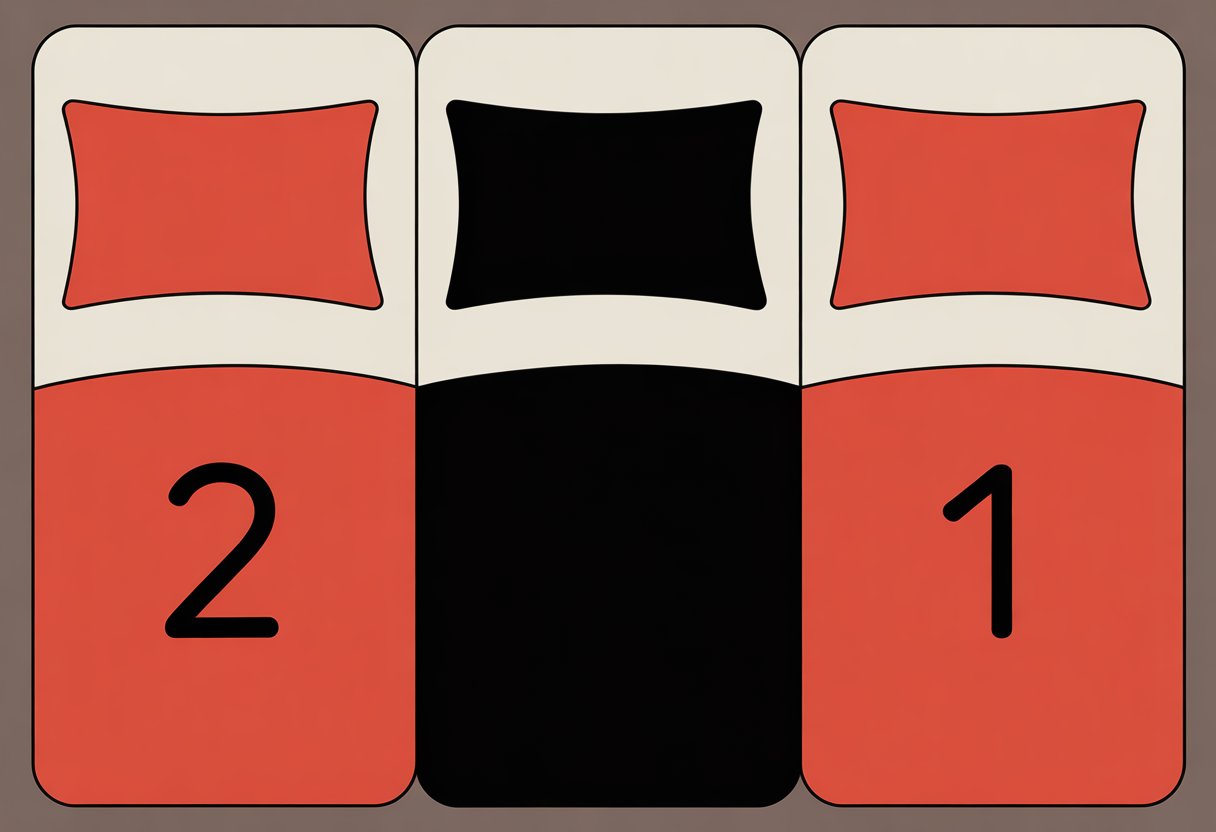
The 2-2-1 pillow rule is a popular arrangement trend that helps you style pillows on sofas and beds with a balanced, professional look. This formula uses five pillows in specific sizes and positions to create visual harmony without overwhelming your furniture.
Key Principles Behind the Rule
The 2-2-1 rule follows a simple pattern that works for both sofas and beds. You start with two large foundation pillows, add two medium decorative pillows, and finish with one accent piece.
For sofas, you place two oversized pillows at angles against each armrest. Next, you position two slightly smaller pillows in front of them. The final pillow goes in the centre to tie the arrangement together.
On beds, the approach is similar but vertical. You stack two Euro pillows (large square pillows) at the back against your headboard. Two standard sleeping pillows sit in front of those. A single decorative or lumbar pillow completes the look at the front.
This arrangement creates depth and dimension while keeping your space looking tidy. The odd number of pillows prevents the symmetrical look from feeling too rigid or formal.
Brief History and Designer Origins
Interior designer Shea McGee popularised the 2-2-1 configuration for styling bedroom pillows, though she notes there's no universal formula for every bed. The rule gained traction on social media and home design platforms as people looked for simple ways to achieve designer looks.
The method emerged from professional staging and interior design practices. Stagers needed quick, repeatable formulas that made homes look polished for showings and photo shoots.
The rule's popularity stems from its flexibility. You can adapt it to match your style by changing colours, textures, and patterns while keeping the same structure. This makes it accessible for anyone, regardless of design experience.
Breaking Down the 2-2-1 Pillow Arrangement
The arrangement uses five throw pillows in graduated sizes to create depth and visual interest. Each position serves a specific purpose in building a balanced look that feels intentional rather than random.
Foundation Pillows Explained
The foundation consists of two large square pillows placed at each end of your sofa or at the back of your bed. These pillows typically measure 20 to 22 inches and create the base layer for the arrangement.
Choose a bold pattern or solid colour for these foundation pillows. They set the colour scheme for the entire arrangement.
The size difference between these and the middle pillows creates height variation. This graduated sizing adds visual intrigue without cluttering your space. Your foundation pillows should be sturdy enough to support the layers in front of them.
The Role of Accent and Statement Pillows
The middle layer uses two smaller accent pillows, usually 18 inches square. These pillows sit in front of your foundation layer and introduce a second pattern or texture.
Your accent pillows should pull colours from the foundation pillows rather than introducing completely new hues. This creates cohesion across the arrangement.
The center statement pillow completes the arrangement. This rectangular pillow, often a lumbar pillow measuring 12 by 20 inches, adds the final pop of personality. Choose a bold pattern, interesting texture, or vibrant colour for this piece. The statement pillow gives you freedom to be creative while the other four pillows maintain structure.
Creating Visual Balance With Odd Numbers
Five pillows create natural balance because your eye can find a clear focal point in the centre. The statement pillow anchors the entire arrangement and draws attention without competing with the other pieces.
Using odd numbers prevents symmetrical arrangements that can feel too formal or stiff. The 2-2-1 ratio gives you enough pillows to look styled without overwhelming your furniture.
Each pillow type plays against the others through size, pattern, and placement. The outer pillows frame the arrangement. The middle pillows bridge the gap between large and small. The centre pillow provides a focal point that ties everything together.
Choosing Pillow Sizes and Shapes for the 2-2-1 Rule
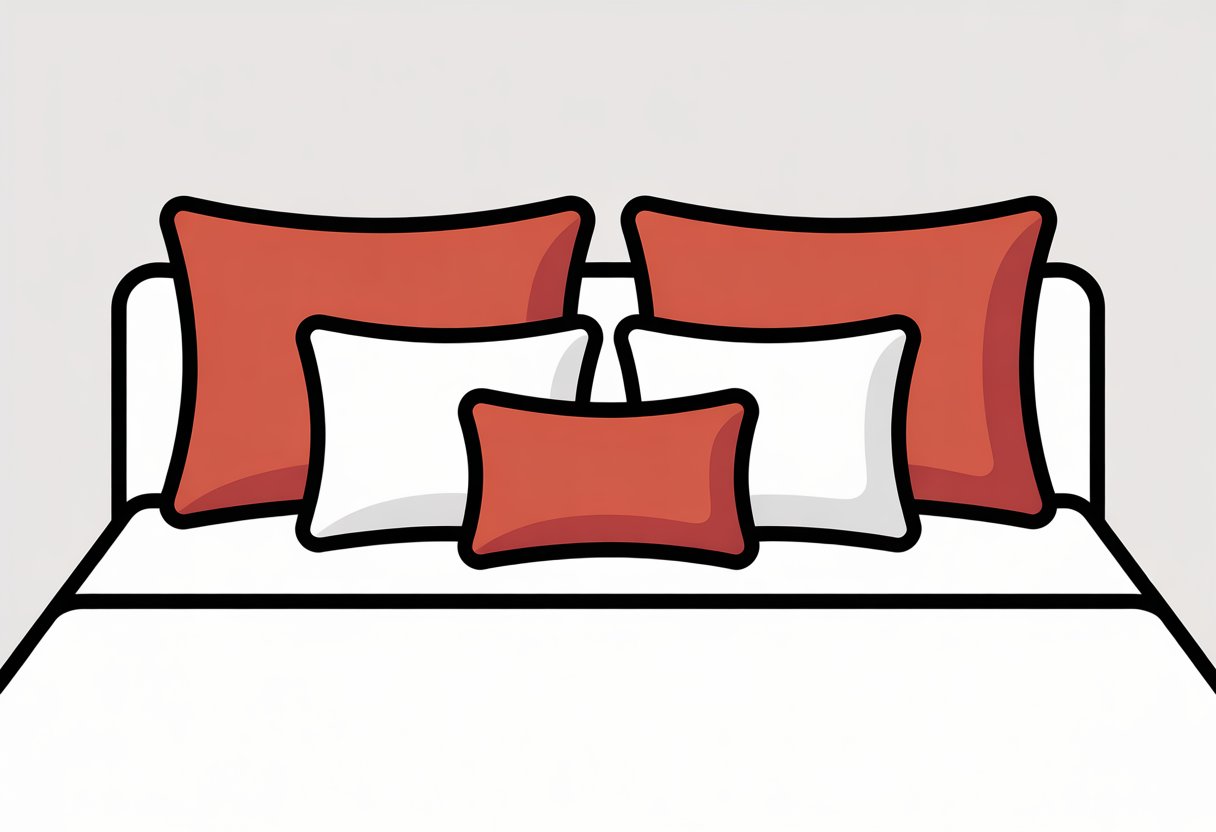
The right pillow sizes and shapes make the 2-2-1 rule work properly on your sofa. Standard sizes range from 18 to 24 inches square, while lumbar pillows add variety to the arrangement.
Guide to Common Pillow Sizes
22-inch pillows work well as your outer layer on most standard sofas. They fill the corners without overwhelming smaller furniture pieces.
20-inch pillows fit perfectly as your middle layer. Using two 20-inch pillows creates a balanced look when paired with larger outer pillows.
18-inch pillows suit smaller sofas or loveseats. They keep proportions correct when your furniture has less depth.
For deeper couches, 24-inch or 26-inch pillows work better as your base layer. Shallower couches look best with 20-inch or 22-inch options.
Here's how sizes typically stack:
|
Position |
Recommended Size |
Purpose |
|---|---|---|
|
Outer corners |
22-24 inches |
Anchors the arrangement |
|
Middle layer |
20 inches |
Adds depth |
|
Centre accent |
18 inches or lumbar |
Creates focal point |
Using Lumbar and Square Pillows
Square pillows form the foundation of most 2-2-1 arrangements. They're easy to layer and work with almost any sofa style.
Lumbar pillows measure roughly 12 by 20 inches or 14 by 22 inches. They make excellent centre accent pieces because their rectangular shape stands out against square pillows.
You can place a lumbar pillow horizontally across the centre of your sofa for a polished look. This works especially well when you want a more tailored appearance.
Some people prefer a small square pillow as their accent piece instead. Both options follow the 2-2-1 rule correctly.
Mixing Pillow Shapes for Visual Interest
Combining different shapes prevents your sofa from looking too uniform. Start with four square pillows in two sizes, then add one contrasting shape.
A lumbar pillow breaks up the repetition of squares. It draws your eye to the centre of the sofa and creates a focal point.
You can also try round pillows or bolsters as your accent piece. These unexpected shapes add personality while maintaining balance.
Keep your colour palette consistent even when mixing shapes. This prevents the arrangement from looking chaotic or disconnected.
The key is varying sizes first, then adding one different shape. Too many different shapes compete for attention and lose the clean look the 2-2-1 rule provides.
How to Arrange Sofa Pillows Using the 2-2-1 Method
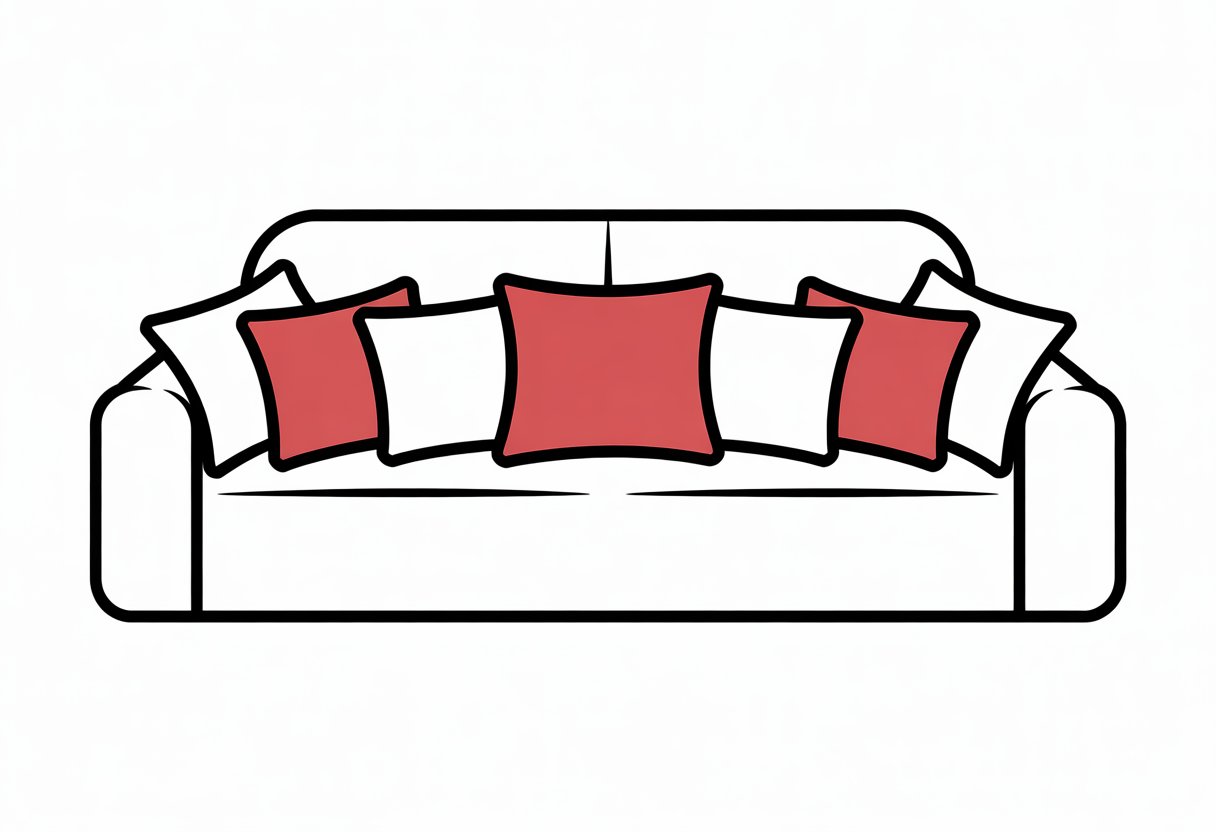
The 2-2-1 method creates a balanced pillow arrangement by using five pillows in three distinct layers, starting with your largest cushions on the outer edges and working inward with progressively smaller or more decorative pieces. This approach works best when you vary both the size and texture of your sofa pillows.
Step-by-Step Arrangement Process
Start by placing two large pillows on either side of your sofa, one against each armrest. These form your base layer and should be your biggest cushions, typically 20 to 22 inches square. Position them at a slight angle against the armrests rather than laying them flat.
Next, add two medium-sized pillows in front of the large ones. These should be smaller than your base pillows, usually 18 to 20 inches square. You can place these straight or at a slight angle.
Finish with one accent pillow in the centre. This final piece can be a lumbar pillow for additional back support or a decorative throw pillow that stands out from the rest. If you prefer a fuller look, you can replace this single pillow with an odd number of smaller throw pillows clustered in the middle.
Tips for Layering and Placement
Layer your pillows from back to front rather than side to side. This creates depth and makes your sofa look more inviting. Keep the largest pillows in back and the smallest or most decorative ones in front where they're most visible.
Mix different textures throughout your arrangement. You might pair smooth velvet pillows with chunky knit or linen options to add visual interest. Don't worry about matching everything perfectly—intentional variation makes the arrangement more dynamic.
Adjust the number of pillows based on your sofa size. A standard three-seater sofa fits the full 2-2-1 arrangement comfortably. For a loveseat, reduce to just four pillows (two large, two small). Larger sectionals can accommodate multiple 2-2-1 arrangements across different sections.
Selecting Colours, Patterns, and Fabrics
The right combination of colours, patterns, and textures turns a basic 2-2-1 pillow arrangement into a design feature that ties your whole bedroom together. Choosing colours that work with your existing space and mixing different pillow fabrics creates depth without looking cluttered.
Coordinating Colours and Patterns
Start by picking 2-3 core colours that already exist in your bedroom. One colour should be dominant while the others act as accents. Neutrals count as colours too, so don't overlook whites, greys, or beiges.
Your sleeping pillows at the back typically stay neutral. The two shams in front of them can introduce your first accent colour or pattern. The final throw pillow becomes your statement piece where you can be bold with pattern or colour.
When mixing patterns, stick to different scales. Pair a large floral print with a small geometric pattern rather than two competing large-scale designs. If you use multiple patterns, keep them within your chosen colour palette so they feel connected.
You can also take a simpler approach by using only two fabrics for your entire arrangement. This creates a cohesive look without overwhelming your bed.
Mixing Textures and Pillow Fabrics
Different pillow fabrics add dimension even when you stick to neutral colours. Cotton, linen, velvet, and knit each bring their own feel to your bed. A smooth cotton sham looks completely different next to a chunky knit throw pillow.
Layer your textures from back to front. Your sleeping pillows are usually standard cotton or linen. Your shams can introduce a subtle texture like a light weave or soft sateen. Save heavier textures like velvet, faux fur, or cable knit for your front throw pillows.
Think about how each pillow fabric performs too. Cotton and linen are easy to wash and work year-round. Velvet adds luxury but shows wear more quickly. Outdoor fabrics resist stains but may feel less soft.
Mix at least two different textures in your five-pillow setup. Three different pillow fabrics gives you even more visual interest without making your bed look too busy.
Adapting the 2-2-1 Rule for Different Spaces
The 2-2-1 pillow rule works differently depending on whether you're styling a sofa or a bed. You'll need to adjust the size, placement, and number of pillows based on the furniture dimensions and how you use the space.
Applying the Rule to Sectionals and Large Sofas
Large sectionals need more pillows than standard sofas to avoid looking bare. You can repeat the 2-2-1 pattern on each main seating section instead of treating the entire sectional as one piece.
For an L-shaped sectional, place two large pillows on the longer side, two medium pillows in front of those, and one accent pillow. Then add one or two pillows to the shorter side to balance the look. Corner sections work well with a single large pillow that anchors the turn.
Oversized sofas that seat four or more people benefit from doubling the rule. Use four large back pillows, four medium ones in front, and two accent pillows instead of one. This creates symmetry without overcrowding.
Key sizing for large furniture:
-
Large pillows should be 50-60 cm
-
Medium pillows around 45-50 cm
-
Accent pillows 30-40 cm
The colours and textures should still follow a cohesive palette across all sections.
Modifying the Approach for Beds and Smaller Furniture
Beds require a different pillow arrangement than sofas because they serve both functional and decorative purposes. Start with your sleeping pillows as the foundation, then layer decorative ones in front.
For a queen bed, use two standard sleeping pillows at the back, two smaller decorative pillows in front, and one lumbar or accent pillow. King beds can handle three sleeping pillows across the back with the same 2-1 layering pattern in front.
Twin and full beds work better with a simplified 1-1-1 approach. Use one or two sleeping pillows, one decorative pillow in front, and optionally one small accent piece.
Loveseat and chair modifications:
-
Loveseats: Two medium pillows and one accent
-
Armchairs: One large pillow or two small ones
-
Reading chairs: One supportive lumbar pillow
Smaller furniture pieces look cluttered with too many pillows. Stick to one or two well-chosen pieces that provide comfort without overwhelming the seat.
Common Mistakes and Pro Tips
Getting the pillow sizes wrong or cramming too many cushions onto your sofa can ruin the balanced look you're trying to achieve. Keeping your pillows coordinated with your existing décor ensures the space feels intentional rather than cluttered.
Proportion and Overcrowding Issues
One of the biggest pillow mistakes people make is using the same size pillows across the entire sofa. This creates a flat, uninspiring look instead of the depth the 2-2-1 rule is meant to provide.
Your sofa size determines how many pillows you can use. A standard three-seater couch fits the full 2-2-1 arrangement comfortably. A loveseat might only accommodate two larger cushions and one small accent pillow.
Start with larger pillows first. Place 22-inch square pillows at each end, then layer 20-inch pillows in front. The sizes should vary by two-inch increments for proper proportion.
Leave breathing room between each pillow. You should be able to sit comfortably without having to remove multiple cushions first. If your sofa looks packed or you can't see any of the back cushions, you've added too many.
Maintaining Cohesion With Room Décor
Your throw pillows need to connect with the colours already present in your space. Choose two to three core colours that appear elsewhere in the room—one dominant colour and one or two accent colours.
Neutrals count as colours in this formula. Beige, grey, or cream pillows can serve as your base while bolder accent pillows add visual interest.
Mix textures intentionally. Pair smooth velvet with nubby linen or add a knit pillow to complement leather furniture. Different textures create depth without clashing patterns.
Don't match your pillows too closely to one piece of furniture. Pull colours from your curtains, rug, artwork, or wall colour instead. This creates flow throughout the entire room rather than making your sofa look isolated from the rest of your décor.
Frequently Asked Questions
The 2 2 1 pillow rule primarily serves as a decorative bed styling technique rather than a sleep system. People often have questions about its practical benefits and whether it applies to actual sleeping arrangements.
How does the 2 2 1 pillow configuration enhance sleep quality?
The 2 2 1 pillow arrangement doesn't directly enhance your sleep quality because it's designed for visual appeal, not for sleeping. This configuration involves stacking two euro pillows at the back, two standard pillows in front, and one decorative or lumbar pillow at the very front.
You typically remove these decorative pillows before bed. The arrangement is meant to make your bed look attractive during the day.
If you're looking to improve your sleep quality, you should focus on choosing pillows based on your sleeping position and personal comfort needs rather than decorative arrangements.
What are the benefits of using the 2 2 1 arrangement for pillows?
The main benefit of using the 2 2 1 arrangement is that it creates a polished, hotel-like appearance for your bed. This layered look adds depth and visual interest to your bedroom.
The arrangement helps you organise different pillow types in a way that looks intentional. It provides structure if you're unsure how to display multiple pillows.
You can also lean against the stacked pillows comfortably when sitting up in bed to read or watch television. The euro pillows at the back provide good support for your lower back in this position.
Can the 2 2 1 pillow formula help alleviate neck and back pain?
The 2 2 1 pillow formula isn't designed to alleviate neck and back pain during sleep. This arrangement is purely decorative and gets dismantled when you actually go to bed.
For neck and back pain relief, you need to select pillows based on your sleeping position. Side sleepers typically need firmer, higher pillows to keep their spine aligned. Back sleepers usually do better with medium-height pillows that support the natural curve of their neck.
If you sit up in bed during the day, the stacked euro pillows in the 2 2 1 arrangement can provide lumbar support. However, this is different from addressing pain during actual sleep.
Is the 2 2 1 pillow rule suitable for all sleeping positions?
The 2 2 1 pillow rule isn't related to sleeping positions because you remove these decorative pillows before sleeping. The arrangement works for any bed where you want an attractive daytime display.
Your actual sleeping pillows should be chosen based on whether you sleep on your side, back, or stomach. These functional pillows may or may not be part of the 2 2 1 display during the day.
Many people use their regular sleeping pillows as the two standard pillows in the middle layer of the arrangement. The euro pillows and decorative pillow are extras kept on the bed for appearance.
What types of pillows are recommended for the 2 2 1 setup?
For the 2 2 1 setup, you'll need two euro pillows, which are large square pillows typically measuring 66 centimetres by 66 centimetres. These form the back layer and provide height to the arrangement.
The middle layer uses two standard sleeping pillows, which are usually around 51 centimetres by 66 centimetres. You can use your regular sleeping pillows for this layer.
The front accent piece is typically a lumbar pillow or a smaller decorative pillow. Lumbar pillows are rectangular and usually measure around 30 centimetres by 51 centimetres. You can also use a small square pillow measuring 30 to 41 centimetres on each side.
How should the pillows be positioned for the correct 2 2 1 alignment?
Start by placing your two euro pillows at the back of your bed, standing them upright against your headboard. Position them side by side so they cover most of the width of your bed.
Place your two standard pillows in front of the euro pillows, also standing upright. These should lean slightly against the euro pillows for support.
Finish by placing your decorative or lumbar pillow in front of the standard pillows, either laying it flat or propping it at an angle. This front pillow serves as the focal point of the arrangement.