
Deciding is an innerspring mattress better than foam often depends on your specific sleep needs. When comparing innerspring vs memory foam, it is important to understand how each material interacts with your body. Choosing between different types of mattresses can feel overwhelming. Whether you look at a traditional spring mattress or modern foam options, you want to find the best mattresses for your frame.
Neither innerspring nor foam mattresses are universally better than the other, as the right choice depends on your sleep position, body type, temperature preferences, and budget. Innerspring mattresses offer a firmer, more responsive feel with better bounce, while foam mattresses provide superior pressure relief and motion isolation. Understanding the key differences between these two popular mattress types will help you make a confident decision.
The good news is that modern versions of both innerspring and foam mattresses have improved significantly over the years. Whether you prefer the traditional feel of springs or the contouring support of foam, you'll find options that address common concerns like heat retention, durability, and comfort for different sleeping positions.
Key Takeaways
-
Innerspring mattresses provide more bounce and airflow, while foam mattresses excel at pressure relief and reducing motion transfer
-
Your preferred sleep position and body weight play a major role in determining which mattress type will keep your spine properly aligned
-
Modern cooling technologies have made both innerspring and foam mattresses suitable for hot sleepers, though innersprings naturally sleep cooler
Understanding Innerspring and Foam Mattresses
Innerspring mattresses use metal coils to provide support, while foam mattresses rely on dense foam layers that contour to your body. Each type offers distinct benefits in terms of support, comfort, and temperature control.
What Is an Innerspring Mattress?
An innerspring mattress is built around a coil system made of steel springs that form the support layer. A spring mattress uses these metal components to maintain a level surface. The coils compress and push back when you lie down, distributing your weight across the surface. Most innerspring mattresses include a comfort layer on top of the coils, usually made from padding or thin foam. Some models even feature a plush pillow top for extra cushioning and luxury.
The coil mattress design allows for excellent airflow, which helps keep you cool throughout the night. This makes innerspring options popular with hot sleepers.
Modern innerspring mattresses use different coil types. Some have interconnected coils, while others feature pocket coils. These individually wrapped springs respond independently to pressure for better contouring. The coil gauge (thickness) affects firmness—lower gauge numbers mean thicker, firmer coils.
These mattresses typically provide a bouncy, responsive feel. You sleep more "on" the mattress rather than sinking into it, which many back and stomach sleepers prefer for spinal alignment.
What Is a Foam Mattress?
A foam mattress consists entirely of foam layers without any coils. The most common types include memory foam mattresses and latex mattresses. Memory foam is a dense, temperature-sensitive material that softens with body heat and moulds to your shape.
Foam mattresses excel at pressure relief because they contour closely to your body. This hugging sensation helps cushion pressure points like hips and shoulders, making them ideal for side sleepers.
The comfort layers in foam mattresses work together with a transition layer and the support layer to provide stability. Memory foam responds slowly to movement, creating a sinking feeling. A latex mattress offers a more responsive, bouncy alternative while still conforming to your body. These materials are often used in a hybrid mattress to provide a balanced feel between foam and springs.
Temperature can be a concern with traditional memory foam since the dense material traps heat. Many newer foam mattresses include gel infusions or open-cell designs to improve breathability.
Hybrid Mattresses Explained
A hybrid mattress combines an innerspring coil system with substantial foam comfort layers on top. This design aims to deliver the supportive bounce of coils with the pressure relief of foam. You get the best features of both mattress types in one product.
The coil system in a hybrid provides the base support and airflow, while multiple foam layers (often memory foam or latex) create the comfort surface. This construction typically offers better edge support than all-foam options.
Hybrid mattresses suit sleepers who want foam's contouring benefits without feeling trapped in the mattress. The coils underneath add responsiveness and make it easier to move around or get out of bed.
Key Construction Differences
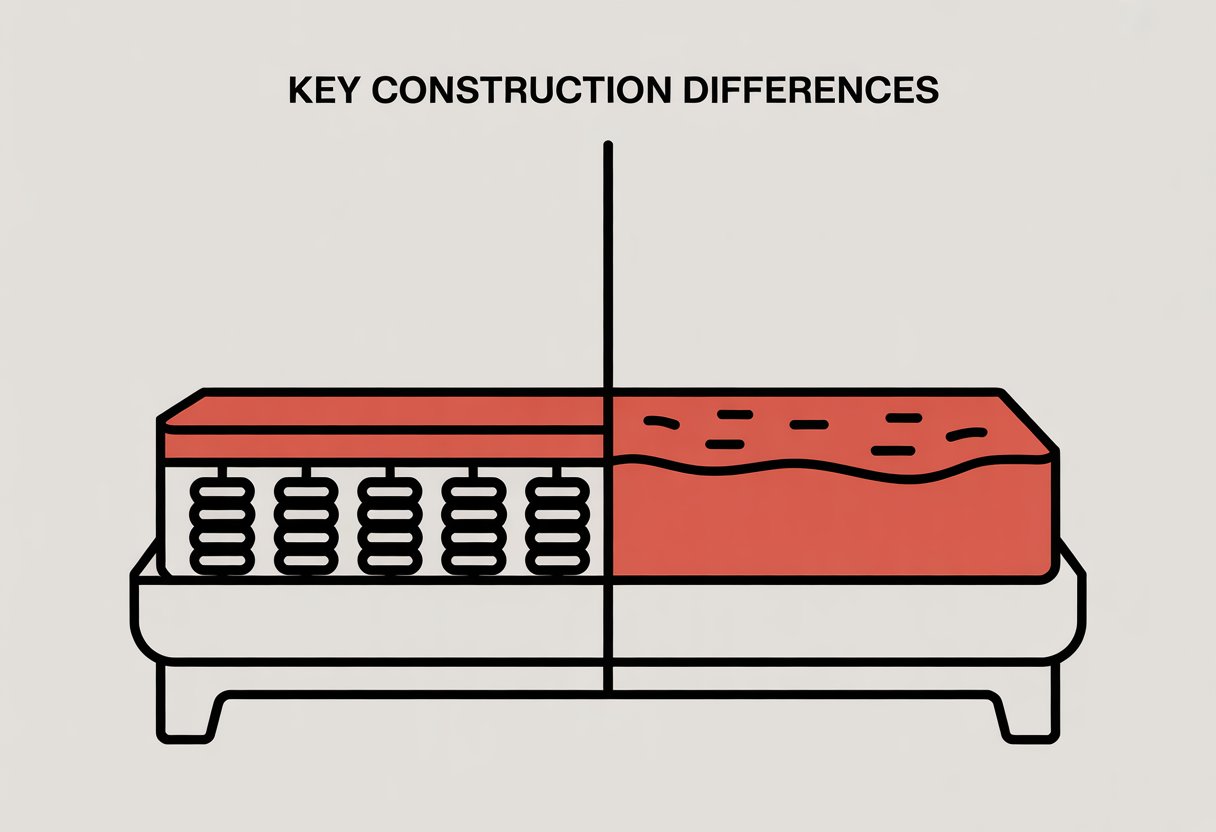
Innerspring and foam mattresses differ fundamentally in their core materials and layering systems. Evaluating innerspring vs memory foam highlights the contrast between metal support and synthetic cushioning. Innerspring beds use steel coils as their support base, while foam mattresses rely entirely on various foam types stacked in specific densities and thicknesses.
Types of Innerspring Coils
Your innerspring mattress contains one of several coil systems that affect support and durability. Bonnell coils are the oldest and most affordable option, featuring an hourglass shape. Offset coils use a similar hourglass design but include a hinging mechanism that offers better body contouring than bonnell coils. These offset coils are designed to be quieter and more flexible, adapting better to the body's curves.
Continuous coils consist of a single wire formed into multiple S-shaped rows, creating a stable and budget-friendly support system. Because the wire is interconnected, continuous coils offer a very durable structure that resists sagging over time. Individually wrapped coils, also called pocketed coils, are each encased in fabric and move independently from one another. This design provides superior motion isolation and body contouring compared to interconnected coil systems.
Coil gauge measures the thickness of the steel wire used in the springs. Thicker coils create a firmer mattress, while thinner gauges offer more flexibility and body-shaping ability. Most innerspring mattresses use gauges between 12 and 15, with lower numbers indicating thicker, firmer coils.
Foam Types and Densities
Foam mattresses use multiple layers of different materials to provide support and comfort. Memory foam, technically called viscoelastic polyurethane foam, is the most common type. Traditional memory foam responds to heat and pressure by moulding closely to your body shape.
Polyurethane foam, or polyfoam, serves as a less expensive alternative that offers some cushioning without the deep contouring of memory foam. Manufacturers often use polyfoam in transition layers between the comfort and support sections. Latex foam provides a more responsive feel with natural cooling properties and greater durability than synthetic options.
Open-cell memory foam features a modified structure that allows better air circulation than traditional closed-cell designs. This helps any foam bed behave more like a cooling mattress. Foam density, measured in pounds per cubic foot, directly impacts durability and support. Higher-density viscoelastic polyurethane foam lasts longer, while lower densities feel softer but may wear out faster.
Performance Comparison: Innerspring vs Foam
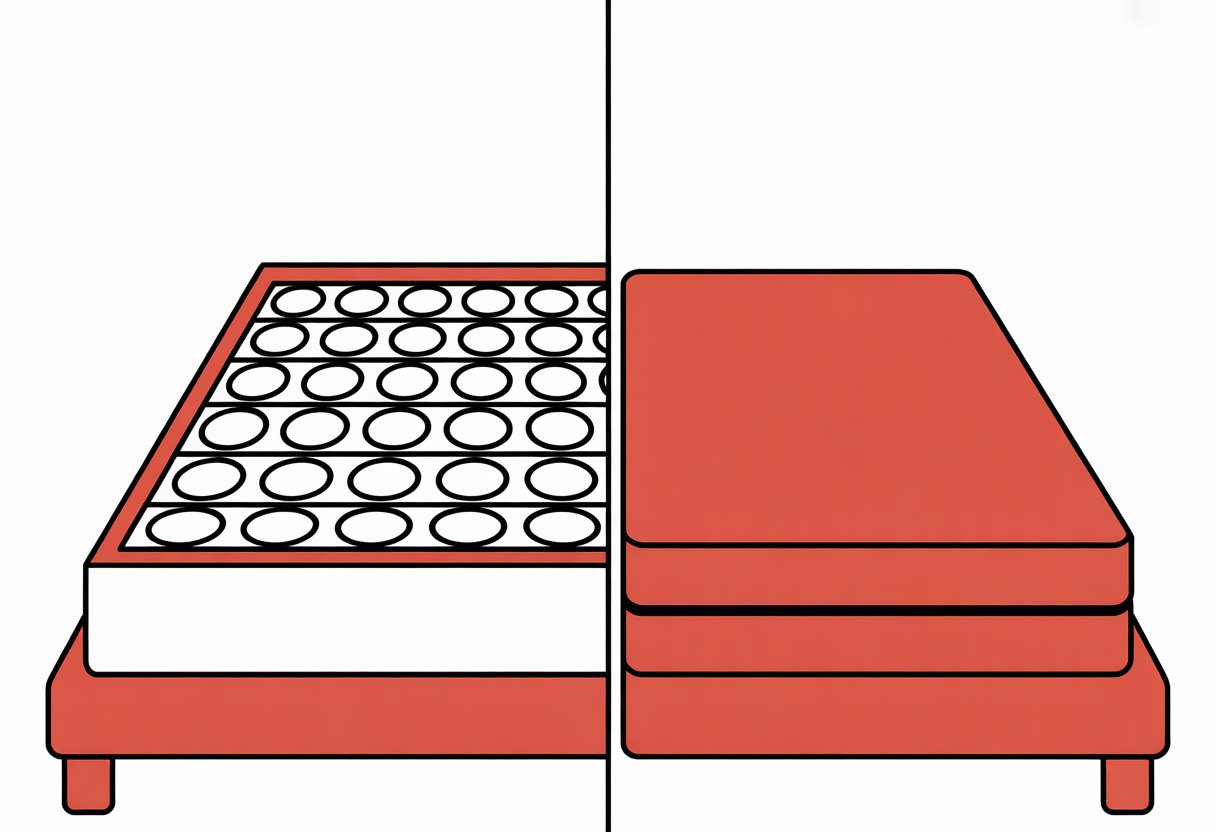
The different types of mattresses available today deliver distinctly different sleep experiences. Many shoppers ask is an innerspring mattress better than foam based on their movement and weight. The innerspring vs memory foam comparison often centers on responsiveness and pressure relief. Innerspring mattresses use steel coils that provide firm, responsive support with minimal sinkage, while foam mattresses use dense materials that conform closely to your body shape.
Support and Spinal Alignment
Innerspring mattresses offer firm, consistent support across the entire sleep surface due to their coil systems. When considering is an innerspring mattress better than foam, the responsive push-back of the coils helps maintain proper alignment. Many high-end models offer zoned support to provide different levels of firmness for your hips and shoulders. This keeps your spine elevated rather than allowing deep sinkage.
Foam mattresses provide support through contouring rather than resistance. The material softens under pressure and heat, allowing your body to sink into the mattress while supporting your natural curves. This contouring effect helps maintain spinal alignment for side sleepers by cushioning your shoulders and hips, which are wider than your waist.
Some innerspring mattresses use pocketed coils that respond independently to different body zones, offering better targeted support than traditional bonnell coils. Foam mattresses may include firmer base layers beneath softer comfort layers to prevent excessive sinkage that could misalign your spine.
Pressure Relief and Body Contouring
Foam mattresses excel at pressure relief because they distribute your body weight evenly across the surface. When you lie down, the foam compresses around pressure points like your shoulders, hips, and knees rather than pushing back against them. This body contouring reduces stress on joints and can ease discomfort if you experience pain in these areas.
Innerspring mattresses provide less body contouring because the coils maintain their shape rather than moulding to your body. The comfort layers on top of the coils offer some cushioning, but the underlying springs create a firmer, more uniform surface. This lack of contouring can create pressure points, particularly for side sleepers whose shoulders and hips bear concentrated weight.
The "hugging" sensation of foam comes from its ability to conform closely to your body's curves. This is often enhanced by a transition layer that prevents you from hitting the hard support core. A spring mattress feels more like lying on top of the bed rather than sinking into it. This responsiveness makes a spring mattress a favorite for those who move frequently at night.
Motion Isolation and Noise
Foam mattresses absorb motion rather than transferring it across the bed surface. If your partner moves or gets up during the night, you're less likely to feel the disturbance because the dense foam material dampens vibrations. This excellent motion isolation makes foam particularly suitable for couples or light sleepers.
Innerspring mattresses transfer motion more noticeably because the interconnected coils allow movement to travel across the bed. When one person shifts position, the springs compress and rebound, creating bounce that your partner may feel. Pocketed coil systems reduce motion transfer compared to traditional coil designs, but they still don't match foam's isolation capabilities.
Innerspring mattresses can produce squeaking or creaking noises as the coils compress and metal components rub together, especially as the mattress ages. Foam mattresses operate silently because they contain no moving parts or metal components.
Temperature Regulation and Cooling Technologies
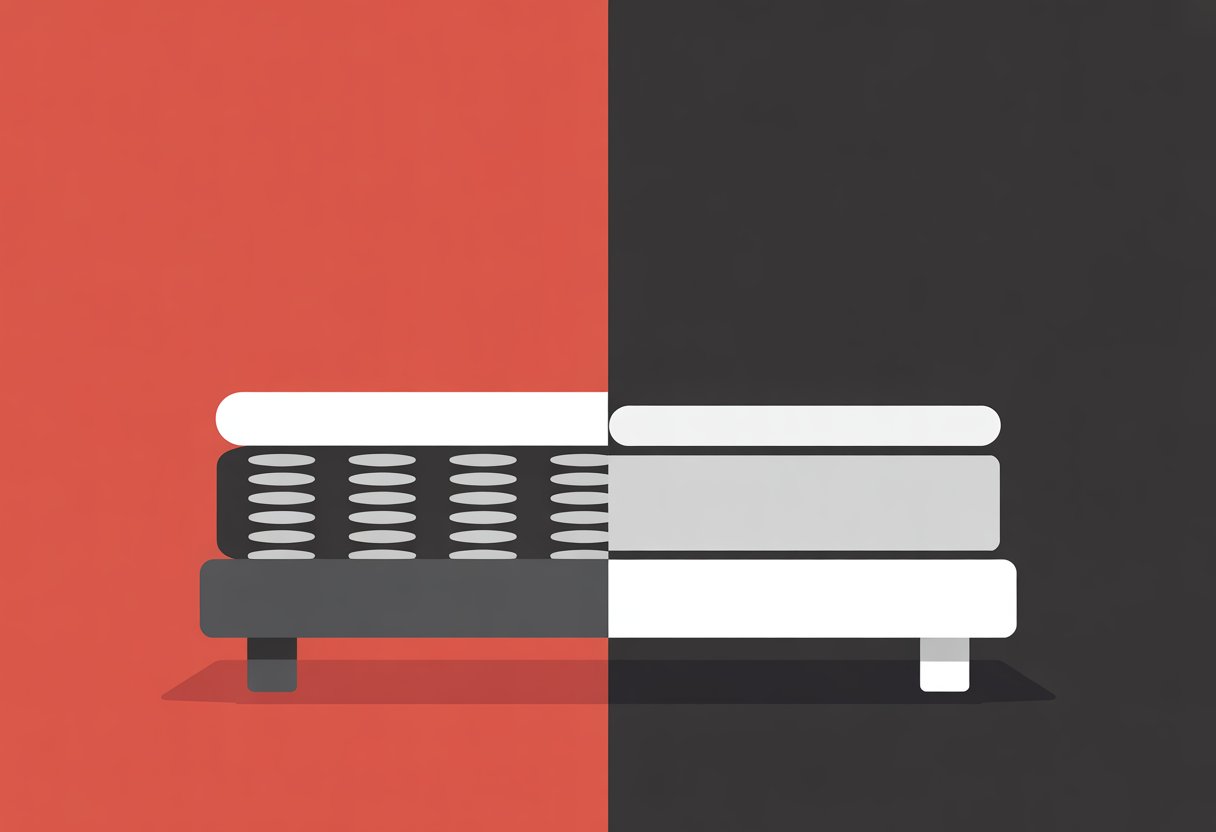
Innerspring mattresses allow air to flow freely through their coil systems, while foam mattresses trap more heat but now include advanced cooling features to help hot sleepers stay comfortable through the night.
Breathability of Innerspring Mattresses
Innerspring mattresses excel at keeping you cool because air can flow through the coils, creating natural ventilation throughout the mattress. The open space between the coils acts like a built-in airflow system that prevents heat from getting trapped against your body.
This design makes innerspring beds more effective for hot sleepers compared to traditional foam options. A spring mattress helps maintain a comfortable temperature throughout the night.
The coil construction naturally promotes temperature neutrality without requiring special cooling technologies. If you sleep hot and want a cooling mattress that works through simple physics rather than added materials, innerspring offers reliable temperature regulation night after night.
Foam Mattress Cooling Features
Modern foam mattresses now include cooling technologies designed specifically to combat heat retention. Gel-infused foam contains cooling gel microbeads mixed into the memory foam to help regulate your body temperature and may feel cool when you first lie down.
Open-cell foam features tiny openings throughout the material that allow more air circulation compared to traditional dense foam. Phase-change materials like copper-infused foam can absorb and wick away heat from your body as you sleep.
However, even with cooling additives, foam creates a denser barrier that restricts airflow compared to innerspring designs. Newer technologies in memory foam have improved temperature regulation, but they still don't match the natural breathability of coil systems. Heavy sleepers who sink deeper into foam may experience more heat trapping regardless of cooling features added to the mattress.
Suitability for Different Sleep Styles
Your sleep position plays a major role in determining which mattress type will give you the best support and comfort. Many sleepers wonder is an innerspring mattress better than foam for their specific position.
Side Sleepers
Side sleepers need a mattress that cushions pressure points at the shoulders and hips. Foam mattresses excel in this area because they contour closely to your body shape. The material moulds around these pressure zones to keep your spine aligned properly.
Memory foam provides contouring body support that prevents uncomfortable pressure buildup. This reduces the chance of waking up with sore shoulders or numb arms.
Innerspring mattresses can work for side sleepers if they have thick comfort layers on top. But the coil system underneath doesn't adapt as well to your curves. You might feel more pressure on your joints with a spring mattress unless it has substantial padding layers.
Back and Stomach Sleepers
Back and stomach sleepers benefit from firmer support that prevents their midsection from sinking too deeply. Innerspring mattresses are firmer and respond quickly, making them ideal for these sleep positions.
The bounce and responsive feel of coils make it easier to change positions during the night. Stomach sleepers especially need firm support to avoid lower back strain from poor spinal alignment.
Foam mattresses can still work for back sleepers if you choose a firmer density. Medium-firm foam provides enough support whilst still offering some pressure relief. Stomach sleepers might find most foam mattresses too soft, causing their hips to sink and creating an uncomfortable arch in the lower back.
Combo Sleepers and Heavy Sleepers
Combo sleepers who change positions frequently need a mattress that responds quickly to movement. Innerspring mattresses win here because their coils bounce back immediately when you shift positions. You won't feel stuck or have to struggle to roll over like you might with slow-responding memory foam.
Heavy sleepers require extra support to prevent excessive sinking. High-density foam mattresses work well because they maintain their shape under more weight. But many heavier individuals prefer innerspring mattresses for their firmer, buoyant support.
The coil support system in a spring mattress provides consistent support across the entire surface. This prevents sagging in areas where your body weight concentrates. Heavy sleepers should look for a coil mattress with higher coil counts and thicker gauge steel. Using a durable latex mattress made with resilient latex foam can also provide necessary longevity. This material helps maintain a supportive surface without the heat retention found in some synthetic foams.
Durability, Longevity, and Maintenance
Memory foam mattresses typically outlast innerspring models by several years, though proper care extends the life of both types. When evaluating is an innerspring mattress better than foam for long-term use, material quality is the deciding factor.
Expected Lifespan and Warranty
Memory foam mattresses last 8 to 15 years, making them more durable than innerspring options. The density of the foam determines how long your mattress maintains its support and comfort.
Innerspring mattresses typically last 7 to 10 years. The springs often show wear after 5 to 7 years of use. You might extend this lifespan by rotating your mattress every six months.
Most manufacturers recommend replacing any mattress every 5 to 10 years regardless of type. Warranty coverage usually reflects these lifespans, with foam mattresses sometimes offering longer protection periods. Check what your warranty covers, as many exclude normal wear like body impressions under a certain depth.
Edge Support and Sag Prevention
Innerspring mattresses often have strong wires around the perimeter of the mattress. This makes the edges stronger than most foam designs. You can sit on the side without feeling like you might roll off.
Memory foam mattresses generally have weaker edge support. The foam compresses more at the perimeter, reducing your usable sleep surface. Some premium foam models include reinforced edges to address this issue.
Sagging affects both mattress types differently. Innerspring mattresses develop permanent indentations when coils lose tension. Memory foam mattresses can develop body impressions where you sleep most often. Using a solid foundation or box spring minimises stress on innerspring mattresses and helps prevent premature sagging.
Off-Gassing and Mattress Protectors
New memory foam mattresses release a chemical smell called off-gassing when you first unpack them. This odour comes from volatile organic compounds in the foam. The smell usually fades within a few days to a week if you air out your room.
Innerspring mattresses produce minimal off-gassing since they contain less foam material. The metal coils and natural fibres used in many innerspring designs don't emit strong odours.
Mattress protectors help with maintenance for both types. They create a washable barrier against dust mites, bacteria, and fluids. This protection extends the life of your mattress by keeping the internal materials clean. Memory foam's dense structure naturally blocks dust mites better than innerspring designs, but a protector adds extra defence for either type.
Choosing the Best Mattress for You
Your ideal mattress depends on how you sleep, what you can spend, and which specific models offer the best combination of comfort and support for your needs.
Personal Preferences and Sleeping Needs
Your sleeping position plays a major role in which mattress type works best. Side sleepers often prefer foam mattresses because they provide pressure relief at the hips and shoulders. Back and stomach sleepers typically do better with innerspring mattresses that offer firmer support and prevent the spine from sinking out of alignment.
Temperature regulation matters if you sleep hot. Innerspring mattresses sleep coolest due to open coil systems, while foam mattresses trap more heat.
Motion isolation is important for couples. Memory foam molds closely to your body and absorbs movement, so you won't feel your partner tossing and turning. Innerspring beds have more bounce, which can transfer motion across the bed.
Body weight affects how much support you need. Heavier sleepers usually need the stronger support that innerspring coils provide, while lighter sleepers can get adequate support from foam.
Budget Considerations and Value
Foam mattresses generally cost less than innerspring models at the entry level. You can find basic foam beds for a few hundred dollars, while quality innerspring mattresses typically start higher.
The cost difference narrows as you move up in quality. Premium foam beds with multiple layers of viscoelastic polyurethane foam and cooling technology can cost as much as high-end innerspring beds. A hybrid mattress usually falls in the mid to upper price range because it combines complex layers. This variety in the types of mattresses available means you can find a comfortable option at almost any price point.
Durability affects long-term value. Innerspring mattresses often last 7 to 10 years before the coils wear out. Foam mattresses typically last 6 to 8 years before they start to sag. Higher-density foam lasts longer but costs more upfront.
Consider what features matter most to you and allocate your budget accordingly. Spending more on better materials usually means better sleep and longer mattress life.
Top Picks: Best Innerspring and Foam Mattresses
The Saatva Classic stands out among the best innerspring mattresses for its dual coil system and luxury materials. It offers strong support with a plush top layer that cushions pressure points.
When searching for the best memory foam mattress, look for a balance of contouring comfort and support. Quality viscoelastic polyurethane foam will keep your spine aligned throughout the night. Look for the best mattresses with at least three layers, including a transition layer and a firmer base. If you sleep hot, prioritize open-cell memory foam to ensure your bed remains a cooling mattress.
When comparing sleep products, check these key features:
Innerspring Essentials:
-
Coil gauge (thicker coils mean firmer support)
-
Coil count (more coils typically mean better support)
-
Edge support quality
-
Top comfort layers
Foam Must-Haves:
-
Foam density (higher density lasts longer)
-
Cooling features like gel or open-cell foam
-
Multiple support layers
-
Cover breathability
Test any mattress during the trial period to make sure it meets your needs. Most companies offer 90 to 120 nights to decide if you want to keep it.
Frequently Asked Questions
Choosing between innerspring and foam mattresses raises common questions about support, temperature control, and longevity. Understanding these differences helps you make an informed decision based on your specific sleep needs.
What are the benefits of an innerspring mattress compared to memory foam?
Innerspring mattresses offer a responsive, bouncy feel that many people find familiar and comfortable. The coil system provides immediate support when you move or change positions during the night.
Innerspring beds allow better airflow through and around the coils, which helps you sleep cooler. This breathability makes them a good choice if you tend to overheat at night.
These mattresses typically cost less than memory foam options. You'll find innerspring beds at various price points, with many budget-friendly choices available.
The firmer surface works well for stomach and back sleepers who need solid support. The lack of deep sinking helps keep your spine properly aligned.
How do foam mattresses differ in support and comfort from innerspring models?
Foam mattresses contour closely to your body shape, creating a hugging sensation. This conforming quality helps distribute your weight evenly across the sleep surface.
The foam layers provide superior pressure relief for your shoulders, hips, and knees. Side sleepers especially benefit from this reduced pressure on sensitive joints.
Memory foam adapts to your body's curves more precisely than innerspring coils. This targeted support can help keep your spine aligned regardless of your sleeping position.
Foam beds offer consistent support across the entire mattress surface. Unlike coils that can create pressure points, foam creates a more uniform feel.
Can innerspring mattresses provide better airflow than foam mattresses?
Yes, innerspring mattresses naturally allow more air circulation than traditional foam. The open spaces between coils create pathways for air to move freely through the mattress.
This enhanced breathability helps regulate your body temperature throughout the night. Heat doesn't get trapped the way it can in dense foam layers.
Modern foam mattresses have improved with gel-infused materials and open-cell technology. However, innerspring mattresses still maintain an advantage in breathability compared to all-foam constructions.
Are there significant differences in the durability of innerspring versus foam mattresses?
Memory foam mattresses typically last around 10 years with proper care. Quality foam maintains its shape and support longer than lower-grade materials.
Innerspring mattresses generally provide seven to eight years of good performance. The coils can eventually lose their tension and support over time.
Both mattress types benefit from using a quality mattress protector. This prevents stains, moisture, and dust from breaking down the materials inside.
Foam mattresses resist sagging better than innerspring models. The foam structure doesn't develop permanent body impressions as easily as coils can lose their spring.
How do innerspring and foam mattresses compare in terms of motion isolation?
Memory foam mattresses excel at reducing motion transfer between sleep partners. The foam absorbs movement rather than transmitting it across the bed surface.
You're less likely to feel your partner's movements on a foam mattress. This makes foam the better choice if you're a light sleeper who wakes easily.
Innerspring mattresses transfer more motion, especially models with open coils. When your partner moves, the connected coils can transmit that movement to your side.
Pocketed coil systems reduce motion transfer better than traditional open coils. Each individually wrapped coil moves independently, limiting how much movement travels across the mattress.
What kind of sleeper would typically benefit more from an innerspring mattress over a foam one?
You'll likely prefer an innerspring mattress if you want a firmer, more supportive feel. Back pain sufferers often find innerspring beds more effective due to their firmer support.
Hot sleepers benefit from the natural breathability of innerspring construction. If you regularly wake up feeling too warm, an innerspring mattress helps keep you cooler.
People who like a responsive, bouncy surface prefer innerspring beds. The immediate feedback when you move makes changing positions easier during the night.
Stomach and back sleepers typically do well on a spring mattress. The firmer surface prevents your hips from sinking too deeply, which helps maintain proper spinal alignment.