

















Picking the right mattress size can feel overwhelming when you're standing in a showroom or scrolling through options online. You need to know how much space you'll actually have to sleep, whether your bedroom can fit the bed, and if the investment makes sense for your needs.
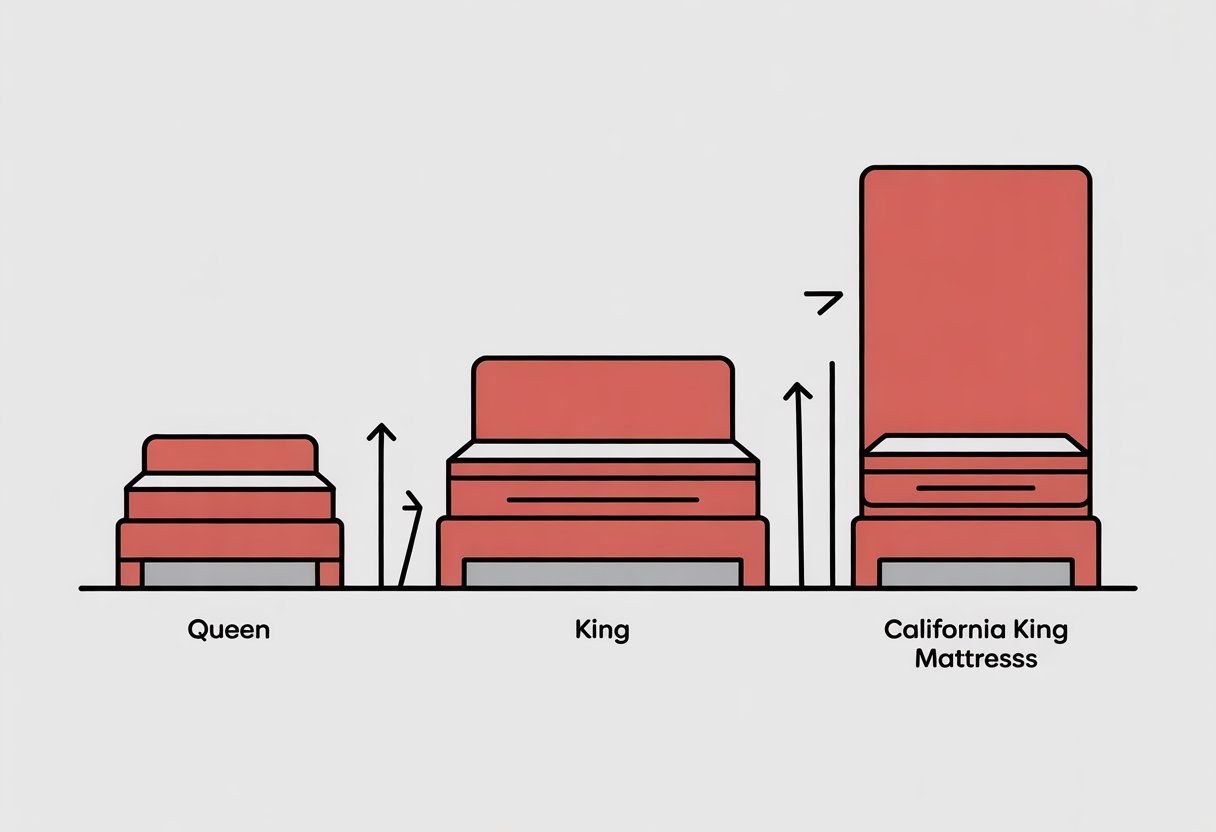
A queen mattress measures 60 inches wide by 80 inches long, a king measures 76 inches wide by 80 inches long, and a California king measures 72 inches wide by 84 inches long. The main difference comes down to width versus length. A standard king mattress gives you 16 extra inches of width compared to a queen, while a California king trades some of that width for four additional inches of length.
Understanding these dimensions helps you match your mattress to your body size, sleeping habits, and bedroom layout. Whether you sleep alone, share your bed with a partner, or have kids and pets joining you at night, the right size makes a real difference in your sleep quality.
Key Takeaways
- Queen mattresses work well for couples in smaller bedrooms, while king mattresses offer more width for spreading out
- California king mattresses are the longest standard option and suit taller individuals or narrower bedroom layouts, but National Mattress currently does not carry this size; king and split king are the sizes we offer
- Your choice should balance your room size, number of sleepers, body height, and budget for both the mattress and bedding
California king vs king: what is the difference?
A California king is 72 inches wide by 84 inches long, and a standard king is 76 inches wide by 80 inches long. The king is 4 inches wider; the California king is 4 inches longer. The king also has more total sleeping surface: 6,080 square inches versus 6,048. Choose a king when two people want width to share. Choose a California king only when one of you is over 6 feet tall and legroom matters more than elbow room.
- King: 76 x 80 inches (193 x 203 cm), the widest standard size
- California king: 72 x 84 inches (183 x 213 cm), the longest standard size
- Split king: two Twin XL mattresses side by side, 76 x 80 inches in total, for adjustable bases and a different firmness on each side
Is a California king bigger than a king?
Not overall. A California king is longer but narrower, and a standard king has 32 more square inches of surface. The California king wins only on length, which matters for sleepers taller than about 6 feet 2 inches. For couples, the king's extra width is usually felt more than the California king's extra length.
Does National Mattress sell California king mattresses?
Not at the moment. National Mattress currently does not carry the California king size. We carry king mattresses and split king mattresses, with the frames, sheets and protectors to match. If the extra length is what you are after, compare a California king against a king on our mattress size guide first; for most sleepers the king's extra width is the difference they feel every night.
Mattress Size Comparison Overview
Queen, king, and California king mattresses differ significantly in both width and length. A queen measures 60 by 80 inches, while a king is 76 by 80 inches, and a California king spans 72 by 84 inches.
Standard Mattress Dimensions
The queen mattress dimensions are 60 inches wide and 80 inches long. This makes it the most popular choice among standard mattress sizes.
King bed size measures 76 inches wide by 80 inches long. The extra 16 inches of width compared to a queen provides more sleeping space for couples.
California king mattress size offers different proportions at 72 inches wide and 84 inches long. This bed is 4 inches narrower than a standard king but 4 inches longer, making it ideal for taller sleepers.
Surface Area Differences
Queen mattresses provide 4,800 square inches of sleeping surface, which equals 33.3 square feet. King mattresses offer 6,080 square inches or 42.2 square feet of space.
California king beds have 6,048 square inches of surface area, totaling 42 square feet. While a standard king has slightly more total area, the California king's extra length redistributes that space differently.
The king bed size gives you 1,280 more square inches than a queen. A California king provides 1,248 additional square inches compared to a queen mattress.
Width and Length Breakdown
Width comparison:
- Queen: 60 inches
- California King: 72 inches
- King: 76 inches
The king mattress dimensions give each sleeper 38 inches of personal width when sharing. A queen bed size provides 30 inches per person, while a California king offers 36 inches each.
Length comparison:
- Queen and King: 80 inches
- California King: 84 inches
All three bed sizes accommodate sleepers up to 6 feet 7 inches comfortably. The California king bed size works better for anyone taller than 7 feet due to its extended length.
Queen Mattress: Key Features and Benefits

A queen mattress measures 60 inches wide by 80 inches long, offering 30 inches of personal space per person. This popular mattress size works well for single sleepers who want extra room and couples who don't mind sleeping closer together.
Who Should Choose a Queen Bed
You should consider a queen bed if you're a single sleeper who likes to spread out during the night. The 60-inch width gives you plenty of room to change positions without feeling cramped.
Couples who prefer sleeping close together will find a queen mattress comfortable. You'll each get 30 inches of width, which works if you don't mind occasional contact during sleep.
Budget-conscious buyers benefit from choosing a queen size. The mattress costs less than larger options, and you'll save money on sheets, comforters, and other bedding. Queen-sized bedding is widely available at competitive prices.
If you move frequently, a queen mattress is easier to transport through doorways and up staircases compared to king or California king sizes. The smaller dimensions make manoeuvring much simpler during relocations.
Ideal Bedroom Sizes for Queen Mattresses
Your bedroom should measure at least 10 feet by 10 feet to fit a queen bed comfortably. This minimum room size allows space for the mattress plus some walking room.
A better option is a bedroom measuring 10 feet by 12 feet or larger. This gives you 2 to 3 feet of clearance on each side of the bed and at the foot.
The extra space lets you walk around easily, make the bed without struggling, and place bedroom furniture like nightstands or dressers. You won't feel cramped or stressed by a tight layout.
Measure your room before buying to ensure you have enough clearance. Don't forget to account for door swings and the space needed for other furniture pieces you plan to keep in the room.
Pros and Cons of Queen Beds
Advantages of queen mattress dimensions:
- Provides extra width and length compared to full-size beds
- Fits comfortably in most bedrooms without overwhelming the space
- Works well for various types of sleepers and sleeping positions
- Bedding and bed frames are widely available and affordable
- Easier to move and manoeuvre than king-sized options
Drawbacks to consider:
- May feel too small for couples who need more personal space
- Not ideal if you're taller than 6 feet 4 inches
- Limited space for co-sleeping with children or pets
- Can feel cramped if both partners are restless sleepers
- Still somewhat difficult to move due to size, though easier than king beds
The size of a queen bed strikes a balance between space and practicality for many households.
King Mattress: Key Features and Benefits
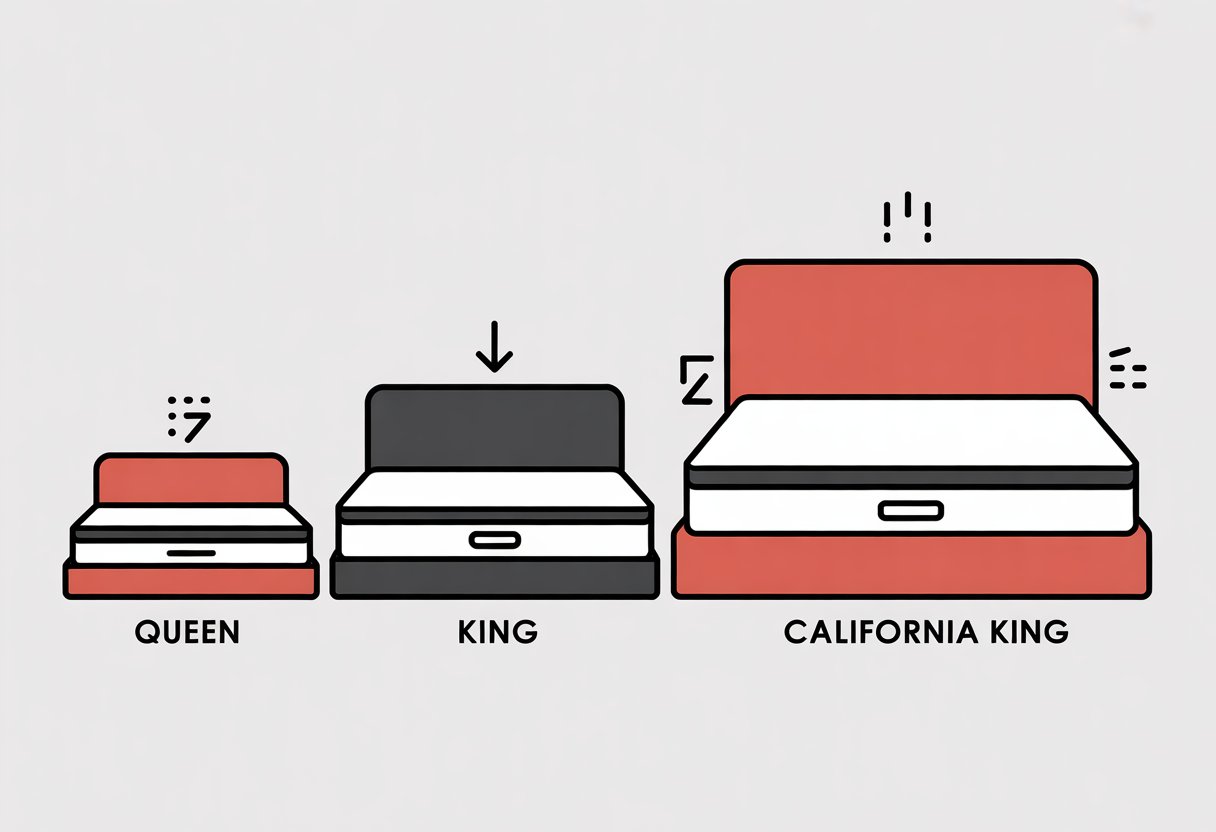
A king size mattress measures 76 inches wide by 80 inches long, making it 16 inches wider than a queen while maintaining the same length. This extra width gives each sleeper 38 inches of personal space—the equivalent of a twin bed per person.
Best Scenarios for a King Bed
King mattresses work best for couples who want maximum sleeping space without feeling cramped. If you share your bed with children who climb in during the night, a king size bed provides enough room for the whole family.
Pet owners benefit from king mattress dimensions too. Large dogs or multiple pets can sleep comfortably without pushing you to the edge of the mattress.
Active sleepers who toss and turn throughout the night will appreciate the extra width. Your movements won't disturb your partner as much on a king size bed compared to smaller options.
A split king mattress consists of two twin XL mattresses side by side. This setup works perfectly with adjustable bed frames, letting each person control their side independently.
Room Dimensions and Space Planning
Your bedroom should measure at least 12 feet by 12 feet to fit a king bed comfortably. This leaves enough space to walk around the bed frame and open drawers on dressers.
A king size mattress takes up 42.2 square feet of floor space. You need to account for additional space if you plan to add nightstands, a dresser, or a bench at the foot of the bed.
The bed frame adds several inches to the overall footprint. Leave at least 24 inches of walking space on each side and at the foot of the bed.
Most king mattresses work with a standard box spring or platform bed frame. Measure doorways and hallways before purchasing—some homes have narrow passages that make moving a king mattress challenging.
Pros and Cons of King Size Beds
Advantages:
- Maximum space for couples – each person gets 38 inches of width
- Accommodates families – room for children or pets
- Reduces sleep disruptions – partner movements are less noticeable
- Luxurious feel – creates a hotel-like bedroom atmosphere
Disadvantages:
- Requires large bedroom dimensions – won't fit comfortably in smaller rooms
- Higher cost – mattress, sheets, and bed frames cost more than smaller sizes
- Heavy and difficult to move – requires at least two people for setup
- Limited bedding options – fewer sheet designs available compared to queen size
- Takes up significant floor space – leaves less room for other furniture
A king bed size requires king size sheets, which typically cost 20-30% more than queen bedding. You'll also need to consider the cost of a compatible bed frame and box spring that can support the mattress weight properly.
California King Mattress: Key Features and Benefits

A California king mattress measures 72 inches wide by 84 inches long, making it the longest standard mattress size available and an ideal choice for tall individuals who need extra legroom. The narrower width compared to a standard king makes it perfect for longer, narrower bedrooms where you need maximum length without excessive width.
Who Needs a California King
You should consider a cal king if you're taller than 6'4" and your feet hang off shorter mattresses. The extra 4 inches of length compared to queen and standard king sizes lets you stretch out fully without curling up or having your feet dangle.
Couples who value personal space benefit from the 36 inches of width per person. This is 6 inches more than what a queen provides, which reduces sleep disturbances when your partner moves during the night.
Families who co-sleep with young children or pets appreciate the added surface area. A california king bed accommodates parents, a toddler, and even a large dog without everyone feeling cramped.
Hot sleepers find the extra space improves air circulation between partners, reducing body heat transfer throughout the night.
Space and Room Length Considerations
Your bedroom should measure at least 12 feet by 12 feet to accommodate a california king bed comfortably. A room measuring 13 feet by 13 feet or larger works better, allowing proper walking space around the bed and room for other furniture.
You need 2 to 3 feet of clearance on each side of the bed and at the foot. This walking space lets you move around easily, make the bed, and access nightstands without feeling cramped.
Before purchasing, measure your doorways, hallways, and staircases. At 72 inches wide, a california king mattress can be challenging to maneuver through standard doorframes. You may need to angle the mattress or temporarily remove door frames during delivery.
The california king bed frame takes up significant floor space lengthwise due to the 84-inch length. This can limit where you place other bedroom furniture, so plan your layout carefully.
Benefits and Drawbacks of California King Beds
Advantages:
- Perfect for tall sleepers between 6'4" and 6'8"
- Provides 36 inches of personal space per person
- Reduces partner disturbance during sleep
- Creates a luxury focal point in large master bedrooms
- Works well in narrow, rectangular rooms
Disadvantages:
- Bed sheets and bedding cost 15% to 30% more than queen size
- California king bed size options are more limited in stores
- Difficult to move without professional help
- May overwhelm smaller bedrooms
- Requires larger bedroom size than other mattress types
The california king mattress size costs between $700 and $4,000 depending on materials and features. Bedding expenses add up over time since you'll pay more for sheets, comforters, and mattress protectors compared to smaller sizes.
Queen vs King vs California King: In-Depth Comparison
The three largest standard mattress sizes differ in ways that affect your daily comfort and bedroom setup. A queen measures 60 x 80 inches, a king spans 76 x 80 inches, and a California king stretches to 72 x 84 inches.
Width vs Length: Comfort Factors
When comparing queen vs king mattresses, width makes the biggest difference. A king gives you 16 extra inches of width compared to a queen, which means each person gets 38 inches of personal space versus 30 inches on a queen.
The California king trades 4 inches of width for 4 extra inches of length. If you're taller than 6 feet 2 inches, this extra length matters for your sleep position.
Space per person:
- Queen: 30 inches per person
- King: 38 inches per person
- California King: 36 inches per person
Side sleepers need more width to avoid bumping their partner during the night. Back sleepers and stomach sleepers can work with less width but benefit from extra length if they're tall. Your sleep preferences should guide which dimensions work best for your body type and how you move at night.
Bedroom Layout and Furniture Fit
A king bed needs a room that's at least 12 x 12 feet to fit comfortably with other bedroom furniture. Queens work well in 10 x 10 foot spaces, making them better for smaller master bedrooms or apartments.
California kings are 4 inches narrower than standard kings, which helps in rooms that are long but not very wide. You'll need to measure your space before buying to ensure you can walk around the bed and open drawers on dressers.
Consider doorway width too. Standard doors are 32 inches wide, and some king mattresses arrive compressed but traditional innerspring versions can be tricky to manoeuvre through tight hallways.
Bedding and Accessory Availability
King sheets and queen bed sheets are easy to find at any retailer. California king bedding is less common and usually costs more.
Bedding costs typically follow this pattern:
- Queen bedding: lowest price
- King bedding: 20-30% more than queen
- California king bedding: 30-40% more than queen
You'll find the widest selection of king comforter sets, mattress protectors, and best pillows designed for standard king beds. California king options exist but expect fewer colour choices and patterns. Best sheets for all three sizes come in various materials, but budget-friendly options are most abundant for queen and king sizes.
Choosing the Best Mattress Size for You
Your sleep habits, body measurements, and bedroom layout all play a role in finding the right mattress size. The perfect fit depends on how you sleep, who shares your bed, and how much space your room can handle.
Sleep Habits and Lifestyle
Your sleep position affects how much bed space you need. Side sleepers typically need less width than back or stomach sleepers who spread out more during the night. If you share your bed with a partner, consider both of your sleep preferences and how much you move at night.
Active sleepers who toss and turn benefit from extra room. A Queen mattress gives each person 30 inches of width, while a King provides 38 inches per person. This extra space can improve sleep quality by reducing disturbances from your partner's movements.
Pet owners and parents who co-sleep with children should size up. A King or California King accommodates families better than smaller options. Think about your current sleep habits and whether they might change in the next few years.
Sleeper Height and Body Size
Tall sleepers over 6 feet need mattresses that are at least 80 inches long. Standard Twin and Full mattresses only measure 75 inches, which leaves taller people with their feet hanging off the edge. Twin XL, Queen, King, and California King all offer 80-inch length or more.
California Kings stretch to 84 inches long, making them ideal for sleepers over 6'2". Your body size matters too. Larger individuals need more surface area for proper support and comfortable sleep positions.
Couples should add their combined width needs together. If either person is tall or broad-shouldered, skip the Full size entirely and start with a Queen as your minimum option.
Room Shape and Future Needs
Room dimensions determine which mattress sizes will fit comfortably. A Queen needs at least a 10x10 foot room, while a King requires 12x12 feet. Leave 24 to 30 inches of walking space on each side of your bed for easy movement and bedroom functionality.
Narrow rooms work better with California Kings (72 inches wide) than standard Kings (76 inches wide). Measure your doorways and hallways too. You need to get the mattress into your bedroom.
Think about future changes like moving to a new home, getting married, or having children. Buying a larger size now might save you from replacing your mattress in a few years. Balance your current room size against potential lifestyle changes.
Other Mattress Sizes and Specialty Options
Beyond the standard queen, king, and California king options, mattress sizes range from compact twin and full beds to massive custom options like Alaskan and Texas kings, plus specialized thickness and material choices for unique sleeping needs.
Oversized and Custom Mattresses
If you need more space than a California king provides, oversized mattresses offer massive sleeping surfaces. The Alaskan king mattress measures 108 inches by 108 inches, creating a perfect square that can accommodate large families or multiple sleepers. The Texas king mattress stretches to 80 inches by 98 inches, while the Wyoming king mattress (also called Alberta king) measures 84 inches by 84 inches.
These represent the largest mattress sizes available, though you'll need custom bedding and a bedroom that's at least 14 feet by 14 feet. Custom mattresses can be built to any dimensions you require, which helps if you have an unusual bed frame or specific space requirements.
Keep in mind that oversized and custom options cost significantly more than standard sizes. You'll also face challenges finding sheets, protectors, and bed frames that fit properly.
Alternative Sizes: Twin, Full, Olympic Queen
A twin mattress measures 38 inches by 75 inches, making it ideal for children's rooms or small spaces. The twin XL mattress adds 5 inches of length at 38 inches by 80 inches, which works well for taller individuals or college dormitories.
Full mattresses measure 54 inches by 75 inches, providing more width than a twin but less than a queen. A full XL mattress extends to 54 inches by 80 inches for extra legroom.
The Olympic queen mattress sits between standard queen and king sizes at 66 inches by 80 inches. This gives you 6 more inches of width than a regular queen without requiring the full space of a king bed. Crib mattresses typically measure 28 inches by 52 inches and must meet strict safety standards for infant use.
Specialty Mattress Considerations
Mattress thickness affects comfort and support, with most options ranging from 8 to 14 inches. Memory foam mattresses contour to your body shape, while hybrid mattresses combine foam layers with innerspring coils for balanced support.
Foam mattresses use various materials like polyfoam or latex, offering different firmness levels and cooling properties. Bed-in-a-box options compress mattresses for convenient shipping, though they need 24 to 48 hours to fully expand.
Key considerations when choosing specialty options:
- Thickness: Deeper mattresses (12+ inches) typically provide better support
- Materials: Memory foam retains heat, while hybrids offer better airflow
- Delivery: Compressed mattresses fit through narrow doorways and staircases
- Trial periods: Many brands offer 100+ night sleep trials
Your body weight, sleeping position, and temperature preferences should guide your material choice. Heavier individuals often need thicker, more supportive options.
Frequently Asked Questions
A Queen mattress measures 60 inches wide by 80 inches long, while a King spans 76 inches wide by 80 inches long, and a California King extends 72 inches wide by 84 inches long. Your choice depends on your height, sleeping partners, bedroom size, and budget.
What are the dimensions of a Queen size mattress compared to a King size?
A Queen mattress measures 60 inches wide by 80 inches long, giving you 4,800 square inches of sleeping space. A King mattress is 76 inches wide by 80 inches long, providing 6,080 square inches total.
The King gives you an extra 16 inches of width compared to a Queen. Both sizes share the same 80-inch length, which works well for most sleepers under 6 feet 2 inches tall.
Each person gets 30 inches of personal space on a Queen. On a King, you each get 38 inches of width.
What is the difference between a king and a California king?
A standard King mattress measures 76 inches wide by 80 inches long. A California King measures 72 inches wide by 84 inches long.
The California King is 4 inches narrower than a standard King. However, it's 4 inches longer, making it better suited for tall sleepers.
The standard King gives you more width for couples who want personal space side by side. The California King prioritises length over width, which benefits individuals over 6 feet 2 inches tall who need extra legroom.
What factors should be considered when choosing between a Queen and King size bed?
Your bedroom dimensions matter most when selecting a mattress size. A Queen fits well in rooms that are at least 10 feet by 10 feet, while a King needs at least 10 feet by 12 feet of space.
You should consider how many people regularly sleep in your bed. If children or pets join you often, a King provides more room than a Queen.
Your budget affects your decision since King mattresses typically cost $200 to $800 more than Queen sizes. You'll also pay more for sheets, mattress protectors, and bed frames designed for larger mattresses.
Think about how you move your mattress through doorways and up stairs. King mattresses are heavier and harder to manoeuvre than Queens.
Which mattress size is more suitable for a couple needing extra sleeping space?
A King mattress offers the most space for couples who want room to spread out. You get 38 inches of personal width per person on a King compared to 30 inches on a Queen.
If either partner is a restless sleeper, a King reduces sleep disruption better than a Queen. The extra width means you're less likely to disturb each other during the night.
A California King works well if one or both partners are very tall and need extra length. However, the narrower width of a California King compared to a standard King may feel cramped if you both prefer spreading out sideways.
What room dimensions are ideal for accommodating a California King size bed?
You need a bedroom that's at least 12 feet by 12 feet to comfortably fit a California King mattress. This size allows you to walk around the bed and access both sides easily.
The 72-inch width and 84-inch length of a California King can make a room feel narrow if your space is limited. You should measure your room carefully and visualise the layout before purchasing.
Leave at least 24 to 30 inches of walking space on each side of your bed. You also need room for nightstands, dressers, and other bedroom furniture without creating a cramped feeling.
How does the comfort level vary between Queen, King, and California King mattresses?
The comfort level of any mattress depends on its construction, materials, and firmness rather than its size. A Queen, King, and California King made from the same materials offer identical support and feel.
Your perceived comfort changes based on how much personal space you have. If you sleep alone, a Queen gives you plenty of room without feeling lost in a too-large bed.
Couples often find Kings more comfortable because each person has more space to move without disturbing their partner. Tall sleepers appreciate the extra 4 inches of length that a California King provides compared to a Queen or standard King.
The size you choose affects your sleep quality when it matches your body size, sleeping habits, and whether you share your bed. A properly sized mattress helps you sleep better by giving you adequate space to rest comfortably throughout the night.
How much bigger is a California king than a king?
It is not bigger; it is longer. A California king adds 4 inches of length and gives up 4 inches of width compared with a standard king, so the two sizes are within 32 square inches of each other. Think of it as a different shape rather than a bigger bed.
What sheets fit a California king versus a king?
They are not interchangeable. King sheets are cut for 76 by 80 inches and California king sheets for 72 by 84 inches, so a fitted sheet for one size will not stay on the other. Buy bedding, protectors and frames for the exact size you own, and check that the longer size is available where you shop before you commit to it.
If king is the size you want, browse our king mattresses.
 by
by 


