

















A queen size mattress measures 60 inches wide by 80 inches long, making it one of the most popular mattress sizes in Canada for both couples and individuals who want extra sleeping space. Queen mattresses offer enough room for two people to sleep comfortably while fitting well in most bedrooms, striking the perfect balance between spacious sleeping area and practical room layout. This size works in guest rooms, smaller master bedrooms, and any space where you want to upgrade from a full size without going all the way to a king.
Choosing the right queen mattress involves more than just picking the correct dimensions. You need to think about the type of material, firmness level, and special features that match your sleeping position and comfort needs. Different materials like memory foam, innerspring, latex, and hybrid designs each offer unique benefits for support and temperature control.
Understanding what makes a quality queen mattress helps you avoid common shopping mistakes and find a bed that supports healthy sleep for years to come. From material construction to comfort layers, knowing what to look for saves you time and money while ensuring you get the rest you deserve.
Key Takeaways
Queen size mattresses provide ample space for couples and singles while fitting comfortably in most bedroom layouts
Different mattress types including memory foam, innerspring, hybrid, and latex each offer distinct support and comfort characteristics
Selecting the right queen mattress depends on your sleeping position, body type, temperature preferences, and specific comfort needs
What Is a Queen Size Mattress?
A queen size mattress measures 60 inches wide by 80 inches long, making it the most popular mattress size for couples and individuals who want extra sleeping space. This size fits comfortably in most bedrooms while providing enough room for two people to sleep without feeling cramped.
Standard Dimensions
A queen size mattress measures 60 inches wide by 80 inches long, which equals 152 centimetres by 203 centimetres. This gives each person approximately 30 inches of personal width when sharing the bed with a partner.
The surface area of a queen-size mattress totals 33.3 square feet. This provides enough space for most couples to sleep comfortably without touching each other throughout the night.
Mattress thickness can vary depending on the construction and materials used. Most queen mattresses range from 8 to 14 inches thick, though pillow-top models may exceed this range.
Keep in mind that actual measurements may vary slightly between manufacturers. Most allow for variations of plus or minus 1 inch in width and length due to manufacturing tolerances.
Comparison to Other Mattress Sizes
A queen size mattress is 6 inches wider and 5 inches longer than a full size mattress (54 inches by 75 inches). This extra space makes a significant difference for couples, as full mattresses only provide 27 inches of width per person.
Compared to a king size mattress (76 inches by 80 inches), a queen is 16 inches narrower. King mattresses give each person 38 inches of width, while queen-size mattresses provide 30 inches per person.
California king mattresses measure 72 inches by 84 inches. They're 12 inches narrower than standard queens but 4 inches longer, making them better suited for taller sleepers.
Twin XL mattresses match the 80-inch length of queens but are only 38 inches wide. Two twin XL mattresses placed side by side create a split king, not a queen.
Ideal Room Size and Space Considerations
Your bedroom should be at least 10 feet by 10 feet to accommodate a queen mattress comfortably. This minimum size allows for the bed plus essential walking space around it.
You need 24 to 30 inches of walking space on each side of your bed for comfortable movement. This clearance lets you make the bed easily, access nightstands, and move around the room without feeling cramped.
Measure your bedroom carefully before purchasing a queen mattress. Account for other furniture like dressers, wardrobes, and chairs that will share the space.
Consider doorway width when planning your purchase. Most doorways are 30 to 36 inches wide, which is enough to fit a queen mattress through when positioned on its side.
Benefits of Choosing a Queen Size Mattress

A queen size mattress provides enough room for two people to sleep comfortably while fitting into most bedrooms without overwhelming the space. This size works well whether you sleep alone or with a partner.
Versatility for Couples and Singles
A queen mattress measures 60 inches wide by 80 inches long. This gives each person about 30 inches of width when sharing the bed. That's roughly the same space as a twin mattress for each sleeper.
If you sleep alone, you get plenty of room to stretch out in any direction. You can move freely without worrying about falling off the edge. The extra space also makes it easier to read, work on a laptop, or relax before falling asleep.
Queen mattresses from brands like Serta and Sealy work well for most people and fit in almost any bedroom. The size accommodates people up to 6 and a half feet tall comfortably. This makes it a practical choice for a wide range of body types and sleeping positions.
Balance of Space and Room Fit
Queen size mattresses leave enough floor space in your bedroom for other furniture. You can typically fit a dresser, nightstands, and still have room to walk around. This matters if you live in an apartment or have a smaller home.
The bed size strikes a middle ground between compact and spacious. It's 6 inches wider than a full size but smaller than a king. Most bedrooms between 10 by 10 feet and 12 by 12 feet can accommodate a queen mattress without feeling cramped.
Doorways and hallways pose fewer challenges when moving a queen mattress compared to larger sizes. The mattress typically compresses into a manageable package for delivery and setup.
Wide Selection and Availability
You'll find more options in queen size than almost any other mattress size. Major brands like Serta, Sealy, and Beautyrest produce their full range of models in queen dimensions. This includes different firmness levels, materials, and price points.
Bedding and accessories are easier to find and often cost less than king size options. Sheets, mattress protectors, and bed frames are widely available both online and in stores. The popularity of queen size mattresses means better selection when shopping.
Replacement parts and specialty items like mattress toppers come in queen size from nearly every manufacturer. This gives you more flexibility to customise your sleep setup over time.
Queen Size Mattress Types and Materials
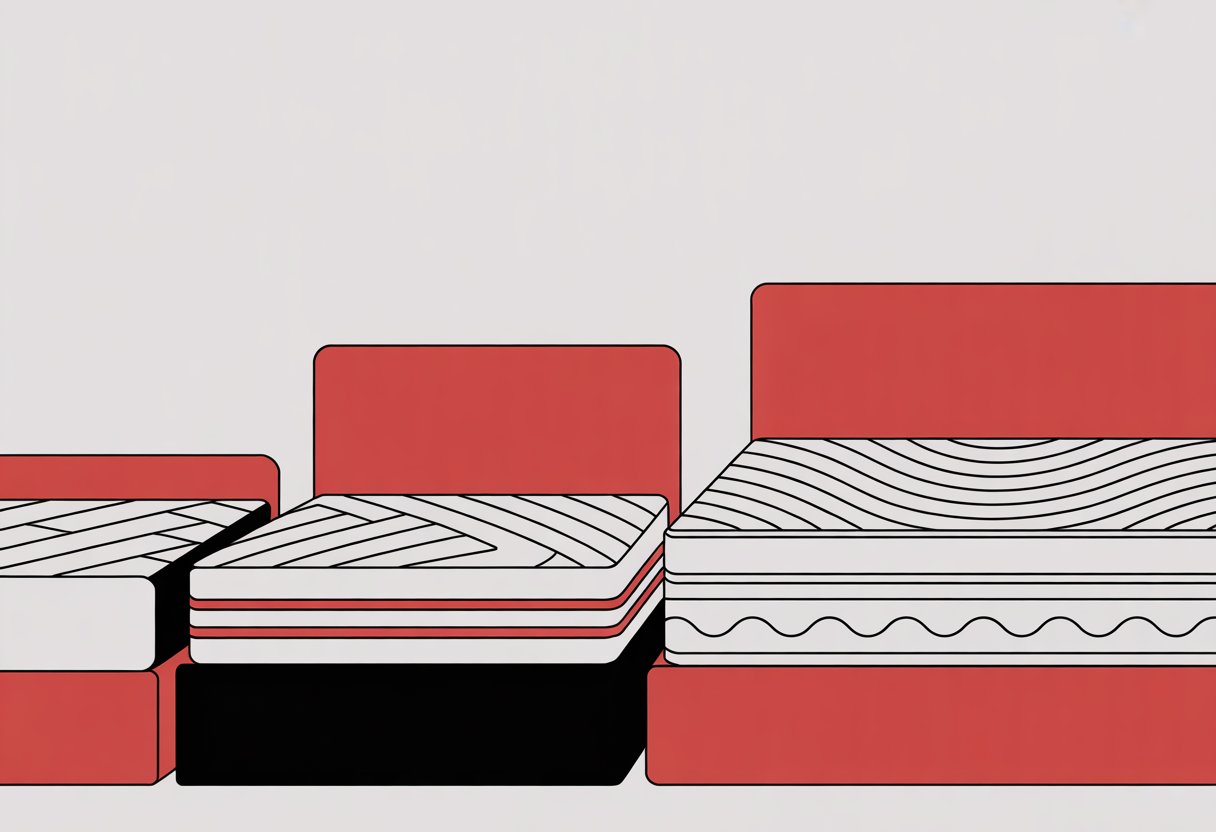
Queen mattresses come in several construction types, each using different materials that affect comfort, support, and durability. The main categories include memory foam, hybrid, innerspring, and compressed mattresses that arrive in a box.
Memory Foam Queen Mattresses
Memory foam mattresses use viscoelastic foam that responds to your body heat and weight. This material contours closely to your shape, which helps reduce pressure points on your shoulders, hips, and back.
These mattresses typically have multiple foam layers. The top layer provides comfort and contouring, while denser base layers offer support and prevent you from sinking too far into the bed. Memory foam absorbs motion well, so you won't feel your partner moving during the night.
The main drawback is heat retention. Traditional memory foam traps body heat, though newer models include gel infusions, copper, or graphite to improve cooling. Memory foam also has minimal bounce compared to spring mattresses.
These mattresses work well for side sleepers and people with joint pain. They need time to break in and may have a chemical smell when new that fades after a few days.
Hybrid Queen Mattresses
Hybrid mattresses combine foam comfort layers with a coil support system underneath. This design gives you the pressure relief of foam with the support and bounce of springs.
The top layers usually contain memory foam, latex, or polyfoam for cushioning. Below these layers, you'll find individually wrapped coils that compress independently. This coil system provides targeted support and reduces motion transfer between sleep partners.
Hybrids sleep cooler than all-foam mattresses because air flows through the coil layer. They also make getting in and out of bed easier due to their responsive feel and edge support.
These mattresses suit most sleeping positions and body types. They cost more than basic innerspring or foam mattresses but offer a balance of comfort and support. The coil system makes them heavier and harder to move than foam mattresses.
Innerspring and Pocket Coil Mattresses
Innerspring mattresses use a steel coil support system as their main component. Traditional innerspring models connect all coils together with wire, creating a bouncy feel but transferring motion across the entire bed.
Pocket coil (or pocketed coil) mattresses wrap each spring in fabric so they move independently. This design reduces motion transfer and provides better contouring than connected coils. Pocket coil systems offer more targeted support for different body zones.
These mattresses have thin comfort layers on top, usually made from foam or fibre padding. Innerspring beds sleep cool because air circulates freely through the coil system. They're durable and maintain their shape well over time.
The main limitation is less pressure relief compared to foam or hybrid options. Innerspring mattresses work best for back and stomach sleepers who need firm support. Brands like Springwall offer some of the most affordable queen mattress options available.
Mattresses in a Box
Mattresses in a box are compressed, rolled, and vacuum-sealed for shipping. Most foam and some hybrid mattresses can be packaged this way for convenient delivery.
You order these mattresses online, and they arrive in a compact box you can carry yourself. After unpacking, the mattress expands to its full size within a few hours. This packaging method doesn't affect the mattress quality or lifespan.
The compressed packaging makes delivery easier and often costs less than traditional white-glove delivery. You can move the box upstairs or through narrow hallways without help. Brands like Springwall and Sealy often use this shipping method for their compressed mattress models.
Once expanded, these mattresses perform the same as non-compressed versions. They include memory foam, hybrid designs, and latex options. Most companies offer trial periods so you can test the mattress at home before committing.
Comfort Features and Sleeping Needs

The right queen-size mattress balances firmness, support, and motion control to match your body type and sleeping habits. These features work together to keep your spine aligned and help you sleep undisturbed through the night.
Firmness Levels and Feel
Mattresses come in different firmness levels to suit various sleeping positions and comfort preferences. Plush queen mattresses deliver a soft, body-hugging feel that works well for side sleepers. Medium-firm options provide balanced support for back and combination sleepers. Firm mattresses offer minimal sinkage and work best for stomach sleepers or heavier individuals.
The feel of a mattress depends on its construction materials. Memory foam contours slowly to your body curves. Non-memory polyurethane foam cradles you without the slow sink. Latex provides cushioning with a subtle bounce. Innerspring models feel more resilient and make it easier to change positions during sleep.
A Serta "medium" might feel like a Beautyrest "firm." Testing a mattress in person helps you find the right firmness level for your body and sleeping style.
Pressure Relief and Spinal Alignment
Good pressure relief prevents pain in your shoulders, hips, and joints where your body presses into the mattress. A quality queen-size mattress distributes your weight evenly across its surface. This reduces pressure points and keeps blood flowing properly while you sleep.
Proper spinal alignment means your spine stays in a neutral position throughout the night. Your mattress should support the natural curve of your spine whether you sleep on your back, side, or stomach. When you lie on your back, your spine shouldn't arch. Your hips and shoulders should feel cradled.
The right support level depends on your body weight and sleeping position. Lighter sleepers often need softer surfaces to allow proper contouring. Heavier sleepers typically require firmer support to prevent excessive sinking.
Motion Isolation for Couples
Motion isolation describes how well a mattress absorbs movement on one side without disturbing someone sleeping on the other side. This feature matters most for couples sharing a bed. All-foam mattresses generally provide better motion isolation than innerspring models because foam absorbs movement rather than transferring it.
Innerspring mattresses with individually wrapped coils perform better at isolating motion than those with traditional interconnected coils. Hybrid mattresses combine foam layers with coil systems to balance motion control with the bounce of springs.
If you or your partner shifts positions frequently during sleep, strong motion isolation helps both of you stay asleep. Poor motion isolation means you'll feel each other's movements, which can disrupt your sleep cycles throughout the night.
How to Choose the Right Queen Size Mattress
Finding the right queen size mattress depends on how you sleep, whether you run hot at night, and what you can afford to spend. Your body weight and preferred sleeping position determine which firmness level will keep your spine aligned.
Matching Sleep Position and Support
Side sleepers need softer surfaces that cushion the shoulders and hips. A medium to medium-soft queen mattress typically works best because it allows these pressure points to sink in while supporting your waist. Without enough give, you'll wake up with sore shoulders.
Back sleepers require medium-firm support to prevent the lower back from sagging. The queen mattress dimensions of 60 inches by 80 inches give you enough room to maintain proper alignment without rolling off the edge.
Stomach sleepers need firm to extra-firm mattresses. Soft surfaces let your hips sink too far, creating an uncomfortable arch in your spine. People over 230 pounds usually need firmer options regardless of sleep position because they compress the comfort layers more.
Temperature Regulation and Cooling Features
Hot sleepers should look for coil-based constructions rather than all-foam builds. Innerspring and hybrid mattresses allow air to flow through the coil layer, preventing heat buildup.
Gel-infused foam layers help draw heat away from your body. Breathable covers made from moisture-wicking fabrics keep the surface cooler than standard polyester. Phase-change materials in some covers actively absorb and release heat throughout the night.
Latex naturally sleeps cooler than memory foam because it doesn't trap body heat. If you share your queen mattress with a partner who generates a lot of warmth, prioritise cooling features in the comfort layers and cover.
Budget Considerations
Quality queen mattresses in Canada typically range from $500 to $2,000. Entry-level options around $500–$800 often use basic foam layers with lower-density materials that may soften faster. Mid-range mattresses from $800–$1,400 usually include better pressure relief through zoned support or hybrid constructions with pocketed coils.
Premium models from Tempur-Pedic or Stearns & Foster feature thicker comfort layers, higher coil counts, and longer warranties. However, price doesn't always equal better sleep. A $600 mattress with the right firmness for your body type will outperform a $1,800 model that's too soft or too firm.
Compare warranty length and trial periods alongside price. A 100-night trial lets you test whether the pressure relief works for your sleep position before committing.
Setting Up Your Queen Mattress
A queen-size mattress needs proper support to maintain its shape and provide comfortable sleep for years. The right foundation protects your investment and ensures you get the best performance from your mattress.
Choosing Bed Frames and Platform Beds
Your bed frame choice affects both the look of your bedroom and how well your mattress performs. Metal frames are affordable and easy to assemble, typically featuring a centre support bar that prevents sagging. Wood frames offer a more traditional appearance and sturdy construction.
Platform beds have become popular because they provide built-in support without needing a box spring. These frames feature slats or a solid surface that holds your mattress directly. If you choose a slatted platform bed, make sure the slats are no more than 3 inches apart to prevent your mattress from sagging between gaps.
Look for frames with strong corner joints and thick legs. A quality frame should support at least 272 kilograms (the combined weight of two adults plus the mattress). Check that the frame dimensions match standard queen measurements of 60 inches by 80 inches.
Box Springs and Foundations
Box springs lift your mattress higher off the ground and absorb some impact from daily use. Traditional box springs contain metal coils covered in fabric. Modern foundations use wooden slats or solid platforms instead of coils and work just as well.
Most memory foam and hybrid mattresses need a solid foundation rather than a traditional box spring. The firm support prevents these mattresses from sinking into gaps. If you prefer the height a box spring provides, choose a low-profile foundation designed for foam mattresses.
Your foundation should match your mattress size exactly. Using a smaller base causes the edges to hang over, which damages the mattress structure over time.
Delivery and Setup Options
Many retailers offer delivery services that bring your mattress to your bedroom. National Mattress provides professional delivery and setup and can remove your old mattress for disposal. Free delivery often comes with online purchases, though minimum purchase amounts may apply.
If you assemble your own frame, follow the manufacturer's instructions carefully. Most frames require basic tools like a screwdriver or Allen key. Allow your mattress to expand fully if it arrives compressed. This usually takes 24 to 48 hours.
Position your bed at least 60 centimetres from walls to allow air circulation and make bed-making easier. Leave enough space to walk comfortably around the bed and access furniture like nightstands.
Frequently Asked Questions
Queen size mattresses measure 60 inches wide by 80 inches long in Canada, making them a popular choice for couples and individuals who want extra space. Proper care and maintenance can extend your mattress's lifespan to 7-10 years, while choosing the right type based on your sleeping position and specific needs ensures better sleep quality.
What are the standard dimensions of a queen size mattress in Canada?
A queen size mattress measures 60 inches by 80 inches (152 cm by 203 cm) in Canada. This standard size is the same across both Canada and the United States.
The queen size provides 7 inches more width than a full or double mattress and 5 inches more length. It offers each person approximately 30 inches of personal space when shared between two sleepers.
How do I choose the best queen size mattress for my sleeping position?
Side sleepers need a mattress with softer comfort layers that cushion your shoulders and hips while maintaining spinal alignment. Look for medium to medium-soft firmness levels that allow your pressure points to sink in slightly.
Back sleepers benefit from medium-firm mattresses that support your lower back's natural curve. Your mattress should keep your spine in a neutral position without creating gaps under your lumbar region.
Stomach sleepers require firmer support to prevent your hips from sinking too deeply, which can strain your lower back. A firm to medium-firm mattress helps maintain proper alignment and reduces pressure on your neck.
What is the average lifespan of a queen size mattress and how can I extend it?
Most queen size mattresses last between 7 and 10 years depending on their construction and materials. Innerspring mattresses typically last 7-8 years, whilst foam and hybrid mattresses can last 8-10 years with proper care.
You can extend your mattress's lifespan by rotating it every 3-6 months to distribute wear evenly. Use a waterproof mattress protector to guard against spills, stains, and moisture damage that can break down materials prematurely.
Keep your mattress on a proper foundation or bed frame that provides adequate support across the entire surface. Vacuum your mattress monthly to remove dust, dead skin cells, and allergens that accumulate over time.
Are there specific types of queen size mattresses that are recommended for people with back pain?
Medium-firm mattresses often work best for people with back pain because they balance pressure relief with spinal support. This firmness level prevents your body from sinking too deeply whilst cushioning pressure points.
Memory foam mattresses from brands like Tempur-Pedic conform to your body's shape and distribute weight evenly, which can reduce pressure on your spine. Hybrid mattresses combine foam comfort layers with innerspring support cores to offer both pressure relief and responsive support.
Look for mattresses with targeted lumbar support or reinforced centre zones that provide extra support to your lower back. Consult with your healthcare provider about specific mattress features that may help your particular back condition.
What should I consider when transitioning from a different mattress size to a queen size?
Measure your bedroom to ensure you have enough space for a queen mattress, leaving at least 60 cm of walking space on each side. A queen size bed measures 60 inches wide and 80 inches long, which is 16 inches narrower than a king and 6 inches wider than a full.
You'll need to purchase new queen size bedding, including fitted sheets, flat sheets, and duvet covers. Check that your existing bed frame and box spring can accommodate queen dimensions or plan to replace them.
Consider how the size change affects your sleep habits, especially if you're moving from a larger king size where you had more personal space. If you're upgrading from a smaller size, you'll gain extra room for movement and comfort.
How do I properly care for and maintain my queen size mattress to ensure its longevity?
Clean spills immediately by blotting with a clean cloth and mild detergent, then allow the area to air dry completely before remaking your bed. Never saturate your mattress with water, as excess moisture can damage internal materials and promote mould growth.
Use a breathable mattress protector that you wash every 1-2 months in hot water to eliminate dust mites and allergens. Strip your bed weekly and allow your mattress to air out for several hours to release trapped moisture and odours.
Avoid sitting on the edge of your mattress regularly, as this concentrated weight can damage the perimeter support system. Keep pets off your mattress when possible to prevent damage from claws and reduce the accumulation of pet dander and hair.
 by
by 


