

















What Is a Coil Mattress?
A coil mattress is a mattress whose support core is made of steel springs called coils. Those coils carry your body weight, set the firmness and bounce, and sit beneath the foam or fibre comfort layers you actually lie on. Whether the coils are linked together (connected coils) or wrapped in individual fabric pockets (pocket coils) changes how the bed feels, isolates motion, and holds up over years of use.
At National Mattress, coil and coil-hybrid beds are among the most common mattresses on the showroom floor, so knowing how the two coil types differ is the fastest way to narrow your choice.
Choosing between a mattress with connected coils or pocket coils can feel overwhelming when you're shopping for better sleep. These two coil systems work differently and affect how your mattress feels, supports your body, and holds up over time. Understanding the differences between a traditional coil mattress and modern designs will help you pick the right mattress for your needs. When comparing an innerspring vs pocket coil, your choice affects everything from temperature to pressure relief.
Connected coils are metal springs linked together to create uniform support across the entire mattress, while pocket coils are individual springs wrapped in fabric sleeves that move independently to contour to your body. Connected coil mattresses typically offer more bounce and make it easier to change positions during the night. Pocket coil mattresses provide better motion isolation and conform more closely to your shape.
Your sleeping position, body type, and whether you share your bed all play a role in which coil type works best for you. Each design has clear benefits and trade-offs that affect comfort, durability, and price.
Key Takeaways
Connected coils offer uniform support with more bounce, while pocket coils provide independent movement for better body contouring
Pocket coils excel at motion isolation and pressure relief, making them ideal for couples and side sleepers
Connected coils typically last longer when well-made and cost less, while pocket coils reduce noise and adapt better to different body shapes
What Are Connected Coils and Pocket Coils?
Connected coils and pocket coils are the two main types of coil systems used in mattresses today. Connected coils link together through metal wires or connections, while pocket coils sit individually wrapped in fabric sleeves.
Overview of Connected Coil Systems
Connected coils, also called open coils, feature metal springs that attach to one another throughout the core of a classic innerspring mattress. These interconnected coils create a single unit that provides the traditional feel of a spring mattress. Each spring connects to its neighbours through helical wires or other metal attachments.
This connected coil design spreads weight across the entire mattress surface. When you press down on one area, the surrounding coils help support that weight. Many sleepers find that a continuous coil provides a more traditional, stable surface compared to pocketed versions. The metal-to-metal connections create a unified support system.
Common types of connected coil systems include:
Bonnell coils - Hourglass-shaped springs based on 19th century designs
Offset coils - Flattened hourglass coils with a hinging action
Continuous coils - Single wire formed into S-shaped patterns
Connected coils were once the standard in every innerspring mattress. Today they appear mainly in budget mattresses, though some higher-end models still use them for specific benefits.
Overview of Pocket Coil Systems
Pocket coils wrap each individual spring in its own fabric sleeve or pocket. The fabric encasements attach to one another, but the metal coils never touch each other directly.
This design lets each coil compress on its own without affecting nearby springs. Your body weight compresses only the coils directly beneath you. While a foam mattress relies purely on material density for support, pocketed systems use individual mechanical response. The surrounding coils stay in their original position.
Pocket coil mattresses have become the most popular coil type since 2010. Most modern hybrid beds and many innerspring mattresses now use this system. The individually wrapped design of a pocket spring mattress offers benefits that many sleepers prefer. This construction allows for personalized support that reacts to your specific body shape.
The fabric pockets prevent metal-on-metal contact throughout the mattress. Manufacturers connect the pockets using fabric, glue, heat-treating, or small ties. This keeps the coils upright while maintaining their independence.
Key Structural Differences
The main difference between these coil types lies in how they handle pressure. Connected coils distribute your weight across the entire mattress through their metal connections. Pocket coils respond only in the specific area where pressure applies.
Weight distribution patterns:
Feature | Connected Coils | Pocket Coils |
|---|---|---|
Pressure response | Spreads across mattress | Localised to contact area |
Coil independence | Work together as unit | Each coil acts separately |
Metal contact | Coils touch each other | Fabric prevents contact |
Pocket coil systems contour better to body shapes than connected spring systems. The independent coils adapt to your curves and pressure points. Connected coils provide more uniform support with less conforming action. In contrast, pocketed systems excel at providing both support and contouring for the sleeper.
Connected coils can recruit support from neighbouring springs when compressed. This shared load reduces stress on individual coils. Pocket coils bear full weight without help from surrounding springs, which puts more strain on each coil over time.
How Coil Design Affects Mattress Performance
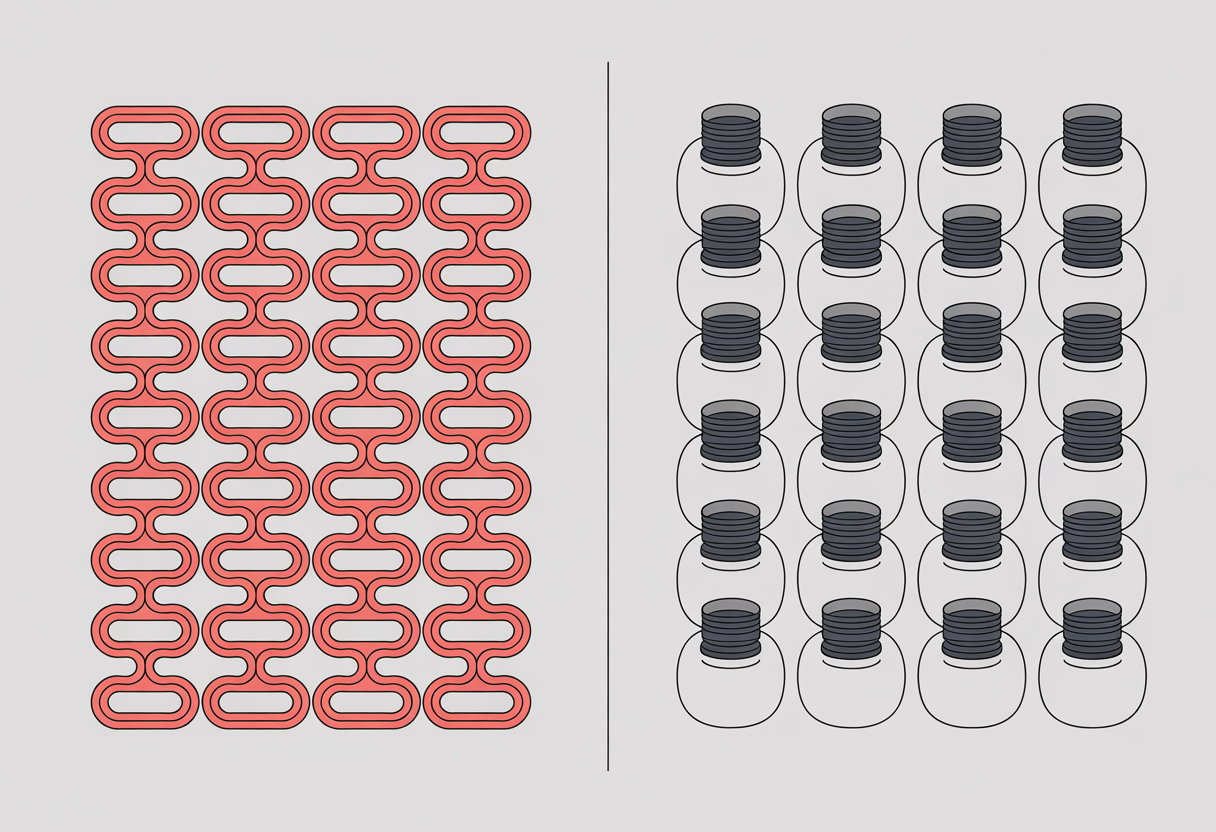
The way coils are built and arranged in your mattress directly impacts how well you sleep. Connected coils and pocket coils each handle support, pressure relief, and movement differently because of their unique structures.
Support and Spinal Alignment
Connected coils work as a single unit, which creates a firmer, more uniform feel across the entire mattress surface. This interconnected system pushes back evenly when you lie down, providing consistent support that many back sleepers find comfortable. The trade-off is that connected coils don't adjust as well to your body's natural curves. When evaluating an innerspring vs pocket coil mattress, this adjustment ability is a key factor.
Pocket coils excel at spinal alignment because each spring moves independently. When you lie down, the coils compress only where your body applies pressure. Heavier areas like your hips get more support, while lighter areas like your shoulders receive less resistance.
This independent movement of pocketed coils helps maintain proper spinal alignment by letting your spine stay in its natural position. Side sleepers particularly benefit from this targeted support since their shoulders and hips need different levels of cushioning.
Pressure Relief and Body Contouring
Connected coil systems distribute your weight broadly across all springs, which can create pressure points at your shoulders, hips, and lower back. The springs don't conform closely to your body shape because they're all linked together. Those seeking a deeper hug might prefer a foam mattress or a high-end pocketed system.
Pocket coils provide superior body contouring since each spring responds only to the pressure directly above it. This creates a customised sleep surface that adapts to your unique shape. The fabric pockets surrounding each coil allow them to compress and extend independently without affecting neighbouring springs.
Your pressure points receive relief because the coils adjust their resistance based on how much weight each area carries. Heavier body parts sink deeper while lighter areas stay supported, reducing the concentration of pressure in any single spot.
Motion Transfer and Motion Isolation
Motion transfer is where connected coils show their biggest weakness. When your partner moves, the interconnected springs transmit that movement across the entire mattress. You'll feel every shift, roll, and adjustment your partner makes during the night. This can significantly disrupt restful sleep for light sleepers.
Pocket coils offer excellent motion isolation because each spring operates independently within its fabric pocket. Movement stays localised to the area where it occurs. When your partner gets up or changes position, only the coils directly beneath them compress and release.
This containment of motion means you can sleep undisturbed even if you share your bed with a restless sleeper. The individual fabric encasements prevent springs from transferring vibrations to adjacent coils, keeping motion isolated to its source.
Types of Connected Coils
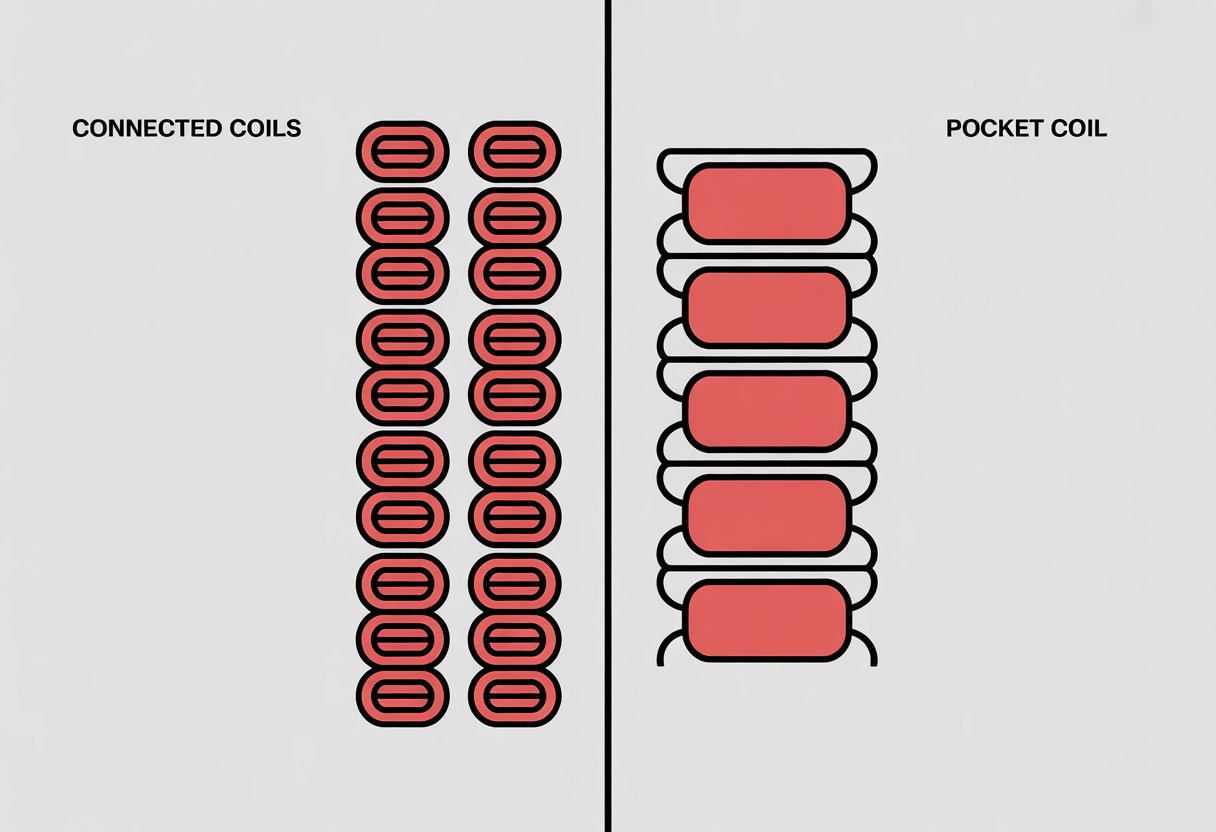
Connected coil systems use three main designs that differ in how the springs are shaped and linked together. Bonnell coils feature an hourglass shape with simple connections, offset coils add hinging action through flattened ends, and continuous wire coils form S-shaped patterns from a single length of wire.
Bonnell Coils: Construction and Feel
Bonnell coils are the oldest type of mattress spring, dating back to buggy seat designs from the 1800s. Each coil has an hourglass shape with a knot at the top and bottom where it connects to other springs.
The design is straightforward. Wire forms a wider circle at each end and narrows in the middle. These coils connect to neighbouring springs through helical wires that run along the top and bottom of the coil unit.
You'll find Bonnell coils most often in budget mattresses today. This traditional coil mattress style remains popular due to its low cost and simple assembly. They provide basic support but offer less body conforming than other coil types. The hourglass shape allows some compression, but the interconnected design means weight spreads across the entire mattress surface.
These coils can develop squeaks over time as metal rubs against metal at connection points. They also transfer motion more readily across the bed compared to individually wrapped springs.
Offset Coils: Features and Benefits
Offset coils improve on the Bonnell design by flattening the top and bottom circles of each hourglass-shaped spring. This modification creates a hinging action when you apply pressure to the mattress.
The flattened ends allow offset coils to connect via helicals more securely. These corkscrew-shaped wires prevent the springs from shifting sideways when compressed. This stable connection reduces noise compared to Bonnell systems.
The hinging design helps offset coils conform better to your body shape than standard Bonnell springs. When you lie down, the flattened portions flex and adjust to your curves while still distributing weight across the interconnected coil system.
You'll typically find offset coils in mid-range to higher-end mattresses. They cost more to manufacture than Bonnell coils due to their more complex construction, but they deliver improved conformance and durability.
Continuous Wire Coils: Durability and Value
Continuous wire coils use a single piece of wire formed into rows of S-shaped springs. The wire runs the entire length of the mattress, creating each row before moving to the next level.
This design results in extremely high coil counts. A queen-size mattress might contain over 1,000 individual coils because the continuous wire creates many connection points. However, you can't directly compare these counts to other coil systems since they're constructed differently.
The interconnected nature of continuous coil systems spreads weight evenly across the mattress. Each coil supports its neighbours, which can enhance durability since no single spring bears excessive load.
Manufacturers use this design primarily in lower-priced mattresses because it's efficient to produce. The single-wire construction of a continuous coil reduces manufacturing complexity and material waste. You get decent support and longevity at an affordable price point, though these systems conform less to your body than pocket coil alternatives.
Types of Pocket Coil Mattresses
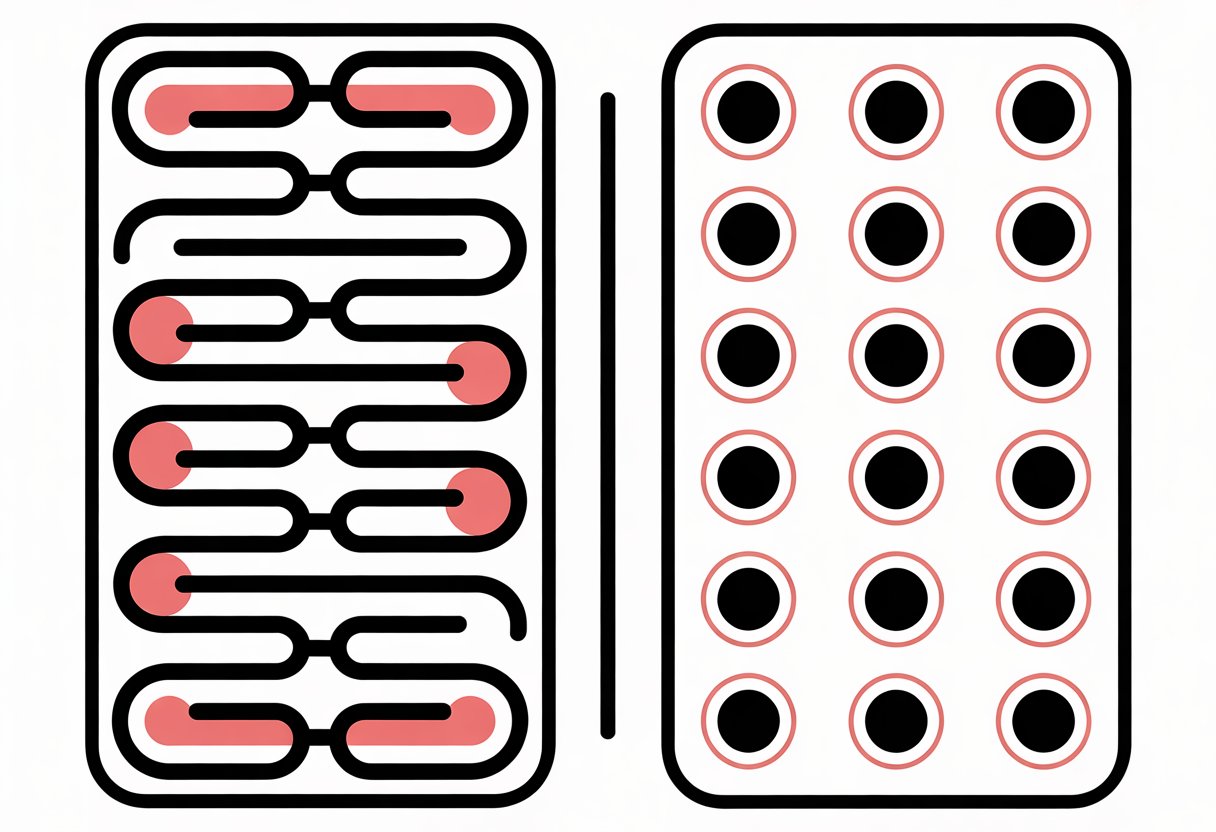
Pocket coil mattresses come in several construction styles that affect how they support your body and respond to movement. The individual wrapping method and coil size create different comfort levels and support zones.
Pocketed Coils and Marshall Coils
Pocketed coils and Marshall coils are the same type of spring, named after their inventor. Each coil sits in its own fabric sleeve or pocket, which keeps it separate from neighbouring springs.
This design lets each coil move independently when you press on it. Your body weight compresses only the coils directly beneath you, while the rest stay in place.
The fabric pockets are typically made from breathable materials that allow air to flow through the mattress. Most pocket spring mattresses contain between 800 and 2,000 individual coils depending on the mattress size.
Wrapped Coil Construction
Individually wrapped coils can be arranged in different patterns to change how a mattress feels. Some manufacturers place more coils in the centre third of the mattress to provide extra support where your hips rest.
The fabric encasing each coil can vary in thickness and material quality. Higher-quality wrapped coil mattresses use durable fabrics that won't tear or wear down over time.
Many hybrid mattresses combine wrapped coils with foam or latex. Some even feature a pillow top mattress design for extra plushness. These modern spring beds offer a blend of luxury and durability. This construction gives you the bounce and support of springs with the pressure relief of softer materials.
The spacing between coils also matters. Tighter spacing creates a firmer feel, while wider gaps between pockets allow for more give.
Micro Coils and Zoned Support
Micro coils are smaller-diameter springs that manufacturers sometimes add as a comfort layer above the main support coils. These miniature coils respond more quickly to pressure and create a softer surface feel.
Zoned support divides the mattress into sections with different coil gauges or densities. Common configurations include:
Firmer coils under your hips and shoulders
Softer coils under your head and legs
Three-zone, five-zone, or seven-zone layouts
Zoned pocketed coil mattresses aim to keep your spine aligned by providing more support where your body weighs the most. The zones prevent your hips from sinking too deeply while still cushioning lighter areas.
Some hybrid mattresses use both micro coils and full-size pocket springs in a layered design.
Comparing Sleeping Experience: Connected Coil vs Pocket Coil
The way coils are designed affects how your mattress feels when you lie down and move around during the night. Connected coils create a firmer, more unified surface with noticeable bounce, while pocket coils offer targeted support that adapts to your body shape.
Bounce and Responsiveness
Connected coil systems give you more bounce than pocket coils. When you shift positions at night, connected coils offer easier repositioning because the weight spreads across the entire surface.
This extra responsiveness makes connected spring beds a good choice if you prefer a firm mattress that doesn't hug your body. The uniform support means your heavier parts won't sink in too much. For many, this provides the ideal balance of support and comfort throughout the night.
Pocket coils feel different because each spring moves on its own. You get less bounce but better contouring around your shoulders and hips. The comfort layer on top works together with the independent coils to cradle pressure points. This makes pocket coil mattresses popular in luxury mattresses where conformance matters more than bounce.
Edge Support and Firmness
Connected coils typically provide stronger edge support. The metal connections running through the mattress create a stable perimeter that holds its shape when you sit or sleep near the edge.
Your firmness level depends on both coil types and comfort layers, but connected coils feel firmer overall. The coils distribute weight evenly across the surface instead of letting individual springs compress. This creates consistent support from edge to edge.
Pocket coils can feel less stable around the edges since each spring works independently. However, many manufacturers add reinforced coils along the perimeter to improve edge support. The independent movement of pocket springs means you'll experience more give where your body presses down, which affects the overall firmness you feel.
Noise and Long-Term Comfort
Pocket coils stay quieter because fabric sleeves prevent metal-on-metal contact. You won't hear squeaks or creaks when you move around, which helps maintain restful sleep throughout the night.
Connected coils can develop noise over time as the metal connections rub together. This becomes more noticeable as the mattress ages and the materials wear down.
Your sleep quality depends on how well the coils maintain their shape. Connected coils recruit support from neighbouring springs, which can improve durability. Pocket coils experience more strain since each spring handles weight independently. Both types can provide good long-term comfort if made with quality materials and proper tempering, though the comfort layers above the coils often wear out before the springs do.
Factors Impacting Coil Mattress Choice
Different coil systems affect how long your mattress lasts, how cool you sleep, and which positions work best for your body. Your budget and personal comfort needs also play major roles in deciding between connected coils and pocket coils.
Durability and Longevity
Connected coil systems often last longer than you might expect because the coils are wired together into one solid unit. This interconnected design distributes weight across multiple coils at once, which reduces stress on individual springs. The trade-off is that when one coil fails, it can affect the entire system.
Pocket coils work independently, which means each coil handles its own portion of your body weight. Pocket coils typically last 5 to 10 years with proper care. Higher coil counts and thicker gauge wire improve durability in both mattress types.
The quality of materials surrounding the coils matters just as much as the coils themselves. Foam layers and padding break down faster than metal springs. Rotating your mattress every few months helps prevent sagging and extends its life regardless of which coil type you choose.
Cooling and Breathability
Connected coil mattresses allow more air to flow between the springs because the coils aren't wrapped in individual fabric pockets. This open space creates natural ventilation that helps heat escape during the night. If you sleep hot, this design advantage can make a real difference. It essentially functions as a cooling mattress by facilitating constant thermal exchange.
Pocket coil systems still breathe reasonably well, but the fabric encasing each coil reduces airflow slightly. The comfort layers on top of either coil system have a bigger impact on temperature regulation than the springs themselves. Memory foam traps more heat than latex or gel-infused materials. A traditional foam mattress may lack the internal air channels found in these metal spring systems.
Key cooling features to look for:
Open coil construction for maximum airflow
Breathable cover fabrics like cotton or Tencel
Cooling gel or phase-change materials in comfort layers
Minimal memory foam if you're a hot sleeper
Suitability for Different Sleeping Positions
Your sleeping position determines which spring mattress construction will support your spine properly. Both systems have unique ways of managing body weight. Side sleepers need more contouring around their shoulders and hips, which pocket coils provide through targeted support. Connected coils feel firmer and push back more uniformly across the surface.
Back sleepers can sleep comfortably on either system, though firmer connected coil mattresses keep the spine aligned without excessive sinking. Stomach sleepers benefit from the firm, even support that connected coils deliver because it prevents the hips from dropping too far into the mattress.
Combination sleepers who change positions throughout the night often prefer pocket coils. The independent movement of each coil adapts as you shift from side to back to stomach. Connected coils work less well for position changes because compressing one spring affects nearby springs.
Heavier individuals need stronger mattress support regardless of their preferred sleeping position. Look for lower gauge coils (thicker wire) or higher coil counts in either system.
Budget, Value, and Personal Preference
Connected coil mattresses cost less to manufacture because they use simpler construction methods. You'll find quality connected coil options at lower price points than comparable pocket coil models. This makes them practical choices when you're working with a tight budget.
Pocket coils justify their higher price through better motion isolation and body contouring. Couples who share a bed often find the extra cost worthwhile because they won't feel their partner's movements during the night. Shopping at a mattress store lets you test both types to see if the difference matters to you.
Value comparison:
Feature | Connected Coils | Pocket Coils |
|---|---|---|
Price range | Lower | Higher |
Motion isolation | Fair | Excellent |
Edge support | Good | Varies by model |
Lifespan | 6-8 years | 5-10 years |
Your body weight, comfort preferences, and whether you sleep alone all influence which system offers better value. Read mattress reviews from verified buyers with similar needs to yours before making a final decision.
Practical Considerations and Care Tips
Understanding technical specifications like coil count and gauge helps you make informed decisions, while knowing proper maintenance practices extends your mattress life regardless of which coil system you choose.
Coil Count and Coil Gauge Explained
Coil count refers to the total number of springs in your mattress. A queen-size mattress typically contains 600 to 1,000 coils in connected systems, while pocket coil mattresses often feature 800 to 2,000 individually wrapped coils.
Higher coil counts don't automatically mean better quality. The construction quality and coil gauge matter more than raw numbers.
Coil gauge measures the thickness of the wire used in each spring, typically ranging from 12 to 15. Lower numbers indicate thicker wire and firmer support. A 12-gauge coil is thicker and firmer than a 15-gauge coil.
Common Coil Gauge Ratings:
12-13 gauge: Extra firm support
13.5-14 gauge: Firm to medium-firm support
14.5-15 gauge: Medium to softer support
Connected coils often use thicker gauges because they share load distribution. Pocket coils can use thinner gauges since each coil works independently.
Can You Flip a Pocket Coil Mattress?
Most modern pocket coil mattresses cannot be flipped because they feature distinct comfort layers on top and a firmer base layer on bottom. Flipping these mattresses puts the support layer against your body, which feels uncomfortable and defeats the design purpose.
Some manufacturers do produce double-sided pocket coil mattresses specifically designed for flipping. These mattresses have identical comfort layers on both sides, which extends their lifespan by distributing wear evenly.
You should still rotate all pocket coil mattresses 180 degrees every three to six months. This practice ensures even wear across the sleep surface even if you can't flip the mattress.
Connected coil mattresses are more commonly double-sided and flippable. Their simpler construction makes two-sided designs more practical and affordable.
Always check your manufacturer's care instructions before flipping any mattress. Flipping a one-sided mattress voids most warranties and damages the comfort layers.
Mattress Maintenance and Protectors
Both connected and pocket coil mattresses benefit from proper foundations. Use a sturdy platform bed, slatted base with slats no more than 8 cm apart, or a traditional box spring designed for your mattress type.
Mattress protectors are essential for both coil systems. They guard against spills, allergens, and body oils that break down comfort materials over time. Waterproof protectors with breathable membranes work best because they block liquids without trapping heat.
Vacuum your mattress surface monthly to remove dust and allergens. This simple step maintains hygiene and prevents buildup in the coil structure below.
Essential Maintenance Schedule:
Rotate mattress every 3-6 months
Vacuum surface monthly
Wash mattress protector every 1-2 months
Inspect for sagging or damage yearly
Pocket coil mattresses handle moisture better than connected systems due to superior airflow between individually wrapped coils. However, both systems need protection from direct moisture exposure to prevent coil rust and comfort layer degradation.
Frequently Asked Questions
Connected and pocket coil mattresses use different spring systems that affect how they feel, perform, and last over time. Understanding these differences helps you choose the right mattress for your sleep needs.
What are the key differences between connected and pocketed spring mattresses?
Connected coil mattresses have springs that are linked together with metal wires, while pocket coil mattresses wrap each spring in its own fabric sleeve. The springs in connected systems work as one unit when you lie down.
Pocket coils move independently because they are not directly connected to each other. Each spring responds only to the weight directly above it.
Connected coils distribute weight across the entire mattress surface. This creates more uniform support throughout the bed.
How do motion transfer characteristics vary between connected and pocket coils?
Connected coil systems transfer motion across the bed because all the springs are linked together. When one spring compresses, it affects the springs around it through the metal connections.
Pocket coils isolate motion much better. The fabric sleeves prevent metal-to-metal contact, so compressing one coil has little effect on nearby coils.
If your partner moves during the night, you will feel less disturbance with pocket coils. Connected coils can also create more noise because metal parts rub against each other.
What are the benefits of a pocket coil mattress in terms of comfort and support?
Pocket coils conform to your body curves more precisely than connected systems. Each spring adjusts independently to match your shape.
This design works well for side sleepers who need extra give around their shoulders and hips. The independent springs accommodate these pressure points without affecting support elsewhere.
Pocket springs offer enhanced conformance for proper spinal alignment. They also provide quieter sleep because the fabric pockets prevent squeaking.
How does the durability of connected coil systems compare to that of pocket coil systems?
Connected coil units can last longer when made with quality materials. Each spring shares the load with surrounding springs, which reduces strain on individual coils.
Pocket coils experience more stress over time because each spring works alone. They cannot distribute weight to nearby springs for extra support.
The durability difference depends heavily on wire thickness and manufacturing quality. Cheap connected coils made with thin wire will not outlast well-made pocket springs.
Can you explain the impact of coil count on the performance of pocket coil and connected coil mattresses?
Coil count matters less than total steel weight and construction quality. Manufacturers sometimes use more coils made from thinner wire to boost numbers.
A full-size mattress should have at least 300 coils, while queen-size needs 375 and king-size requires 450. These are minimum guidelines for adequate support.
Lower coil counts can still perform well if the manufacturer uses thicker wire or better construction methods. Look at wire gauge and working turns instead of focusing only on coil numbers.
In what ways does the construction of a connected coil mattress affect sleep quality compared to a pocket coil mattress?
Connected coils provide more bounce and make it easier to change positions during sleep. The linked springs create a responsive surface that helps you move around.
This design suits stomach sleepers who need their hips to stay level with the rest of their body. The uniform support prevents heavier body parts from sinking too deeply.
Pocket coils create a more hugging sensation that some sleepers prefer. The conforming surface reduces pressure points but may make repositioning slightly harder.
What is a coil mattress?
A coil mattress is a mattress supported by a core of steel springs, or coils, topped with comfort layers of foam or padding. The coils provide the structure, support, and bounce, while the top layers set the surface feel.
Connected coil and pocket coil beds are the two main kinds, and both are coil mattresses. They simply arrange the springs differently.
Are coil mattresses good?
Coil mattresses are a good choice for most sleepers because the spring core gives strong support, steady airflow for a cooler surface, and a supportive, responsive feel. Pocket coils suit couples and side sleepers who want motion isolation and contouring, while connected coils suit those who prefer more bounce and easier movement.
The right pick depends on your sleeping position, body type, and whether you share the bed. Staff at National Mattress can match you to the coil type that fits how you sleep.
For the history behind this coil design, our guide to who invented pocket coil mattresses.
 by
by 


