

















Memory foam mattresses feel comfortable right away, but they need time to reach their full potential. When brand new, these mattresses often feel firm and stiff because the foam hasn't adjusted to your body yet. This firmness goes away as you sleep on the mattress and it starts to mould to your shape.
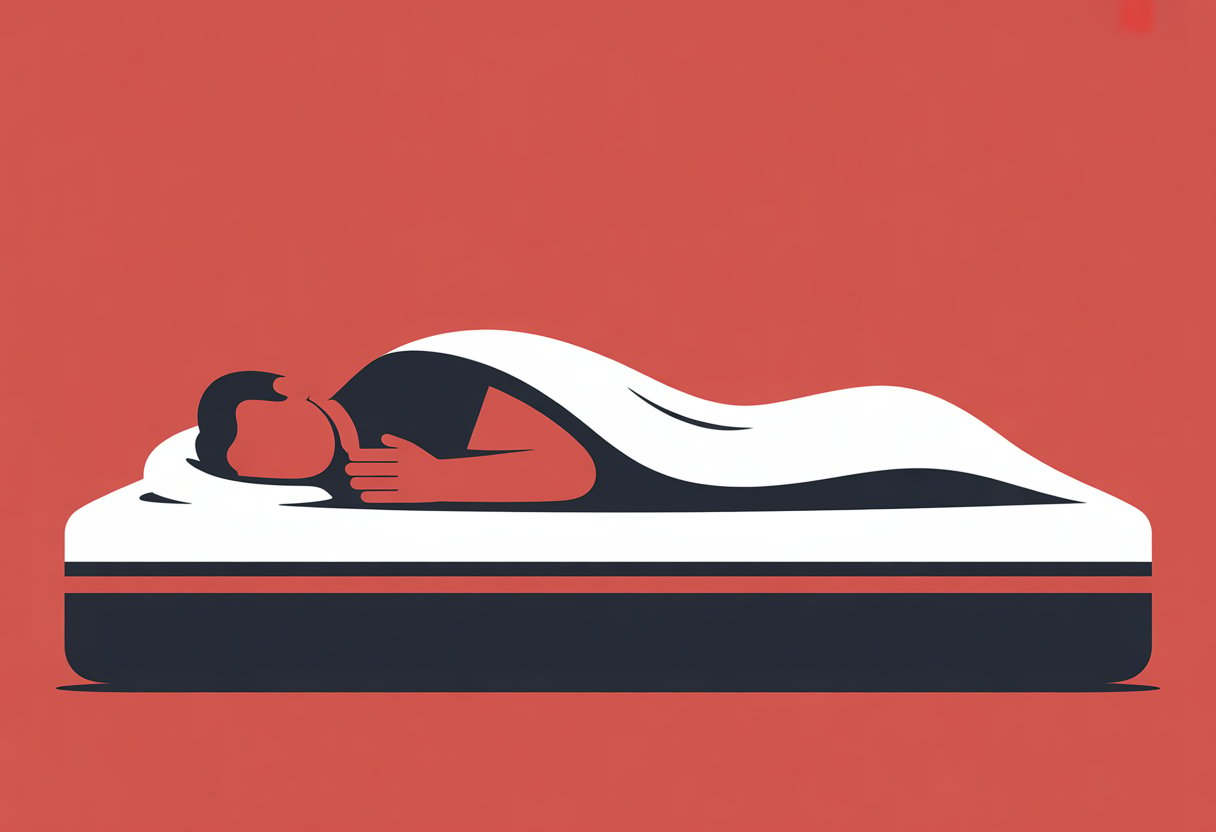
Memory foam responds to body heat and pressure, allowing the surface to contour around your body as it warms.
Key Takeaways
- Memory foam mattresses need a break-in period before they feel their best and conform properly to your body
- The mattress's feel can change as you adjust to the new sleeping surface
- There are multiple methods you can use to speed up the break-in period of your new mattress
How Do You Break In a Memory Foam Mattress? 10 Tips
1. Start Sleeping On Your New Mattress Quickly
Begin using your new memory foam mattress within a few days of unboxing it. The sooner you start sleeping on it, the faster it will soften and adjust to your body.
Your mattress will feel firm at first. This is normal for new memory foam mattresses. The materials need time to respond to your weight and body heat before they can properly mold to your body.
Plan to use your mattress regularly once it has fully expanded. Consistent use helps speed up the break-in process.
2. Add a Topper Or Pad For Extra Comfort
A mattress topper or pad creates an additional comfort layer while your memory foam mattress breaks in. This extra padding makes sleeping more comfortable during the first few weeks.
Toppers serve two purposes. They help you sleep better while adjusting to a new mattress, and they add pressure to the mattress surface that aids the break-in process.
Types of toppers to consider:
- Memory foam toppers
- Latex toppers
- Wool or cotton pads
- Down alternative toppers
3. Be Patient During the Break-In Period
Your memory foam mattress needs time to soften and conform to your sleeping position. Most memory foam mattresses can take at least a month to fully break in.
Don't make any final decisions about your mattress during the first few weeks. The feel will change as the materials adjust to regular use.
Some mattresses feel comfortable within days, while others need two to four weeks. The timeline varies based on foam density and mattress construction.
4. Switch Sleeping Positions Regularly
Sleeping on different areas of your mattress helps it break in evenly. Try alternating which side you sleep on each night.
This prevents one section from wearing in faster than others. Even break-in means your mattress will feel consistent across the entire surface.
If you share your bed with a partner, you can skip this step. Two people naturally distribute weight across more of the mattress surface.
5. Avoid Jumping Or Bouncing On the Surface
Keep children and pets from jumping on your new memory foam mattress. Excessive impact can damage the foam layers and create permanent indentations.
Memory foam responds to steady pressure, not sudden force. Jumping creates uneven compression that can prevent the foam from recovering properly.
Test comfort by sitting or lying down instead. Gentle crawling or rolling around on the surface helps break in the mattress without causing damage.
6. Turn Your Mattress Every Few Months
Rotating your mattress 180 degrees helps distribute wear evenly. Turn it so the foot end becomes the head end.
Most memory foam mattresses don't need flipping since they have a specific top and bottom. Only rotate them head-to-foot.
Rotation schedule:
| Time Period | Action |
|---|---|
| First 3 months | Rotate monthly |
| After 3 months | Rotate every 3-6 months |
Regular rotation extends mattress life and maintains consistent comfort.
7. Keep Heavy Items Off Your Mattress
Don't store boxes, furniture, or other heavy objects on your memory foam mattress. Concentrated weight can compress the foam and create lasting impressions.
Use your mattress only for sleeping and resting. Extra weight slows down the break-in process and can reduce how long your mattress lasts.
Heavy objects prevent the foam from expanding and contracting naturally. This stops the materials from softening at the proper rate.
8. Choose the Proper Foundation
Your mattress needs the right support underneath to break in correctly. Using the right foundation prevents sagging and maintains proper foam response.
Platform beds, slatted frames, and adjustable bases all work well with memory foam. Check your mattress warranty to see which foundations the manufacturer recommends.
Avoid using an old box spring unless your mattress specifications say it's appropriate. Weak or damaged foundations cause uneven wear and void most warranties.
9. Warm Up Your Bedroom
Memory foam responds well to heat and becomes softer and more pliable in warmer temperatures. Increasing your room temperature to around 72 degrees helps speed up the break-in process.
Warmer air helps the foam soften faster when you first start using it. Your body heat also warms the foam as you sleep, helping it contour to your shape.
You can lower the temperature once your mattress has fully broken in. The initial warm period just helps the materials adjust more quickly.
10. Let Your Mattress Air Out Properly
Give your mattress time to breathe for 4 to 10 hours after unboxing. This allows packaging odours to dissipate and helps the foam expand fully.
Open a window or turn on a fan to improve air circulation while the mattress airs out.
How Long Does a Memory Foam Mattress Take To Break In?

Most memory foam mattresses need about 30 days of regular use to fully break in. Some mattresses may feel comfortable sooner, while others could take up to 60 days depending on their construction.
The break-in period depends on density and firmness of your mattress. Higher-density foam has a tighter structure that takes longer to soften. The number of foam layers also affects how quickly your mattress becomes comfortable.
You might notice improvements within the first few days or weeks. Many people find significant comfort improvements within a couple of weeks of sleeping on their new mattress.
Factors that affect mattress break-in:
- Foam density and thickness
- Number of layers
- Room temperature
- How often you use it
A mattress topper can help during the break-in period if your new mattress feels too firm. Your body also needs time to adjust to the new support system.
Why Breaking In a Memory Foam Mattress Takes Time
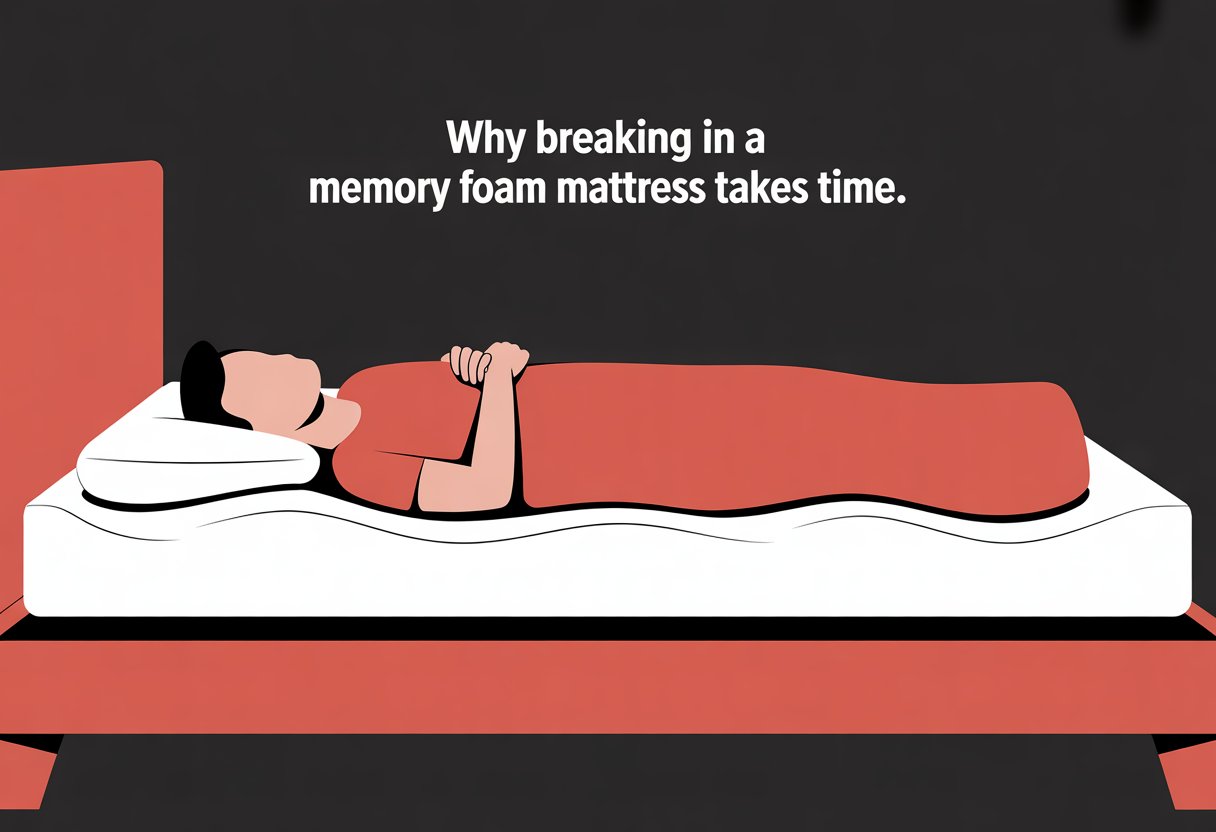
Memory foam needs time to respond to your body because the material relies on heat and pressure to soften. When you first sleep on your new mattress, it feels firm because the foam hasn't adjusted yet. Your body weight and warmth gradually cause the foam to mould around your shape.
This adaptation process creates the comfort that memory foam is known for. The foam softens in areas where you apply the most pressure, which helps reduce discomfort at your pressure points like hips and shoulders.
Several factors affect how quickly your mattress breaks in:
- Room temperature: Warmer rooms help foam soften faster
- Frequency of use: Daily sleep speeds up the process
- Mattress foundation: A proper base supports even compression
- Body weight: Heavier individuals may notice faster softening
Most memory foam mattresses need 30 to 60 days to fully break in. During the first week, you might also notice off-gassing, which is the release of VOCs from the manufacturing process. This smell typically fades within a few days.
Your slatted foundation or box spring should provide adequate support during this period. Without proper support, the foam may not break in evenly. The compression happens faster in spots where you sleep most often, so rotating your mattress can help distribute wear.
What if Your Memory Foam Bed Never Softens Up?
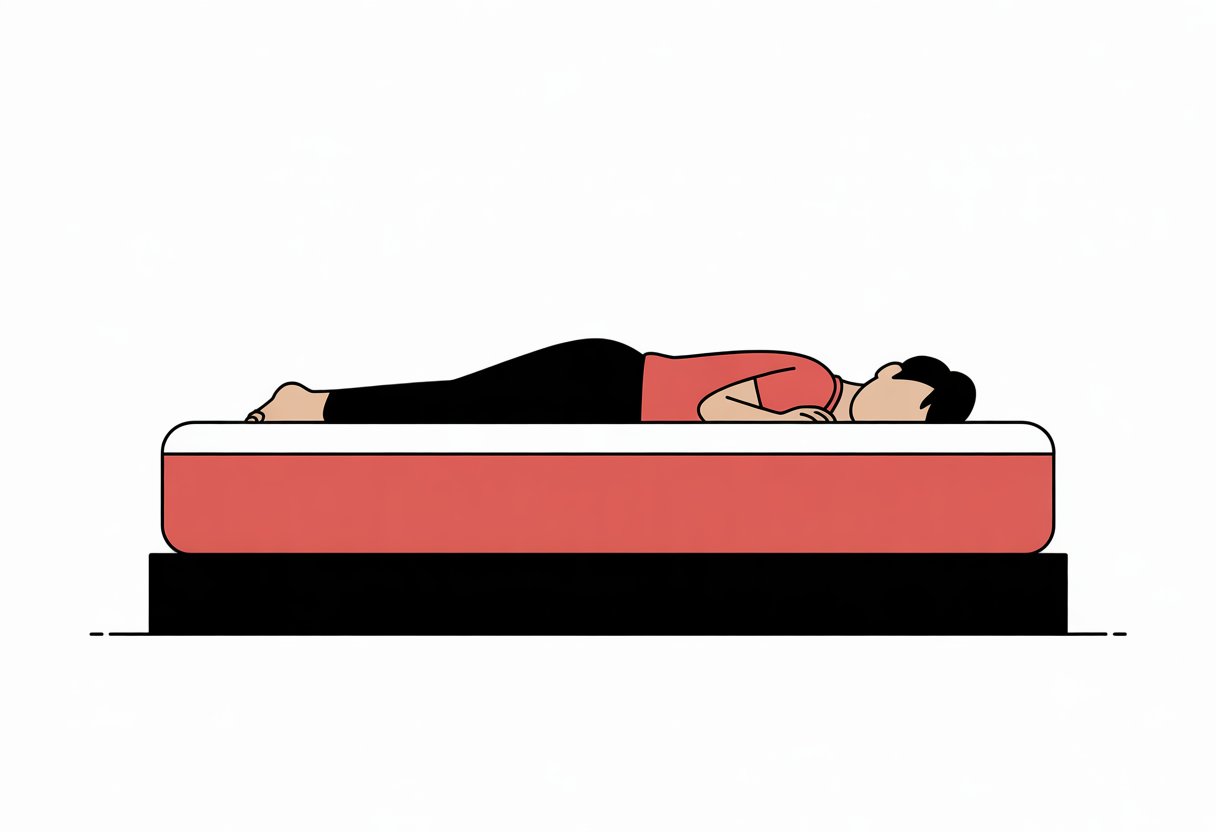
Sometimes a memory foam mattress just won't get more comfortable no matter how long you wait. If you've given it enough time and tried different methods, you might need to look at other factors.
Do not remove the mattress's factory cover to change its firmness. Follow the manufacturer's care instructions for the cover, and distinguish it from a separate protector or topper.
Your bed's foundation can affect how the mattress feels too. Try these options:
- Platform bed with close slats (no more than 8 cm apart)
- Box spring designed for foam beds
- Solid base like a bunkie board
Add high-quality sheets that breathe well. Sheets with cooling properties help memory foam respond better to your body temperature during the night.
Most companies offer a sleep trial that lets you test the bed at home for 30 to 120 nights. If your mattress still feels wrong after the break-in period, contact the company about your options. You may qualify for an exchange or return.
Persistent or severe pain should be discussed with a clinician. For questions about the mattress's comfort or support, contact the seller.
Final Thoughts
Adjusting to a new memory foam mattress requires patience and consistent use. Most mattresses take 30 to 90 days to break in properly, with denser materials needing more time to soften and conform to your body.
Your body also needs time to adapt to the new sleeping surface. You may experience some stiffness during the first few weeks as your muscles and joints adjust to different support levels.
Keep these points in mind during the break-in period:
- Sleep on your mattress every night for at least 30 days
- Apply gentle pressure by walking across the surface
- Maintain a warm room temperature to help the foam soften
- Avoid making a final decision before the adjustment period ends
Breaking in a memory foam mattress is a period of adjustment. Memory foam responds to body heat and pressure, so its feel can change as you use it.
Frequently Asked Questions
How much time does a memory foam mattress need to reach full expansion?
A memory foam mattress typically needs 24 to 72 hours to expand completely after you unpack it. The exact time depends on the foam density and the temperature in your room.
Denser foam takes longer to reach its full size. Warmer rooms help the process move faster because heat makes the foam softer and more flexible.
You can use your mattress before it reaches full expansion, but waiting gives you the best experience. The mattress will continue to soften and adjust over the first few weeks of use.
What techniques can help speed up the adjustment period for a new memory foam mattress?
Several approaches can help your mattress adjust more quickly to regular use.
Temperature control works well because memory foam responds to warmth by becoming softer. Keep your bedroom around 20-22°C to help the foam become more pliable.
Regular use is the most effective method. Sleep on your mattress every night and spend time sitting or lying on different areas throughout the day.
Gentle movement on the surface helps soften the foam layers. Roll or crawl across the mattress to apply pressure evenly across all sections.
Additional activities like reading in bed or watching television while lying down add extra time on the mattress. This increases the pressure and body heat that help the foam adjust.
Will using a memory foam mattress before complete expansion harm it?
Using your mattress before it fully expands will not damage it. The foam is designed to handle weight and pressure from the moment it starts expanding.
Your mattress may feel firmer than expected if you use it right away. This firmness is temporary and will decrease as the foam continues to expand and soften.
Sleeping on a partially expanded mattress might feel less comfortable but causes no structural harm. The foam will reach its intended shape whether you use it during expansion or wait until afterwards.
What is the typical timeframe for adjusting to a new memory foam mattress?
Your body needs 30 to 90 days to adapt to a new memory foam mattress. This period allows both your body and the mattress to adjust to each other.
The foam gradually softens and moulds to your body shape during this time. Your muscles and joints also need time to adapt to the different support levels.
Higher density memory foam may require more time to fully conform to your body. Some high-density foams take up to 60 days to complete the adjustment process.
Your sleep quality might vary during the first few weeks. This is normal as your body adapts to the new sleeping surface.
Should I turn my memory foam mattress to ensure even adjustment?
Rotating your memory foam mattress helps it adjust more evenly across all areas. Turn the mattress 180 degrees so the head becomes the foot every few months.
Most memory foam mattresses have specific top and bottom layers, so you should not flip them over. Only rotate them from head to foot.
Regular rotation during the adjustment period distributes your body weight across different sections. This prevents certain areas from softening faster than others.
Check your manufacturer's guidelines before rotating. Some brands have specific recommendations for their mattresses.
Do higher and lower density memory foam mattresses have different adjustment periods?
Density significantly affects how long a memory foam mattress takes to fully adjust.
Higher density foam contains more material per cubic foot, which makes it firmer and more durable. These mattresses can take 60 days or longer to completely mould to your body.
Lower density foam has less material and softens more quickly. These mattresses typically complete their adjustment period in 30 to 45 days.
The density affects both the initial expansion and the ongoing adjustment process. Higher density foam needs more time to respond to your body heat and weight patterns.
| Foam Density | Typical Adjustment Period | Characteristics |
|---|---|---|
| Low (3 lb/ft³ or less) | 30-45 days | Softer, faster adjustment |
| Medium (4-5 lb/ft³) | 45-60 days | Balanced comfort and support |
| High (6 lb/ft³ or more) | 60-90 days | Firmer, longer-lasting |
Your patience during the adjustment period often leads to better long-term comfort. The extra time for higher density foam results in more durable support that lasts for years.
If you like how memory foam contours to your body, check out our guide to plush mattresses and our guide to what counts as a medium-firm mattress.
 by
by 


