

















When shopping for a new mattress, understanding the technical details that affect comfort can make all the difference in finding the right fit. One measurement that plays a crucial role in determining how a mattress feels is ILD, or Indentation Load Deflection, which tells us how firm or soft foam materials are. This rating system applies to various foam products across multiple industries, from mattresses and sofas to car seats and packaging foam.

We created this guide to help you understand what foam ILD means, how it's measured, and why it matters for your comfort and health. Whether you're buying a new mattress or simply want to learn more about foam manufacturing standards, knowing about ILD ratings will help you make better purchasing decisions across the foam industries.
Key Takeaways
- ILD measures how firm foam is by testing how much force is needed to compress it by 25%
- Lower ILD numbers mean softer foam while higher numbers indicate firmer materials
- Understanding ILD ratings helps you choose foam products that match your comfort needs and support requirements
What Does Foam ILD Stand For?
ILD stands for Indentation Load Deflection, which measures how much pressure is required to compress foam materials. This rating tells us about the firmness level of foam products like mattresses, cushions, and toppers.
Understanding foam ILD helps determine comfort characteristics across different foam types including:
- Memory foam
- Polyurethane foam
- Latex foam
- HR foam
The ILD measurement process involves applying force to a foam sample and recording how much weight causes compression. Lower ILD numbers indicate softer foam, while higher numbers mean firmer materials. This rating system applies to individual foam layers and complete foam products, making it essential for evaluating mattress construction and overall mattress firmness.
How is Foam ILD Measured?
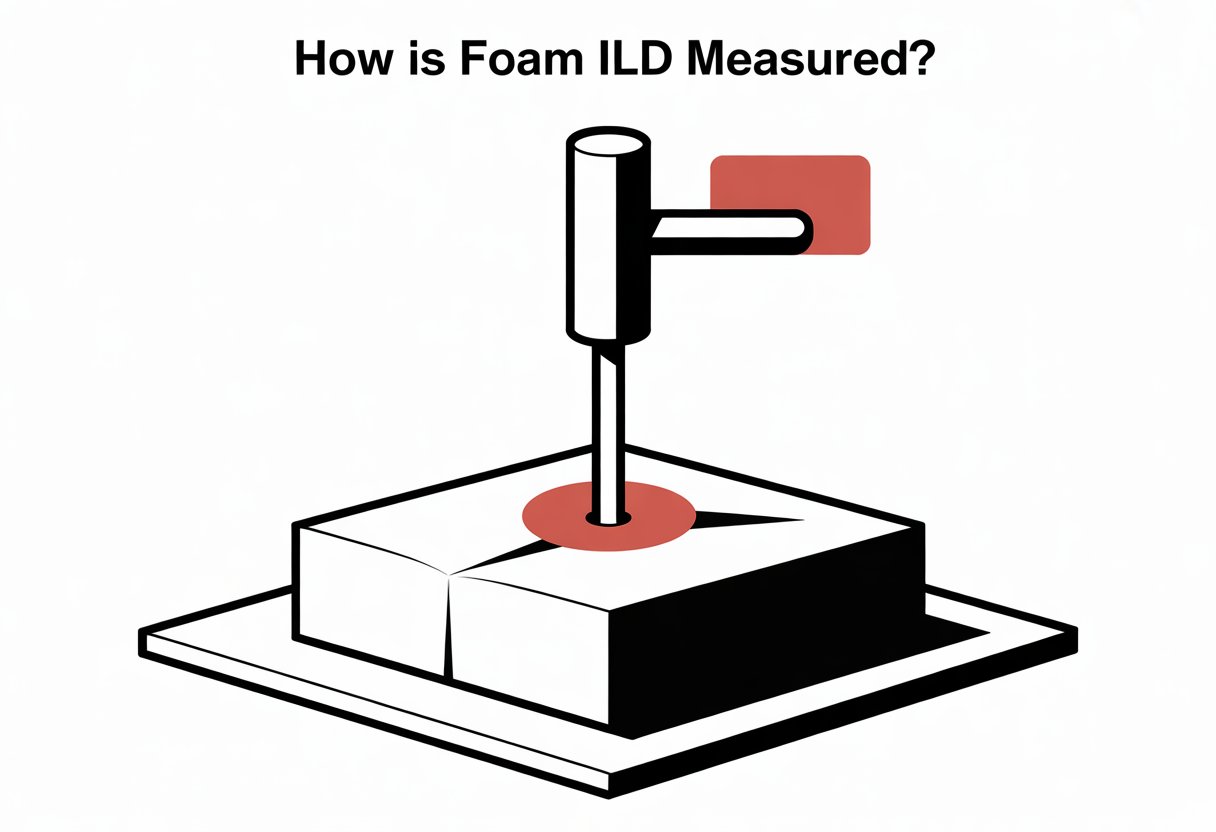
The ILD measurement process involves pressing a round disc into foam and recording the force needed. We use a 12-inch circular disc that presses into a 4-inch thick piece of foam until it compresses by 25% of its thickness, which equals one inch. The weight or pressure required to achieve this compression becomes the ILD rating.
A specialised machine applies force to the foam surface and measures resistance. The ILD rating is expressed as a numerical value in pounds. Higher ILD ratings indicate firmer foam, while lower ratings mean softer material.
ILD and IFD are used interchangeably in the industry. The test covers 50 square inches of foam surface area. According to testing standards, foam with ratings between 15-20 feels softer, whilst ratings of 30-40 offer medium firmness. This measurement helps us understand foam firmness independent of foam density.
The Impact on Your Health

Your mattress firmness plays a direct role in supporting your spine and reducing discomfort during sleep. When you experience back problems, selecting a bed with the right firmness level becomes crucial for managing pain and promoting proper alignment.
For those with back concerns:
- Higher ILD ratings provide the necessary support to prevent excessive sinking
- Firmer surfaces help maintain neutral spine positioning throughout the night
- Conditions like sciatica and herniated discs typically benefit from increased firmness
The connection between foam firmness and support means that people dealing with spinal issues often find relief when sleeping on surfaces that resist compression. A mattress that doesn't give too much keeps your back in better alignment and reduces pressure on sensitive areas.
For those without back issues:
We don't need to worry as much about specific firmness numbers. Personal preference becomes the primary factor in choosing comfort levels. Some people simply enjoy sleeping on softer surfaces, and that's perfectly acceptable when back health isn't a concern.
| Health Status | Recommended Approach |
|---|---|
| Back problems present | Choose higher ILD for firm support |
| No back issues | Select based on comfort preference |
Understanding how mattress firmness ratings relate to your health needs helps you make informed decisions. We should always consider our individual circumstances before purchasing a new mattress, whether shopping online or in-store.
Know About ILD Prior to Shopping

We recommend learning about ILD measurements before you visit a store to buy a foam mattress. Being prepared makes the shopping process smoother for everyone involved.
Why Research Matters
When we understand mattress firmness ratings beforehand, we help sales staff assist us more effectively. We save time by knowing which ILD range suits our needs. This preparation also helps us locate the right mattresses or cushions on the sales floor quickly.
What to Know Before Shopping
- The ILD rating we prefer based on our comfort needs
- Whether we need a firm mattress or softer option
- How different foam mattresses compare in the mattress industry
We should determine our ideal firmness level before entering any store. This approach benefits both us and the retailer. The mattress-buying process becomes more efficient when we arrive with knowledge about what we want.
Common Questions About Foam ILD
How Does ILD Connect to How Firm Foam Feels?
ILD measures how much force you need to compress foam by a specific amount. The test uses a standard method where we press down on a 4-inch foam sample until it compresses by 25% of its height.
The number tells us exactly how firm the foam is. A lower number means softer foam that's easier to compress. A higher number means firmer foam that needs more pressure to indent.
For example, foam rated at 12 ILD feels soft and cushiony. Foam rated at 50 ILD feels extra firm and supportive. Foams with similar ILD ratings will feel similar even if other properties differ.
What Changes the ILD Number of Foam?
Several elements determine what ILD rating a foam receives:
- Foam density - The weight per cubic foot affects compression resistance
- Chemical composition - Different foam formulas create varying firmness levels
- Cell structure - How the tiny bubbles in foam are arranged impacts compression
- Manufacturing process - Production methods alter the final firmness
- Foam type - Polyurethane, latex, and memory foam each have different properties
We can adjust these factors during production to create foam with specific ILD ratings. Manufacturers control the firmness by changing the recipe and process.
Does ILD Tell Us How Long Foam Will Last?
ILD and durability are separate characteristics. The ILD rating indicates firmness but doesn't directly predict how long foam will maintain its shape.
Density is a better indicator of durability. Higher-density foams typically last longer because they contain more material per cubic foot. A soft foam with high density can outlast a firm foam with low density.
We need to consider both measurements together. A foam might have a high ILD but poor durability if the density is low. The best foam for long-term use combines appropriate firmness with adequate density.
Why Does ILD Matter When Choosing Upholstery Foam?
Selecting the right ILD for furniture ensures comfort and proper support. Different furniture pieces need different firmness levels.
Common upholstery applications include:
| Furniture Type | Typical ILD Range | Feel |
|---|---|---|
| Sofa cushions | 28-40 | Medium to medium-firm |
| Chair seats | 35-50 | Medium-firm to firm |
| Back cushions | 18-25 | Soft to medium-soft |
| Armrests | 20-30 | Soft to medium |
We match the ILD to how people will use the furniture. Seat cushions need higher ILD ratings because they support body weight directly. Back cushions work better with lower ratings for comfort.
How Does ILD Affect Mattress Comfort?
ILD influences how a mattress feels when we lie down. The rating affects pressure relief, support, and overall sleep quality.
Lower ILD mattresses conform more closely to body contours. They work well for side sleepers who need pressure relief at shoulders and hips. Higher ILD mattresses provide more support and work better for back and stomach sleepers.
Most people prefer different firmness levels based on personal preference and sleep position. A mattress rated at 30 ILD feels relatively soft while one rated at 50 ILD feels much firmer.
We should remember that ILD measures individual foam layers rather than the entire mattress. A mattress might combine multiple foam layers with different ILD ratings.
What Are Normal ILD Ranges for Various Uses?
Different products require specific ILD ranges to function properly. The applications span from very soft to extra firm.
ILD ranges by product type:
- Pillows and toppers - 11-20 ILD (soft, contouring comfort)
- Mattress comfort layers - 20-35 ILD (soft to medium support)
- Mattress support cores - 35-50 ILD (firm foundational support)
- Wheelchair cushions - 25-40 ILD (balanced comfort and stability)
- Packaging foam - varies widely (protection-focused)
Specialty applications might fall outside these ranges. We choose the ILD based on the specific requirements of each product. The goal is matching firmness to function for optimal performance.
Ready to shop? Shop foam mattresses at National Mattress.
 by
by 


