

















Dust mites are tiny bugs that live in homes and can cause health problems for many people. These small creatures are too small to see with your eyes, but they live in places like beds, carpets, and furniture. They eat dead skin cells that fall off our bodies every day, which is why they do so well in bedrooms and other areas where people spend time.
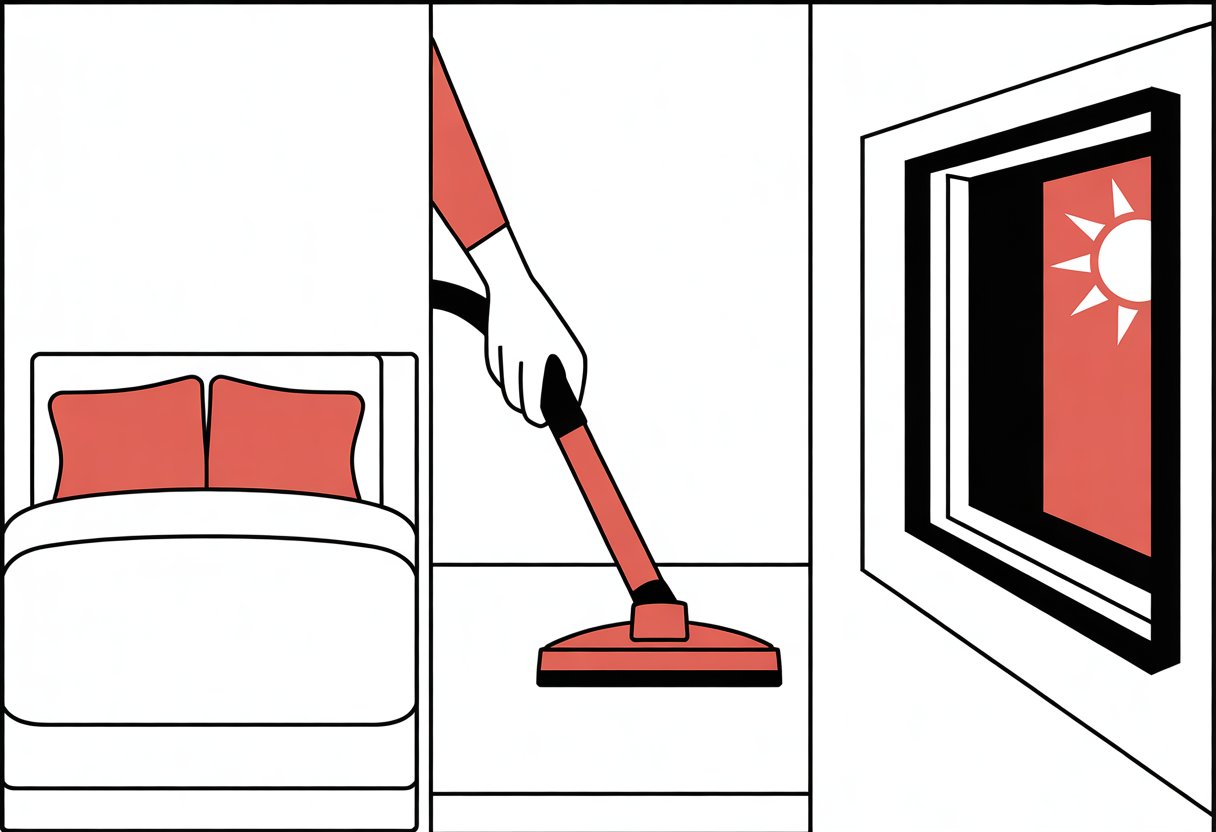
People with allergies or asthma often have worse symptoms because of dust mites. The good news is that there are simple ways to reduce dust mites in your home. We'll share practical steps you can take to lower the number of these bugs and help protect your health.
Key Takeaways
- Dust mites are tiny bugs that live in homes and feed on dead skin cells, causing allergy and asthma symptoms in sensitive people
- Dust mites thrive in warm, humid environments and are commonly found in bedding, carpets, and furniture
- Regular cleaning, reducing humidity, and washing bedding in hot water are effective ways to control dust mite populations
What Are Dust Mites?
Dust mites are tiny creatures that live in our homes and belong to the same family as spiders and ticks. We cannot see them without a microscope because they are so small.
These bugs live in our beds, carpets, and furniture where they eat the dead skin cells that fall off our bodies every day. Dust mites thrive in warm and moist environments where they have access to their food supply.
Our bedding creates a perfect home for a dust mite population because it stays warm and holds moisture. People are allergic to dust mite droppings, not the bugs themselves.
A dust mite infestation can happen in any home since these pests naturally occur indoors. House dust mites cause problems for people with allergies or breathing issues.
Signs and Symptoms of Dust Mites
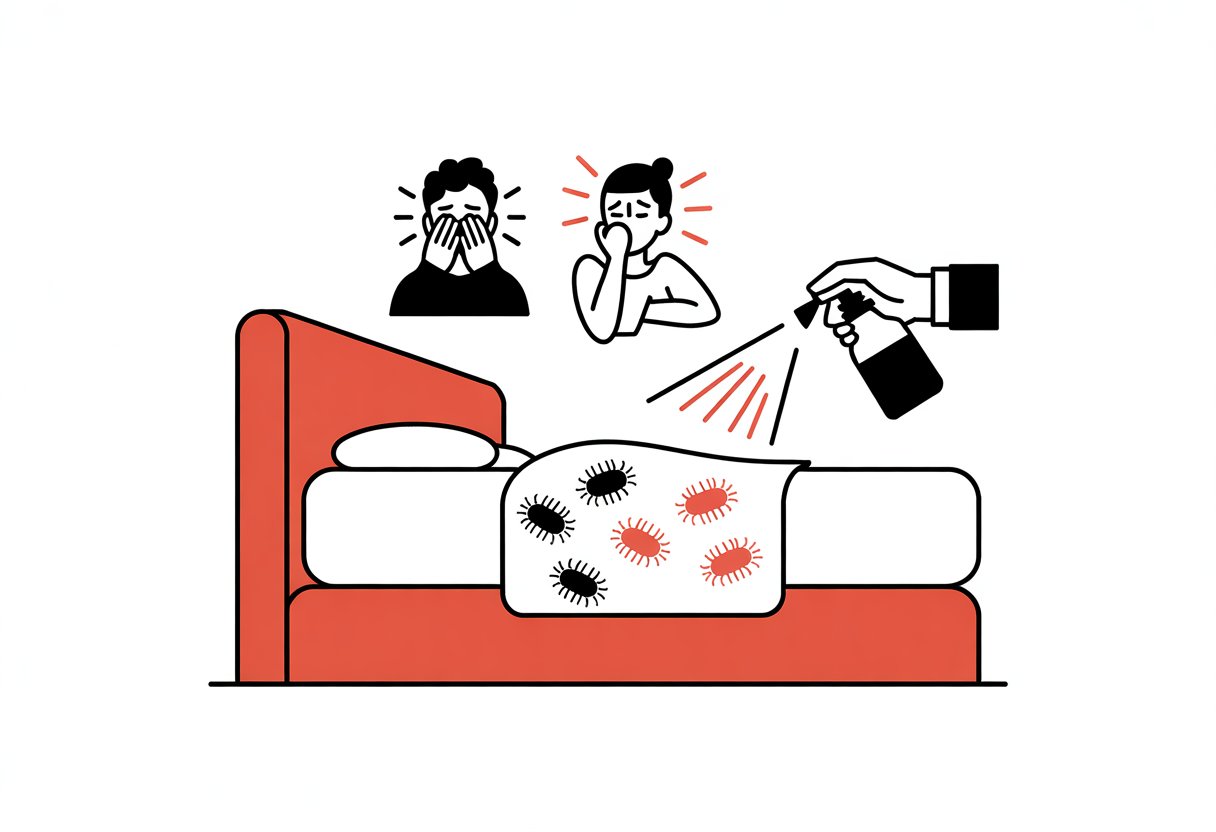
Dust mites live in nearly every home, but they're too small to see without a microscope. When you're exposed to these tiny creatures and their waste, your body may react in several ways.
Persistent Coughing and Sneezing
Dust mite allergies often cause frequent coughing and sneezing fits. Your body treats dust mite droppings as harmful invaders, triggering these reactions to expel the allergens.
People with asthma face bigger risks because dust mite exposure can lead to serious breathing problems. If you notice more coughing or sneezing when you're in bed or cleaning your home, dust mites might be the cause.
Throat Irritation and Breathing Difficulties
Wheezing and a sore throat are common dust mite allergy symptoms. The allergic reaction creates inflammation in your airways, making it harder to breathe normally.
These symptoms often feel worse at night or early morning when you're around bedding where dust mites gather. Some people develop hay fever-like reactions that make their throat feel scratchy and raw.
Eye Irritation and Tearing
Your eyes become itchy and watery when dust mite allergens reach the sensitive membranes around them. This allergic reaction causes inflammation that makes your eyes red and uncomfortable.
The symptoms can mimic other conditions, but if they happen mainly indoors or when you wake up, dust mites are likely responsible.
Skin Problems and Flare-Ups
Dust mite exposure triggers skin rashes and worsens eczema in many people. Your skin becomes red, itchy, and inflamed when it contacts these allergens.
Children and adults with sensitive skin experience more severe reactions. These skin issues often appear on areas that touch bedding during sleep.
How Dust Mites Impact Our Health
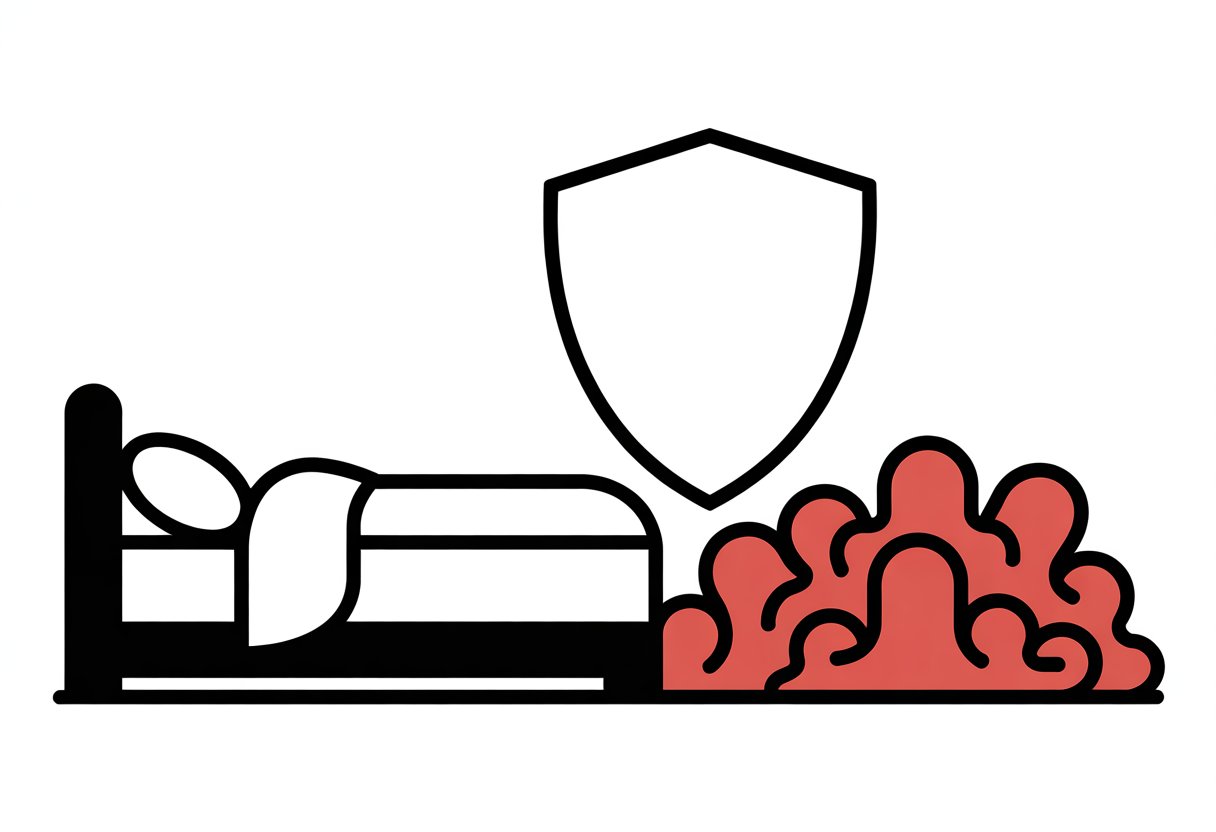
Dust mites create real health problems for many of us, especially those who live with asthma or allergies. When we breathe in dust mite allergens, our immune system treats them as threats and reacts to protect us.
This reaction leads to allergic rhinitis, which shows up in different ways. We might experience:
- Runny or stuffy nose
- Watery eyes
- Sneezing fits
- Coughing
- Facial pressure
- Difficulty breathing
For those of us with asthma, exposure to dust mite allergens can make asthma symptoms worse or trigger attacks. Some people also develop eczema from contact with these allergens.
Doctors can confirm dust mite allergies through a skin prick test. Treatment options include allergy shots, also called immunotherapy, which help our bodies build tolerance over time. Understanding where dust mites live helps us reduce our exposure and manage symptoms better.
Where Do Dust Mites Come From?
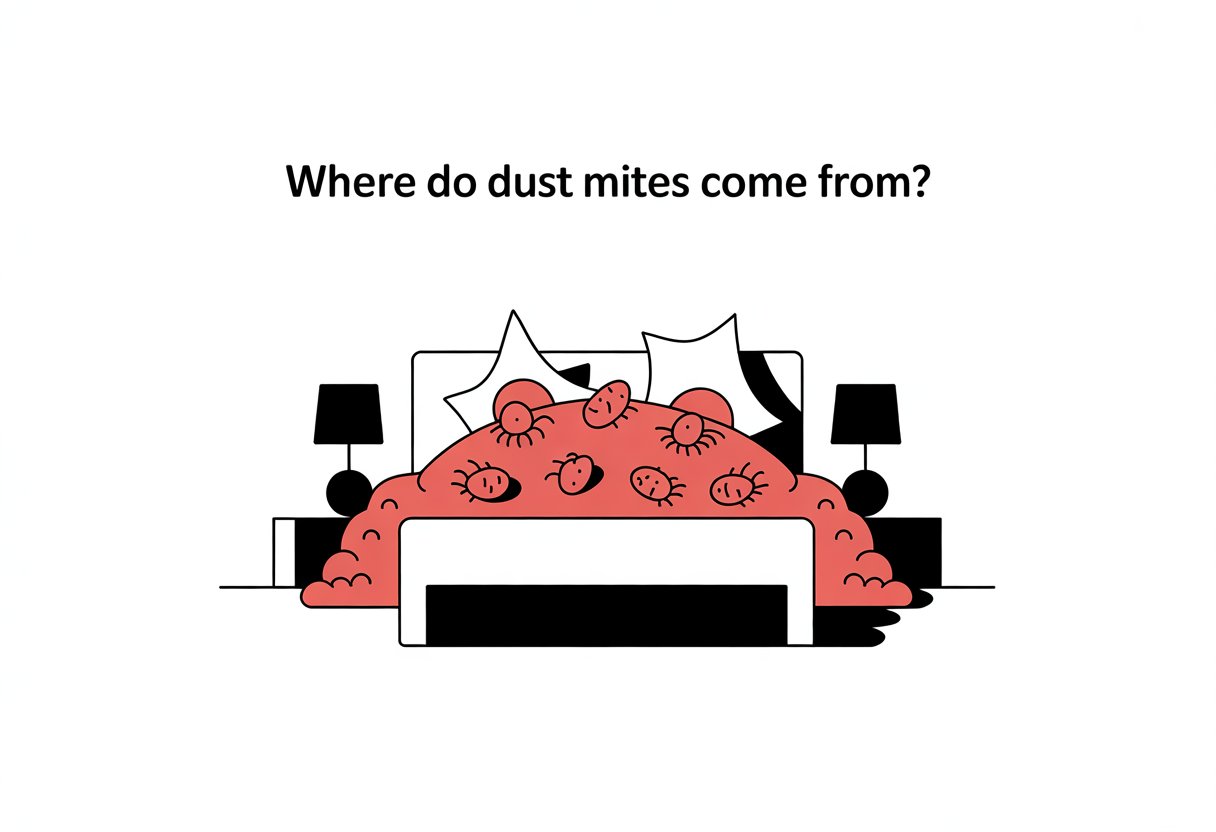
Dust mites don't just appear out of nowhere in our homes. These tiny creatures arrive through various pathways and establish themselves wherever conditions suit their needs.
Common Entry Points:
- Attached to our clothing and shoes from outdoor environments
- Carried in on pet dander and fur from animals
- Brought inside through open windows along with pollen and other outdoor particles
- Transferred on used furniture, mattresses, and carpets we bring into our homes
Once inside, dust mites settle into areas where they can access their primary food source: dead human skin cells. We naturally shed millions of these cells every day, which become part of household dust. The mites consume this material and produce dust mite droppings, which become allergens mixed into house dust.
Temperature and moisture levels in our homes determine whether these organisms can multiply and thrive. Warm spaces with moderate humidity create ideal breeding grounds, allowing small populations to grow quickly into larger infestations throughout our living spaces.
Tips on How to Prevent Dust Mites
Maintain a Clean Mattress
We need to clean our mattresses and bedding at least once each month. Our beds can harbour dust mites that feed on dead skin cells we shed while sleeping.
When we clean, we should focus on all bedding items and surfaces. This includes washing sheets in hot water and vacuuming the mattress itself. We should avoid leaving clothing or fabrics near windows where they collect dust and create ideal conditions for mites to multiply.
Regular cleaning prevents these pests from building up over time. We can use a HEPA filter vacuum to capture tiny particles that regular vacuums miss.
Use a Mattress Protector
Dust-mite-proof covers create a barrier between us and these pests. We should choose hypoallergenic mattress protectors that stop mites from burrowing into our bedding.
These covers are easier to clean than the mattress itself. We can wash them regularly to remove allergens and keep our sleeping area fresh. The breathable material allows air flow while blocking moisture and sweat that dust mites need to survive.
Quality protectors also shield our mattresses from spills and stains. This extends the life of our bedding while creating an environment where mites cannot thrive.
Choose the Right Mattress Material
Latex mattresses naturally resist dust mites better than other materials. The dense structure makes it difficult for mites to penetrate and establish colonies inside.
We should look for mattresses with these key features:
- Breathable materials that reduce moisture buildup
- Dense construction that blocks mite entry
- Natural fibres that don't trap allergens
- Easy-to-clean surfaces for regular maintenance
Memory foam and latex options often work better than traditional spring mattresses. These materials don't create the same warm, humid pockets where mites reproduce. We can also reduce humidity around our beds with proper ventilation and air conditioning.
Install an Air Purifier
Air purifiers help eliminate conditions that allow dust mites to multiply. We should use devices with HEPA filters that capture tiny particles floating in our rooms.
A dehumidifier works alongside an air cleaner to control humidity levels. Mites thrive when humidity rises above 50 percent, so we need to keep our homes drier. Air conditioning also helps by circulating air and removing excess moisture.
These devices remove pet dander, mould spores, and other allergens from our living spaces. We breathe cleaner air and create an environment hostile to dust mites.
Replace Old Bedding Items
We should replace worn sheets, blankets, and pillows that accumulate mites over time. Old upholstered furniture, rugs, and carpets also harbour these pests no matter how often we clean them.
When we wash bedding in hot water weekly, we kill existing mites. However, heavily infested items need replacement. We should choose washable curtains instead of heavy drapes and limit stuffed toys in bedrooms.
Steam cleaning carpets kills mites with high heat, but old fibres still trap allergens. We can use microfiber cloths for dusting hard surfaces instead of feather dusters that spread particles around.
Key Takeaways
We can control dust mites in our homes through regular cleaning habits. These microscopic creatures live in bedding, carpets, and furniture where they feed on dead skin cells.
Essential steps for managing dust mites:
- Wash bedding weekly in hot water
- Vacuum floors and upholstered furniture regularly
- Use damp cloths when dusting surfaces
- Keep indoor humidity levels below 50%
- Cover mattresses and pillows with allergen-proof cases
We should focus our efforts on bedrooms since dust mite symptoms often feel worse at night. While we cannot remove every single dust mite from our living spaces, we can reduce their numbers significantly through consistent cleaning practices. These actions help create a more comfortable environment for people with allergies or asthma.
Common Questions About Dust Mite Prevention
What cleaning methods work best to reduce dust mites in our homes?
We need to clean regularly using specific techniques that target these tiny pests. Vacuuming alone won't remove dust mites effectively, so we should use a vacuum with a HEPA filter that traps small particles.
Steam cleaning carpets kills dust mites because the high heat destroys them on contact. We can steam clean carpets, upholstered furniture, and curtains every few months.
Damp mopping hard floors works better than dry sweeping because it captures dust instead of spreading it around. We should also wipe down surfaces with a damp cloth rather than a dry duster.
Key cleaning practices include:
- Using HEPA-filtered vacuums on all soft surfaces
- Steam cleaning carpets and upholstery regularly
- Wiping surfaces with damp cloths
- Mopping hard floors instead of sweeping
- Washing curtains and fabric items frequently
Do special covers for bedding and pillows help keep dust mites away?
Allergen-proof bedding creates a barrier between us and dust mites. These covers are tightly woven so dust mites cannot pass through the fabric.
We should encase our mattresses, box springs, and pillows in these protective covers. The covers trap existing dust mites inside while preventing new ones from entering.
These covers need to have zippers that close completely. We wash the covers monthly along with our regular bedding.
Effective cover features:
| Feature | Purpose |
|---|---|
| Tight weave | Blocks dust mites from passing through |
| Zippered closure | Seals mattress or pillow completely |
| Washable material | Allows regular cleaning |
| Breathable fabric | Maintains comfort while sleeping |
What moisture levels should we maintain indoors to discourage dust mites?
Dust mites thrive in humid environments, so we control moisture to make our homes less welcoming to them. We should keep indoor humidity below 50 percent.
The ideal range sits between 30 and 50 percent relative humidity. We can measure this using an inexpensive hygrometer from any hardware shop.
Dehumidifiers help us maintain proper moisture levels, especially in damp basements or during humid months. We empty and clean them regularly to prevent mould growth.
We should avoid keeping plants or fish tanks in bedrooms since they add moisture to the air. Running air conditioning during warm months also reduces humidity while filtering air.
Which materials and fabrics should we stay away from to avoid dust mite problems?
Heavy fabrics and plush materials collect dust and provide perfect homes for dust mites. We should choose smooth, tightly woven fabrics that we can wash easily.
Materials to avoid:
- Thick carpeting throughout the home
- Heavy drapes and curtains
- Upholstered headboards
- Fabric-covered furniture with deep crevices
- Decorative pillows and cushions
- Wall-to-wall carpeting in bedrooms
Better alternatives:
- Hardwood, tile, or vinyl flooring
- Washable blinds or light curtains
- Leather or vinyl furniture
- Wood or metal bed frames
- Minimal decorative textiles
We replace carpeting with hard flooring when possible, especially in bedrooms where we spend many hours.
How often do we need to launder our sheets and bedding?
We wash all bed linens weekly in hot water to kill dust mites and remove their waste. Water temperature matters because dust mites survive cooler washing cycles.
We use water that's at least 60°C (140°F) to eliminate dust mites effectively. If our bedding can't handle hot water, we dry it on high heat for at least 15 minutes.
Washing schedule:
- Sheets and pillowcases: weekly
- Blankets and duvets: every two weeks
- Mattress covers: monthly
- Pillows themselves: every three months
- Comforters: seasonally
We dry everything completely before putting it back on the bed. Damp bedding encourages dust mite growth.
How does filtering the air help us manage dust mites indoors?
Air filtration removes airborne particles that contain dust mite waste, which triggers allergic reactions. We use HEPA filters in our heating and cooling systems to trap these microscopic particles.
Portable air purifiers with HEPA filters work well in bedrooms and other spaces where we spend time. These devices continuously clean the air by capturing dust, dander, and allergens.
We change furnace filters every one to three months depending on the type. Dirty filters stop working effectively and can spread particles back into our air.
Air filtration benefits:
- Captures airborne dust mite allergens
- Reduces overall dust in our homes
- Improves air quality for breathing
- Works continuously without extra effort
We combine air filtration with other prevention methods for the best results. Filtration alone won't eliminate dust mites, but it reduces our exposure to allergens they produce.
Ready to shop? Shop mattress protectors at National Mattress.
 by
by 


