

















Powered temperature regulating mattresses and covers do work: they move heat away using circulated water or air, and can adjust the bed surface temperature directly. Passive designs help less, because gel-infused foam stores heat temporarily and slows warming rather than creating a lasting route for heat to escape. Phase change materials absorb your body heat as they melt, then release it as they cool. Ask which mechanism a specific cover uses before you buy.
If you've ever woken up in the middle of the night feeling too hot or too cold, you might wonder whether temperature regulating mattresses can actually help you sleep better. Their effectiveness depends on factors like room temperature and the specific technology used.
The question about whether cooling mattresses work has created debate among sleep experts and customers alike. Some people report sleeping much cooler and waking up less often, while others find the benefits less noticeable. The truth is that these mattresses work best when combined with other cooling strategies like keeping your bedroom cool and using breathable bedding.
Understanding how these mattresses function can help you decide if one might improve your sleep. Different technologies offer varying levels of temperature control, and certain sleepers benefit more than others from these features. Your body naturally drops in temperature when you fall asleep, so maintaining the right sleep environment matters more than you might think.
Key Takeaways
Temperature regulating mattresses use different approaches: airflow through the build and temporary heat storage in materials
These mattresses work best when your bedroom is already cool and you combine them with breathable bedding
- People who feel too warm may value temperature features, but the label does not establish better sleep or treatment of night sweats.
How Do Temperature Regulating Mattresses and Smart Covers Work?
Passive designs may combine temporary heat storage with airflow paths. Powered systems move heat using mechanisms such as circulated water or air; they do not necessarily incorporate every passive feature.
Temperature Regulation Mechanisms
Your body naturally releases heat as you sleep, and mattresses need ways to move this heat away from your skin. Phase change materials (PCMs) are substances that absorb and release thermal energy as they change states between solid and liquid. When PCMs in a mattress cover absorb your body heat, they melt and store that energy. As you cool down, the PCMs solidify and release the stored heat back into the surrounding air.
Smart or adaptive fabric is a broad label. Ask which mechanism the specific cover uses and what evidence supports it; do not assume every such fabric opens and closes its fibres in response to body temperature.
Powered water-circulating covers can adjust the bed surface temperature. Check the individual system's controls, operating range, installation and maintenance requirements; the mechanism alone does not establish superiority or precise control under every condition.
Role of Material Science in Cooling
Foam cell structure, ventilation and how closely you settle into the surface affect heat transfer. Density describes mass per volume, so it is not a direct airflow rating or proof that an older or newer foam will sleep hot.
Gel-infused foam can store heat temporarily and slow warming; it does not create a lasting route for heat to escape. Cover and bedding fabrics also matter, but fibre names alone do not establish wicking or temperature regulation.
Copper and graphite labels alone do not establish how cool a mattress will sleep. Check evidence for the individual model and consider its airflow, comfort-layer thickness and cover together.
Heat Dissipation and Ventilation Features
Coil cores provide open spaces that can allow airflow. The cover, comfort layers and surrounding environment still affect heat transfer, so a core alone does not establish active pumping of warm and cool air as you move.
Manufacturers also add specific ventilation features to improve air circulation:
Perforated foam layers with hole-punched patterns that create pathways for air movement
- Cover construction that permits airflow, considered with the layers below
- Documented ventilation channels, assessed separately from firmness or support zoning
Use the mattress maker's approved base and required support. Slats, a solid platform and side ventilation interact with the complete bed; ventilation alone does not justify choosing an incompatible base or establish that every solid platform traps heat.
Why Does Sleep Temperature Matter?
Thermal comfort can affect how easily you settle and stay comfortable in bed. Sleep involves changes in body temperature, but there is no single skin-temperature target that every shopper should try to achieve with a mattress.

Body Temperature and the Sleep Environment
Core temperature, skin temperature and room temperature are different measurements. Bedding, clothing and humidity also affect heat exchange, so do not treat one research range as a universal mattress setting.
What Research Can Show
Studies of particular powered covers can test specific sleep outcomes. Their findings do not establish that an ordinary gel mattress improves deep sleep, tissue repair, immunity or cardiovascular health.
When Warmth Needs More Attention
Adjust bedding and room conditions for comfort. Recurrent unexplained night sweats or symptoms that interrupt sleep warrant clinical advice; a cooling mattress does not identify or treat their cause.
What Is a Temperature Controlled Mattress?
Temperature-controlled and temperature-regulating labels can describe different products. Passive materials may store heat temporarily or permit airflow; powered systems can actively adjust a surface temperature. Check the mechanism rather than assuming the label means a thermostat-controlled bed.
Phase Change Materials (PCM)
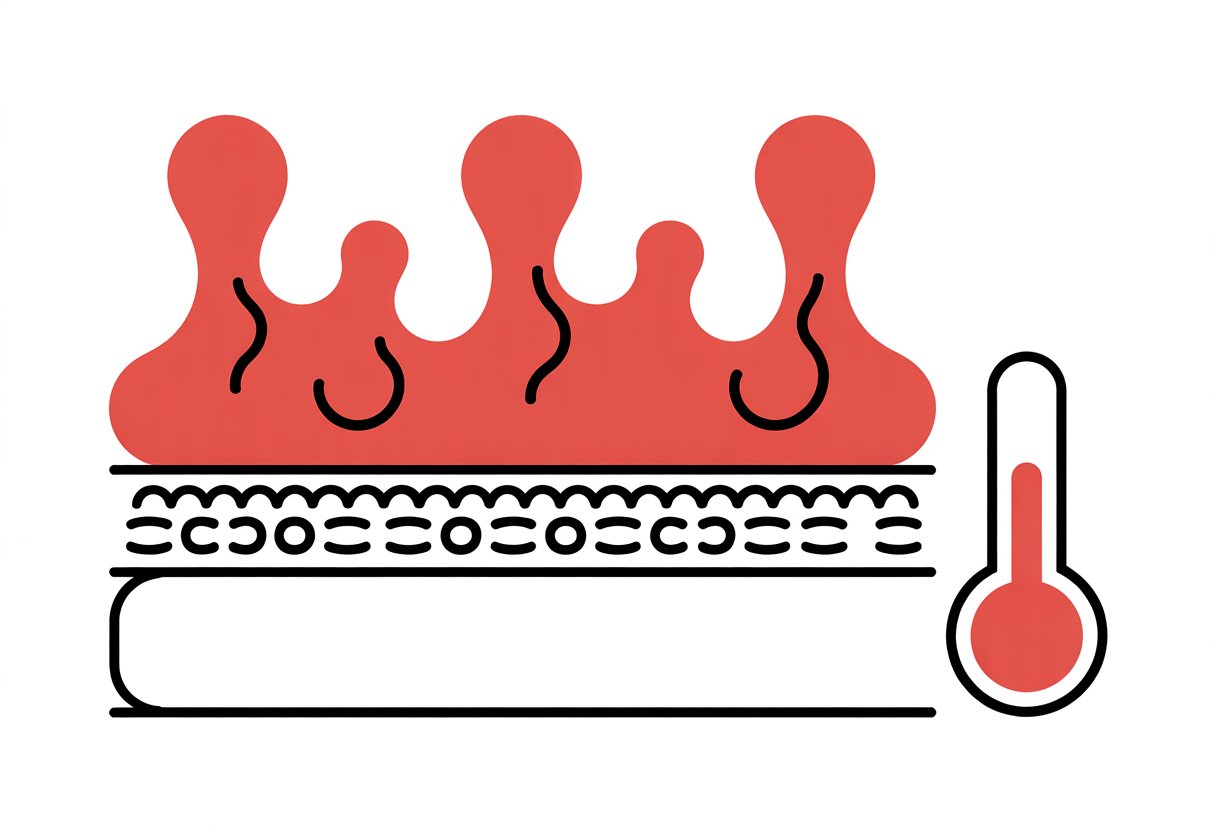
Phase change materials are substances that absorb and release heat as they shift between solid and liquid states. When your body temperature rises during sleep, PCMs absorb the excess heat and change from solid to liquid. As you cool down, the materials solidify again and release the stored heat.
PCMs store and release heat during a phase transition. Their heat-storage capacity is finite, and the surrounding layers must still exchange that heat; the material does not guarantee a constant temperature throughout the night.
Outlast describes using microencapsulated wax to store and release heat during temperature changes. That is a heat-storage mechanism, distinct from transporting perspiration through fabric. Check the actual product construction and care instructions.
Gel-Infused Memory Foam and Cooling Gels
Gel-infused memory foam contains small gel beads or liquid gel swirled throughout the foam structure. Gel is a heat sink, not a heat path: it raises thermal mass so the surface warms more slowly. That temporary effect does not establish whether an all-foam mattress regulates temperature well through the night.
Do not treat an infusion name as evidence of all-night cooling. The amount and arrangement of a material matter, and cooling claims need model-specific evidence.
Two limits matter when judging gel foam:
Slower warming: Added thermal mass delays the initial rise in surface temperature
Finite capacity: Once the gel has warmed, airflow and the rest of the build still determine how heat can escape
Gel may change the initial feel, but does not guarantee a cooler night. Sustained cooling comes from airflow. Start with a breathable build, treat infusion as a refinement, and compare cooling mattresses by their complete construction.
Open-Cell, Perforated, and Convoluted Foam
Open-cell foam has connected pores that can provide paths for air. How much airflow occurs depends on the actual foam and surrounding layers; open-cell structure does not prevent all heat buildup.
Perforated foam includes small holes punched through the material to create additional air channels. These perforations increase airflow and help heat escape from the sleep surface. The holes can be arranged in various patterns and sizes depending on the cooling needs.
Convoluted foam features a textured surface with peaks and valleys, often called an egg crate pattern. This design increases the surface area exposed to air and creates space for heat to dissipate. The valleys between peaks act as air channels that promote airflow and support temperature regulation.
Compare the actual ventilation, layers and cover. A list of structural features or foam density alone cannot establish better temperature comfort than every alternative.
Which Mattress Types Regulate Temperature Best?
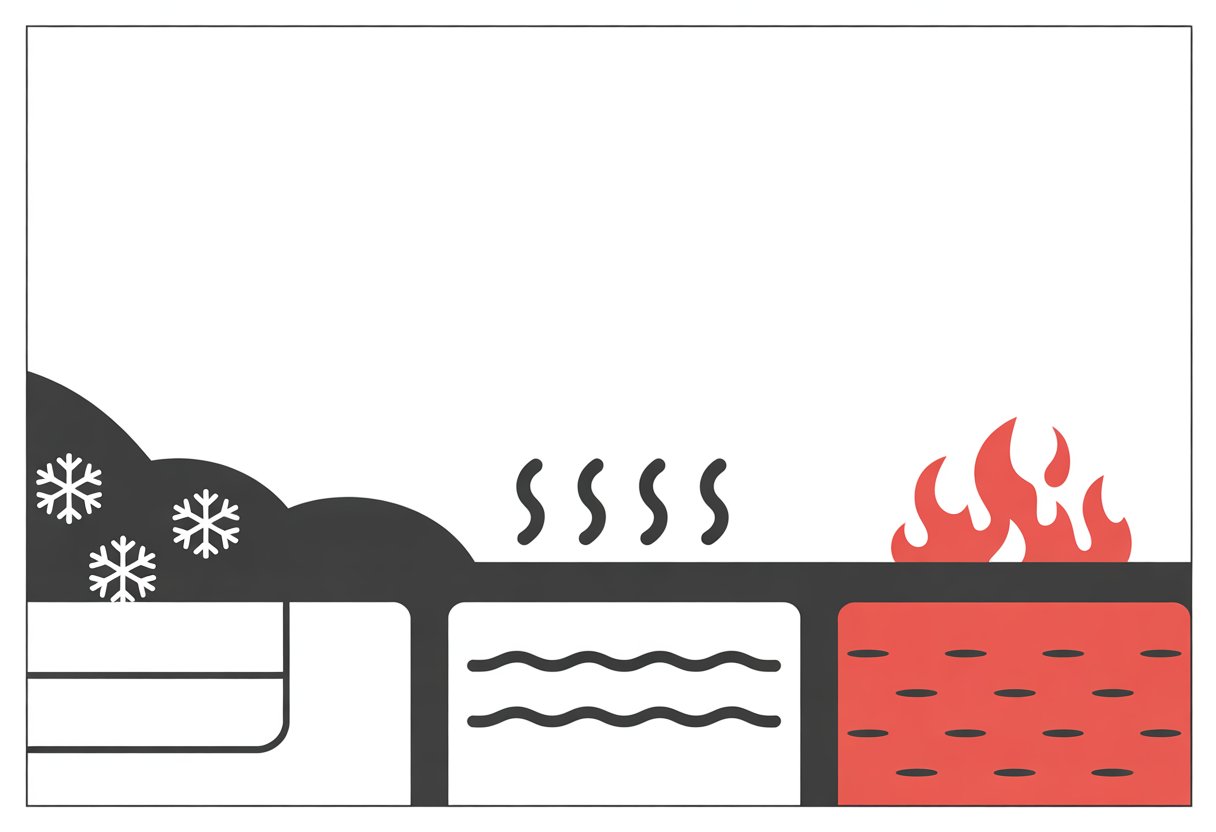
Builds with a coil core, innerspring and hybrid, have the airflow head start: spring coil mattresses allow better airflow than solid foam designs, and the thinner the comfort layers above that core, the less heat-trapping material sits between you and it. Perforations and open-cell foam can improve ventilation in any build. The full construction still matters: thick comfort layers, the cover and bedding can limit airflow above a ventilated core. Compare individual models instead of assuming one construction always sleeps coolest.
Modern Memory Foam Mattresses
A close-contouring foam surface can feel warm to some sleepers. Cell structure, layer thickness, ventilation and bedding matter; density alone does not explain airflow or establish a universal hot-sleeping result.
Newer memory foam mattresses address this issue with cooling technologies. Some models use infusions marketed for cooling; gel can slow initial warming, while the advantage of other additives needs evidence for that model. Some brands add phase-change materials that absorb excess heat when you get warm and release it when you cool down.
Common cooling features in memory foam include:
Open-cell foam structures that allow better air circulation
Perforated layers with holes for improved breathability
- Infusions assessed by their mechanism and model-specific evidence
Breathable covers made from moisture-wicking fabrics
The full construction matters more than a foam-family label. Compare the actual model and your bedding rather than assuming every memory foam mattress sleeps warmer than every other type.
Hybrid Mattress Innovations
A hybrid combines comfort layers with a coil core. The core provides airflow space, while the layers above it affect surface warmth; that combination does not automatically regulate temperature better than every all-foam model.
Coil spaces may connect to ventilation at the sides or underside, depending on the design. Heat can still build up above the core, so compare the comfort layers and cover too.
Hybrid advantages for temperature control:
Feature | Benefit |
|---|---|
Coil support core | Creates airflow channels |
Thinner comfort layers | Less heat-trapping material |
Multiple material types | Different components whose combined thermal behaviour must be assessed |
A hybrid may combine contouring with spring response, but pressure relief and temperature comfort both depend on the complete mattress and sleeper.
Latex and Natural Options
Latex foam may include an open-cell structure and perforations that permit airflow. Compare the complete layers and bedding; a natural-latex label does not guarantee cooler sleep than memory foam.
Latex often rebounds more quickly than memory foam, which some sleepers prefer for changing position. That response does not by itself establish reduced heat concentration or consistent overnight temperature regulation.
Ventilation holes in latex can provide airflow paths. Latex foam is not itself a fabric wick that pulls sweat from the skin; moisture management also depends on the cover and bedding.
Coil and Innerspring Design
Innerspring cores have open spaces between coils. The complete layers, cover and room conditions determine whether those spaces translate into useful ventilation at the sleep surface.
Less enclosing cushioning may feel cooler to some sleepers, but there is no universal coolest innerspring design. Metal stores and transfers heat too; the complete construction determines surface warmth.
Innerspring cooling benefits:
- Space for airflow within the coil core
- Heat transfer assessed through the complete mattress, including the layers above the springs
Minimal material between you and the ventilated core
Natural fibre toppers that breathe well
Consider a ventilated design if you value airflow, while checking the upper layers and room conditions. The material family alone does not establish suitability for every warm climate or hot sleeper.
Who Benefits Most from Temperature Regulating Mattresses?
The sleepers who get the most from these features are the ones whose problem is comfort: people who consistently feel warm in bed or throw off the covers, and couples who want different temperatures on each side, since some powered systems offer separate side settings. Anyone whose warmth comes from night sweats, hot flashes or a health condition is a different case: a mattress can change how the surface feels, but it does not treat the cause.
Temperature features may be worth comparing when warmth affects comfort. Separate that shopping decision from symptoms or health conditions; mattress features do not establish treatment benefits.
Hot Sleepers and Night Sweats
Feeling warm or throwing off covers does not identify the cause of sweating. Check bedding and room conditions, and seek clinical advice for recurrent unexplained night sweats or symptoms that disrupt sleep.
Ventilation and less enclosing bedding may improve temperature comfort for some sleepers. A mattress feature does not guarantee fewer awakenings or deeper sleep.
Night sweats have several possible causes. A cooler-feeling bed can be a comfort adjustment, but it does not establish a balanced body temperature or treat the underlying cause.
Couples with Different Sleep Preferences
You and your partner might have completely different temperature needs at night. One of you might need extra blankets while the other sleeps in just a t-shirt.
Some powered systems offer separate side settings. Check the actual controls and operating limits; neither a passive mattress nor dual-zone control guarantees a comfortable result for both partners.
Compare the whole bed with both partners, including bedding and personal preferences. A temperature-regulating label does not guarantee fewer disruptions or improved sleep for either person.
People Experiencing Menopause or Health Conditions
Menopause often brings intense hot flashes and night sweats that can wake you multiple times per night. Your body's temperature regulation system becomes less stable during this transition, making it harder to stay comfortable while sleeping.
A mattress can change the feel of the sleep surface, but it does not treat hot flashes or the cause of night sweats. Seek clinical advice for persistent or severe symptoms.
For an existing health condition, medication questions or symptoms that affect your sleep, ask your clinician. Choose bedding for comfort alongside that advice.
What Else Affects How Cool Your Bed Sleeps?
Your mattress is only one part of the equation when it comes to sleeping cool. The materials you layer on top of your mattress and the fabrics that touch your skin play a major role in how well heat escapes from your body during the night.
What sits between you and a cool bed, beyond the mattress:
- Cover and sheet construction: weave, knit, finishes and barriers affect airflow, and thread count alone does not grade it
- Moisture-wicking fabrics: sweat cools you only when it can evaporate, so fabrics that spread it help it dry faster
- A mattress protector: many create a waterproof barrier that traps heat and moisture
- A topper: it changes contouring and heat transfer above the mattress
- The room itself: a hot room can overwhelm even the best cooling mattress technology, and humidity and sleepwear matter too
Breathable Covers and Bedding
Cover weave, knit, finishes and barriers affect airflow. A fibre name alone does not establish breathability or prevent heat buildup, so compare the actual fabric and layers.
Synthetic fabrics vary widely. A porous polyester knit and a solid vinyl barrier do not behave the same way; assess the actual construction, moisture-vapour transport and care requirements.
Comfort-layer depth, contouring and ventilation affect temperature feel. A cooling-additive label is not required for airflow, and latex or a coil core does not guarantee it at the surface.
Sheet and duvet construction also affect warmth. Thread count alone does not grade airflow; compare weave, fabric weight, finishes and how the complete bedding feels.
Moisture-Wicking Materials
Sweat is your body's cooling mechanism, but it only works when moisture can evaporate from your skin. Moisture-wicking fabrics pull perspiration away from your body and spread it across a larger surface area where it dries faster.
TENCEL Lyocell is a branded wood-derived fibre with moisture-control properties. That fibre-level characteristic does not establish a universal percentage advantage over cotton or guarantee drier skin and regulated temperature in every finished fabric.
For textiles described as bamboo, identify the actual fibre, such as rayon or viscose made from bamboo. The source plant alone does not establish fast drying, wicking or prevention of a clammy feel; compare the finished fabric.
Moisture transport and phase-change heat storage are different features. Check which mechanism the cover actually uses, and consider it together with the rest of the bedding.
Mattress Protectors and Accessories
A mattress protector serves two purposes: it guards against spills and stains while adding another layer between you and the mattress. However, many protectors create a waterproof barrier that traps heat and moisture.
A continuous waterproof barrier may restrict airflow, but comfort depends on the complete construction. Do not treat a backing-material label as a guarantee that every sleeper will wake hot or sweaty.
Waterproof membranes vary in moisture-vapour permeability and air permeability; those are different properties. Check the actual protector's specifications and care instructions rather than assuming a Tencel or bamboo blend preserves cooling performance.
A topper changes contouring and heat transfer above the mattress. Compare its layers and ventilation with your existing bed; thickness, latex or a cooling-gel label alone does not establish the thermal result.
Final Thoughts: Do Temperature Regulating Mattresses Really Work?
Temperature features can affect comfort, but results vary by product, bedding, room and person. Studies of particular powered covers do not establish better sleep from every passive or active cooling product.
Scientific Evidence and Expert Opinions
A 2024 study of the powered Eight Sleep Pod reported about 14 additional minutes of deep sleep in men and nine additional minutes of REM sleep in women when using cooler settings during the first half of the night, compared with the cover switched off. These were subgroup results from that particular setup, not expected gains for every sleeper or ordinary gel mattress.
The same study reported changes in sleeping heart rate and heart rate variability. It studied one powered cover, and several authors worked for its manufacturer. These results do not establish a health benefit for ordinary gel mattresses.
Passive heat-storage effects have finite capacity. Powered systems can continue moving heat while running, but their accuracy and comfort depend on the device, settings, maintenance and operating conditions; they do not guarantee a fixed surface temperature in every room.
Spring coil mattresses naturally allow better airflow compared to solid foam designs. This open structure helps with temperature regulation without requiring special cooling materials.
Limitations and Considerations
Every layer affects heat transfer, but the amount cannot be determined from a memory-foam label. Gel and phase-change materials have finite heat-storage capacity, with duration depending on the material and conditions.
Powered systems require electricity and may require water, cleaning or other maintenance. Compare current costs, controls and noise specifications; active operation alone does not establish the better choice for every sleeper.
Your bedroom environment matters too. A hot room can overwhelm even the best cooling mattress technology. Humidity levels, bedding choices, and sleepwear all affect how well these mattresses work.
Temperature preferences vary between individuals and with bedding, age, conditions and other factors. Do not assign a required setting from sex or a universal temperature difference; adjust for personal comfort.
Choosing the Right Mattress for Your Needs
Start by checking room conditions and bedding, then compare the actual technology if warmth still affects comfort. Recurrent unexplained sweating or sleep-disrupting symptoms warrant clinical advice before treating a new mattress as the solution.
Key factors to evaluate:
- Budget: compare the current purchase, electricity and maintenance costs of the actual products
Sleep position: Side sleepers need pressure relief along with cooling
Partner preferences: Dual-zone temperature control helps couples with different needs
Existing sleep issues: Consider whether motion transfer or pressure relief matter as much as temperature
Test any cooling mattress during different seasons if possible. A mattress that feels perfect in summer might feel too cool in winter. Look for adjustable systems that let you change settings as your needs change throughout the year.
Frequently Asked Questions
Temperature-regulating products differ in mechanism and care. Passive materials and powered covers can have different maintenance requirements, so read the actual maker's instructions.
How do phase change materials in mattresses help with temperature control?
Phase-change materials store heat during a transition and release it as conditions allow the reverse transition. This changes thermal behaviour but does not guarantee a stable sleep-surface temperature.
The amount of heat stored is limited by the material and its transition range. Once it has absorbed that heat, the surrounding layers and room determine how readily it can release it again.
PCMs affect heat storage, while ventilation provides an airflow path. Compare the complete model and conditions; the ingredient alone does not establish more consistent overnight temperature than every alternative.
Can a temperature regulating mattress improve sleep quality?
A more comfortable temperature may help some people settle, but a mattress label does not guarantee changes in deep or REM sleep. Findings from one powered cover cannot be extended to every cooling mattress.
Check whether changing bedding, room conditions or the actual sleep surface improves your comfort. None of those changes guarantees fewer wake-ups or less tossing and turning.
Some hot sleepers value a cooler-feeling surface, but results vary. Recurrent night sweats or persistent sleep problems need clinical attention rather than a promised product benefit.
What is the difference between active and passive cooling mattresses?
Passive cooling mattresses use materials and design features that naturally dissipate heat without any power source. These include breathable foams, coil systems that promote airflow, and moisture-wicking fabrics.
Active cooling systems require electricity and use fans, water circulation, or refrigeration to control mattress temperature. These systems often include controls that let you set specific temperature preferences.
Passive materials do not require power for heat storage or ventilation, but the mattress still needs its prescribed care. Powered systems add controls, energy use and device-specific maintenance; neither approach suits every sleeper.
How do mattresses with gel infusions regulate temperature?
Gel-infused foams store some heat temporarily, so the surface warms more slowly. This is a limited heat-capacity effect, not a permanent heat-removal system.
These materials feel cooler to the touch initially, but that sensation is not a measure of all-night cooling. Once the gel has warmed, the surrounding foam, airflow and cover still matter.
The initial cooling sensation diminishes as the gel warms. How long that takes and whether it helps a particular sleeper vary by model and conditions.
What maintenance is required for temperature regulating mattresses to function effectively?
Most temperature regulating mattresses need the same basic care as standard mattresses. Keep your mattress clean and use a breathable protector that doesn't block airflow through cooling materials.
Follow the mattress maker's rotation and handling instructions. Rotation, where permitted, can distribute use but cannot guarantee even wear or preserve every cooling property. Powered systems may have separate care requirements.
Use breathable sheets and avoid heavy mattress toppers that trap heat. The cooling features work best when air can circulate freely around and through the mattress layers.
Are temperature regulating mattresses effective for people with night sweats?
A ventilated or cooler-feeling surface may improve comfort, but a temperature-regulating mattress does not treat night sweats or their cause. Seek clinical advice when symptoms recur without an obvious reason, are severe or disrupt sleep.
Adjust bedding and room conditions to a comfortable level for you. A single room-temperature range does not guarantee maximum benefit or address a medical cause of night sweats.
The result depends on the product, environment and person. Use mattress features for comfort alongside appropriate clinical advice; do not delay assessment of unexplained or persistent night sweats.
 by
by 


