
Sharing a bed with a partner comes with unique challenges that go beyond finding enough space to stretch out. When researching what type of mattress is good for couples, you might have different sleep positions, body weights, or temperature preferences. Finding the right mattress often requires balancing these conflicting needs. This process helps you identify the best mattress for couples based on your shared comfort goals. One person might love a soft surface while the other needs firm support, or someone's tossing and turning could wake up their partner throughout the night.
Hybrid mattresses are often the best choice for couples because they combine memory foam comfort with innerspring support, offering good motion isolation while accommodating different sleeping preferences. These mattresses work well for partners who sleep in different positions or have varying firmness needs. The coil system provides bounce and airflow, while foam layers absorb movement and relieve pressure points.
Your search for the best mattresses for couples should focus on key features like motion isolation, edge support, temperature regulation, and size. This guide, based on extensive mattress testing, will help you understand which mattress types work best for shared sleeping, how to find the best overall mattress for couples, and how to balance different firmness preferences.
Key Takeaways
-
Hybrid mattresses offer the best balance of motion isolation, support, and cooling for most couples with different sleep preferences
-
Firm mattresses rating 7 to 8 work best for stomach sleepers and heavier couples to keep the spine properly aligned
-
Motion isolation, edge support, and temperature control are the most important features for couples buying a mattress together
Key Criteria for Choosing a Mattress for Couples
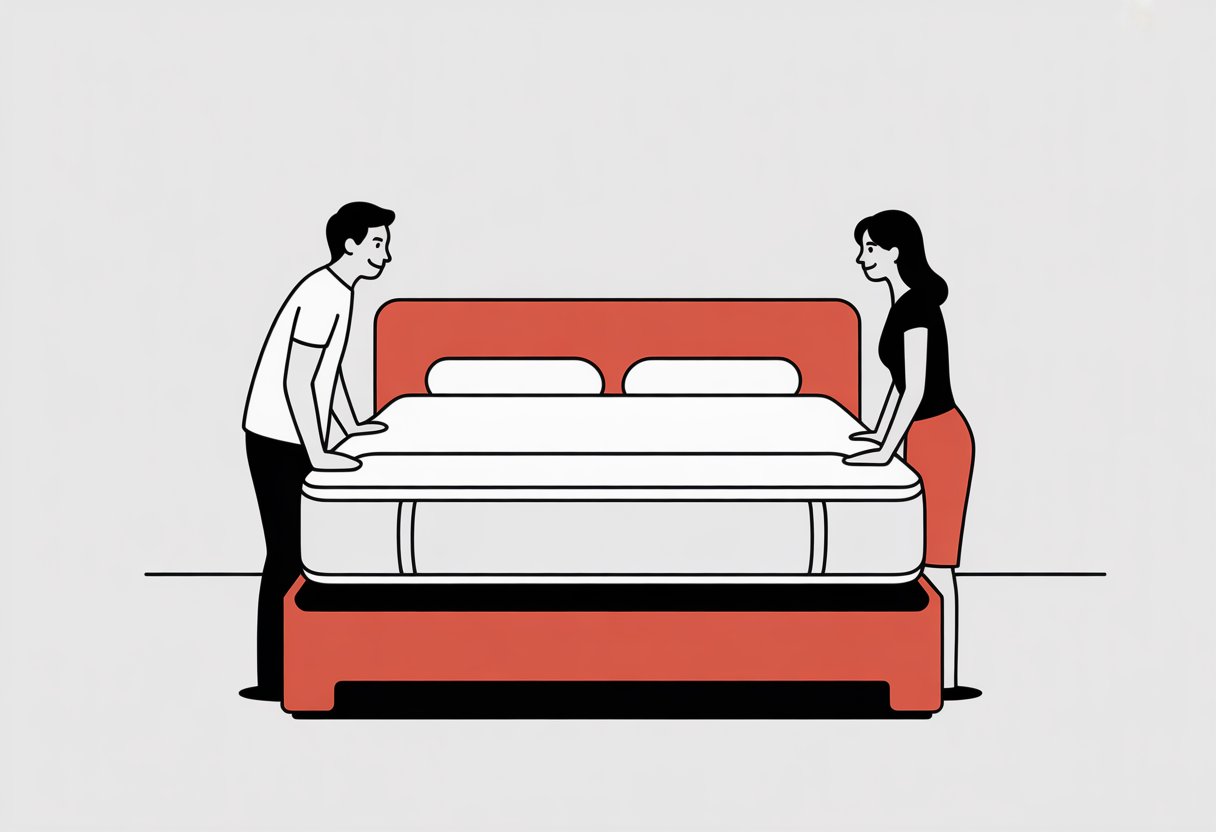
When two people share a bed, certain mattress features become more important than they would be for solo sleepers. The best mattresses for couples provide a stable environment where one person's movement doesn't disrupt the other. This stability, combined with support and cooling, directly impacts how well both partners sleep.
Motion Isolation and Motion Transfer
Motion isolation refers to how well a mattress absorbs movement on one side of the bed so it doesn't disturb the other person. Finding the best mattress for couples often starts with testing how well it stops movement from spreading. When your partner shifts positions, a mattress with poor motion isolation can wake you up.
Foam mattresses typically offer the best mattress for motion isolation because the material absorbs energy rather than bouncing it back. Memory foam excels at this, with each layer of foam dampening movement before it reaches your partner's side.
Hybrid mattresses with individually wrapped coils also perform well. Each coil moves independently, which limits motion transfer between the two sides of the bed. Traditional innerspring mattresses with interconnected coils tend to transfer more motion.
If you or your partner are light sleepers who wake easily, prioritizing motion isolation becomes critical. Look for mattresses that score at least 4 out of 5 in motion transfer tests.
Edge Support and Perimeter Stability
Edge support determines how well the perimeter of your mattress holds up when you sit or sleep near the edge. Strong edge support gives you the full usable surface of the bed, which matters more when two people share the space.
Without proper edge support, you may feel like you're rolling off when sleeping near the edge. Quality perimeter construction is vital in the best mattresses for heavy people to prevent this sinking feeling. This forces both partners toward the centre of the bed, reducing personal space.
Innerspring and hybrid mattresses generally provide better edge support than all-foam options. The coils extend to the perimeter and create a reinforced border. Some mattresses include additional support rails or foam encasements around the edges.
Heavier individuals should pay extra attention to edge support. More weight compresses the perimeter more easily, making a reinforced edge structure even more valuable.
Temperature Regulation and Cooling
Two bodies generate more heat than one, making temperature regulation essential for couples. A cooling mattress helps dissipate body heat and prevents the uncomfortable warmth that disrupts sleep.
Mattress materials affect temperature control significantly. Innerspring and hybrid mattresses allow air to flow through the coil layers, which naturally helps with cooling. All-foam mattresses can trap more heat, though many now include cooling technologies like gel-infused foam, copper-infused memory foam, or phase-change materials.
The cover material also impacts temperature regulation. Breathable fabrics and moisture-wicking materials help pull heat away from your body. Many brands now include a breathable Tencel cover to wick away moisture. Others utilize copper-infused memory foam to pull heat away from the body, making it a viable mattress for hot sleepers who need to stay cool.
If either partner sleeps hot, look for mattresses specifically designed with cooling features. The best cooling mattress for couples will often feature a combination of breathable fabrics and heat-dissipating foams. Selecting the best cooling mattress involves looking at both the cover and the internal support layers to ensure maximum airflow. The best cooling mattresses should increase in surface temperature by no more than 6-7 degrees after five minutes of body contact.
Pressure Relief and Comfort
Pressure relief describes how well a mattress cushions your body's pressure points—shoulders, hips, and lower back for side sleepers. Good pressure relief prevents pain and discomfort that can wake you up during the night. Many top-rated models include reinforced lumbar support in the middle third of the bed. This helps keep the spine aligned while the upper layers provide the necessary cushioning.
Different sleeping positions require different levels of pressure relief. Side sleepers need the best mattress for side sleepers that provides deep cushioning around their shoulders and hips. Those seeking the best mattress for back sleepers need support that maintains spinal alignment without creating pressure points. Stomach sleepers require a firmer surface to prevent their hips from sinking too far.
When couples have different sleeping positions, finding a mattress that accommodates both becomes challenging. Medium-firm mattresses around 6.5 on a 10-point firmness scale often work well as a compromise. Some couples choose mattresses with dual firmness options or adjustable bases.
The materials used in comfort layers affect pressure relief. Memory foam contours closely to your body shape. Latex provides responsive cushioning with more bounce. Hybrids combine foam comfort layers with coil support to balance pressure relief and responsiveness.
Mattress Types for Couples: Pros and Cons
Different mattress constructions affect how well couples sleep together. Hybrid mattresses balance support and motion control, whilst memory foam excels at isolating movement but may trap heat, and latex offers natural bounce with cooling airflow.
Hybrid Mattresses
Hybrid mattresses combine coil support systems with foam comfort layers, making them popular for couples who need different features. A best hybrid mattress provides the structural integrity of steel coils with the plushness of foam. Many users find a hybrid to be the most comfortable mattress because it offers a perfect middle ground between bounce and contouring. Choosing a hybrid mattress for couples allows for better airflow compared to all-foam alternatives. The best hybrid mattress for couples typically features pocketed coils to further isolate motion.
These mattresses sleep cooler than all-foam options because air flows through the coil system. Many hybrid mattresses use gel-infused foam or gel memory foam in their comfort layers to pull heat away from your body. This matters when two people share a bed since you generate more warmth together.
The bounce from the coils makes it easier to change positions during the night and move around freely. A hybrid is often the best mattress for combination sleepers who shift between different positions. They also tend to be more responsive during intimate moments compared to foam-only beds. They also tend to be more responsive during intimate moments compared to foam-only beds.
Memory Foam Mattresses
Memory foam mattresses and all-foam mattresses excel at motion isolation, which helps when one partner moves during the night. Standard foam mattresses for couples are highly effective at preventing sleep disruptions. For those who wake up from the slightest movement, memory foam is often the best mattress for couples. The dense foam absorbs movement instead of transferring it across the bed surface. This makes memory foam mattresses ideal if you're a light sleeper who wakes easily.
Traditional memory foam can trap body heat, creating an uncomfortable sleeping environment for couples. Modern memory foam mattresses often include gel memory foam or other cooling technologies to address this issue. Some use copper-infused memory foam or phase-change materials in their cover fabrics.
These mattresses contour closely to your body, providing pressure relief for side sleepers at the shoulders and hips. However, the slow response of memory foam makes it harder to change positions quickly. You may feel like you're sinking into the mattress rather than resting on top of it.
All-foam mattresses typically cost less than hybrid options and work well if motion isolation is your top priority. Some couples also find that certain foam support structures help manage snoring or mild sleep apnea by keeping the head slightly elevated on an adjustable base.
Latex Mattresses
Latex mattresses offer natural bounce and responsiveness that many couples prefer. Natural latex comes from rubber tree sap and provides a buoyant feel that makes movement easier. You won't get the sinking sensation that occurs with memory foam.
These mattresses sleep naturally cool because latex has an open cell structure that promotes airflow. Latex mattresses often include pinhole patterns that enhance breathability even further. This cooling effect benefits couples who tend to overheat at night.
Latex provides good motion isolation whilst still maintaining responsiveness. The material absorbs some movement between partners but doesn't create the sluggish feel of memory foam. Natural latex is also highly durable and resists sagging for many years.
The main drawback is cost, as latex mattresses typically carry premium prices. Some people also find the bouncy feel too springy for their preference.
Innerspring and Airbeds
Innerspring mattresses use only coil systems with minimal padding on top. Traditional innerspring mattresses don't isolate motion well, so you'll likely feel your partner's movements throughout the night. The coils transfer energy across the bed surface easily.
These mattresses provide strong edge support and sleep cool due to excellent airflow through the coils. Innerspring mattresses are usually the most affordable option and offer a familiar, traditional feel. However, they lack the pressure relief that foam or latex layers provide.
Airbeds use adjustable air chambers that let each partner control their side's firmness level independently. You can inflate or deflate your side using a remote control to find your ideal comfort. This customisation helps couples with very different firmness preferences.
Most airbeds include foam comfort layers on top of the air chambers for pressure relief. They tend to be expensive and may require occasional adjustments to maintain your preferred feel.
How to Match Mattress Firmness with Couple Preferences
Selecting the right mattress firmness for couples requires balancing different body weights, sleep positions, and comfort preferences between partners. A firmness between 5-7 on a 10-point scale works for most couples, with specialized options available when standard firmness levels don't meet both partners' needs.
Medium-Firm vs Firm Mattresses
Medium-firm mattresses (rated 5-6 out of 10) suit most couples because they balance support and pressure relief. If you're a side sleeper and your partner sleeps on their back, a medium-firm surface provides enough cushioning for your shoulders and hips while supporting your partner's spine alignment. This firmness level accommodates different body weights reasonably well, making it ideal when partners weigh within 30 pounds of each other.
A firm mattress (rated 7-8 out of 10) works better when both partners sleep primarily on their backs or stomachs. This is a reliable mattress for back sleepers because it prevents excessive sinking that can misalign the spine. In contrast, a softer mattress for side sleepers allows the hips and shoulders to sink in comfortably. However, firm surfaces may create pressure points if either partner sleeps on their side frequently.
The challenge with choosing between these options is that mattress firmness for couples involves compromise. When your preferences differ significantly, neither a medium-firm nor firm mattress alone may satisfy both of you.
Split Firmness and Split King Options
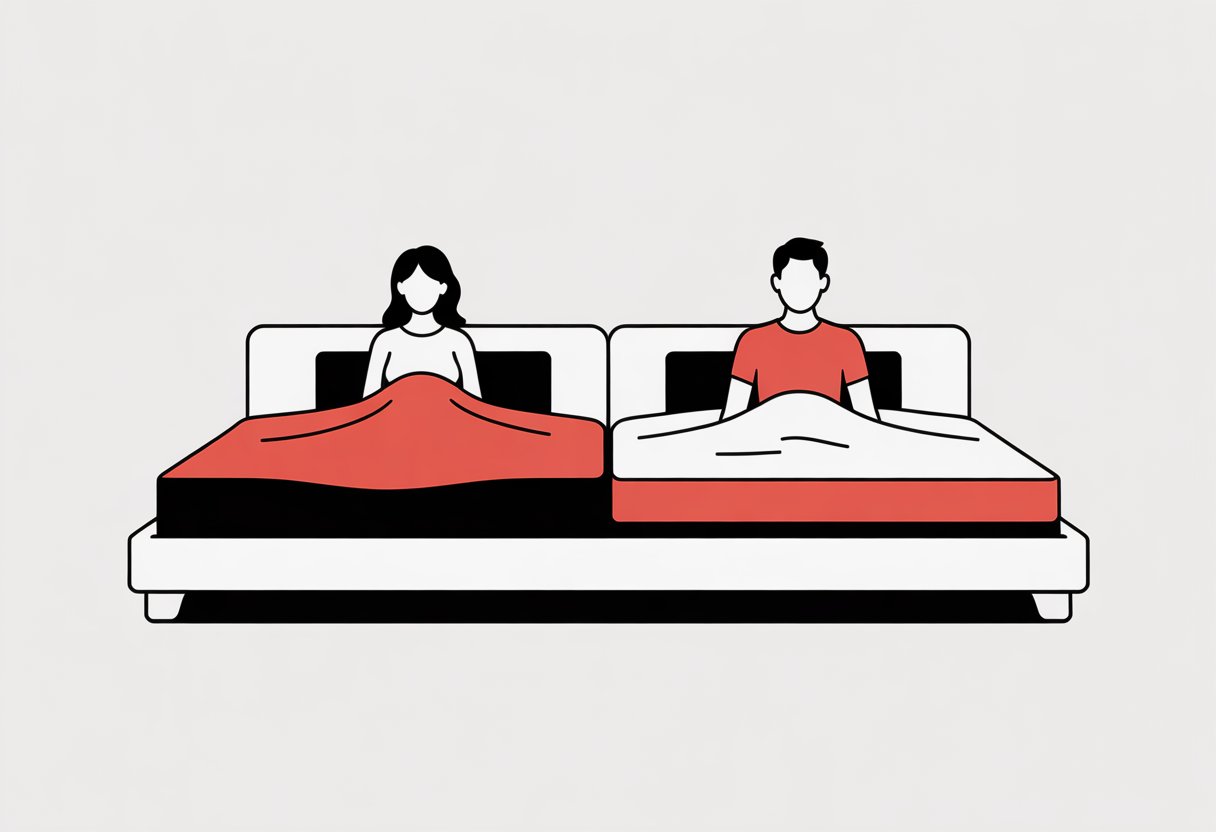
Split king mattresses consist of two twin XL mattresses placed side by side, creating a king-sized sleeping surface where each partner controls their own firmness level. The best king-size mattresses often allow for this type of customization to satisfy different needs. You can select a medium-firm surface on one side and a firm surface on the other.
This solution eliminates the need to compromise on mattress firmness. If you weigh significantly less than your partner or sleep in different positions, a split king lets you both get proper support. The main drawback is the gap between mattresses, though specialized sheets and mattress toppers can minimize this issue.
Some manufacturers offer single mattresses with different firmness zones on each side without the centre gap. These dual firmness designs provide customization while maintaining a unified sleeping surface.
Zoned Support and Adaptive Designs
Zoned support mattresses feature different firmness levels across various sections of the sleeping surface. Typically, the centre third (hip area) is firmer to prevent excessive sinking, whilst the shoulder and leg zones are softer for pressure relief.
This design benefits couples because it addresses body mechanics rather than personal preference. While zoned layers are common, some people prefer a flippable mattress that offers two different feels in one unit. Both partners receive proper spinal alignment regardless of their sleep position differences.
Flippable mattresses offer another adaptive solution. These designs provide different firmness levels on each side—flip the entire mattress when your firmness needs change. Some couples rotate the mattress periodically to find their preferred firmness without purchasing a new one.
Evaluating Mattress Size and Sleeping Positions
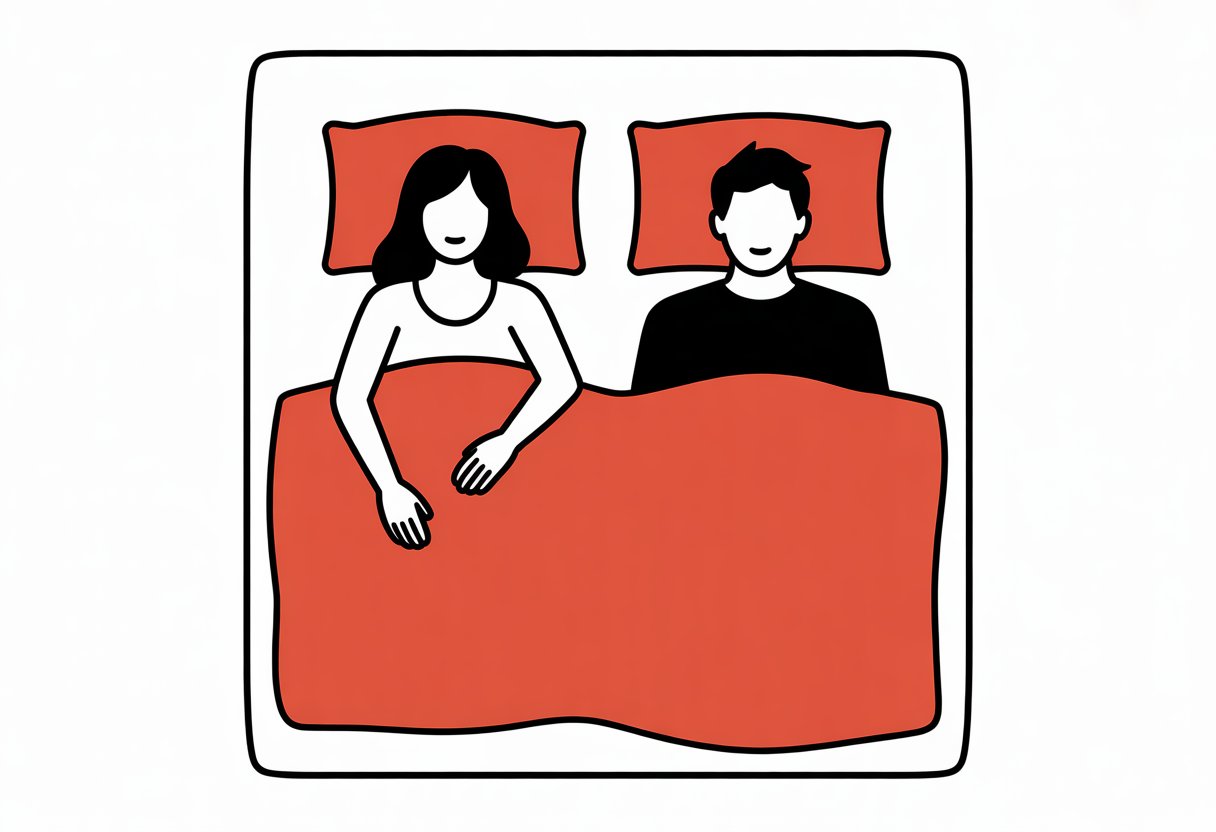
The right mattress size and proper support for your sleeping style can make or break your comfort as a couple. A queen or king size mattress is typically best for couples, while different sleep positions require specific firmness levels and support features.
Choosing the Best Mattress Size
A king mattress offers ample room for two people to sleep comfortably and move throughout the night without feeling cramped. Standard king mattresses measure 193 cm wide by 203 cm long, giving each person roughly 122 cm of personal space.
Queen mattresses work well for couples in smaller bedrooms. They measure 152 cm wide by 203 cm long, providing 76 cm per person.
Consider upgrading to a king if either partner is over 183 cm tall or weighs more than 104 kg. Identifying the best mattresses for couples requires considering how much space you both need to move freely. You'll also want the extra space if you have children or pets who join you in bed.
Mattress Size Comparison:
-
King: 193 cm × 203 cm (best for couples with space needs)
-
Queen: 152 cm × 203 cm (good for standard bedrooms)
-
California King: 183 cm × 213 cm (ideal for taller individuals)
Accommodating Different Sleeping Positions
Side sleepers need softer mattresses with deeper cushioning to relieve pressure on shoulders and hips. Look for firmness levels between 4-6 out of 10.
Back sleepers require medium-firm support, typically rated 6-7 out of 10. This firmness maintains proper spinal alignment without creating pressure points.
Stomach sleepers need firmer surfaces, rated 7-8 out of 10, to prevent their midsection from sinking too deeply. Combination sleepers who change positions throughout the night should choose medium-firm mattresses around 6 out of 10.
When partners have different sleeping styles, hybrid mattresses with zoned support layers can accommodate both preferences. Another option is choosing a mattress with multiple firmness levels available or purchasing two twin XL mattresses to create a split king configuration.
Best Mattresses for Heavy Couples
Couples where one or both partners weigh over 104 kg need mattresses with enhanced support and durability. The best mattress for heavy couples usually includes thicker comfort layers and higher-density base foams. This prevents the "bottoming out" sensation and ensures longevity. Selecting the best mattress for heavy couples ensures the bed won't sag prematurely under higher weight loads.
Look for mattresses at least 30 cm thick with reinforced support cores. Hybrid mattresses with heavy-gauge coils (13-gauge or lower) provide better weight distribution and longevity.
Key features for heavy couples:
-
Coil count: Minimum 1,000 coils for a queen size
-
Foam density: At least 2.3 kg per cubic metre for comfort layers
-
Edge support: Reinforced perimeter coils or high-density foam rails
-
Weight capacity: Verify the manufacturer's maximum weight rating
Firmer mattresses rated 7-8 out of 10 typically work best, as they resist excessive sinking. However, if you're a side sleeper, you may need targeted cushioning zones to prevent pressure buildup despite the firmer overall feel.
Features for Enhanced Couple Comfort and Performance
Couples need mattresses that handle movement well, provide stable support across the entire surface, and offer enough responsiveness for intimate activities. The right combination of bounce, durability, and edge reinforcement creates a better sleep environment for two people sharing one bed.
Best Mattresses for Sex
The best mattress for sex needs strong responsiveness and adequate bounce to allow for easy movement. Deciding on the best overall mattress for couples involves looking at how the bed performs during both sleep and activity. Many mattress reviews highlight hybrids as the top choice for this category. Hybrid mattresses typically perform better than all-foam options because their coil systems provide more spring and energy return.
Adaptive memory foam can work well in a luxury mattress for couples when it's combined with supportive coils underneath. This design gives you the pressure relief of foam with the responsiveness needed for movement. Pure memory foam mattresses often feel too slow to respond.
Look for mattresses with bounce heights above 10 inches in testing. The Stearns & Foster Lux Estate models achieve high bounce levels and score well for sex performance. Higher bounce translates directly to better intimate experiences.
Consider these features:
-
Coil-on-coil construction for maximum spring
-
Minimal sinkage to maintain positioning
-
Quick response times under 0.5 seconds
Responsive Mattresses and Bounce
A responsive mattress springs back quickly when pressure is removed. This quality matters for couples because it makes changing positions easier and prevents the trapped feeling that slow-responding foam creates.
Bounce height measures how high a weighted ball rebounds off the mattress surface. Moderate bounce (9-12 inches) works well for most couples, while extremely high bounce (above 14 inches) provides the most responsiveness.
Response time measures how quickly the mattress recovers its shape. The Simmons Beautyrest Black recovers quickly, making it highly responsive. Anything under 0.8 seconds performs well for couples who move frequently during sleep.
Hybrid and innerspring mattresses naturally offer more bounce than foam beds. Latex hybrids provide a unique bouncy feel that some couples love, though the sensation is more buoyant than traditional spring bounce.
Edge-to-Edge Support
Strong edge support lets you use the full surface of your mattress without feeling like you'll roll off. This feature is especially important for couples who need every inch of space or sit on the mattress edge.
Quality edge support comes from reinforced perimeter coils or high-density foam encasements. Mattresses with outstanding edge support allow only 2-3 inches of compression when sitting on the edge.
Poor edge support wastes usable sleep space and creates an unstable feeling. You'll notice weak edges when sitting to put on shoes or when sleeping near the perimeter. A luxury mattress for couples should maintain its shape all the way to the borders.
Testing edge support involves sitting and lying near the mattress edge. The best performers keep you stable without excessive sinking or the sensation of sliding off.
Noise Reduction and Durability
A quiet mattress prevents sleep disruptions when your partner moves during the night. Squeaking and creaking sounds come from coils rubbing together or springs contacting the frame.
Modern pocketed coils are individually wrapped in fabric, which eliminates most noise. Cheaper bonnell coils connect to each other and often develop squeaks over time. All-foam mattresses make no noise but sacrifice the bounce and support that couples need.
Durability directly affects long-term comfort for couples. Two people put more weight and stress on a mattress than one person. Look for these durability indicators:
-
High-density foams (4+ pounds per cubic foot for memory foam)
-
Thick comfort layers (at least 4 inches)
-
Quality coil systems with proper gauge thickness
-
Lifetime or extended warranties showing manufacturer confidence
A well-built hybrid or innerspring mattress should last 8-10 years for couples. Cheaper mattresses often develop sagging and loss of support within 3-5 years.
Additional Considerations for Couples Buying a Mattress
Beyond comfort and support, couples need to think about trial periods, delivery options, eco-friendly materials, and budget when choosing a mattress together.
Sleep Trials and Warranties
A sleep trial gives you time to test a mattress at home before fully committing to the purchase. Most companies offer sleep trials ranging from 90 to 365 nights. This matters for couples because you both need enough time to determine if the mattress works for your different sleep styles and body types.
Look for sleep trials with at least 100 nights. Some companies require a break-in period of 30 days before you can return the mattress.
Pay attention to warranty coverage as well. Standard warranties last 10 to 25 years, with some manufacturers offering lifetime warranties. Check what the warranty actually covers—most protect against sagging beyond a certain depth (usually 2.5 to 4 cm) and manufacturing defects. Keep in mind that normal wear and tear, stains, and damage from improper use typically void warranties.
Adjustable Beds and Accessories
Adjustable beds let each partner customise their side of the bed for reading, watching television, or relieving pressure points. Split king configurations work particularly well for couples with different needs. Each person gets their own twin XL mattress on an adjustable base, so one partner can elevate their head whilst the other stays flat.
Not all mattresses work with adjustable beds. Memory foam and latex mattresses typically flex well, whilst traditional innerspring mattresses may not bend properly.
Compatible mattress types for adjustable beds:
-
Memory foam
-
Latex
-
Hybrid with pocketed coils
You might also consider a mattress topper if one partner needs extra softness or firmness. Toppers range from 5 to 10 cm thick and can modify the feel of your mattress without replacing it entirely. Many premium brands offer white glove delivery to simplify the setup process for heavy luxury beds. Choosing a brand that provides white glove delivery ensures your new bed is installed correctly without physical strain on you or your partner. This service is worth considering for adjustable bases, as technicians will set up the bed and remove your old mattress.
Organic and Eco-Friendly Choices
An organic mattress uses natural materials like organic cotton, wool, and latex instead of synthetic foams and chemicals. These mattresses appeal to couples concerned about off-gassing, allergens, or environmental impact.
The best organic mattress for couples should still meet your needs for motion isolation and temperature regulation. Natural latex provides good bounce and cooling, whilst organic wool helps regulate temperature. Look for certifications like GOTS (Global Organic Textile Standard) for cotton and wool, or GOLS (Global Organic Latex Standard) for latex.
Organic mattresses typically cost more than conventional options. Expect to pay £1,500 to £4,000 for a queen-size organic mattress. The higher price reflects the cost of certified organic materials and more labour-intensive manufacturing processes.
Affordability and Value
Budget matters when shopping as a couple, but the best value mattress isn't always the cheapest option. Consider the cost per year of ownership rather than just the upfront price. A £2,000 mattress that lasts 12 years costs less annually than a £800 mattress that needs replacing after 5 years.
Affordable mattresses for couples typically range from £600 to £1,500 for a queen size. Look for beds that score well in the categories that matter most to you—motion isolation, cooling, and edge support.
Ways to get better value:
-
Shop during holiday sales (Boxing Day, Victoria Day, Canada Day)
-
Compare warranty lengths and what they cover
-
Factor in delivery costs and return fees
-
Check if the price includes a sleep trial
Some manufacturers offer payment plans that let you spread the cost over 12 to 36 months. Just make sure you're comfortable with the monthly payment and understand any interest charges.
Top Mattress Recommendations for Couples in 2026
Several standout models excel in motion isolation, edge support, and temperature regulation while accommodating different sleep positions and body types. The Sealy Posturepedic Plus leads as the best overall mattress for couples according to recent testing.
Best Overall Mattress for Couples
The Sealy Posturepedic Plus stands out as the top choice for couples because it balances comfort, support, and motion isolation effectively. This mattress uses individually wrapped coils that respond independently to movement, which means you won't feel your partner shifting positions during the night.
The medium-firm feel works well for most sleeping positions. Side sleepers get enough cushioning for their shoulders and hips, while back and stomach sleepers receive proper spinal alignment.
Strong edge support lets you use the full surface of the mattress without feeling like you might roll off. This feature matters when two people share the bed and need every inch of space.
The Sealy Posturepedic Plus also sleeps cool thanks to its breathable cover and coil system that allows air to flow through the mattress. If you or your partner tend to sleep hot, this helps maintain a comfortable temperature throughout the night.
Best Cooling Mattress for Couples
The Serta iComfort Eco offers the best temperature regulation for couples who struggle with overheating. This mattress uses phase-change material in its cover that actively pulls heat away from your body.
The iComfort Eco mattress includes gel-infused foam layers and a coil system that promotes airflow. These features work together to prevent heat buildup that often happens when two people sleep close together.
You can choose from soft, medium, or firm options depending on your preferences. The medium option suits most couples with different sleep styles.
The Tempur-Pedic TEMPUR-Breeze provides another excellent cooling option with its specialized cooling cover. The TEMPUR-Breeze construction combines memory foam comfort with innerspring support while maintaining a neutral temperature.
Best Hybrid Mattress for Couples
The Stearns & Foster Lux Estate earns its reputation as an outstanding choice for shared sleep. This innerspring mattress features a dual-coil system with individually wrapped coils on top and a steel support base below.
The Stearns & Foster provides multiple firmness levels and height options, letting you customise the feel to match your needs. Most couples prefer the medium-firm option, which offers a balanced feel that works for combination sleepers.
Testing shows that hybrid and latex models often work well for shared sleep because they balance comfort with responsiveness. The Stearns & Foster Lux Estate delivers on both fronts with its euro pillow top and supportive coil layers.
The Simmons Beautyrest Black and Kingsdown Passions also rank highly among hybrid options. Both use quality materials and advanced support systems that provide different firmness levels across the mattress surface.
Best Luxury Mattress for Couples
The Sealy Posturepedic Plus Hybrid represents the best luxury mattress for couples who want premium materials and customised comfort. This mattress costs more than budget options but includes features that justify the higher price.
The Posturepedic Plus Hybrid uses gel memory foam, a high-density coil system, and a quilted top for extra cushioning. These layers create a plush feel while maintaining the support couples need.
You get enhanced edge support that extends the usable sleep surface and reduces the feeling of rolling toward the centre. The mattress also includes a breathable cover that helps with temperature control.
The Simmons Beautyrest Harmony Lux offers a slightly firmer alternative for couples who prefer more support. Both models include a reinforced perimeter and premium materials throughout.
The Evergreen Mattress Organic Latex stands out among luxury options for couples who prioritise organic materials. This Evergreen mattress uses natural latex, organic wool, and organic cotton without synthetic foams or chemicals.
Frequently Asked Questions
Couples face unique challenges when shopping for a mattress together, from different body weights and sleep positions to varying temperature preferences and sensitivity to movement. These common questions address the most important factors that affect shared sleep quality.
What features should couples consider when selecting a mattress for shared use?
Motion isolation ranks as one of the most critical features for couples. When one partner moves, gets up, or shifts positions during the night, a mattress with poor motion transfer can wake the other person repeatedly throughout the night.
Edge support matters when two people share a bed. Strong perimeter support prevents the feeling of rolling off the sides and maximizes the usable sleep surface.
Temperature regulation becomes twice as important when two bodies generate heat on the same mattress. Look for materials and construction that promote airflow and dissipate heat effectively.
Durability should factor into your decision since two people place more stress on a mattress than one. A bed that develops sagging or body impressions will affect both partners' comfort and sleep quality.
How does motion transfer affect sleep quality for couples and which mattress types minimize it?
Motion transfer directly impacts how often you wake up when your partner moves during sleep. Research shows that sleep disruptions reduce sleep quality and can lead to health concerns over time.
Memory foam mattresses excel at motion isolation, making them ideal when one partner moves frequently during sleep. These beds absorb movement rather than transferring it across the surface.
All-foam mattresses generally perform better at isolating motion than innerspring models. The dense foam layers absorb energy and prevent it from travelling to other areas of the bed.
Hybrid mattresses with thick comfort layers can also minimize motion transfer. The foam or latex on top absorbs movement before it reaches the coil system below.
What firmness level is most suitable for a variety of sleeping positions for partners?
Medium-firm mattresses work well for the widest range of sleeping positions and body types. This firmness level provides enough support for back and stomach sleepers while offering sufficient cushioning for side sleepers.
A firmness rating of 6 to 7 out of 10 satisfies most couples with different sleep preferences. This range balances support and pressure relief effectively.
Side sleepers typically prefer softer mattresses that cushion shoulders and hips. Back sleepers need moderate firmness to maintain spinal alignment. A mattress for combination sleepers should offer a medium-firm feel to support multiple positions throughout the night.
When partners have drastically different firmness needs, consider mattresses that come in multiple firmness options or explore split configurations.
Can a mattress accommodate different weight categories while maintaining comfort for both partners?
Weight plays a significant role in how a mattress feels and performs. Heavier individuals sink deeper into mattresses and need firmer support to prevent excessive sinking and maintain proper spinal alignment.
Hybrid mattresses with reinforced coil systems handle weight differences better than all-foam options. The spring layer provides consistent support across different weight ranges while the comfort layers adjust to each person's body.
Mattresses with zoned support systems offer different firmness levels in specific areas. These designs provide extra support in the midsection where most body weight concentrates whilst offering softer comfort for shoulders and legs.
When partners have a significant weight difference, opt for a mattress with strong support and responsive materials. Memory foam may work for lighter individuals but can feel too soft and unsupportive for heavier sleepers.
What are the benefits of investing in a split-king mattress for couples with diverse sleep preferences?
A split-king mattress consists of two twin XL mattresses placed side by side, matching the dimensions of a standard king bed. This configuration allows each partner to choose their own firmness level, material type, and even adjustability features.
Individual customization solves the problem of conflicting preferences. One partner can select a firm innerspring whilst the other chooses a soft memory foam without compromise.
Split-king configurations work exceptionally well with adjustable bases. Each person can raise or lower their head and foot independently for reading, watching television, or relieving pressure points.
The main drawback involves a gap down the middle where the two mattresses meet. Quality mattress pads or toppers can minimize this separation, though some couples find it bothersome.
How significant is temperature regulation in mattresses for couples who sleep together?
Two bodies generate considerably more heat than one, making temperature regulation essential for couples. Overheating disrupts sleep cycles and causes night sweats that wake both partners.
Innerspring mattresses retain less heat than foam mattresses due to the open space between coils that allows air to circulate freely. This natural airflow helps dissipate body heat throughout the night.
Hybrid mattresses combine breathable coil systems with comfort layers that may include cooling technologies. Look for materials like gel-infused foam, copper-infused foam, or phase-change materials designed to pull heat away from the body.
Latex naturally sleeps cooler than memory foam because of its responsive, bouncy nature and open cell structure. Natural and organic latex options often provide better temperature regulation than synthetic alternatives.