

















Do you move between your back, side, and stomach throughout the night? You're a combination sleeper, and finding the best mattresses for combination sleepers can feel challenging when you need support in multiple positions.
Choosing the best overall mattress for combination sleepers requires careful research. Our mattress reviews highlight the most versatile mattresses for combination sleepers available today. We also consider the needs of hot sleepers who struggle with temperature spikes.
The best mattresses for combination sleepers balance responsive support with enough cushioning to keep you comfortable no matter how you shift during the night. Unlike sleepers who stay in one position all night, you need a bed that adapts quickly as you move. The wrong mattress can leave you stuck in uncomfortable positions or waking up with aches. Many combo sleepers find that a responsive surface is key.
Combination sleepers need specific features in their mattress to get quality sleep. This guide covers what to look for, which mattress types work best, and the top options available in 2025. You'll learn how to choose a bed that supports your changing positions throughout the night.
Key Takeaways
Combination sleepers need mattresses that respond quickly to movement and provide support in multiple sleeping positions
Medium-firm mattresses typically work best because they balance cushioning with support for back, side, and stomach sleeping
Look for features like strong edge support, temperature regulation, and pressure relief when shopping for your mattress
What Makes Combination Sleepers Unique
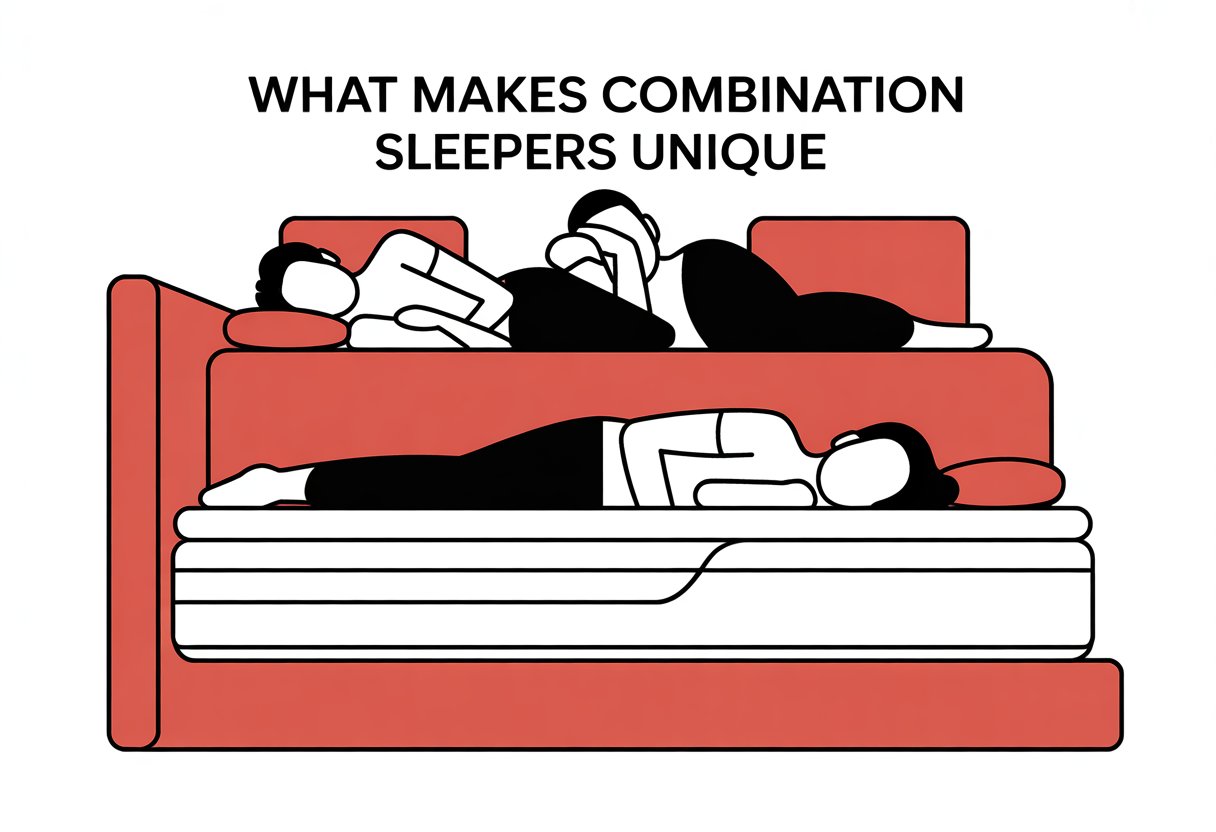
Combination sleepers move between multiple sleep positions throughout the night, creating specific needs that differ from people who stay in one position. These shifting patterns require mattresses that can adapt to different body alignments and pressure points.
Definition of a Combination Sleeper
A combination sleeper is someone who shifts between two or three sleep positions during a single night. You might start on your back, roll to your side, and end up on your stomach before morning. This differs from single-position sleepers who maintain the same posture throughout their sleep cycle.
Most combination sleepers switch positions without even realizing it. These movements happen naturally as your body seeks comfort. When using a memory foam mattress, the material seeks to prevent pressure buildup in any one area. The frequency of position changes varies from person to person.
Some people switch positions just a few times per night. Others move more frequently, adjusting their posture every hour or even more often.
Common Sleep Positions and Patterns
The three main sleep positions are side sleeping, back sleeping, and stomach sleeping. Each position puts different demands on your mattress and spine alignment.
Side sleeping requires cushioning for your shoulders and hips. Back sleeping needs support for your lower back curve. Stomach sleeping demands a firmer surface to prevent your midsection from sinking too deeply.
Your specific pattern matters when choosing a mattress. You might rotate equally between all three positions, or you might favour two positions over the third. Many combination sleepers spend most of their night alternating between side and back positions, with less time on their stomach.
The order and frequency of your position changes also affect your mattress needs.
Challenges Faced by Combination Sleepers
Finding the right mattress firmness becomes complicated when you need support for multiple positions. A mattress that's perfect for side sleeping might be too soft for stomach sleeping. A bed that supports back sleeping well might create pressure points when you roll to your side.
Ease of movement presents another challenge. You need a mattress surface that lets you shift positions without feeling stuck or having to struggle against sinking foam. Mattresses that conform too closely can make it hard to move freely.
Motion isolation versus ease of movement creates a difficult balance, especially if you share your bed. You want enough motion absorption to avoid disturbing your partner, but you also need sufficient responsiveness to change positions easily. Finding this middle ground requires careful consideration of mattress materials and construction.
Key Features to Look for in Mattresses for Combination Sleepers
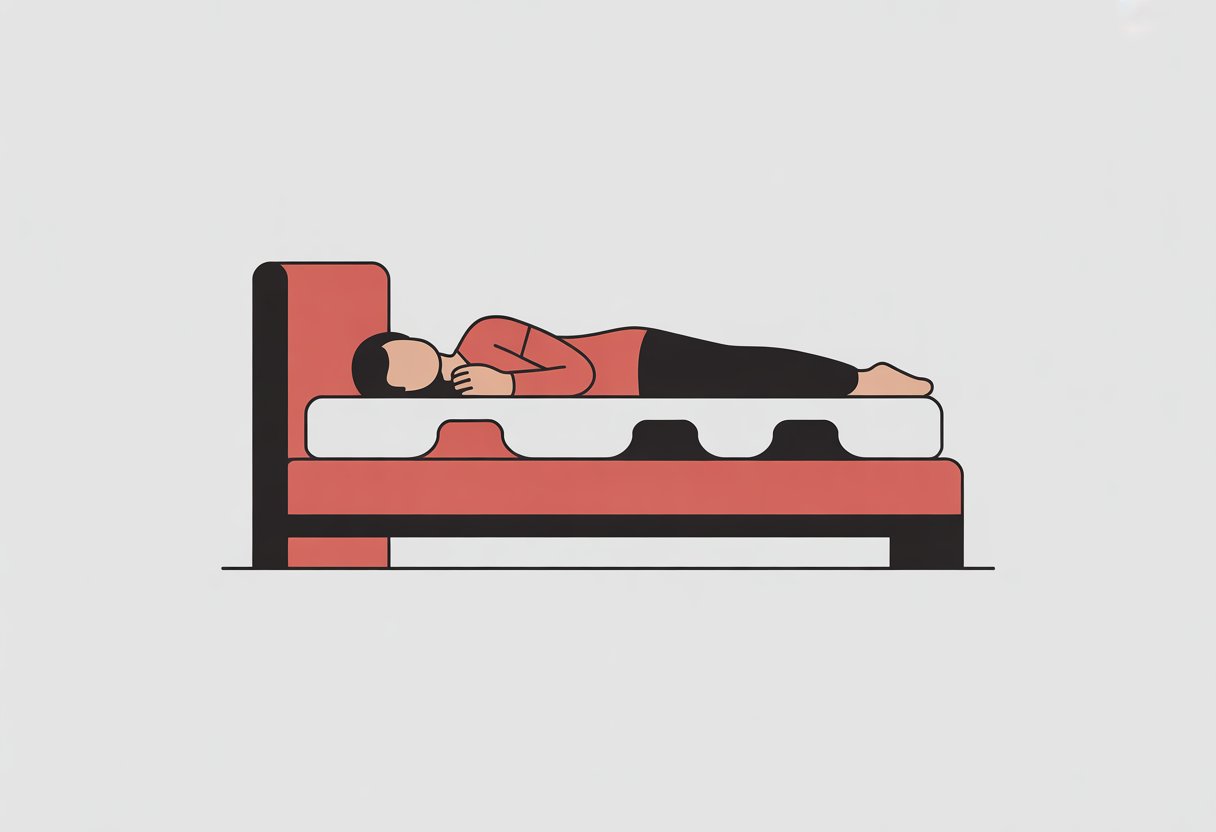
The right mattress needs to move with you as you shift positions, provide pressure relief where you need it, and keep your spine aligned throughout the night. Strong edge support and motion isolation become equally important when you share your bed or sleep near the edge.
Responsiveness and Ease of Movement
A responsive mattress lets you change positions without feeling stuck or trapped. Many of these beds use gel-infused foam to provide a cooler surface that reacts quickly to your body.
When searching for the best cooling mattress for combination sleepers, look for materials that prioritize airflow alongside quick reaction times. This is especially helpful for hot sleepers who need to move to a cooler spot on the bed. When you shift from your side to your back or stomach, the surface should adapt quickly.
Memory foam typically responds slowly and can make movement difficult. A memory foam mattress for combination sleepers needs specific engineering to allow for easier movement. Latex and hybrid mattresses with coils offer better responsiveness. The best mattresses for combination sleepers include materials that bounce back quickly.
Look for mattresses with transition layers beneath the top comfort layer. These layers help the bed respond to your movements without feeling too bouncy or unstable. A mattress that's too soft will trap you in one position, while one that's too firm won't cushion pressure points as you shift.
Pressure Relief and Contouring
Your mattress needs to cushion your shoulders and hips when you sleep on your side, but it can't be so soft that your stomach sinks when you roll onto your front. Pressure relief and contouring work together to support your body's natural curves. Finding effective pressure point relief is essential for comfort. Effective pressure point relief prevents morning stiffness by reducing stress on heavy body parts.
Medium-firm mattresses typically work best because they balance cushioning with support. Foam layers that contour gently prevent pressure buildup without creating that quicksand feeling. The top comfort layer should be thick enough to cushion your body but not so thick that you sink too deeply.
Key pressure points to consider:
Shoulders when side sleeping
Hips when side sleeping
Lower back when back sleeping
Chest and pelvis when stomach sleeping
The mattress should distribute your weight evenly across all positions. Too much contouring restricts movement, while too little creates pressure points that wake you up during the night.
Spinal Alignment and Zoned Support
Your spine needs to stay in a neutral position whether you're on your back, side, or stomach. Poor spinal alignment causes morning aches and disrupts your sleep quality. Maintaining proper spine alignment is critical for combo sleepers who shift between their back and side. Without correct spine alignment, you may wake up with stiffness in your neck or lower back.
Zoned support divides the mattress into different firmness zones. Firmer zones support your head, back, and legs, while softer zones cushion your shoulders and hips. This targeted approach keeps your spine aligned as you move between positions.
Mattresses with zoned support technology use different materials or construction methods in specific areas. Some brands use varying foam densities, while others adjust coil gauges or create cutout patterns in the support layer.
Medium firmness levels (around 5-6 on a 10-point scale) generally provide the versatility you need. This firmness range prevents your hips from sinking too much while side sleeping but still cushions your body when you're on your back.
Motion Isolation and Edge Support
Motion isolation matters when you share your bed with a partner. As you change positions throughout the night, a mattress with good motion transfer reduction keeps your movements from disturbing your partner's sleep. High motion transfer can wake a partner, so look for beds that absorb movement.
Foam layers excel at absorbing motion, but they often lack the responsiveness you need. Hybrid mattresses with pocketed coils offer a better balance—the coils move independently to isolate motion while still providing bounce for easy repositioning.
Edge support prevents that roll-off feeling when you sleep near the side of your bed. Reinforced perimeters or firmer edge construction give you the full surface of your mattress to use. Without proper edge support, you lose usable sleeping space and might feel unstable when sitting on the bed's edge.
Look for mattresses with reinforced perimeter coils or high-density foam edges. These features maintain stability across the entire surface, which matters more for combination sleepers who move around frequently during the night.
Understanding Mattress Types for Combination Sleepers
Different mattress types offer distinct advantages for people who change positions throughout the night. Hybrid mattresses combine coil support with foam comfort, memory foam provides pressure relief, latex offers natural bounce, and innerspring delivers traditional firm support.
Hybrid Mattresses
A hybrid mattress combines innerspring coils with foam layers to create a responsive sleeping surface. A high-quality hybrid mattress for combination sleepers uses specialized layers for balance.
The coil base provides sturdy support while foam comfort layers cushion pressure points. Finding the best hybrid mattress for combination sleepers involves looking at the specific coil count and foam density. This design is excellent for hot sleepers who benefit from the airflow through the coils.
The best hybrid mattress will offer both durability and comfort. High-end models often qualify as the best luxury mattress for combination sleepers due to their sophisticated layering and premium materials.
The best hybrid mattresses for combination sleepers typically feature pocketed coils that respond independently to movement. This design makes position changes easier throughout the night. The foam layers on top often include gel memory foam for temperature regulation and responsive foam that adapts quickly when you move. Incorporating gel memory foam helps with both cooling and contouring.
Most hybrid options work well for sleepers of different weights. The coils prevent excessive sinking when you sleep on your stomach, while the foam layers provide cushioning when you shift to your side. Edge support is typically strong in hybrids due to reinforced perimeter coils.
Key Benefits:
Quick response to position changes
Strong edge support
Good temperature regulation
Balanced support across all positions
Memory Foam Mattresses
Memory foam moulds to your body shape and distributes weight evenly across the surface. This material responds to heat and pressure, creating a cradling sensation.
A memory foam mattress excels at pressure relief for side sleeping while still supporting your spine when you roll onto your back. Modern versions often use gel memory foam to address heat retention concerns. These cooling technologies help draw heat away from your body. Searching for the best memory foam mattress involves comparing heat dissipation and responsiveness. A high-quality best memory foam mattress for combination sleepers will offer both contouring and temperature control.
The material's slow response can make position changes feel slightly restricted compared to other options. However, newer responsive foam formulations recover more quickly. Memory foam also provides excellent motion isolation if you share your bed with a partner.
Firmness matters significantly with memory foam. Medium-firm options typically work best for combination sleepers since they balance contouring with support.
Latex Mattresses
Latex mattresses offer natural bounce and quick response times. This material comes in two main types: Dunlop and Talalay latex, with Talalay typically feeling softer and more consistent.
A latex mattress responds instantly when you change positions, eliminating the stuck feeling some people experience with memory foam. You might choose talalay latex for a more breathable and bouncy feel. The material provides firm support without excessive sinking, which helps maintain spinal alignment.
Choosing an organic mattress or an eco-friendly mattress helps reduce your environmental impact. Many shoppers find that the best organic mattress options use GOTS-certified cotton and natural latex for a healthier sleep environment.
These beds often use organic materials and natural materials like natural latex, organic wool, and cotton. Using natural materials ensures that your sleep surface is free from synthetic chemicals. These organic materials appeal to environmentally conscious shoppers.
An organic mattress often provides better breathability. Latex is naturally resistant to dust mites and mould. The open cell structure promotes airflow, keeping you cooler than traditional memory foam, which is a major plus for hot sleepers.
The main drawback is cost, as latex typically costs more than other mattress types. Weight is another consideration since latex mattresses are heavy and difficult to move.
Innerspring Mattresses
An innerspring mattress uses a coil support system with minimal comfort layers on top. This traditional design provides firm support and excellent airflow.
These mattresses work well for back and stomach sleepers who need firmer support. The bouncy surface makes position changes effortless. However, innerspring options often lack sufficient pressure relief for side sleeping, which can cause discomfort at the shoulders and hips.
Modern innerspring mattresses include better comfort layers than older versions, but they still don't contour to your body like foam or latex. Motion isolation is generally poor, meaning you'll feel your partner's movements throughout the night.
Affordability is the main advantage. Innerspring mattresses typically cost less than hybrid, memory foam, or latex options.
Mattress Firmness and Feel Preferences
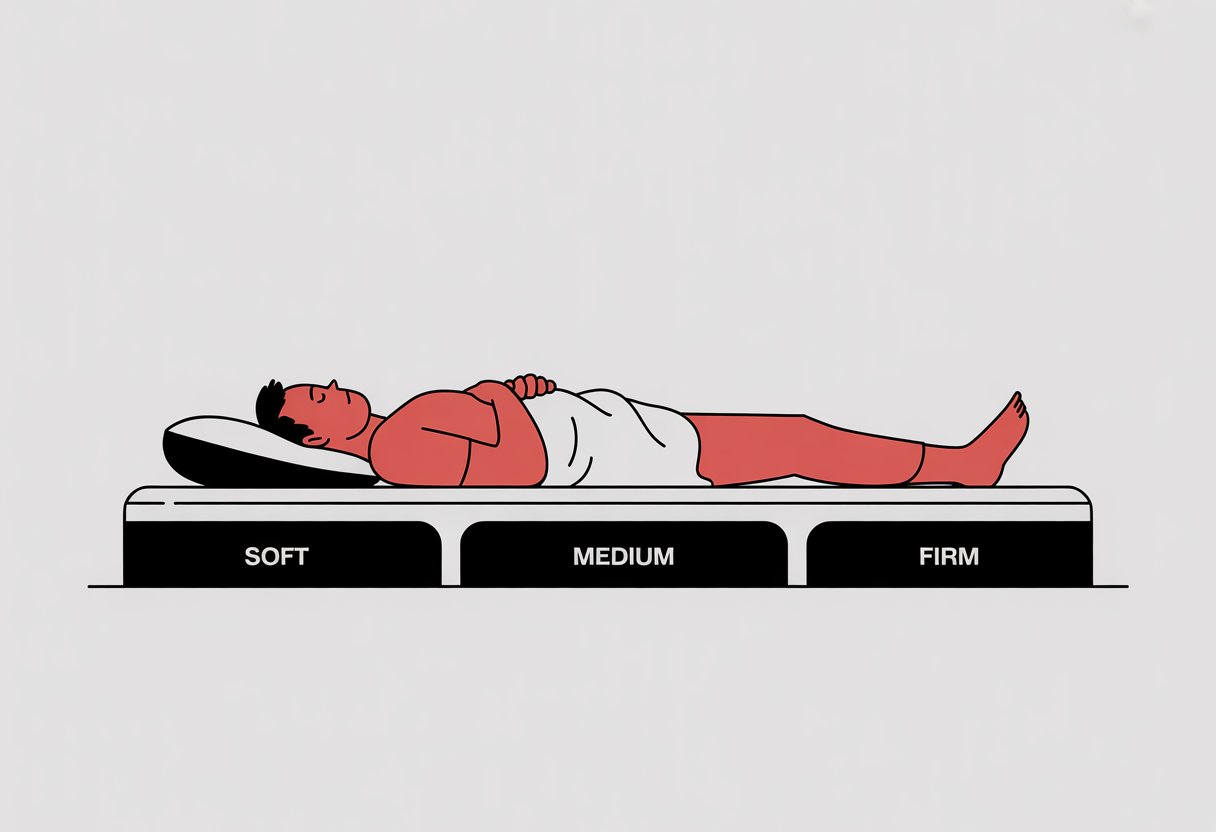
Combination sleepers need a mattress firmness that supports multiple positions without causing pressure points or poor alignment. Most experts recommend a medium-firm feel because it balances cushioning with support across back, side, and stomach sleeping.
Ideal Firmness Levels for Combination Sleepers
A medium-firm mattress works best for combination sleepers because it adapts to different positions throughout the night. This firmness level rates between 5 and 7 on a 10-point scale.
Your body weight plays a key role in choosing firmness. Sleepers under 130 pounds often prefer slightly softer beds (5-6 on the firmness scale) for better pressure relief. Those between 130 and 230 pounds typically find medium-firm options (6-7) most comfortable. Heavier sleepers above 230 pounds usually need firmer support (7-8) to prevent excessive sinking.
The medium-firm range prevents your hips from sinking too deeply when you sleep on your stomach. It also provides enough contouring for your shoulders when you shift to your side. When you roll onto your back, this firmness maintains proper spinal alignment without creating gaps under your lower back.
Firmness Scale and Mattress Ratings
The mattress firmness scale runs from 1 to 10, where 1 is extremely soft and 10 is extremely firm. Most mattresses fall between 3 and 8 on this scale.
Here's how the scale breaks down:
1-2: Extremely soft (rare)
3-4: Soft
5-6: Medium to medium-soft
6-7: Medium-firm
7-8: Firm
9-10: Extra firm (rare)
Companies rate their mattresses differently, so a "medium-firm" from one brand might feel different from another. Testing a mattress during a sleep trial gives you the most accurate sense of how it feels for your body. Many mattresses for combination sleepers offer trials between 100 and 365 nights.
Your personal comfort preference matters as much as the technical rating. Some people prefer a softer landing surface with firm support underneath, while others want consistent firmness throughout.
Medium-Firm vs Firm vs Soft Mattress
A soft mattress (3-5 on the scale) creates deep contouring but often lacks the support combination sleepers need. While a soft mattress feels cozy, it may cause the spine to curve too much for stomach sleepers. You might feel comfortable on your side, but stomach sleeping becomes difficult as your hips sink too far down. This creates poor spinal alignment and potential back pain.
A firm mattress (7-8 on the scale) supports stomach and back sleeping well but can create pressure points on your shoulders and hips when you turn to your side. Side sleepers on firm beds often wake up with numbness or discomfort in these areas.
The medium-firm mattress (6-7 on the scale) splits the difference. You get enough cushioning for side sleeping without sacrificing the support needed for stomach and back positions. This firmness range accommodates the widest variety of body types and sleeping styles, which explains why couples with different firmness preferences often choose this level as a compromise.
Top Mattresses for Combination Sleepers in 2025
The Sealy Posturepedic Luxury Hybrid stands out as the best overall choice with its multiple firmness options and zoned support system. Hybrid models like the Helix Midnight Luxe deliver excellent responsiveness for position changes, while memory foam options provide targeted pressure relief without sacrificing support.
Best Overall Mattress for Combination Sleepers
The Sealy Posturepedic Luxury Hybrid earns top marks as the best mattress for combination sleepers who switch positions. It is widely considered one of the best mattresses for combination sleepers on the market today. This hybrid mattress comes in various firmness levels, including plush and firm. Choosing a luxury mattress often means getting better edge support and more durable materials. This model is often cited as the best luxury mattress for combination sleepers because it balances refined aesthetics with high-performance support. Many people consider this the best luxury mattress in its class.
The luxury firm option works best for most combination sleepers. It features a plush pillow top that cushions your shoulders and hips when you're on your side, while zoned pocketed coils provide firm support for back and stomach sleeping. The mattress scored 9 out of 10 for back and stomach sleeping and 8.5 out of 10 for side sleeping.
You get exceptional ease of movement with a responsiveness rating of 9.5 out of 10. The bouncy coil system makes it easy to shift positions without feeling stuck. White glove delivery, a 120-night trial period, and a lifetime warranty come standard with your purchase.
Best Hybrid Mattress for Combination Sleepers
The Serta Perfect Comfort X Hybrid combines zoned support with a medium firmness profile that works well for side and back sleepers. Individually wrapped coils adjust to your body position, while the high-end comfort layers add cushioning.
The Simmons Beautyrest World Class deserves consideration if you sleep hot. Its specialized cooling cover feels physically cold to the touch, and advanced foam layers pull heat away from your body. A high-quality cooling cover can make a significant difference for those who wake up sweating. You can choose from three firmness levels and add an optional pillow top. The medium firmness with pillow top accommodates most sleeping positions while keeping you cool.
The Stearns & Foster Estate offers a medium-firm feel that supports stomach and back sleepers while still cushioning side sleepers. Quality construction ensures durability and support for a variety of body types.
Best Memory Foam Mattress for Combination Sleepers
The Sealy Essentials Foam mattress provides the contouring feel of memory foam without a stuck sensation. Its foam layers respond quickly enough to let you change positions easily while still relieving pressure on your joints.
The Serta iComfort delivers premium memory foam comfort with a medium-firm profile. The specialized cooling foam helps regulate temperature, addressing common complaints about heat retention. You get a 365-night trial period to test whether the mattress works for all your sleeping positions.
The Springwall Flippable Hybrid stands out as a versatile mattress with different feels on each side. You can choose the softer side when you want more cushioning or flip to the firmer side for extra support. This flexibility lets you adjust based on which sleeping position you favour most.
Best Organic and Eco-Friendly Options
The Evergreen Organic Hybrid uses eco-friendly materials and natural latex to create a responsive sleep surface. The latex provides support that works well for position changes, while breathable layers regulate temperature.
The Simmons Beautyrest Harmony Lux Coral Island features sustainable materials in a hybrid design. Its medium-firm feel supports multiple sleeping positions while utilizing recycled ocean plastics in the fabric. You get white glove delivery and setup included with your purchase.
The Stearns & Foster Estate combines premium materials with a specialized coil-in-coil system and lumbar support. You can choose from various firmness options, with the luxury firm working best for combination sleepers needing spinal alignment. A 365-night trial period and free white glove delivery make it easy to test at home.
Performance Factors: Cooling, Durability, and Construction
The right mattress needs proper cooling features to prevent overheating, quality materials that last for years, and construction that promotes consistent airflow. These three factors work together to keep you comfortable throughout the night.
Temperature Regulation and Cooling Technologies
A cooling mattress uses specific materials to prevent heat buildup. These are essential for hot sleepers who need to stay comfortable throughout the night.
Hot sleepers often find that specialized fabrics help maintain a consistent body temperature. The best cooling mattress options often feature phase-change materials and breathable covers.
Many models include gel-infused foam layers that absorb and disperse body heat effectively. This is vital for hot sleepers who might otherwise wake up due to night sweats during position changes.
Breathable cover materials play a key role in temperature control. Organic cotton covers allow air to move freely through the fabric. Some manufacturers add phase-change materials to their covers that actively pull heat away from your body.
Advanced foam technologies like Bio-Pur® use open-cell structures that promote better airflow than traditional memory foam. These materials don't trap heat the same way dense foams do. The plant-based composition also increases breathability.
Hybrid mattresses combine foam comfort layers with innerspring coils. The coil system creates natural channels for air to circulate throughout the mattress core. This design prevents the stuffy feeling that can happen with all-foam beds.
Durable Materials and Construction Quality
Quality construction for a luxury mattress starts with high-density base foam that prevents sagging. This foundation ensures the best luxury mattress remains supportive for years. The base layer should be at least 7 inches thick to provide long-term stability. This foundation supports the comfort layers above it.
Memory foam density affects how long your mattress maintains its shape. Foams with density ratings between 4 to 5 pounds per cubic foot offer the best balance of comfort and longevity. Lower-density foams break down faster under regular use.
Pocketed coil systems in hybrid models use individually wrapped springs that move independently. These coils resist wear better than traditional connected springs. The steel gauge thickness should range from 13 to 15 for optimal support and durability.
Edge support construction reinforces the mattress perimeter with denser foam or extra coils. This feature prevents the sides from compressing when you sit or sleep near the edge. Strong edge support extends the usable sleeping surface.
Breathability and Airflow
Multiple foam layers need transition zones that allow air to pass between them. Some mattresses use hexagon-shaped cutouts in their support layers to create ventilation channels. These cutouts serve dual purposes by providing zoned support and improved airflow.
An organic cotton cover naturally wicks moisture away from your body while allowing heat to escape. Organic wool offers similar benefits with added temperature regulation properties. Both materials resist moisture buildup that can affect comfort.
The quilting pattern on your mattress cover impacts air circulation. Tight quilting restricts airflow while looser patterns promote better ventilation. Some covers include mesh side panels that increase air exchange around the mattress perimeter.
Hybrid designs provide superior breathability compared to all-foam models. The space between coils acts as natural ventilation that keeps the mattress core from retaining heat.
This construction style works well for hot sleepers in any position. By preventing heat traps, these mattresses allow hot sleepers to stay in a deep sleep cycle longer without discomfort.
Buying Considerations and Policies
When shopping for a mattress as a combination sleeper, understanding the company's policies can protect your investment and ensure you're satisfied with your purchase. Key factors include how long you have to test the mattress, what coverage the warranty provides, and how the bed will arrive at your home.
Sleep Trials and Return Policies
Most mattress companies offer a trial period that lets you test the bed in your own home. A standard sleep trial typically ranges from 100 to 120 nights, though some brands offer shorter or longer periods.
A 120-night sleep trial gives you about four months to decide if the mattress works for your sleeping style. This matters for combination sleepers because you need time to see how the bed performs across all your positions.
During the trial period, you can usually return the mattress for a full refund if it doesn't meet your needs. Some companies charge return shipping fees, while others cover these costs. A few brands require you to keep the mattress for a minimum period (often 30 days) before initiating a return.
Read the fine print carefully. Some policies exclude certain models or require the mattress to be in like-new condition. Others donate returned mattresses to charity rather than reselling them.
Warranty and Customer Support
Mattress warranties protect against manufacturing defects like sagging, broken coils, or faulty materials. A standard 10-year warranty covers these issues, though some brands offer longer coverage. Having a 10-year warranty provides peace of mind that your investment is protected.
Premium mattresses sometimes include a lifetime warranty that extends protection for as long as you own the bed. However, warranty terms often change after the initial period. Full replacement might only apply for the first few years, with prorated coverage afterwards.
Most warranties require a minimum sagging depth (usually 2.5 to 4 centimetres) before they'll replace the mattress. They typically don't cover normal wear, stains, or damage from improper support.
Customer support quality varies between brands. Look for companies that offer multiple contact methods like phone, email, and live chat. Responsive support teams can help troubleshoot issues and process warranty claims efficiently.
Shipping and Delivery Services
Most online mattress companies ship beds compressed in boxes for free. The mattress arrives at your door within 5 to 10 business days in most cases.
White glove delivery is a premium service where professionals bring the mattress inside, set it up in your room, and remove your old bed. This costs extra but saves effort, especially for heavier hybrid mattresses.
Some companies offer free white glove delivery on higher-end models. This service typically includes unpacking, setup, and removal of packaging materials.
Check if the mattress has CertiPUR-US certification, which means the foams meet standards for emissions, content, and durability. This certification doesn't affect delivery but indicates quality materials that won't off-gas harmful chemicals in your bedroom.
Choosing the Right Mattress for Your Needs
Your body weight, sleeping partner, and health conditions all affect which mattress will work best for you. These factors change how firm a mattress feels and how well it supports your body through different positions.
Combination Sleeping with a Partner
A mattress for couples needs strong motion isolation to prevent your position changes from waking your partner. Look for models with individually wrapped coils that move independently. These coils absorb movement better than traditional springs.
Edge support matters when two people share a bed. Reinforced perimeters let you use the full surface without feeling like you might roll off. This extra space helps when you need to switch positions during the night.
Choose a medium firm option if you and your partner have different preferences. Most mattresses for combination sleepers in this firmness range work for multiple body types. Some brands offer split mattresses with different firmness levels on each side.
Mattresses for Heavy or Lightweight Combination Sleepers
Your weight changes how soft or firm a mattress feels. Sleepers under 60 kg typically need medium soft to medium firm options. Those between 60 and 105 kg do well with medium to medium firm beds. People over 105 kg need medium firm to firm support.
The best mattress for heavy combination sleepers has thicker coil systems and high-density foams. Selecting the best mattress for heavy combination sleepers requires focusing on reinforced support layers that prevent bottoming out. These materials provide durable support that won't sag quickly over time. Look for models designed specifically for higher weights. The best mattress for combination sleepers with back pain often features reinforced lumbar zones for better alignment.
Zoned coils work well for heavier sleepers because they add extra support where your body weighs most. The midsection gets firmer coils while shoulders stay softer.
Back Pain and Special Health Needs
The best mattress for combination sleepers with back pain keeps your spine aligned in every position. Medium firm models usually work best because they balance cushioning with support.
Pressure relief matters for painful areas. Memory foam or thick comfort layers reduce stress on your hips and shoulders when you sleep on your side. Zoned support adds extra reinforcement through your lower back.
Try mattresses with lumbar support features if you have chronic back issues. Some models include firmer sections through the middle third of the bed. This targeted support helps whether you sleep on your back, side, or stomach.
Frequently Asked Questions
Combination sleepers need mattresses that balance responsiveness with proper support across multiple positions. The right firmness level, materials, and construction features all play crucial roles in ensuring comfort throughout the night.
What are the key features to look for in a mattress suitable for all sleep positions?
You need a mattress that responds quickly when you change positions during the night. Responsiveness lets you move from your back to your side or stomach without feeling stuck or trapped in the mattress.
Pressure relief is essential for protecting your shoulders and hips when you sleep on your side. At the same time, the mattress must provide enough support to keep your spine aligned when you switch to your back or stomach.
Motion isolation matters if you share your bed with a partner. A mattress with good motion isolation helps prevent disturbances when either person moves throughout the night.
Look for medium to medium-firm options that balance contouring with support. These mattresses provide enough cushioning for side sleeping while maintaining the firmness needed for back and stomach positions.
How does mattress firmness affect combination sleepers?
Firmness directly impacts how well your mattress supports different sleeping positions. A mattress that's too soft will let your hips sink too deeply when you sleep on your stomach, causing lower back strain.
Medium firmness works best for most combination sleepers because it adapts to multiple positions. This firmness level offers enough give for side sleeping while preventing excessive sinkage during back or stomach sleeping.
A mattress that's too firm creates pressure points on your shoulders and hips when you're on your side. You'll likely wake up with discomfort or numbness in these areas after a full night's sleep.
Can a single mattress accommodate both side and back sleeping preferences?
Yes, the right mattress can comfortably support both side and back sleeping positions. Hybrid mattresses with individually wrapped coils and foam layers adjust to your body in different positions throughout the night.
The key is finding a mattress with balanced firmness that doesn't favour one position over another. Medium-firm mattresses typically provide the versatility needed for switching between side and back sleeping.
Zoned support systems work particularly well for combination sleepers. These mattresses feature firmer support under your hips and softer cushioning near your shoulders, accommodating both sleeping styles effectively.
What is the importance of motion isolation in a mattress for someone who frequently changes sleep positions?
Motion isolation becomes critical when you move often during sleep, especially if you share your bed. Each time you shift positions, you create movement that can disturb your partner's rest.
Mattresses with memory foam or latex layers absorb movement rather than transferring it across the surface. Hybrid mattresses with individually wrapped coils also reduce motion transfer by isolating movement to specific areas.
Poor motion isolation leads to sleep disruption for both you and your partner. You'll both experience more frequent awakenings, resulting in lower sleep quality and daytime fatigue.
What type of mattress materials offer the best support and comfort for combination sleepers?
Hybrid mattresses combine innerspring coils with foam layers to deliver both bounce and pressure relief. The coils provide responsive support while the foam adapts to your body shape in different positions.
Latex foam offers excellent responsiveness and durability for combination sleepers. Natural latex springs back quickly when you move, making position changes smooth and effortless throughout the night.
Memory foam provides strong pressure relief but traditional versions can feel slow to respond. Gel-infused memory foam or newer formulations respond faster while still contouring to your body.
Innerspring mattresses offer good support and airflow but often lack adequate pressure relief on their own. They work best when topped with comfort layers of foam or latex for added cushioning.
How does the thickness and layering of a mattress impact a combination sleeper's rest?
Mattress thickness affects how well the bed supports your body weight across different positions. Thicker mattresses generally provide more comfort layers and deeper cushioning for pressure relief.
A mattress between 25 and 35 centimetres thick typically works well for combination sleepers. This thickness allows for adequate support layers plus sufficient comfort materials without feeling too high or unstable.
The layering structure matters as much as overall thickness. A transition layer between the support core and comfort layers prevents you from sinking too deeply while still providing pressure relief.
Thinner mattresses under 20 centimetres often lack the cushioning needed for side sleeping. You may feel the firm support layer through the comfort materials, creating uncomfortable pressure points.
 by
by 


