

















Back discomfort can make choosing a mattress difficult. Start by separating construction from firmness: a foam, hybrid, or innerspring mattress can be made with different feels. This guide compares those constructions and the support, cushioning, and movement questions worth testing.
No construction type is best for every person with back pain. A randomized trial in adults with chronic nonspecific low back pain found better outcomes with medium-firm than firm mattresses. The trial compared firmness, not foam against coils. Compare complete models for comfortable support and pressure relief; persistent or severe pain needs advice from a qualified clinician.
Browse mattresses to compare for back comfort using those criteria. A mattress is not a treatment for an underlying back condition, and a product name or medical-sounding feature does not establish a clinical benefit.
Key Takeaways
Medium-firm research provides a starting point for some chronic low-back-pain cases, not a universal prescription
Construction, firmness, pressure relief, and ease of movement are separate comparisons
Evaluate comfort within the seller's actual policy; do not delay medical advice to complete a trial
Understanding the Impact of Back Pain on Sleep
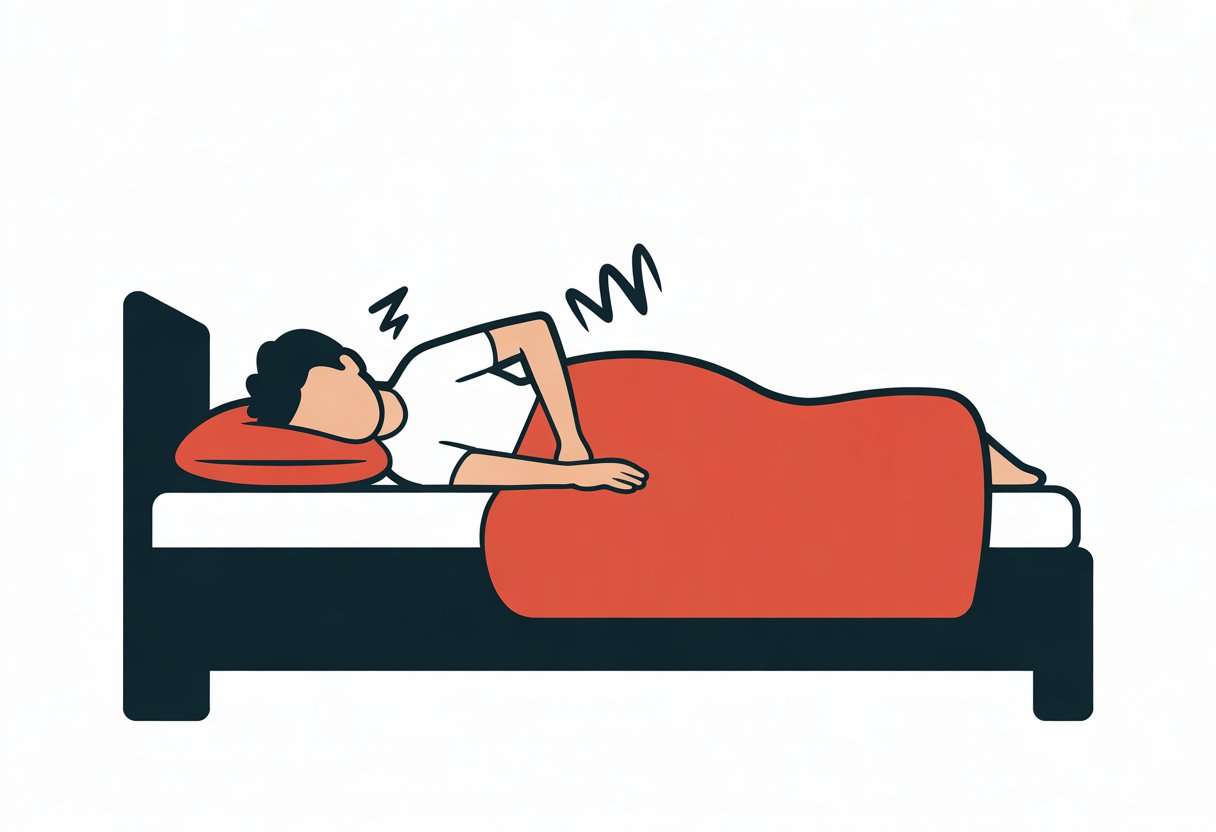
Pain and disrupted sleep can occur together, but morning discomfort does not identify the mattress as the cause. Review the condition of your mattress and base alongside other possible contributors with a clinician when symptoms persist.
What the mattress evidence can tell you
The trial of medium-firm and firm mattresses enrolled 313 adults with chronic nonspecific low back pain. Its results support comparing a medium-firm surface rather than automatically choosing the hardest option. They do not establish a cure, a preferred construction, or a result for every type of back pain.
Assess comfort without diagnosing the cause
Notice pressure at the shoulders and hips, whether the torso feels supported, and whether changing position is comfortable. Persistent or worsening pain needs clinical assessment rather than a stronger mattress claim.
Key Mattress Features for Back Pain Relief
Compare the features as a complete system. Cushioning, the support core, edge stability, and ease of movement can feel different even in mattresses carrying the same firmness label.
Pressure Relief and Support Technologies
Comfort layers cushion the body while the core supplies underlying support. Zoned systems vary in firmness or construction across areas of the mattress; whether those zones suit you depends on where your body rests.
Hybrids combine comfort layers with a coil support unit. Pocketed coils respond more independently than interconnected springs, but the full construction determines support and motion transfer.
Key pressure relief features include:
Cushioning that feels comfortable at the shoulders and hips
A support core that prevents uncomfortable excessive sinking
Pocketed coils that respond independently to your movements
Euro-top or pillow-top covers for initial cushioning
Check whether you can change position comfortably. Slow-contouring memory foam and faster-response surfaces feel different; neither response speed by itself establishes a back-pain benefit.
Edge Support for Accessibility
Test the edge while sitting and lying near it, especially if getting in and out of bed is difficult. Reinforcement can improve stability, but the usable feel depends on the model and your needs.
You lose usable sleeping surface when edges compress too much. This becomes especially important if you share your bed with a partner. Reinforced edges typically use firmer foam or additional coil support around the perimeter.
There is no universal edge-compression measurement that proves a mattress is suitable for back pain. Test the finished bed height and stability in the way you will use them.
Motion Isolation for Couples
A mattress for couples needs to absorb movement so your partner's tossing and turning doesn't wake you. Poor sleep quality can make back pain worse, so uninterrupted rest matters.
Foam layers and individually wrapped coils both contribute to motion isolation. The foam formulation and complete construction matter; greater thickness alone does not establish better motion isolation. Memory foam provides excellent motion isolation but can trap heat.
Pocketed coils can reduce the spread of movement compared with interconnected springs, but they do not eliminate it. Test partner movement together because the comfort layers and coil unit both contribute.
Temperature Control and Cooling Fibres
If warmth disturbs you, compare the whole mattress construction along with your bedding and room conditions. Cooling labels do not establish a back-pain treatment.
Breathable covers and spaces for airflow can affect warmth and moisture. A cool initial touch is different from sustained cooling through the night.
Effective cooling features include:
Phase-change materials that absorb and release heat
Gel that can absorb some heat and slow initial warming, with finite capacity
Coil systems that allow air circulation through the mattress
Moisture-wicking cover fabrics
A hybrid's coil unit leaves space for airflow, but thick or less breathable upper layers can still feel warm. There is no universal coil-height threshold that establishes a cooler sleep surface.
What type of mattress should you compare for back pain?
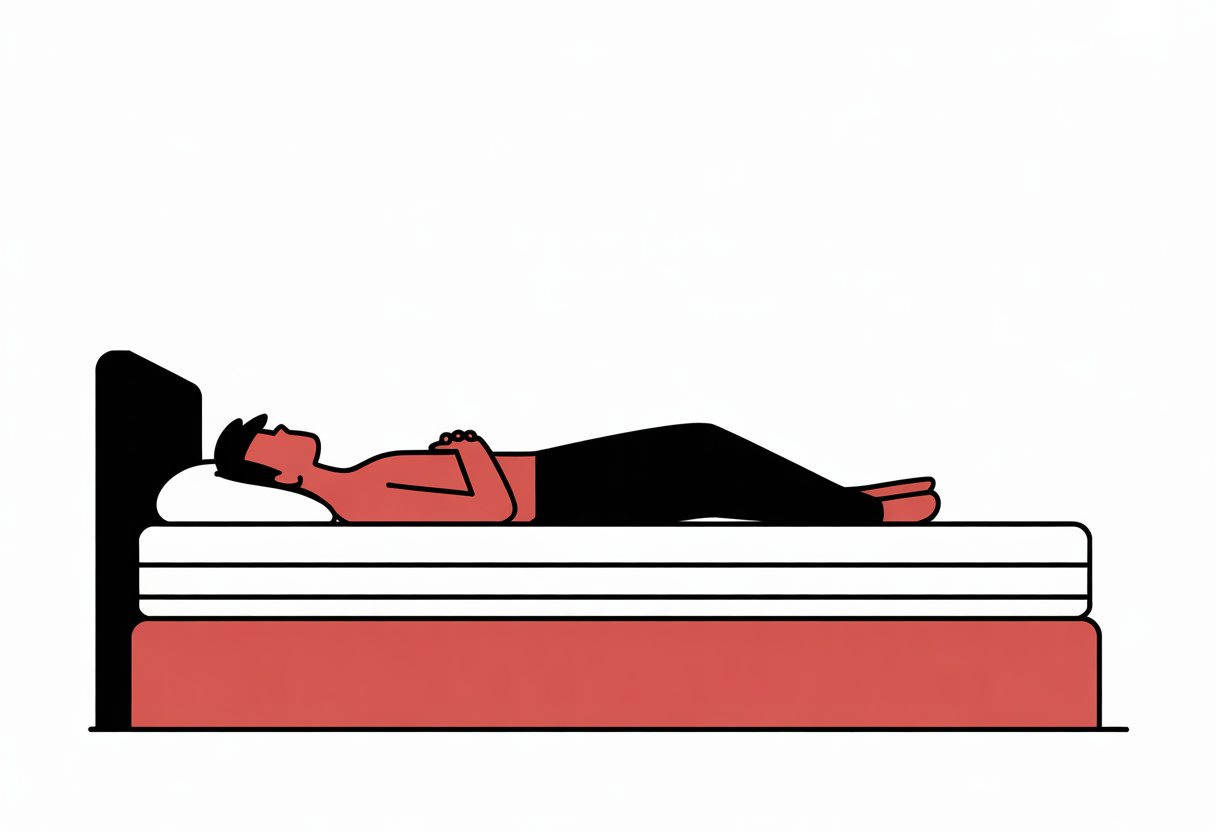
Compare the full construction and actual feel. The evidence above does not establish a foam, hybrid, or innerspring winner, and each type includes different firmness levels.
Hybrid Mattresses
A hybrid mattress combines foam or latex comfort layers with a coil support unit. Compare it if you want cushioning with a more responsive underlying feel; check that the torso feels supported without uncomfortable pressure.
A hybrid label alone is not evidence of tested back-pain relief. Ease of turning, depth of cushioning, and edge stability are more useful things to assess in the specific model.
Zoned coils may change support across different areas, but pocketed coils are not automatically zoned. Check the model's documented construction and how the zones line up with your body.
The coil unit permits airflow within the mattress. Surface warmth still depends on comfort layers, cover, bedding, and room conditions.
Memory Foam Mattresses
Memory foam contours under pressure and responds to warmth. It can cushion the shoulders and hips, while the support core beneath it supplies the mattress's underlying support. Compare memory foam options by their complete construction.
Compare how deeply you settle into the comfort layers and whether turning feels comfortable. Contouring should feel comfortable without leaving the torso unsupported.
Memory foam may retain warmth and respond slowly. Gel can slow initial warming by absorbing some heat, but its capacity is finite; ventilation and bedding also matter.
Foam density is not the same as firmness. Density can help assess durability within a foam type, but it does not establish a medical benefit or replace an assessment of the full mattress.
Innerspring and Pocketed Coil Mattresses
Innerspring mattresses use a coil support unit with comfort material above it. Interconnected coils and pocketed coils respond differently, but either construction can be made in different firmness levels.
Compare how much cushioning sits above the springs and how the whole mattress supports you. A coil unit does not by itself establish either pressure relief or back-pain suitability.
Pocketed coils respond more independently than interconnected coils. Zoning requires a deliberate change in support across areas; individual wrapping alone does not create it.
Edge construction and comfort layers vary between innerspring models. Test stability and warmth-related features rather than assuming the construction label guarantees them.
Choosing the Best Mattress Firmness and Height
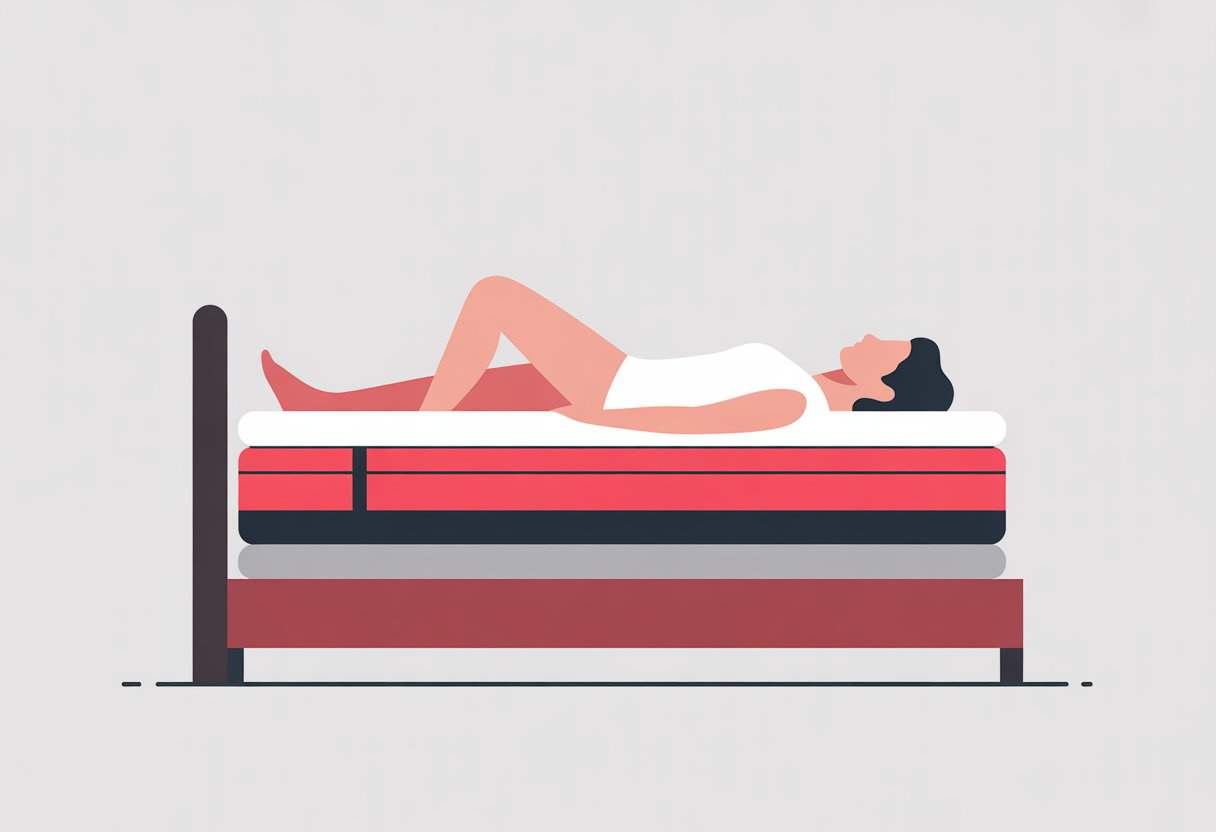
Choose mattress feel for comfort and support, and assess the combined frame and mattress height for access. A thicker mattress is not automatically more supportive or better for back pain.
Medium-Firm vs. Firm Options
Medium-firm is a useful comparison point from the chronic nonspecific low-back-pain trial. Firmness labels and numbered scales vary by brand, so compare the actual feel.
The trial does not show that a medium-firm mattress eliminates pressure points or keeps every sleeper aligned. Use the research as a starting point, then assess comfort in your usual position.
Firm mattresses offer less surface give, but the hardest option is not automatically appropriate. A firm feel may suit some back and stomach sleepers; assess cushioning and support together.
Body weight changes how deeply a comfort layer compresses. A heavier sleeper may experience the same mattress as softer, so assess sinking depth and underlying support separately. Lighter people may find firm mattresses uncomfortable because they don't sink enough to relieve pressure.
Mattress Height and Accessibility
Check the actual height of the mattress and compatible base together. Accessibility depends on the finished bed, not mattress thickness alone.
A very low bed can be difficult to rise from, while a very high bed can be difficult to sit on securely. Test the height and edge stability that work for you.
More height can mean additional material, but thickness alone does not prove better support or pain relief. Compare what the layers do and whether the bed is easy to use.
Sit on the finished bed if possible and check whether your feet can rest comfortably on the floor. If transfers are difficult, discuss your access needs with an appropriate professional.
Mattress Firmness for Different Sleeping Positions
Side sleepers generally compare medium to plush feels for shoulder and hip cushioning. Check pressure and comfortable alignment rather than choosing a number from a universal scale.
Back sleepers generally compare medium-firm to firm feels, checking that the torso feels supported without uncomfortable pressure.
Stomach sleepers generally compare firm feels to limit excessive sinking at the hips. Comfort and complete support still matter.
Combination sleepers generally start by comparing medium feels and ease of turning. Test each usual position; no firmness guarantees comfort in every one.
Building a Shortlist for Back Comfort
Use the back-comfort mattress collection to compare actual constructions and feels. A product in a collection is not a clinical recommendation or a promise of pain relief.
Compare features you can verify
Check the support-core type, comfort materials, edge construction, and firmness choices on the product page. Then test pressure at the shoulders and hips, torso support, turning, and access at the edge.
Keep your health needs separate from product claims
Bring any relevant guidance from your clinician to the comparison. Do not select a mattress solely because a model name includes a medical term or because an unattributed ranking calls it best for pain.
Mattress Buying Considerations and Policies
Read the seller's policies before purchasing. Trial or exchange eligibility, warranty defect coverage, and delivery services are separate matters.
Trial Periods and Sleep Trials
Read the applicable sleep trial policy for the purchase. Confirm whether it provides an exchange or refund, what conditions apply, and any charges.
An adjustment period in a retail policy is not medical advice to tolerate pain. Seek appropriate assessment for persistent, severe, or worsening symptoms.
Check condition requirements, collection arrangements, and any exchange or return charges before ordering.
Assess the mattress's comfort during ordinary use within the seller's terms. A trial does not guarantee it will reduce back pain.
Warranty and Lifetime Coverage
Check the applicable manufacturer warranty for covered defects and exclusions. Warranty duration is not a promise of comfort or useful lifespan.
A prorated warranty may require you to pay part of a replacement cost; non-prorated coverage has different terms. Read the actual warranty rather than assuming a standard progression.
Use the maker's specified method and threshold when documenting a suspected defect. Keep the receipt and support information; normal changes in comfort and covered defects are not necessarily the same.
Lifetime warranties sound appealing but often include similar restrictions as standard warranties. Compare the actual terms rather than just the length of coverage.
Delivery Options in Canada
Confirm what any setup or delivery service includes at your address. Do not assume placement, assembly, or old-mattress removal is included because a service is called white glove.
If the order requires you to move or unpack the mattress yourself, arrange suitable help. Compare that requirement before choosing the delivery option.
Consult National Mattress's current delivery information and confirm service availability and charges for your order.
If getting in and out of bed is difficult, assess the finished height and edge stability alongside your other back-comfort considerations.
Frequently Asked Questions
Choosing the right mattress involves understanding firmness levels, material types, and replacement timelines. Your body type, sleeping position, and specific pain locations all play important roles in finding proper support.
What types of mattresses are best suited for individuals with lower back discomfort?
The trial in 313 adults with chronic nonspecific low back pain supports comparing medium-firm with firm. It does not establish which mattress construction is best for all lower-back discomfort.
Hybrid mattresses combine coil support with comfort layers. Innerspring mattresses offer traditional bounce and support. Memory foam options mould to your body shape.
Compare cushioning and torso support in your usual position. Body shape affects the feel, but hip width alone cannot prescribe a mattress construction.
How does mattress firmness affect back pain relief and sleep quality?
Firmness directly impacts how well your spine stays aligned during sleep. A mattress that's too firm won't let your hips and shoulders sink in enough. One that's too soft won't provide adequate support for your lower back.
The old advice to buy the firmest mattress possible isn't supported by current research. Personal preference should guide your choice since there's no single firmness level that works for everyone.
Your sleeping position affects which firmness you need. Side sleepers typically need slightly softer surfaces. Back and stomach sleepers often prefer firmer support.
Can memory foam mattresses provide adequate support for those suffering from back pain?
A memory foam mattress can offer comfortable cushioning with an appropriate support core. Density and thickness alone do not establish back-pain relief; assess the complete model.
Some memory foam options retain warmth or make turning feel slower. Compare those trade-offs in the actual model rather than judging safety or comfort from the material name alone.
A topper changes surface feel but cannot repair a sagging mattress or base. Assess the underlying support before adding cushioning.
What should be considered when choosing a mattress for someone with chronic back pain?
Consider the person's clinical advice, comfort, ease of turning, and ability to get in and out of bed. Persistent or severe pain requires medical assessment rather than a mattress-only explanation.
Body weight affects compression and perceived feel: a heavier sleeper generally sinks more deeply into the same comfort layer. Assess support and pressure in the complete mattress instead of assigning a firmness from body type alone.
Read the applicable trial policy before buying. Do not delay needed medical care while waiting for a retail adjustment period to end.
Price alone is not evidence that a mattress will improve or worsen pain. Compare documented construction and comfort within your budget.
Are there specific mattress features that can help alleviate upper back and neck pain?
Proper neck support depends on maintaining neutral spine alignment. Your pillow works together with your mattress to support your neck and upper back properly.
Check shoulder comfort and pillow height together. A mattress or pillow adjustment may change comfort, but it does not diagnose the cause of upper-back or neck pain.
Check neck comfort and pillow height in your usual position. Side sleepers need room for the shoulder beneath the head, while back sleepers should check whether the pillow pushes the head forward.
If you lie near the edge, check that the surface feels stable. Reinforced edges do not guarantee that every sleeper will feel secure.
How often should mattresses be replaced to maintain proper support for back pain sufferers?
There is no fixed replacement birthday that maintains back health. Inspect the mattress and base for persistent sagging, damage, or a meaningful loss of comfort.
A damaged or sagging base can undermine mattress support. Check it as well as the mattress before deciding what needs replacement.
Compare any lasting impressions with the maker's inspection and warranty guidance. Pain or stiffness alone does not prove the mattress has failed.
A new mattress is not guaranteed to resolve discomfort. Choose a suitable replacement if the existing system is worn, and seek clinical advice for persistent symptoms.
 by
by 


