

















A hybrid mattress combines a spring support core with foam or latex comfort layers. To compare hybrids, look at the complete stack: the surface cushioning, transition layers and coil unit each affect the feel.
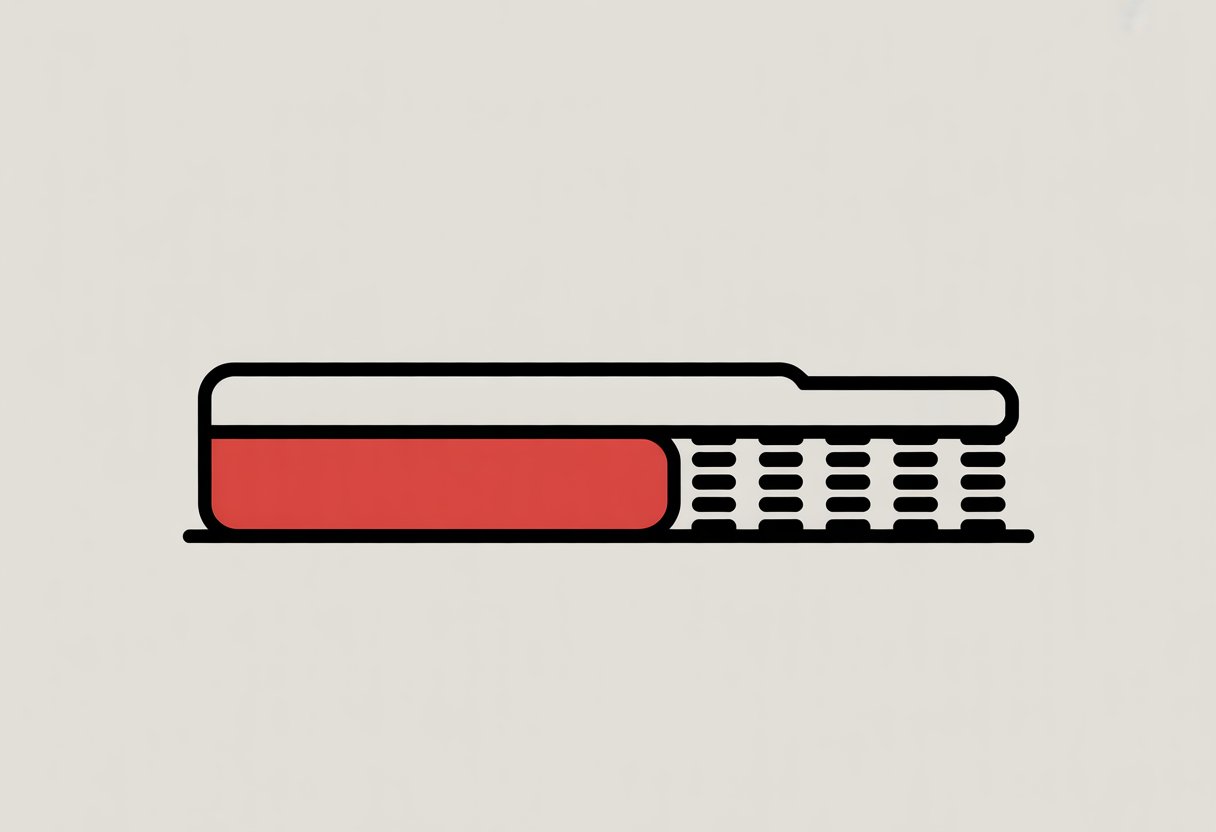
The hybrid label describes a combination of materials, not one fixed firmness. A model can feel more enclosing with memory foam or more responsive with latex. Its cover and layer structure also affect airflow.
Understanding what makes a hybrid mattress different helps you decide if it's the right choice for your sleep needs. The materials, construction, and design all affect how the mattress feels and performs over time.
Key Takeaways
- Hybrid mattresses combine innerspring coils with thick foam or latex comfort layers to balance support and pressure relief
- Different coil types and foam materials create variations in firmness, durability, and temperature regulation
- Your sleep position, body weight, and personal preferences determine whether a hybrid mattress suits your needs
What Is a Hybrid Mattress?
A hybrid mattress pairs a coil support core with cushioning layers of foam or latex. The coils provide spring response, while the comfort layers shape how closely the surface contours around you. A pocketed coil unit can reduce movement transfer compared with linked springs. No single layer thickness defines comfort: compare the complete construction and the feel in your usual sleep position.
Definition and Core Features
A hybrid mattress is a multi-layer bed that pairs an innerspring system with substantial foam layers above it. The coil base provides the foundational support, while the foam comfort layers create a softer sleeping surface.
The depth of the comfort layers varies by model. Extra mattress height can be distributed between the coil unit, transition layers and comfort layers, so overall thickness alone cannot tell you how it will feel.
The coils in hybrid mattresses are usually pocketed or individually wrapped. These separated coils move independently from each other, which helps reduce motion transfer when your partner moves during the night.
The layers combine spring response with surface cushioning. Whether that combination supports you comfortably depends on the whole mattress, your body and your sleeping position.
Hybrid Mattress vs. Traditional Mattresses
Traditional innerspring designs often emphasize spring response, while hybrids emphasize the combination of springs and comfort layers. There is no universal layer-depth boundary that predicts how either will feel.
Innerspring mattresses can also contain foam, fibre or other cushioning. Compare the actual comfort layers and feel instead of assuming that every innerspring has limited pressure relief or belongs to one price tier.
All-foam mattresses contain only foam layers without any coils. While they excel at contouring to your body, they often trap heat and lack the bounce that coils provide.
Hybrid mattresses split the difference between these two styles. They give you the responsive support of coils combined with the body-hugging comfort of memory foam or latex.
Key Benefits of Hybrid Mattresses
Comfort layers can redistribute pressure around the shoulders and hips, while a pocketed support core can reduce movement transfer. Those are mechanical properties, not a promise of pain relief. Persistent or severe pain is a question for a clinician, not a mattress.
A coil core provides space for airflow, but the comfort layers, cover and bedding affect heat transfer at the surface. A hybrid is not necessarily cooler than every all-foam mattress.
Key advantages include:
- Pressure redistribution to assess in the actual comfort layers
- Space for airflow within the coil core, subject to the layers above it
- Reduced motion transfer from individually wrapped coils
- Balanced support that works for multiple sleeping positions
- Construction choices to compare across the comfort layers and support core
Partners with different preferences should test the same mattress together. Both experience the complete stack, so combining coils and foam does not automatically meet two different comfort needs.
Core Components of a Hybrid Mattress

Hybrid designs can include comfort, transition, coil support and bottom stabilizing layers. The number and arrangement vary by model; the sections below describe common functions rather than a required four-layer formula.
Comfort Layer
The comfort layers sit beneath the cover and provide surface cushioning. Their depth and materials vary, and can include memory foam, latex or polyfoam. Check the model specifications instead of treating one depth as standard.
Memory foam contours as it warms and compresses, while latex responds more quickly and feels less enclosing. Gel infusion can delay initial warming of foam. Airflow through the cover and layers, rather than infusion alone, does the sustained cooling work.
Some hybrid mattresses include a thin pillow top sewn onto the comfort layer for extra cushioning. The materials in this top layer determine how soft or firm the mattress feels when you first lie down.
Transition Layer
A transition layer, where present, changes the feel between the softer layers above and the coil core below. Its effect depends on the complete construction and the sleeper.
Transition layers may use polyfoam or other cushioning materials. A separately named transition layer is not essential in every design, and its absence does not mean a sleeper will feel springs through the surface.
This layer also helps with spinal alignment by creating a gradual shift from soft to firm support.
Support Layer
The support layer contains the coil system. Coil-unit height varies, so use the product specifications to see how the mattress height is distributed.
Most hybrids use individually wrapped pocket coils rather than traditional connected springs. Each coil moves independently, which reduces motion transfer and provides targeted support to different areas of your body. The steel coils create airflow channels throughout the mattress that help regulate temperature.
Some manufacturers use different coil gauges or zoning patterns to provide extra support under heavier body parts like your hips and lower back.
Base Layer
Some hybrids include a stabilizing layer beneath the coils. Its material and depth vary; do not assume every hybrid has the same bottom layer.
A bottom layer can help stabilize the internal construction, but it does not replace a suitable external base. Use the mattress maker's requirements for the frame, foundation, slat spacing and centre support.
Types of Hybrid Mattresses
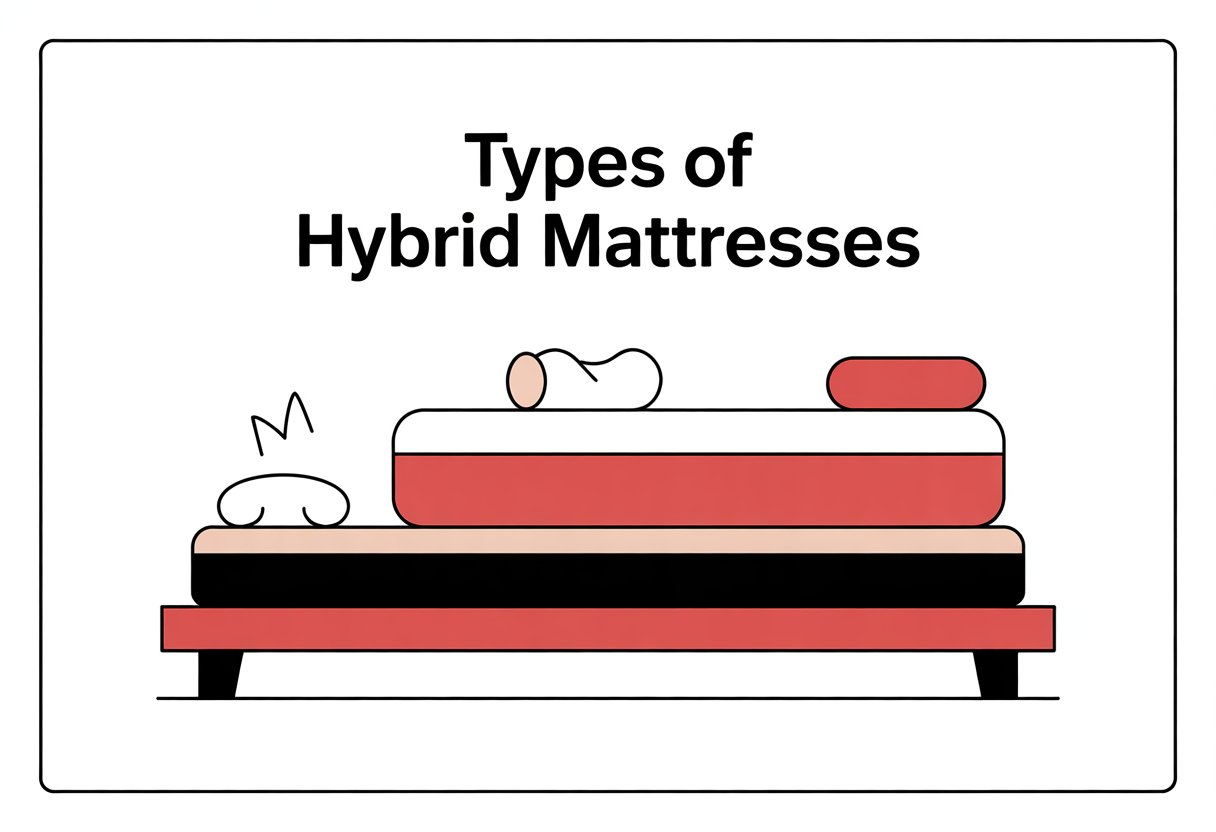
Hybrid mattresses come in different varieties based on the comfort materials layered above the coil system. The main types include memory foam hybrids that contour to your body, latex hybrids that offer bounce and cooling, and microcoil hybrids that add extra support through smaller coils.
Memory Foam Hybrid
A memory foam hybrid combines innerspring coils with memory foam layers on top. The memory foam conforms to your body shape and helps relieve pressure points at your shoulders and hips. This type works well if you sleep on your side or need extra cushioning.
A memory foam hybrid combines a coil core with cushioning above it. The foam depth varies, and the complete construction determines how far a particular sleeper settles.
Open-cell or perforated foam can improve airflow above the springs. Gel infusion works differently: it increases thermal mass and delays warm-up at first. It does not create an airflow path or guarantee a cool surface all night.
Latex Hybrid
A latex hybrid uses natural or synthetic latex foam instead of memory foam as the comfort layer. Latex feels more responsive and bouncy than memory foam. It springs back quickly when you move rather than slowly conforming to your shape.
Latex has a responsive, less enclosing feel than memory foam at a comparable firmness. Do not choose it as a dust-mite barrier: no mattress material is dust-mite proof, and natural latex itself can be a contact allergen.
Latex has a distinct, responsive feel that some sleepers prefer to the closer contour of memory foam. Compare current prices and complete specifications; the material name alone does not establish value or useful lifespan.
Microcoil Hybrids
Microcoil hybrids add smaller springs within the comfort system above the main support unit. Their height and arrangement vary by model, so check the listed construction.
The microcoils respond to pressure independently, similar to how foam contours to your body. They provide better airflow than solid foam layers. This design combines the bounce of springs with targeted pressure relief.
Manufacturers often add thin layers of foam or padding between the microcoils and the base coils. This prevents the smaller coils from shifting and creates a smoother sleep surface.
Coil Technologies and Support Systems

The coil core contributes to support, response and motion transfer. The layers above it and your individual fit also matter; the core alone cannot establish alignment or edge performance.
Pocketed Coils and Targeted Support
Pocketed coils are individually wrapped springs enclosed in fabric sleeves. Each coil moves independently from its neighbours, which allows the mattress to contour to your body shape more precisely than traditional coil systems.
Separately wrapped springs can reduce movement transfer compared with linked units. The shared cover and comfort layers still transmit some movement, so the two sides are not isolated completely.
Some hybrids have zones that respond differently under parts of the body. Compare how the zones fit your height and sleeping position; a zone count or firmer centre does not guarantee comfort or prevent permanent sagging.
Fabric pockets separate the springs, but they do not guarantee silence. Noise can also come from the foundation or frame.
Other Coil Types: Bonnell, Offset, and Continuous Coils
Bonnell coils are the oldest and most basic spring design. These hourglass-shaped coils connect to each other with helical wires, creating a unified support structure. They provide a bouncy feel and good airflow but transfer motion more readily than pocket coils.
Offset coils are similar to Bonnell coils but feature a squared-off top and bottom. The hinged design allows these coils to conform better to your body while maintaining durability. They're less common in modern hybrid mattresses.
Continuous-coil units use wire formed into rows of springs. Their linked construction can transmit more movement than pocketed units. Judge feel and durability from the complete mattress rather than the spring-family name.
Coil Count and Durability
Coil count is the number of springs reported for a specified mattress size and construction. Some counts include several spring layers, so compare like-for-like specifications instead of assuming a standard range.
Higher coil counts do not automatically mean better quality or support. Wire gauge, diameter, turns and arrangement differ, so no one number ranks complete mattresses.
A wire-gauge number describes wire size within a gauge system. Read it alongside the complete spring and mattress design:
- Lower gauge numbers mean thicker wire within the same gauge system
- Gauge alone does not select a firmness or mattress for a body weight
Spring design, comfort-layer quality, use and the supporting base affect wear. Coil gauge does not establish a fixed interval before significant wear.
Key Performance Factors
Hybrid mattresses deliver different levels of performance across several important areas that affect your sleep quality. The coil system and foam layers work together to determine how well your mattress handles movement, supports your body at the edges, stays cool through the night, and responds to your sleeping position.
Motion Isolation and Motion Transfer
Motion isolation refers to how well your mattress absorbs movement when you or your partner shift positions during sleep. Hybrid mattresses typically perform moderately well in this area, though not as effectively as all-foam options.
The innerspring coils in hybrid designs allow some motion transfer between sleepers. Pocketed coils perform better than traditional coils because each spring moves independently in its own fabric pocket. This design limits how much movement travels across the mattress surface.
The foam layers above the coils help reduce motion transfer. Memory foam provides the best motion isolation, while latex and polyfoam allow more movement to pass through. Thicker comfort layers generally improve motion isolation performance.
If you share your bed and wake up when your partner moves, consider a hybrid with pocketed coils and substantial foam layers. Light sleepers may still notice some movement with hybrid mattresses compared to all-foam options.
Edge Support and Sagging
Edge support describes how the mattress responds when you sit or lie near its perimeter. It varies between models and is not guaranteed by the hybrid label.
Supportive edges can make the perimeter feel more usable. Test sitting and lying near the edge; neither a coil core nor a reinforced edge guarantees the same feel as the centre.
Reinforced perimeter coils or foam rails may add resistance at the edge. Their presence does not prevent all permanent wear, so assess the actual model and follow its base requirements.
Permanent impressions can develop as comfort materials or springs wear. A hybrid label alone does not prove better resistance to sagging than an all-foam design, and spring support does not restore worn comfort layers.
Breathability and Cooling Features
Temperature regulation significantly impacts sleep quality. Hybrid mattresses generally sleep cooler than all-foam designs because the coil system creates natural airflow channels beneath the comfort layers.
Air circulates freely through the gaps between springs, carrying heat away from your body. This breathable innerspring base helps offset heat retention from foam layers that might otherwise trap warmth.
Cooling features vary by mattress construction:
- Gel-infused foam slows initial warming by adding thermal mass
- Breathable cover fabrics promote airflow at the surface
- Porous foam technologies allow air to pass through more easily
- Phase-change materials absorb and release heat during their transition; they do not guarantee a constant temperature all night
The thickness and density of foam layers affect heat retention. Thick memory foam can still trap some warmth despite the coil ventilation below. Latex and polyfoam layers typically sleep cooler than dense memory foam.
Responsiveness and Spinal Alignment
Responsiveness describes how quickly your mattress adapts when you change positions. Hybrid mattresses offer moderate to high responsiveness because the coil system provides bounce and quick recovery.
The springs compress and rebound immediately under pressure. This makes it easier to move around and shift positions during the night. Memory foam responds more slowly, while latex and polyfoam react faster to pressure changes.
Spinal alignment depends on matching mattress firmness to your body weight and sleeping position. The foam layers contour to your curves while the coils provide underlying support to keep your spine straight.
Side sleepers need more cushioning at the shoulders and hips. Back sleepers require support that maintains the natural curve of the lower back. Stomach sleepers benefit from firmer surfaces that prevent the midsection from sinking too deeply.
Your weight affects how much the mattress compresses. Heavier individuals typically need firmer hybrids with robust coil systems. Lighter sleepers often prefer softer comfort layers that allow adequate contouring without requiring excessive pressure.
Suitability for Different Sleepers
Hybrid mattresses work well for many sleeping positions because they combine foam comfort with coil support. Your sleeping position and body weight determine which firmness level you need to keep your spine aligned and reduce pressure on your joints.
Side Sleepers
Side sleepers need a soft to medium mattress that cushions your shoulders and hips. These areas carry most of your body weight when you sleep on your side, creating pressure points that can lead to pain.
Side sleepers can compare cushioning at the shoulders and hips while checking deeper support. No fixed foam-depth minimum guarantees that fit; materials, firmness and construction all matter.
Some hybrids feel too resistant for a particular side sleeper. Test pressure at your shoulders and hips; comfort-layer thickness alone cannot determine whether the cushioning is adequate.
Back Sleepers
Back sleepers need a medium-firm to firm mattress that supports your lower back. This sleeping position puts less pressure on your joints than side sleeping, but you still need proper spine alignment.
For back sleeping, check whether your lower back feels supported and your pelvis settles comfortably. A hybrid can have different firmness levels and does not automatically prevent excessive sinking.
Your lower back should feel supported without gaps between your body and the mattress. If the bed is too soft, your hips will sink down and create a curve in your spine. If it's too firm, you'll feel pressure on your shoulders and tailbone.
Stomach Sleepers
Stomach sleepers can start with firm. Look for support that limits the pelvis dropping below the ribs while still allowing comfortable surface cushioning.
For stomach sleeping, test whether the complete mattress limits the pelvis dropping below the ribs without uncomfortable pressure. A coil core or thin comfort layer alone cannot establish that fit.
You should choose a mattress that keeps you on top of the surface. Heavy sinkage in any area of your body creates poor alignment and can lead to back pain.
Combination Sleepers and Heavy Sleepers
Combination sleepers can start with medium and test how easily they turn. The feel must suit the positions they use as well as their preference for a responsive or enclosing surface.
Heavier sleepers compress the layers further and should compare pressure and support in their normal position. Coil gauge, thickness and the hybrid label do not by themselves establish load capacity or prevent sagging; check mattress and base specifications.
Coil gauge is a wire-gauge designation, not a thickness in millimetres. Compare the maker's complete specifications: coil diameter, gauge and turns differ, so coil count alone cannot rank support or durability.
Mattress Shopping Considerations
Selecting a hybrid mattress requires evaluating firmness levels, compatibility with your bed frame, and protective features that extend mattress life. Understanding these factors helps you make an informed purchase decision.
Mattress Firmness: Medium, Medium-Firm, and Soft Options
Use sleep position as a starting point when comparing firmness: side sleepers can start with medium to plush, back sleepers with medium-firm to firm, stomach sleepers with firm, and combination sleepers with medium.
A medium feel is a starting point for combination sleepers. Test all the positions you use, including how easily you turn; one firmness does not suit every body or position.
Softer feels may give some side sleepers or lighter sleepers more cushioning. Body weight changes how the layers compress, but no fixed weight cutoff determines the right firmness. Test pressure and deeper support together.
Your body weight influences which firmness level feels comfortable. Heavier individuals typically need firmer support, while lighter sleepers often prefer softer surfaces that conform to their body shape.
Choosing the Best Hybrid Mattress for You
Start your mattress shopping by testing models in person whenever possible. Lie in your typical sleep position for at least 10 minutes on each mattress. This gives your body time to settle and reveals how the mattress truly feels.
Read coil gauge and count in context. Gauge, diameter and turns differ between manufacturers, so a higher count alone cannot establish better support or durability.
Review the foam layers carefully. Memory foam offers pressure relief, while latex provides more bounce and breathability. Consider how much foam sits above the coils, as this affects whether the mattress feels more foam-like or spring-like.
Read the current sleep trial policy before buying. Use the policy itself for the applicable terms rather than relying on a general shopping rule.
Box Spring and Foundation Requirements
A hybrid needs a base approved for that model. Check the required slat spacing, slat width, centre support and load limits. An adjustable base also requires explicit mattress compatibility.
The internal coil core supports the sleeper within the mattress; it does not replace the support beneath the mattress. A compatible platform or rigid foundation may be suitable, depending on the mattress and frame requirements.
Check the maker's approved base instructions before choosing a foundation. Read the current manufacturer warranty information for the applicable policy details.
Adjustable bases pair nicely with many hybrid mattresses. Verify that your chosen model can bend without damaging the coil system or foam layers.
Mattress Protector and Cover Features
A suitable protector can help keep spills and soil off the mattress. Check its stated liquid-barrier properties and how the complete bedding setup feels; waterproof construction does not guarantee a cool surface.
Match the protector's pocket depth and attachment style to the actual mattress height. A deep-pocket design is useful only when the mattress requires it; no attachment label guarantees that it will stay in place.
Compare a protector's fabric and barrier construction for feel, noise and breathability. Fibre names and a cooling label alone do not establish heat removal or overnight temperature comfort.
A hypoallergenic label does not establish a dust-mite barrier. Where a barrier is needed, look for an appropriate full encasement and follow its care instructions. A general protector may serve a different purpose.
Durability, Cost, and Maintenance
Hybrid lifespan and cost vary by construction, use and care. Compare current model details and watch for changes in comfort instead of assuming a fixed replacement year.
Lifespan and Mattress Warranty
There is no fixed useful lifespan established by the hybrid label. Materials, use and the supporting base affect how the mattress wears.
Material quality can affect wear, but foam density, wire gauge and a premium price alone do not establish how many more years a mattress will last.
Read the current manufacturer warranty information for the model you are considering. Warranty terms and useful comfort life are different questions.
Follow the model's installation and care instructions, and keep its documentation. Refer to the applicable warranty information for policy conditions rather than assuming a rule across all hybrids.
Hybrid Mattress Cost Factors
Hybrid prices vary by model, size and current offer. Compare the current hybrid mattress selection at National Mattress for options from budget to luxury.
Several factors affect mattress cost:
- Coil type and count: Individually wrapped coils cost more than traditional coils but provide better motion isolation
- Foam quality: Higher-density foams and natural latex increase prices
- Cooling technology: Gel infusions, copper, and phase-change materials add to costs
- Mattress thickness: Thicker comfort layers require more materials
Compare price with the features and fit that matter to you. A higher price or hybrid label does not guarantee better long-term value or a longer useful life.
Maintenance and Care
Follow the mattress maker's care instructions. A suitable protector helps with hygiene, but it cannot prevent foam fatigue or spring wear.
Essential care tasks include:
- Rotate only as directed by the mattress maker
- Clean the surface using methods allowed by the mattress maker
- Follow the stated spill-cleaning method without soaking the layers
- Washing removable covers according to manufacturer instructions
Use a base that meets the specific mattress's support and load requirements. Mattress weight varies by model and size; check the listed specifications rather than a general range.
Avoid jumping on your mattress or placing excessive weight in one spot, as this damages internal components.
Pros and Cons of Hybrid Mattresses
Hybrid mattresses offer a balance of support and comfort through their unique construction, but they come with trade-offs in cost and maintenance. Understanding both the benefits and limitations helps you decide if this mattress type suits your needs.
Hybrid Mattress Advantages
Hybrid mattresses combine coil response with foam or latex cushioning. Compare that feel with all-foam and other spring designs; the combination does not establish universally superior support or comfort.
You get better airflow compared to all-foam mattresses. The space between coils allows air to circulate, which helps regulate temperature during sleep. Many models also include cooling technology in their foam layers.
Some hybrids have reinforced edges that can feel more resistant. Test the perimeter in the positions you use; the hybrid label does not guarantee edge feel equal to the centre or prevent sagging.
Hybrids are available in different feels. Choose a model whose cushioning and support suit your body and usual positions; the hybrid label alone does not establish suitability for every sleeper.
Potential Drawbacks of Hybrids
Hybrid mattresses typically cost more than basic innerspring or foam options. The multi-layer construction requires more materials and manufacturing steps, which increases the price.
They weigh more than other mattress types. Moving or rotating your hybrid mattress takes more effort because of the dense coil system and multiple foam layers.
Some hybrids develop noise over time as the coils wear. The springs may squeak or creak when you move, especially after several years of use.
These mattresses often have a break-in period. You might need several weeks before the materials fully adapt and provide optimal comfort. The initial firmness can feel different from what you'll experience long-term.
Frequently Asked Questions
Hybrid mattresses raise common questions about their construction, performance, and care. Understanding the core components, differences from traditional mattress types, and maintenance requirements helps you make informed decisions about whether this mattress style suits your needs.
What are the primary components of a hybrid mattress?
A hybrid mattress combines metal coil construction with comfort layers on top. The base layer uses innerspring coils that provide support and airflow throughout the mattress.
The comfort layers above the coils typically include memory foam, latex, or other cushioning materials. Some models use cotton or wool in these upper layers. The combination of springs and foam creates a mattress that offers both support and pressure relief.
How does a hybrid mattress differ from an all-foam or innerspring model?
An all-foam mattress uses only foam layers without any springs or coils inside. These mattresses typically provide more contouring but can trap heat and lack bounce.
Traditional innerspring mattresses contain primarily coils with minimal cushioning on top. They offer good airflow and support but often create pressure points. Hybrid mattresses merge the firm support of innersprings with the pressure relief of foam layers, attempting to deliver benefits from both designs.
Can a hybrid mattress provide benefits for side sleepers?
Side sleepers need cushioning at the shoulders and hips where pressure builds up. The foam layers in a hybrid mattress can conform to these areas while the coils maintain spinal alignment.
Your body weight and the mattress firmness level affect how well a hybrid works for side sleeping. Softer hybrid models with thicker comfort layers typically work better for side sleepers than firmer options.
What is the typical lifespan of a hybrid mattress?
There is no fixed lifespan established by the hybrid label. Comfort layers can wear before a coil unit, and a spring core does not guarantee that the complete mattress will outlast an all-foam design.
The foam layers may break down before the springs lose their support. Higher-quality materials and construction extend the mattress's usable life. Your body weight and how often you use the mattress also affect how long it lasts.
How should one care for and maintain a hybrid mattress to ensure its longevity?
Follow the mattress maker's instructions about rotation and flipping. Rotation, when allowed, can distribute use across the surface but does not prevent every permanent impression.
Use a mattress protector to guard against spills, stains, and moisture that can damage foam layers. Avoid jumping on the mattress, as this can damage the coil system. Keep your mattress on a supportive foundation that doesn't sag, as proper support prevents premature wear.
Follow the mattress maker's cleaning instructions for spills and routine care. Use only approved methods and let any damp area dry fully before replacing bedding; do not assume every cover or foam can be cleaned with detergent.
What are the considerations when choosing the firmness level of a hybrid mattress?
Your body weight significantly impacts which firmness level feels comfortable. Lighter individuals typically need softer mattresses for adequate cushioning, while heavier people often require firmer options for proper support.
Side sleepers can start with medium to plush, back sleepers with medium-firm to firm, stomach sleepers with firm, and combination sleepers with medium. A firmer mattress is not inherently better for lower-back pain; persistent or severe pain needs a clinician's assessment.
Personal preference plays a role beyond these guidelines. Some people simply prefer the feel of a firmer or softer sleep surface regardless of their body type or sleeping position.
 by
by 


