

















Picking the right mattress can feel overwhelming when you have so many options available. Two of the most common choices are traditional spring mattresses and memory foam mattresses, and both offer different benefits for different types of sleepers.
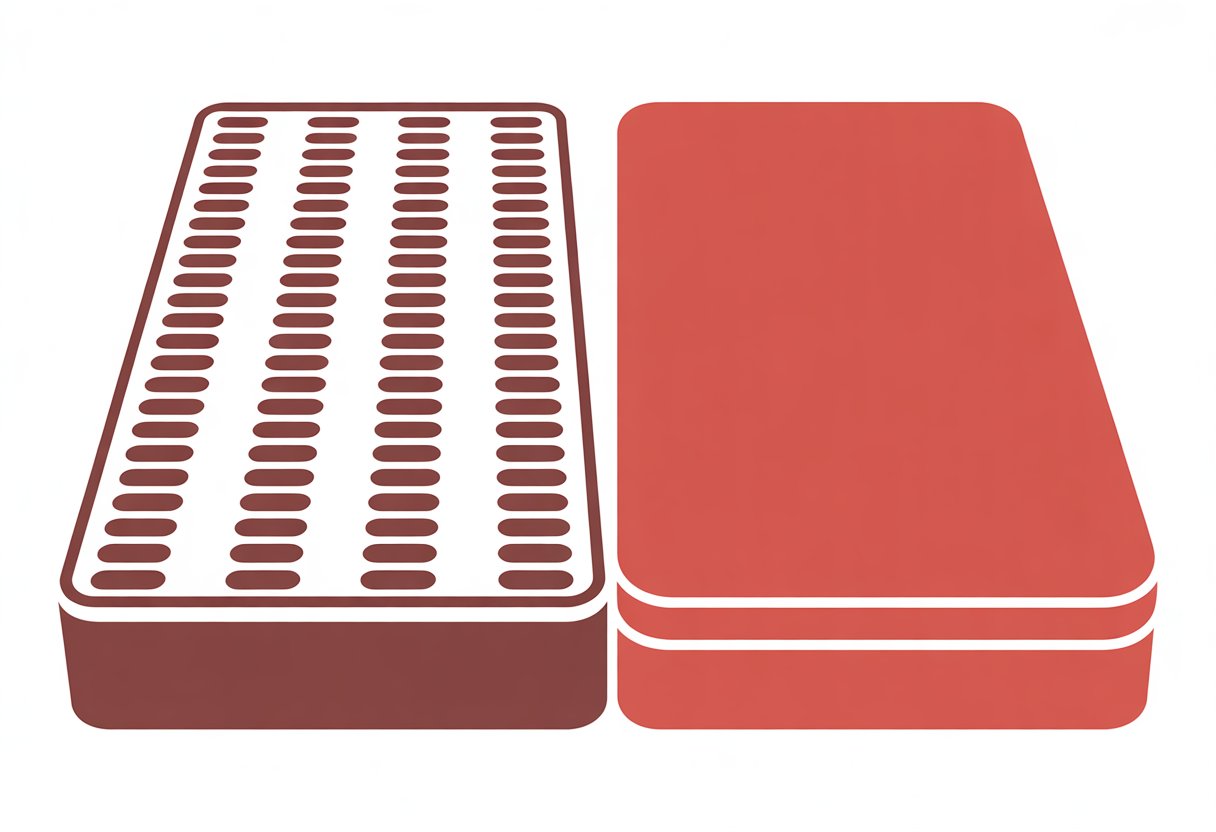
We will break down the key differences between foam and spring mattresses to help you make an informed decision. We will look at comfort, support, durability, and which option works best for specific sleep positions and health concerns like back pain.
Key Takeaways
- Spring and memory foam mattresses have different comfort levels, support systems, and lifespans that suit different sleeping styles
- Your sleep position and any back pain issues should guide which mattress type you choose
- Understanding the pros and cons of each mattress type helps you pick the best option for your needs
What Is A Spring Mattress?
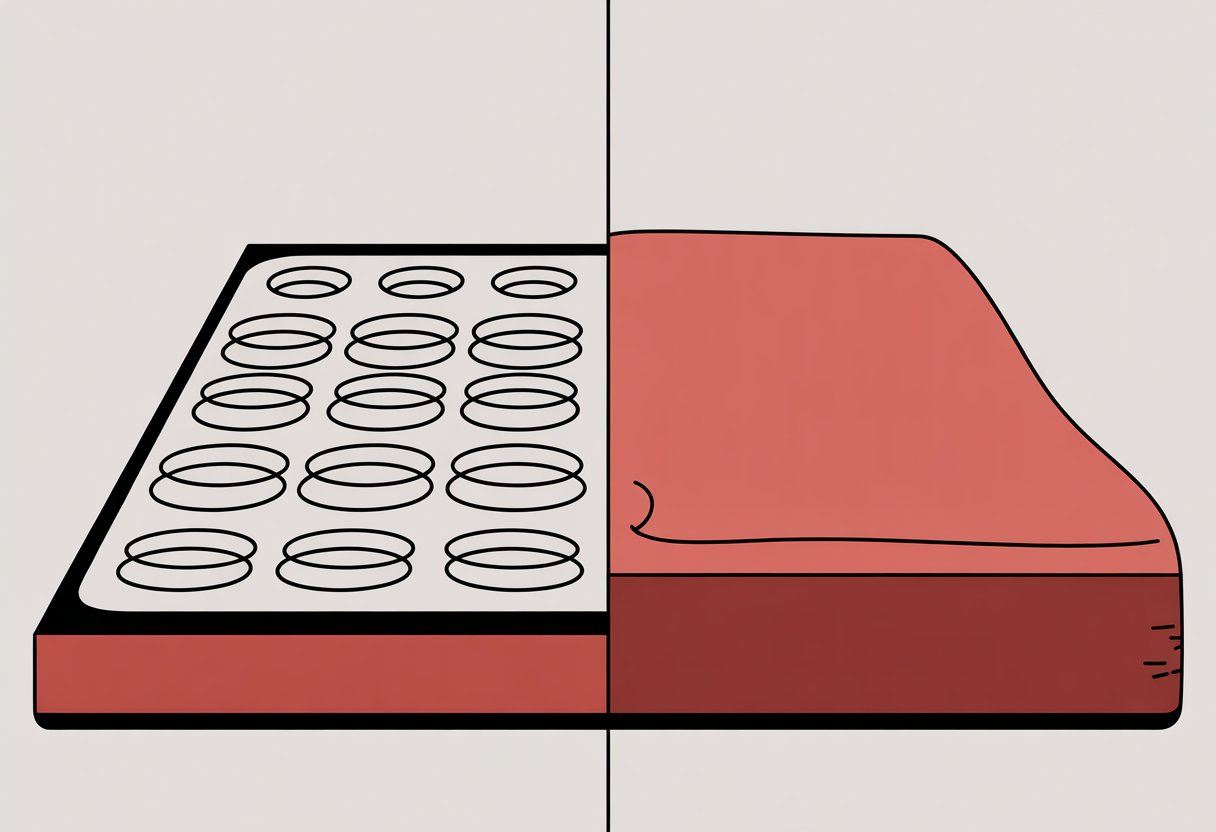
A spring mattress uses metal coils as its main support system. These coils work together to hold up your body weight while you sleep.
Most spring mattresses contain between 300 and 800 individual coils. Each coil is typically wrapped on its own to reduce motion transfer between sleepers.
The coils create the signature bouncy feeling that innerspring mattresses are known for. When you lie down, the springs compress under your weight and push back to provide support. This responsive quality makes it easy to move around and change positions during the night.
Key features of innerspring mattresses:
- Metal coil support core
- Bouncy, responsive surface
- Easy to move around on
- Traditional mattress design
Spring mattresses remain one of the most popular choices available today.
What Is A Memory Foam Mattress?
A memory foam mattress uses viscoelastic foam that moulds to your body shape as you lie down. This material was first created by NASA to protect astronauts during launch.
The foam responds to your body heat and weight. It creates a custom fit that spreads pressure evenly across the surface.
Key features of memory foam mattresses:
- Contours to your body's natural curves
- Distributes weight across the entire surface
- Returns to its original shape after use
Many memory foam mattresses include additional materials like gel or latex layers. These extras can enhance cooling or change the feel of the bed.
The contouring effect may help reduce movement during the night. This happens because the foam absorbs motion rather than transferring it across the bed.
Types of Spring Mattresses
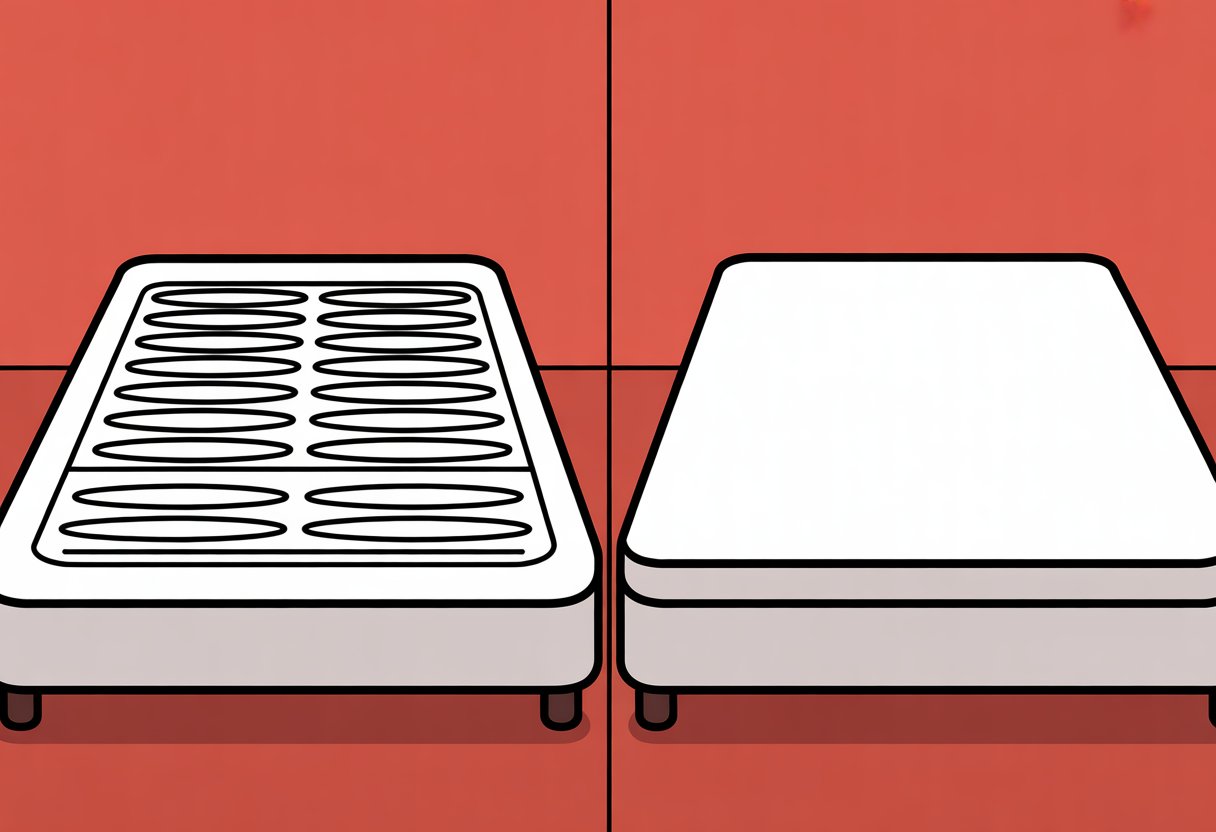
Spring mattresses come in different designs based on how the coils are built and connected. Two common styles are Bonnell coils and offset coils.
Bonnell coils represent the oldest design for mattress springs. These coils use steel wire shaped into a barrel form. The springs connect to each other through helical lacing that ties them together.
Offset coils share similarities with Bonnell coils but include one key difference. An extra piece of steel wire runs through the middle of each spring. This centre wire adds more support to the mattress core.
Benefits of Bonnell Coil Mattresses
We find several advantages with Bonnell coil designs:
- They cost less than most other mattress types
- They last many years when properly maintained
- They offer a bouncy feel with solid support
- They work well for stomach and back sleepers
Drawbacks of Bonnell Coil Mattresses
Some limitations exist with this coil type:
- They don't match the comfort level of newer mattress designs
- The coils can create noise when they rub against each other
- They may not suit people dealing with back pain
Benefits of Offset Coil Mattresses
Offset coils provide different advantages:
- They deliver more comfort than Bonnell coil options
- They balance support with a responsive bounce
- They maintain durability over many years with proper care
- They suit side sleepers particularly well
Drawbacks of Offset Coil Mattresses
These coils also have some downsides:
- They carry a higher price tag than Bonnell coil mattresses
- They can produce noise from coils rubbing together
Each coil type serves different needs and budgets. Foam and spring mattresses offer distinct features that affect comfort and support. Your choice depends on your sleeping position, budget, and personal preferences.
Varieties Of Memory Foam Beds
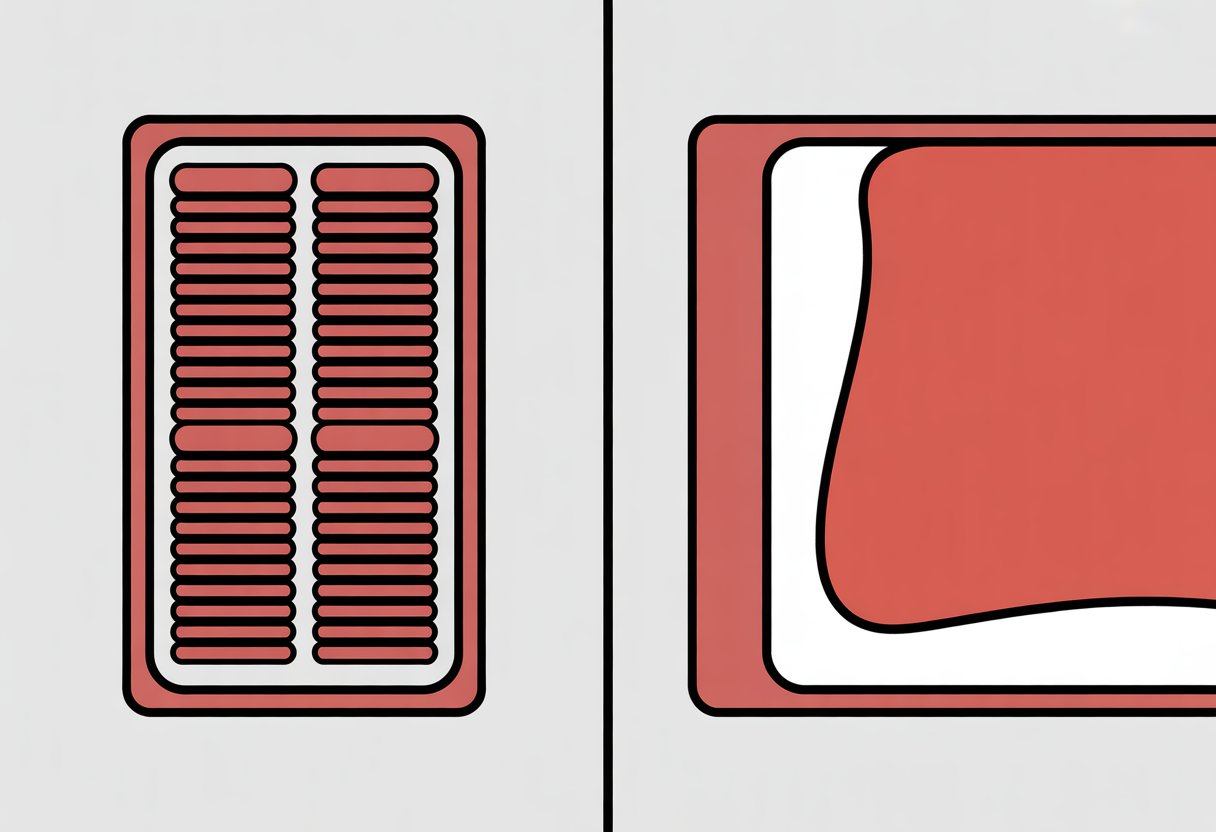
Memory foam beds come in two main types. Traditional memory foam uses petroleum-based materials to create its signature feel. Gel-infused versions contain tiny gel beads mixed throughout the foam to improve temperature control during sleep.
Some shoppers also consider best hybrid mattresses that combine memory foam layers with innerspring coils. These beds offer benefits from both materials.
Benefits Of Memory Foam Beds
Memory foam mattresses provide several key advantages:
- They mould to your body shape to deliver targeted support and reduce pressure points
- They offer comfortable sleep surfaces that help many people rest better at night
- They work well for sleepers dealing with back discomfort
Drawbacks Of Memory Foam Beds
We should note some limitations of memory foam:
- Price: These mattresses often cost more than basic spring options
- Heat retention: Some versions trap body warmth, which bothers certain sleepers
- Bounce: They lack the responsive, springy feel that coil mattresses deliver
Spring Or Foam Mattress For Back Pain?
Memory foam mattresses work better for people dealing with back pain. The material moulds to your body shape and helps keep your spine in the right position while you sleep.
Why Memory Foam Helps:
- Reduces painful pressure points
- Supports natural spinal curves
- Works well for back sleepers and stomach sleepers
Spring mattresses don't contour as closely to your body. This means they may not provide enough pressure relief and support for your spine.
When shopping for a mattress, look for one designed with back pain in mind. Some brands offer special features that focus on spinal alignment. Testing different firmness levels helps you find what supports your body best.
Spring Mattress Lifespan vs Memory Foam Durability
When we compare how long these mattresses last, memory foam typically lasts 8 to 10 years while spring mattresses usually need replacement after five to seven years. Memory foam's superior durability comes from its dense material construction, which holds up better than metal coils over time.
Key Lifespan Factors:
- Regular vacuuming removes dust and debris
- Mattress protectors prevent stains and moisture damage
- Proper support from your bed frame matters
Many bed-in-a-box mattresses use memory foam specifically because it compresses well for shipping and maintains its quality for extended periods.
Which Mattress Is More Comfortable- Spring Or Foam?
Comfort depends entirely on what you prefer when sleeping. Some people think spring mattresses feel too firm, while others enjoy the bounce and support they provide. Memory foam offers body-hugging comfort but can trap heat during the night.
Comfort factors to consider:
- Pressure relief: Foam conforms to your body shape
- Bounce: Spring mattresses offer more responsive movement
- Temperature: Spring designs feel cooler than foam options
- Motion isolation: Foam mattresses provide excellent motion isolation for couples
- Edge support: Spring mattresses have excellent edge support and a firmer feel
If you want the best of both worlds, a hybrid mattress combines foam comfort with coil support. A luxury innerspring mattress often includes memory foam or latex on top of pocketed coils. This design works well as a mattress for couples who have different comfort needs.
What Is the Best Mattress for Side Sleepers?
Side sleepers need a bed that balances cushioning with proper support. We recommend looking for mattresses that prevent your hips and shoulders from sinking too far down while still providing enough softness to relieve pressure.
Medium-soft to medium firmness mattresses work well for most people who sleep on their side. These firmness levels allow your body to nestle into the surface without creating uncomfortable pressure points.
Memory foam and hybrid mattresses are popular choices because they cradle your body. Thick foam comfort layers create a cushiony surface that moulds to your shape.
We find that mattresses with responsive support layers help maintain proper spine alignment throughout the night. This prevents you from waking up with aches in your hips, shoulders, or back.
So, Which One Should You Choose?
The foam vs spring mattress decision depends on what you value most in a bed. Memory foam works well if you want a surface that moulds to your shape and relieves pressure points. This type responds to your body weight and heat to create custom support.
Spring mattresses suit people who prefer a more classic bounce and firmer surface. They offer steady support and better airflow throughout the night.
Key factors to consider:
- Body support needs - Do you need targeted pressure relief or even support?
- Sleep position - Side sleepers often prefer foam while back sleepers may like springs
- Temperature - Springs sleep cooler while foam retains more heat
- Budget - Spring beds typically cost less upfront
We recommend testing both mattress types before buying to see which feels right for your sleeping style.
Common Questions About Mattress Types
How do innerspring and foam beds differ in their feel and spinal alignment?
Innerspring beds use metal coils to create bounce and a firmer sleeping surface. The coils push back against your body weight to keep you on top of the mattress.
Foam beds contour closely to your body shape. They cradle pressure points like hips and shoulders while supporting your spine.
When it comes to choosing between foam and spring mattresses, we find that support varies based on coil gauge and foam density. Innerspring models offer more responsive support that some sleepers prefer. Foam options provide targeted pressure relief that adapts to your unique body curves.
Key differences include:
- Innerspring beds have a bouncy, traditional feel
- Foam beds offer body-hugging contouring
- Spring mattresses provide uniform support across the surface
- Foam mattresses relieve pressure at specific points
How long does each mattress type typically last?
Foam mattresses generally last 7 to 10 years with proper care. High-density foam versions can extend beyond this range.
Innerspring mattresses typically last 6 to 8 years. The coils can lose their support over time as the metal weakens.
Factors that affect durability:
- Foam density and quality
- Coil gauge and count
- Your body weight
- How often you rotate the mattress
- The quality of the mattress cover
We notice that foam beds often maintain their shape longer than spring models. However, lower-quality foam can develop body impressions faster than expected.
How does movement on one side affect the other side?
Innerspring mattresses transfer motion more noticeably. When someone moves or gets out of bed, the coils compress and create movement across the surface. This can wake up a partner sharing the bed.
Foam mattresses excel at isolating motion. The material absorbs movement rather than transferring it. We find this especially true with higher-density foam layers.
Motion transfer comparison:
| Mattress Type | Motion Transfer | Best For |
|---|---|---|
| Innerspring | High | Solo sleepers |
| Foam | Low | Couples |
Partners who sleep lightly benefit from foam's ability to contain movement. The differences in motion isolation make foam a popular choice for shared beds.
What makes foam beneficial for spine discomfort?
Foam mattresses reduce pressure on sensitive areas. The material moulds around your body to distribute weight evenly. This takes stress off your lower back and joints.
Benefits for back pain:
- Conforms to natural spine curves
- Reduces pressure points
- Supports proper alignment
- Cushions joints and muscles
We observe that foam helps maintain neutral spine position throughout the night. Side sleepers with back issues find relief as the foam cushions their shoulders and hips. Back sleepers get support in the lumbar region without uncomfortable pressure.
The contouring nature of foam prevents your body from creating stress points. Traditional spring beds can create gaps between your body and the mattress that strain your back.
Which mattress type keeps you cooler at night?
Innerspring mattresses allow more airflow. The space between coils lets heat escape from your body. Air circulates through the mattress to prevent heat buildup.
Foam mattresses tend to trap more body heat. The dense material absorbs warmth and doesn't ventilate as easily. However, newer foam beds include cooling features like gel infusions and open-cell structures.
Temperature regulation features:
- Innerspring: Natural airflow between coils
- Traditional foam: Retains body heat
- Gel foam: Draws heat away from body
- Open-cell foam: Improves breathability
We recommend innerspring models if you sleep hot naturally. If you prefer foam but need cooling, look for versions with temperature regulation technology built into the design.
What upkeep does each mattress need?
Both mattress types require regular rotation. We suggest rotating your mattress 180 degrees every three to six months. This prevents uneven wear patterns.
Innerspring maintenance:
- Rotate every 3-6 months
- Use a mattress protector
- Vacuum the surface monthly
- Check for sagging or broken coils
- Avoid jumping on the bed
Foam maintenance:
- Rotate every 3-6 months
- Use a breathable protector
- Air out the mattress regularly
- Spot clean stains promptly
- Keep away from direct sunlight
Foam mattresses need proper ventilation to prevent moisture buildup. Remove bedding periodically to let the mattress breathe. Innerspring beds benefit from a sturdy foundation that supports the coils evenly.
We never recommend flipping modern mattresses unless the manufacturer specifies. Most current designs have specific top and bottom layers that shouldn't be reversed.
 by
by 


