

















Mattress cleaning comes down to three gentle steps: vacuum with an upholstery attachment, blot spots with a little mild soap in cold water if your care label allows, and lift odours with dry baking soda left about 15 minutes, then vacuumed off. Dry every damp spot completely, never soak the mattress, and keep a washable protector on it.
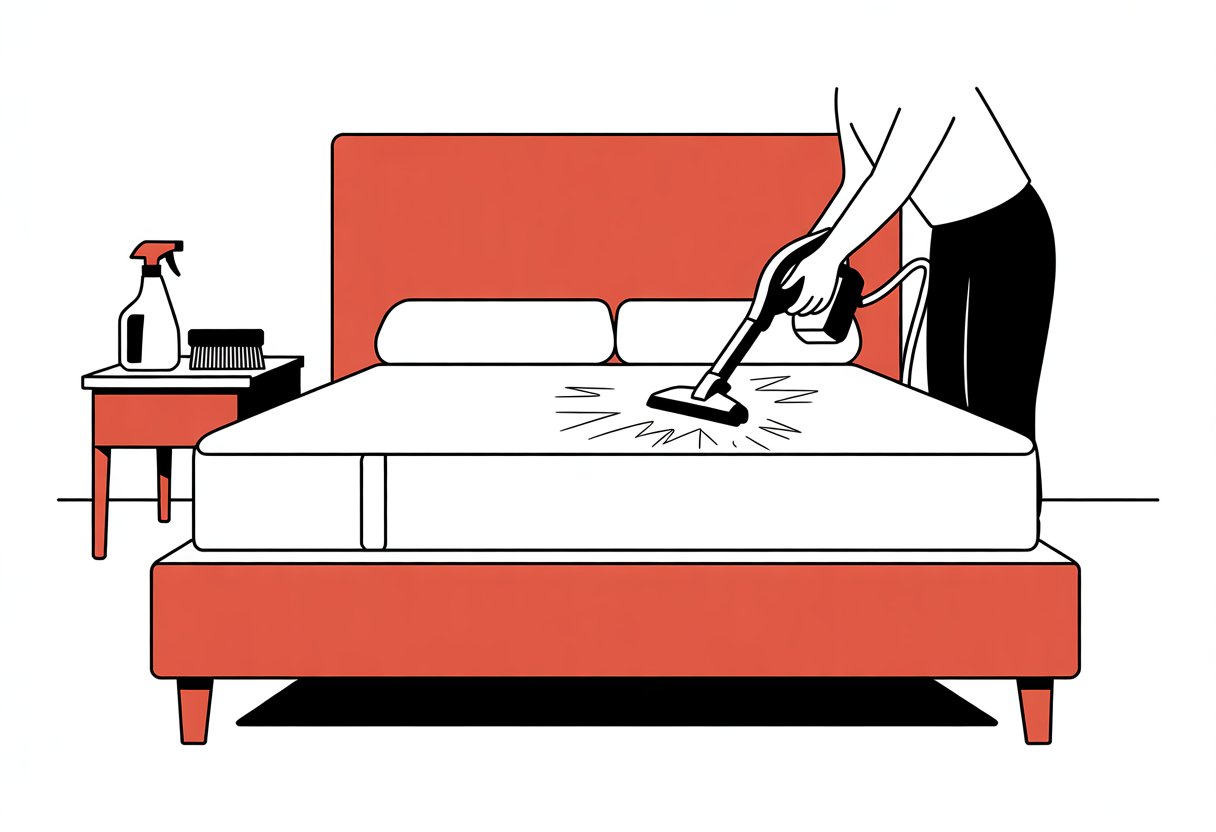
Every night your body sheds skin cells and leaves behind sweat and oils, and a mattress cannot go in the washing machine, so every method below uses as little liquid as possible. Mattress makers warn that soaking the foam or using harsh chemicals can damage it, which is why gentle and dry beats strong and wet.
Key Takeaways
- The best mattress cleaner is the gentlest one that works: a vacuum, dry baking soda and, where your care label allows, mild soap in cold water
- Use as little liquid as possible, follow your care label on stain removers, and let every spot dry completely
- A washable mattress protector takes spills instead of the mattress, which matters because stains commonly void mattress warranty coverage
What Is the Best Mattress Cleaner?
The best mattress cleaner is usually the mildest one: a vacuum with an upholstery attachment for dust, dry baking soda for odours and, on most mattresses, a little mild soap or detergent in cold water for spots (Stearns & Foster suggests one part to four parts water). Always check your care label first: makers warn that soaking the foam or using harsh cleaners can damage a mattress.
- Vacuum: the everyday cleaner. Run the upholstery attachment over the top, sides and seams; Stearns & Foster recommends vacuuming at least once a month.
- Mild soap or detergent in cold water: for spills and marks. Dampen a clean white cloth, blot the stain, then blot again with plain water to rinse. Never pour liquid onto the mattress.
- Baking soda: for odours. Sprinkle it dry, leave it about 15 minutes, vacuum it off and repeat if needed.
- Your care label: the final word. Makers differ: Beautyrest advises against applying any liquid to its mattresses, and Tempur-Pedic says its TEMPUR material should never become wet, and that spills should be soaked up with towels and dried with a fan.
Whatever you use, test it on a hidden spot first, blot rather than rub, and dry the area completely (a fan blowing across it helps) before you make the bed. Keep your care label too: stains and damage from improper care are commonly excluded from mattress warranties, which is why a washable mattress protector is the cheapest cleaner of all.
Our 7 Key Steps for Mattress Cleaning!
1. Start With Your Vacuum Cleaner
Using a vacuum is one of the best ways to clean a mattress and remove dust that collects in the fibres. Most vacuums include an upholstery tool that works well for this task.
We recommend running the attachment across the entire surface and along the edges of your mattress. Don't forget to turn it over and clean the bottom side too. This helps get rid of all the dust and particles that build up over time.
Important tips for vacuuming:
- Press the nozzle down firmly to reach dust deep in the fabric
- Move slowly across each section
- Pay extra attention to seams and crevices
Skip the steamer. Steam pushes heat and moisture into the mattress, and makers warn against exactly that: Beautyrest says moisture or chemicals applied directly to the mattress can cause premature breakdown of the foam.
Protecting Your Mattress
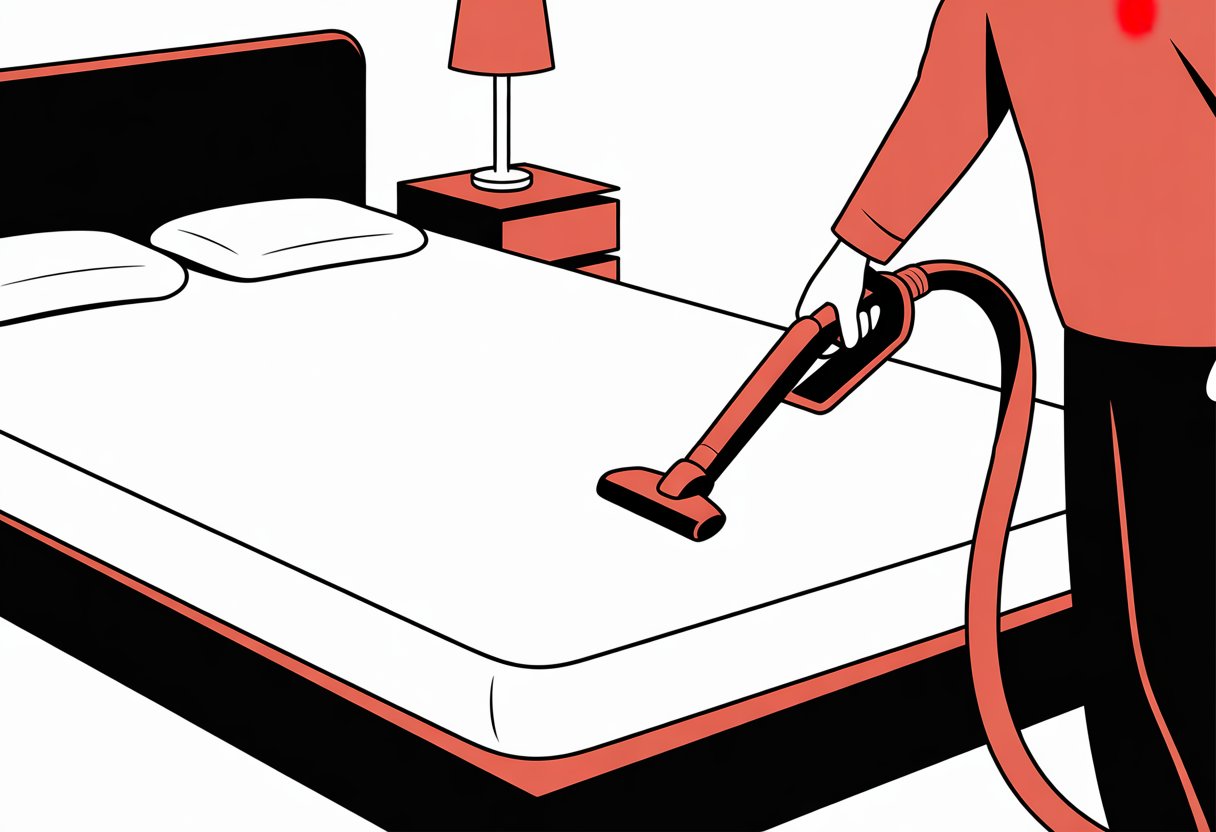
2. Invest in a Mattress Cover
A mattress protector stands as one of the smartest purchases for keeping your bed clean. These covers create a barrier that stops liquids from soaking into your mattress. This helps prevent dampness and stains from building up over time.
We recommend choosing mattress protectors that can be washed in your machine, so you can throw them in the laundry whenever they get dirty. A protector also helps keep your warranty intact, because stains commonly void mattress warranty coverage and the protector takes the spill instead. Every mattress protector we carry is washable.
Most mattress pads can be reused many times. Simply wash them when they get dirty and put them back on your bed.
Keeping Your Mattress Fresh and Clean
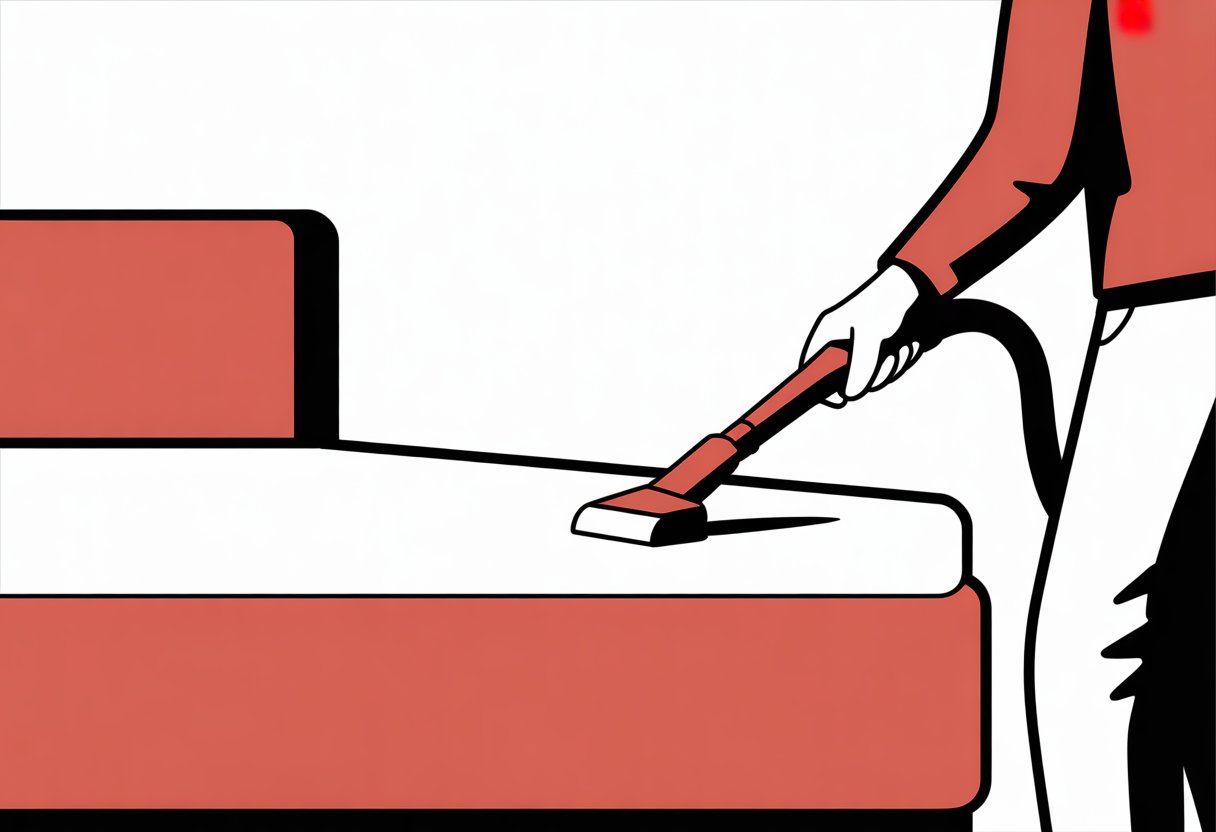
3. Getting Rid of Spots and Marks
Accidents happen even when you take steps to protect your bed. Knowing the right way to tackle spots helps you avoid bigger problems down the road.
Mild liquid soap or detergent mixed with cold water works well; save specialized mattress or upholstery cleaners for beds whose care label allows them. We suggest blotting with a barely damp clean cloth rather than scrubbing. Getting your mattress too wet can leave it damp inside, which creates bad smells.
After you remove mattress stains, let the surface dry completely for 4 to 8 hours. Don't put your sheets back on until everything feels dry to the touch. This waiting period stops moisture from getting trapped inside.
Key steps for spot treatment:
- Use minimal water
- Work gently with soft tools
- Allow plenty of drying time
- Test cleaners on a small area first
4. Lower Moisture in Your Room
Dust mites thrive in damp spaces, so controlling moisture helps keep them away. A dehumidifier works well for this job.
Health Canada recommends keeping indoor relative humidity between 35 and 50%. You can check this with a simple humidity meter from any hardware store.
Opening windows on dry days lets fresh air circulate. Running a fan helps air move around the room too. These simple actions make your sleeping space less inviting to dust mites and other unwanted guests.
5. Clean Your Sheets Regularly
Health Canada lists washing linens in hot water weekly among the ways to reduce your exposure to dust and dust mites. Use the hottest setting each item's care label allows.
Washing schedule:
| Item | Frequency |
|---|---|
| Pillowcases | Weekly |
| Sheets | Weekly |
| Duvet covers | Every 2 weeks |
| Mattress protector | Monthly |
Your pillowcases need washing at least once a week. This stops dust from moving from your pillow to your mattress surface. Clean sheets and pillows work together with a clean mattress to create a healthier sleeping space.
6. Take Plants Out of the Bedroom
Live plants look nice but they can bring unwanted problems near your bed. They attract things that eventually spread to your mattress.
Plants attract these issues:
- Dust buildup on leaves
- Pollen particles
- Small bugs
- Tiny organisms
These things love plant soil and leaves. When plants sit close to your bed, these elements slowly move over time. If you want greenery in your room, artificial plants give you the look without the problems.
7. Freshen Up Your Mattress
Your mattress can develop smells from body oils, sweat, and dead skin cells that build up during sleep. Baking soda works great for removing odours from mattresses.
Sprinkle a light layer of baking soda across the entire surface. Use a soft scrub brush to work it gently into the fabric. This lets the powder reach deeper where smells get stuck.
Let the baking soda sit for 15 to 20 minutes. Then use your vacuum with an upholstery attachment to remove all the powder. The baking soda pulls out trapped odours as you vacuum it away.
How To Deep Clean Your Mattress
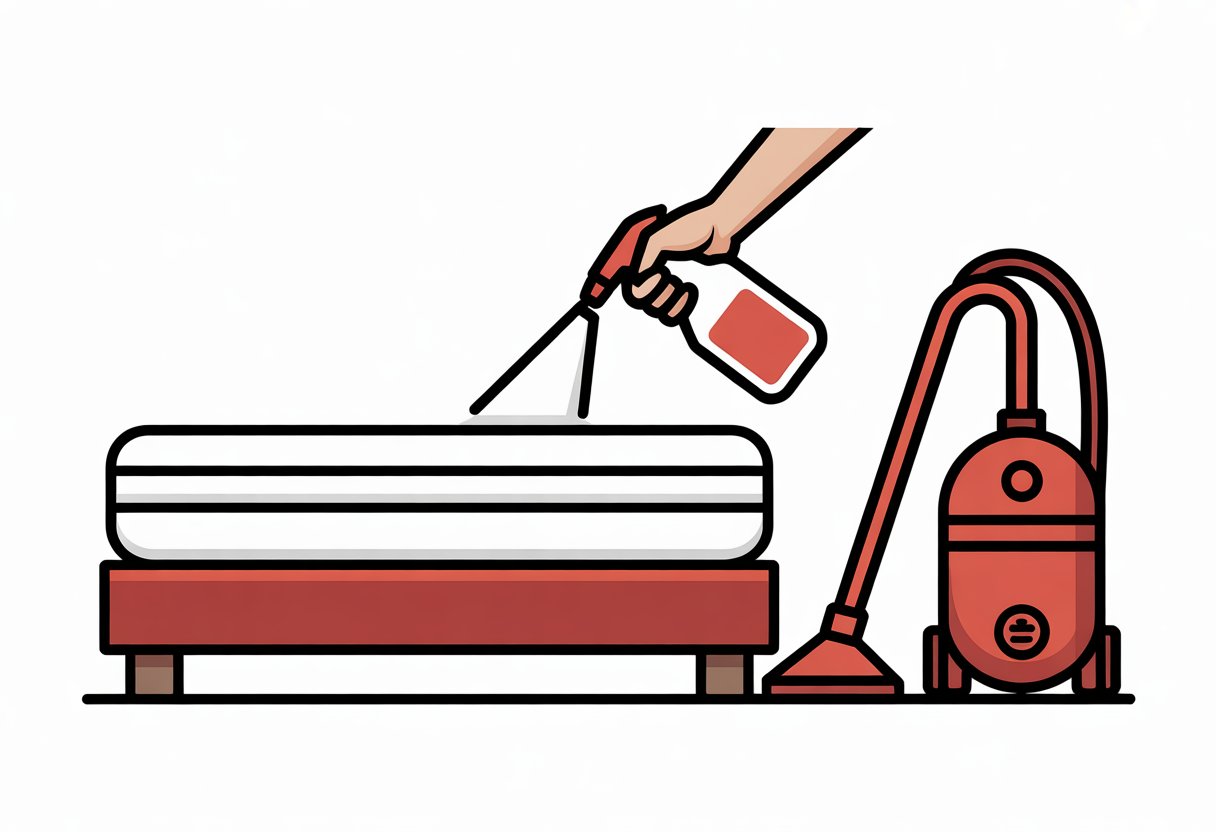
Deep cleaning a mattress requires some basic supplies and a bit of time, but nothing harsh: a vacuum cleaner with an upholstery attachment, several clean white cloths, a bowl, a mild liquid soap or detergent, cold water, baking soda and a fan to speed up drying.
Before we start, we should move the bed away from furniture to protect other items in the room. Having everything ready makes the process go smoothly.
Complete Cleaning Process
Step One: Remove All Bedding
We start by taking off every sheet, blanket, and pillowcase from the mattress. This gives us full access to the entire surface that needs cleaning. All removable bedding should go straight into the washing machine, on the hottest setting each care label allows.
Step Two: Apply Deodorizer
Mattresses can develop unpleasant odours from sweat, spills, and daily use. Rather than using scented sprays that contain artificial fragrances, we use baking soda as a natural deodorizer. We sprinkle a generous amount across the entire mattress surface and let it sit for at least 15 minutes. During this time, we gently rub the baking soda into the fabric fibres. The baking soda absorbs odours naturally without leaving behind chemical residues that might trigger allergies.
Step Three: Vacuum the Surface
After the baking soda has done its job, we vacuum the entire mattress. The upholstery attachment works best for this task. We avoid attachments with rolling brushes because they can snag or tear the mattress fabric. We vacuum in overlapping narrow paths across the top and sides of the mattress. This technique ensures we don't miss any spots, especially around seams and edges where dead skin cells and dust tend to collect.
Step Four: Treat Stains
Whatever the stain, whether sweat, blood, urine or a spilled drink, use the same gentle method Stearns & Foster publishes, unless your care label rules out liquid altogether:
- Blot up as much as you can with a dry, clean white cloth, pressing down rather than rubbing.
- Mix one part mild soap or detergent with four parts cold water in a bowl.
- Dampen a clean cloth in the mix, not the mattress, and blot the stain lightly. Repeat until it stops lifting.
- Blot again with a cloth dampened in plain cold water to rinse out the soap.
- Let the area air dry completely, with a fan blowing across it, before any bedding goes back on.
A stain that will not lift completely is better left faint than chased with more liquid. Skip hydrogen peroxide, bleach and other bleaching stain removers unless your mattress's care label allows them: Stearns & Foster warns never to use dry cleaning fluids or bleach, because they can damage mattress materials.
Flip and Repeat
Once the top side is clean and completely dry, we flip the mattress over to clean the bottom side. We vacuum the underside thoroughly, paying attention to areas where dust and allergens collect. If we have a mattress with a pillow-top on only one side, we don't need to treat the other side for stains. However, if we have allergies or pets that go under the bed, giving the underside extra attention with the vacuum helps remove allergens and pet dander.
Using a mattress cover after cleaning protects our work and keeps the mattress cleaner longer. Regular vacuuming between deep cleans means each one has less to lift.
The complete cleaning process lifts the dust, skin cells and grime that build up over time. Taking the time to properly clean both sides ensures we get the most benefit from our effort.
Some Final Tips For Keeping Your Mattress Clean!
We recommend cleaning your mattress every three to six months to maintain good sleep quality. If spills or stains happen between these cleanings, treat them right away to avoid bigger issues later.
Weekly Maintenance Tasks
We suggest changing your bed linen weekly to reduce dust buildup, and vacuuming the mattress at least once a month.
Protection and Rotation
A mattress protector keeps spills, sweat and stains off the mattress, which matters for hygiene and for your warranty. We think this is one of the best investments you can make.
Rotating your mattress every three months ensures even wear across the surface. For pillowtop styles, rotate from head to foot quarterly instead of flipping. This keeps your sleeping surface fresh and comfortable.
Don't forget about your bed frame either. Vacuum underneath and around it during your regular mattress cleaning routine to remove dust that settles there.
Common Questions About Mattress Care
What's the most effective method for removing spots from our mattresses?
We recommend acting quickly when spills happen. Blot the area with a clean cloth instead of rubbing, which can push the stain deeper into the fabric.
For general stains, we can mix cold water with a small amount of mild dish soap. Apply this solution with a cloth and gently dab the affected area. We should avoid soaking the mattress as too much moisture can lead to mould growth.
The same blot, rinse and dry method works for blood, urine and sweat alike, as set out in the deep-cleaning steps above.
After treating any spot, we should blot away excess moisture with dry towels. Opening windows or using a fan helps the area dry completely before making the bed again.
How do we effectively manage dust mites in our sleeping surfaces?
Dust mites thrive in warm, humid environments and feed on dead skin cells. We can't eliminate them entirely, but we can significantly reduce their population.
Health Canada advises washing linens in hot water weekly to reduce exposure to dust mites. Use the hottest setting each item's care label allows.
Vacuuming our mattress regularly removes dead mites and their waste. We recommend using a vacuum with a HEPA filter to trap these tiny particles effectively. Skip steam cleaning, which pushes moisture into the mattress.
We can also reduce humidity in our bedroom by using a dehumidifier. Health Canada recommends keeping indoor relative humidity between 35 and 50%.
Is baking soda suitable for mattress maintenance, and what's the proper application?
Baking soda is one of our favourite natural cleaning agents for mattresses. It's safe, affordable, and effective for memory foam and traditional mattresses.
Here's how we use it properly:
- Strip all bedding from the mattress
- Vacuum the surface to remove loose debris
- Sprinkle a generous layer of baking soda across the entire surface
- Let it sit for about 15 minutes, then repeat if the smell lingers
- Vacuum thoroughly to remove all the powder
The baking soda absorbs odours, moisture, and oils.
We find this method particularly helpful for neutralising pet odours, body odours, and musty smells.
What's the recommended frequency for thorough mattress cleaning?
We should perform a deep clean on our mattresses at least twice per year. Some situations call for more frequent attention.
We recommend increasing cleaning frequency if we:
- Have allergies or asthma
- Live in humid climates
- Have pets that sleep on the bed
- Sweat heavily during sleep
- Have young children who may have accidents
Between deep cleans, we should vacuum our mattress monthly. This prevents dust and allergens from building up.
We also rotate our mattress head to foot every three months, and flip it only if it is a two-sided model. This promotes even wear and gives us an opportunity to check for any issues.
Cleaning the bed frame and mattress topper during each deep clean ensures our entire sleep surface stays fresh.
Which cleaning products work well for mattresses while being gentle on sensitive skin?
We prioritise mild, hypoallergenic products when cleaning mattresses for people with sensitive skin.
Our top choices include:
| Product | Benefits | Usage |
|---|---|---|
| Baking soda | Absorbs odours, gentle abrasive | Sprinkle dry, vacuum off after about 15 minutes |
| Castile soap | Plant-based, fragrance-free options available | Dilute heavily with water |
We avoid harsh chemicals like bleach or ammonia. Stearns & Foster warns that harsh cleaners and bleach can damage mattress materials.
When selecting commercial cleaners, we look for products labelled "hypoallergenic," "fragrance-free," or "dermatologist-tested." We always test any new product on a small, hidden area first.
Cold water works better than hot for many cleaning tasks. It prevents protein-based stains from setting and is less likely to damage mattress materials.
Using a mattress protector creates a washable barrier between our skin and the mattress. This reduces how often we need to use cleaning products directly on the mattress surface.
Can we apply professional cleaning methods at home for fresher mattresses?
We can definitely use professional-grade techniques without hiring experts. Vacuuming, spot-treating stains, and adding protection form the foundation of professional mattress care.
The key difference between professional and home cleaning is equipment power. Professional machines have stronger suction and faster drying capabilities. However, we achieve excellent results at home by allowing more drying time and working in sections.
We recommend working on a warm, dry day with good air circulation. This helps the mattress dry completely before you make the bed.
Ready to shop? Shop mattress protectors at National Mattress.
 by
by 


