

















Finding a quality mattress doesn't mean you need to spend thousands of dollars. Entry level mattresses offer solid comfort and support at prices that fit tight budgets, making them perfect for first apartments, guest rooms, or anyone who wants good sleep without the premium cost. These mattresses typically range from $400 to $700 for a queen size and can perform just as well as pricier options for many sleepers.
Entry level mattresses focus on core comfort features while skipping expensive extras like organic materials, thick comfort layers, or advanced cooling technology. You can expect reliable support, decent durability, and trial periods that let you test the mattress at home. The key is knowing which features matter most for your sleep style and which ones you can live without.
Understanding what makes a good entry level mattress helps you avoid low-quality options that wear out quickly or leave you uncomfortable. With the right knowledge, you can find a mattress that supports your body, stays cool enough through the night, and lasts several years without breaking your budget.
Key Takeaways
Entry level mattresses between $400 and $700 provide good comfort and support without premium features
Foam and hybrid mattresses offer the best value in the budget category
Look for at least 100-night trial periods and 10-year warranties when shopping; National Mattress gives you 365 nights
What Are Entry Level Mattresses?
Entry-level mattresses typically cost $600 or less for a queen size and provide basic comfort and support without premium features. These beds focus on essential sleep needs rather than luxury additions, making them accessible for budget-conscious shoppers.
Definition and Key Characteristics
An entry-level mattress delivers the core functions you need for sleep—support, comfort, and durability—at a lower price point. According to testing from Consumer Reports, affordable mattresses costing between $250 and $600 for a queen size can still provide quality rest without requiring you to spend thousands of dollars.
These mattresses usually have simpler construction than premium models. You'll find basic foam layers or traditional innerspring coils rather than multiple specialty foam types or advanced cooling systems. The covers tend to be thinner and less plush.
Entry-level options skip luxury features like pillow tops, gel-infused memory foam, or zoned support systems. They focus on proven materials and straightforward designs that keep costs down. Testing shows that mattresses under $500 can still feel supportive when they use quality materials in simpler configurations.
Who Should Consider Entry Level Options
You should consider an entry-level mattress if you're furnishing a guest room, college dormitory, or temporary living space. These beds work well when you need something functional but don't require it to last a decade.
Budget constraints make affordable mattresses practical for many situations. First-time home buyers, students, and people recovering from financial setbacks often need quality sleep without the premium price tag. Young adults starting their first apartment benefit from entry-level models that provide decent comfort while they build savings.
Guest rooms represent an ideal use case since visitors sleep on these beds less frequently. You want guests to rest comfortably, but investing in a premium mattress for occasional use doesn't make financial sense.
Comparison to Mid-Range and Premium Mattresses
Entry-level mattresses differ from higher-priced options in materials, construction complexity, and expected lifespan. Mid-range beds (roughly $800 to $1,500) typically include better foam quality, thicker comfort layers, and more sophisticated support systems.
Premium mattresses ($2,000 and above) feature advanced materials like natural latex, high-density memory foam, or complex coil systems with thousands of individual springs. They often include cooling technologies, organic covers, and extended warranties of 15 to 25 years.
Key Differences:
Materials: Entry-level uses basic polyfoam or bonnell coils; premium uses latex, high-density foam, or pocketed coils
Comfort layers: 1-2 inches versus 3-4 inches or more
Durability testing: Budget mattresses tested by Consumer Reports undergo the same rigorous evaluations as expensive models but may show wear sooner
Warranty coverage: 5-10 years versus 15-25 years
The performance gap has narrowed over time. Many entry-level mattresses now score well in stabilisation tests and provide adequate support for average-weight sleepers. You sacrifice longevity and premium comfort rather than basic sleep quality.
Types of Entry Level Mattresses

Entry level mattresses come in four main construction types that affect comfort, support, and price. Each type uses different materials and designs to meet various sleep preferences and budgets.
Innerspring Construction
Innerspring mattresses use steel coils as their main support system. These are often the most affordable option for budget shoppers.
Traditional innerspring models have coils connected in a single unit. This design costs less to make but transfers motion across the bed when someone moves. You'll feel your partner shifting positions during the night.
Modern innerspring mattresses may feature individually wrapped coils that move independently. Each coil responds only to pressure applied directly to it. This design reduces motion transfer between sleepers.
The comfort layer on top of the coils is usually thin in entry level models. You might find a layer of foam or fibre padding between the coils and the cover. Innerspring mattresses typically need thicker comfort layers to provide adequate cushioning for pressure points.
Most entry level innerspring options weigh less than foam or hybrid models. This makes them easier to move and rotate.
Memory Foam Materials
Memory foam mattresses conform to your body shape through heat and pressure. The material was originally developed for NASA before being adapted for consumer use.
These mattresses have multiple foam layers stacked together. The top layer is memory foam that moulds to your body. Base layers use firmer polyfoam for support and structure.
Entry level memory foam options typically use lower density foams than premium models. Foam density measures how much material is compressed into each cubic foot. Lower density foam costs less but may break down faster over time.
Memory foam provides excellent motion isolation. You won't feel movement from your partner during the night. The material absorbs motion instead of transferring it across the bed surface.
These mattresses have a characteristic "hug" feeling. You sink into the surface rather than sleeping on top of it. Some people love this sensation while others find it restrictive when changing positions.
Budget memory foam models may retain more body heat than pricier options. The dense foam can trap warmth against your body during sleep.
Hybrid Designs
Hybrid mattresses combine innerspring coils with foam comfort layers. This design aims to deliver both the bounce of springs and the pressure relief of foam.
The coil base in a hybrid provides support and airflow. Most use individually wrapped coils rather than connected spring systems. Above the coils, you'll find layers of memory foam, polyfoam, or both.
Entry level hybrids balance cost by using fewer foam layers or thinner comfort sections. A budget hybrid might have 5 to 8 centimetres of foam on top compared to 13 or more centimetres in luxury models.
These mattresses appeal to people who want some body contouring without the full "quicksand" feeling of all-foam beds. You get moderate pressure relief while still being able to move easily.
Hybrids typically sleep cooler than solid foam mattresses. Air circulates through the coil system beneath the foam layers. This helps disperse heat away from your body.
The combination of materials usually makes hybrids heavier than pure innerspring or foam options.
Gel Memory Foam Innovations
Gel memory foam adds gel beads or liquid gel to traditional memory foam. Manufacturers created this material to address heat retention issues in standard memory foam.
The gel component helps conduct heat away from your body. It absorbs and disperses warmth more effectively than regular foam alone. You should notice less heat buildup during the night.
Entry level gel foam mattresses may use gel only in the top layer. The base layers remain standard polyfoam to keep costs down. Some budget models infuse gel throughout multiple layers.
The feel of gel memory foam is similar to regular memory foam. You still get the body-conforming support and motion isolation. The main difference is temperature regulation rather than firmness or support.
Not all gel foams perform equally. The amount and type of gel affects how well the material manages heat. Entry level versions may provide modest cooling compared to premium gel foams.
These mattresses usually cost slightly more than comparable non-gel memory foam options. The price difference reflects the added manufacturing complexity of incorporating gel into the foam structure.
Essential Features to Look For
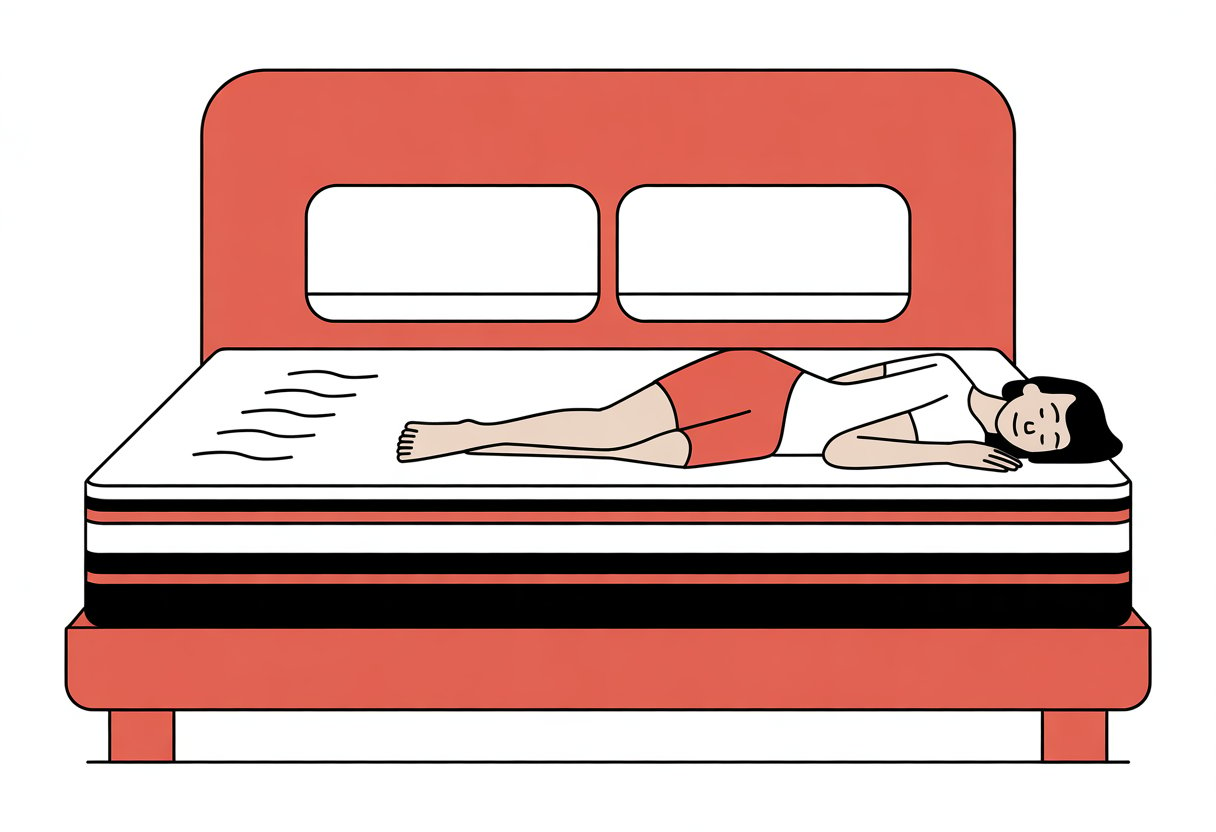
Entry-level mattresses can still deliver quality sleep when you focus on the right features. Strong edge support prevents sagging when you sit or sleep near the sides, while motion isolation keeps you from feeling your partner's movements throughout the night.
Edge Support and Motion Transfer
Edge support determines how well your mattress holds up around the perimeter. When you sit on the side of your bed to put on shoes or get up in the morning, good edge support prevents excessive sinking. This feature becomes especially important if you share your bed with a partner or use the full surface area for sleeping.
Innerspring mattresses typically offer stronger edge support through reinforced coils or high-density foam encasements around the perimeter. These materials keep the sides firm and stable. Foam mattresses often struggle with edge support unless they use dense foam layers of at least 4 pounds per cubic foot.
Motion transfer refers to how much movement travels across your mattress. If your partner tosses and turns at night, poor motion isolation will wake you up. Foam mattresses excel at absorbing movement, while innerspring mattresses with pocket coils provide better motion isolation than traditional connected coil systems. Each pocket coil moves independently, reducing the bounce that spreads across the bed.
Firmness and Sleep Needs
Your sleep needs should guide your firmness choice rather than popular trends or advertising claims. A medium-firm mattress works well for most people, but your body weight and sleeping position matter more than general recommendations.
Back sleepers need medium to medium-firm support with light contouring to maintain proper spine alignment. Side sleepers typically prefer softer mattresses that cushion pressure points at the shoulders and hips. Stomach sleepers often need a firm mattress to prevent their midsection from sinking too deeply.
Your weight affects how you experience firmness levels. If you weigh less than 90 kilograms, standard firmness ratings usually apply. Heavier sleepers need denser materials and firmer support to avoid excessive sinking. A mattress labelled "medium" might feel soft to someone who weighs 110 kilograms.
Testing different firmness levels helps you discover your true preference. Many people who think they want a firm mattress actually prefer medium support once they try various options.
Cooling Technologies
Temperature control affects your sleep quality more than you might realise. Your body temperature drops naturally as you fall asleep, and a mattress that traps heat can disrupt this process.
Foam mattresses tend to sleep warm because they conform closely to your body, limiting airflow. If you're a hot sleeper, look for innerspring or hybrid designs that allow heat to dissipate through the coil spaces. Latex foam sleeps cooler than memory foam due to its more breathable structure.
Some entry-level mattresses include basic cooling features like ventilated foam layers or moisture-wicking covers. These additions can help, but they won't transform a heat-trapping mattress into a cooling mattress. Phase-change fabrics and gel-infused foams offer modest temperature regulation, though their effects vary by person.
The most reliable cooling comes from mattress construction rather than special additives. Prioritise breathable materials and open designs over marketing claims about advanced cooling technology.
Certifications and Eco-Friendly Materials
Third-party certifications verify that your mattress meets specific safety and environmental standards. These credentials matter because mattress materials can emit volatile organic compounds or contain harmful chemicals.
CertiPUR-US certification confirms that foam meets standards for emissions, content, and durability. Certified foams contain no ozone depleters, flame retardants, mercury, lead, or formaldehyde. They also meet strict limits for volatile organic compound emissions.
GREENGUARD Gold certification sets even stricter standards for chemical emissions and air quality. This certification considers vulnerable populations like children and ensures the product contributes to healthier indoor air.
Look for mattresses that clearly display these certifications rather than vague claims about being "eco-friendly" or "natural." Entry-level mattresses with proper certifications prove that budget-friendly options don't require sacrificing safety standards.
Some manufacturers also use sustainable materials like organic cotton covers or plant-based foams. While these features add environmental benefits, they shouldn't replace fundamental certifications that protect your health.
Recommended Entry Level Mattress Models
Several mattresses deliver quality sleep at accessible prices, with options ranging from all-foam designs to hybrid constructions. These models offer different firmness levels and materials to suit various sleeping positions and preferences.
Sealy Posturepedic Series Overview
The Sealy Posturepedic series features a medium firm feel that works well for side and back sleepers. These mattresses combine high-density foam comfort layers with Proback pocketed coils for targeted support.
The queen-size mattress includes reinforced perimeter coils that strengthen edge support when you sit or sleep near the sides. The coil system also promotes airflow to help regulate temperature throughout the night.
Sealy models often feature GelSense foam to provide pressure relief while keeping you cool. The hybrid construction provides moderate bounce while the foam layers minimize motion transfer between sleep partners. At various heights, these models fit standard fitted sheets easily.
Serta Perfect Sleeper Memory Foam
The Serta Perfect Sleeper uses specialized foam layers to cradle your body and relieve pressure points. This all-foam design performs particularly well for side sleepers who need cushioning around their shoulders and hips.
Memory foam naturally absorbs movement, making Serta foam models a solid choice for couples who don't want to feel their partner's movements. The mattress has a medium firm feel that balances contouring with support.
Serta offers reliable warranties that protect your investment in these entry-level models. The foam layers include cooling gel infusions to counteract heat retention. You'll notice close conforming when you first lie down as the foam responds to your body heat and weight.
Simmons Beautyrest Harmony Hybrid
The Beautyrest Harmony line offers multiple firmness options including plush, medium, and firm. This flexibility helps you match the mattress to your preferred sleeping position and comfort needs.
The hybrid design pairs premium foam comfort layers with T1 Pocketed Coil technology. These coils respond independently to your movements and provide targeted support where you need it most.
Simmons utilizes sustainable materials in the Harmony line, keeping quality high for budget-conscious buyers. The series includes a breathable cover that adds surface cushioning, while the coil system maintains steady airflow to prevent heat buildup during sleep.
Galaxy Bedding Foam Series
The Galaxy Bedding foam series uses a simple multi-layer construction that keeps the price point accessible. Despite its straightforward design, these mattresses provide adequate support for most sleeping positions.
A gel-infused memory foam comfort layer typically sits atop a high-density polyfoam base. This combination offers pressure relief without the complex layering found in premium models. Galaxy Bedding works best for back and side sleepers looking for maximum value.
The memory foam conforms to your body shape while the dense base layer prevents excessive sinking. You'll experience strong motion isolation with this all-foam design, making it an excellent choice for budget-friendly comfort.
Comparing Popular Entry Level Mattress Brands
Several established manufacturers offer quality mattresses at entry-level prices, with Beautyrest's BR800 series standing out for its hybrid construction and traditional brand reliability, while other budget-focused brands provide competitive alternatives through direct-to-consumer models and simplified designs.
Beautyrest Harmony Series
The Beautyrest Harmony series represents a modern approach to affordable quality. These mattresses feature pocketed coil systems that provide targeted support and reduce motion transfer between sleep partners.
You'll find multiple firmness options in this line. The Harmony series comes in plush, medium, and firm feels to match different sleep positions. Side sleepers typically prefer the plush model, while back and stomach sleepers often choose medium or firm.
Beautyrest uses gel memory foam layers above the coil system. These layers add pressure relief around your shoulders and hips. The cooling cover helps dissipate heat better than standard fabrics.
The Harmony series typically costs between $700 and $1,100 for a queen size. This pricing puts it at the higher end of entry-level options but still well below luxury mattresses that can exceed $2,000.
Other Leading Budget Brands
When comparing the best affordable mattress options, you'll encounter several competitive alternatives. The Springwall Chiropractic line offers firm support designs at budget-friendly prices. These mattresses work well for back sleepers who need solid support and spinal alignment.
The Galaxy Bedding line provides medium-firm options priced well under $1,000. These models often include cooling gel infusions. The Sealy Posturepedic series combines hybrid construction with a medium-firm feel, making it versatile for different sleeping positions.
Most quality mattresses under $1,000 now include generous trial periods of 100 to 120 nights. This lets you test the mattress at home before committing. Warranties on entry-level beds typically range from 10 years to lifetime coverage, depending on the manufacturer's confidence in their materials and construction.
Buying Tips and What to Expect
Entry-level mattresses typically come with trial periods of 90 to 120 days, basic warranties of 10 years, and compressed delivery in a box. Prices vary from $200 for a twin to $600 for a king, with most budget models measuring 8 to 10 inches in height.
Warranty, Trials, and Delivery Options
Most entry-level mattresses include a 10-year warranty that covers manufacturing defects like sagging over 1 inch deep. These warranties don't cover normal wear or damage you cause yourself.
Trial periods let you test the mattress at home for 90 to 120 nights. If you don't like it, you can return it for a refund. Some companies charge return shipping fees of $50 to $100.
Standard delivery means your mattress arrives compressed in a box at your door. You'll need to unpack it and let it expand for 24 to 48 hours before sleeping on it. White glove delivery costs extra (usually $100 to $200) but includes setup in your room and removal of your old mattress.
Price Ranges by Size and Type
Entry-level mattress prices depend on size and materials. Foam mattresses cost less than innerspring or hybrid options.
Size | Foam | Innerspring | Hybrid |
|---|---|---|---|
Twin | $200-$300 | $250-$350 | $300-$400 |
Full | $300-$400 | $350-$450 | $400-$500 |
Queen | $400-$500 | $450-$550 | $500-$600 |
King | $500-$600 | $550-$650 | $600-$700 |
Sales around holidays can save you 20% to 30% off these prices.
Mattress Height and Construction Details
Entry-level mattresses measure 8 to 10 inches tall. This is shorter than premium models that reach 12 to 14 inches. The lower mattress height works fine with most bed frames and sheets.
Budget foam mattresses have two or three layers. The bottom layer provides support while the top comfort layer is 1 to 2 inches thick. Innerspring models use bonnell coils with coil counts of 300 to 600 and add a thin foam top.
Cheaper mattresses use glued layers covered in polyester fabric. Higher-priced entry models might have quilted covers or gel-infused foam for cooling.
Frequently Asked Questions
Entry-level mattress shopping raises common questions about features, sizing, materials, testing methods, budgets, and policies. Understanding these basics helps you make an informed purchase that fits your needs and budget.
What features should I consider when purchasing a mattress for the first time?
You should focus on firmness level, durability, breathability, stability, and support when buying your first mattress. Firmness varies between brands, so one company's "medium" might feel like another's "firm."
Durability determines how long your mattress will last before it starts sagging or losing support. Look for construction details like foam density and coil count if you're considering an innerspring model.
Breathability affects how much heat your mattress traps during sleep. Innerspring mattresses generally retain less heat than foam models because air flows through the coils.
Stability, also called motion isolation, matters if you share your bed. A mattress with good stability prevents your partner's movements from disturbing your sleep.
Support keeps your spine aligned while you sleep so you don't wake up with aches. The right level of support depends on your body weight, how your weight is distributed, and your sleep position.
How do I determine the right size for my bed when choosing a mattress?
A twin mattress measures 38 by 75 inches and fits one person in small bedrooms. Twin XL adds five extra inches of length at 38 by 80 inches, making it better for taller people or college students.
Full or double mattresses measure 54 by 75 inches. They offer more width than a twin but still fit in smaller spaces, comfortably sleeping one person or accommodating two smaller people.
Queen mattresses at 60 by 80 inches are the most commonly sold size. They provide enough space for two people to sleep comfortably and plenty of room for solo sleepers who move around, requiring a bedroom of at least 10 by 10 feet.
King mattresses measure 76 by 80 inches and offer ample room for couples. You'll need a larger bedroom of at least 12 by 12 feet for this size.
California King mattresses are 72 by 84 inches, making them the longest option available. They suit taller couples who want extra legroom and can compromise on width, also requiring a 12 by 12 foot bedroom minimum.
What are the differences between memory foam, innerspring, and hybrid mattresses?
Memory foam mattresses are built entirely of foam layers that provide a cradling feel. You sink slowly into these curve-conforming layers, and they offer good motion isolation but may retain more heat than other types.
Innerspring mattresses have a steel-coil foundation topped with layers of fibre padding, foam, or both. They're more resilient than foam mattresses, making it easier to shift positions, and they retain less heat.
Hybrid mattresses combine innerspring coils with foam layers. They offer the resilience of coils with the cuddle of foam, but they vary widely in construction.
The ratio of coils to foam affects how a hybrid feels. Mattresses with more foam feel foam-forward, while those with less foam feel more like traditional innersprings.
Can you recommend ways to test a mattress for comfort and support before buying?
You should spend at least 10 minutes on each mattress you're considering and ask for a pillow to test properly. Lie on your back first and focus on your spine, which should feel neutral and not arched.
Your hips and shoulders should feel cradled. Roll onto each side and use the pillow to align your neck with your spine, checking that your back feels comfortably neutral.
Test the edge support by sitting on the mattress edge. It should stay fairly stable so you can pull on socks or get in and out of bed easily.
If you have a sleep partner, test the bed together. Shift positions and see if the movement disturbs the other person, as this shows how well the mattress isolates motion.
Check the return policy before buying. Direct-to-consumer brands typically give you 30 days to a year to try the mattress, though some charge transportation or restocking fees.
What is an appropriate budget for a quality entry-level mattress?
Entry-level queen mattresses cost under $599 on average. You can find high-performing mattresses in the $1,000 range, and some quality options for under $600.
Price doesn't always indicate quality. Many wallet-friendly mattresses perform well in durability tests and provide good support.
Mattresses costing around $2,000 or more often include extras like organic cotton covers and latex foams. These features are nice to have but aren't necessary for back support or durability.
Your budget should account for the mattress size you need. Larger sizes like king and California king cost more than twin or full sizes.
What kind of warranty or return policies are typically offered with entry-level mattresses?
Return policies vary significantly by retailer. Online brands often provide 30 days to one year for returns with full refunds, though some charge transportation or restocking fees.
Physical stores may only refund a percentage of the purchase price or offer store credit instead of cash back. The store's return policy typically applies rather than what's on the manufacturer's website.
You need to understand the specific terms before purchasing. Ask about any fees, time limits, and whether you'll receive a full refund or store credit.
Check whether the retailer requires you to try the mattress for a minimum period before accepting returns. Some companies want you to sleep on the mattress for at least 30 days to allow your body to adjust.
Warranty coverage for entry-level mattresses typically addresses manufacturing defects like sagging beyond a certain depth. Read the warranty terms to understand what's covered and for how long.
 by
by 


